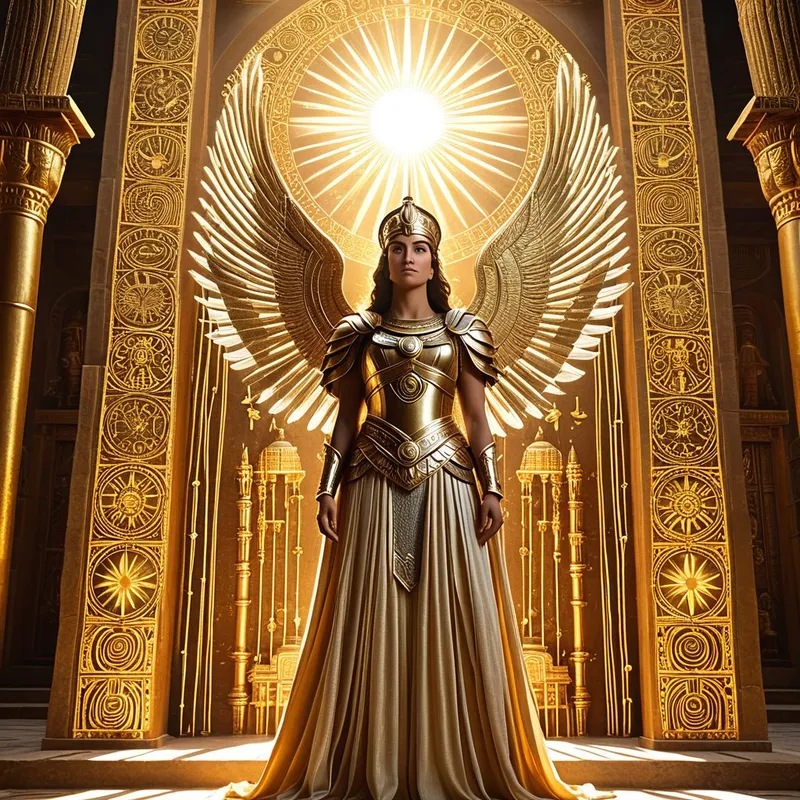
Athena's Loom Myth Meaning & Symbolism
The myth of the mortal weaver Arachne, who challenged the goddess Athena to a contest and was transformed for her hubris and sublime skill.
The Tale of Athena's Loom
Listen, and hear the tale spun not from wool, but from fate itself. In the humble lands of Lydia, there lived a maiden named Arachne. Her fame was not born of noble blood or divine favor, but from her hands. When she sat before her loom, the world held its breath. The shuttle flew like a thought, the threads sang, and from nothingness emerged tapestries so vivid that nymphs would forsake their streams to gaze upon them. Flowers woven dewed with nectar; woven animals seemed to breathe. People whispered that Athena herself must have taught her. But Arachne, her heart swollen with the pride of pure skill, would scoff. "My gift is my own," she declared. "Let the goddess come and contest with me. Should I lose, I will pay any price."
The air in the humble workshop grew heavy, scented with wool and ozone. An old woman, back bent with years, hobbled through the door—a disguise thin as gauze to the soul's eye. She warned Arachne of the danger of challenging the immortals, to offer praise to the source of all skill. Arachne, her eyes on her own flying fingers, only laughed and repeated her challenge. Then, the disguise fell away like a shed skin. There stood Athena in her terrible majesty, grey eyes flashing like storm-lit sea. "She has come," the onlookers gasped. The challenge was accepted.
Two looms were erected side by side. The goddess and the mortal tied their warps and took up their shuttles. The only sound was the rhythmic clack-clack-clack of the beams and the whisper of thread. Athena wove a warning: the central, awe-inspiring figure of her own triumph in the contest for Athens, surrounded by smaller, dreadful scenes of mortals who had dared defy the gods and been transformed into mountains, birds, and stones for their hubris. Each figure was a sermon in thread.
Arachne wove a truth. With audacious perfection, she depicted the gods not in glory, but in deception and desire. There was Zeus as a bull, a swan, a shower of gold, pursuing mortal lovers. There was Poseidon in his guises. Each scene was a masterpiece of composition and shame, a breathtaking catalog of divine transgressions. The tapestry was flawless, its technique undeniable, its subject an unparalleled insult.
The work finished. The crowd, even the nymphs and dryads who had gathered, fell into a silence deeper than any tomb. Athena examined her rival's work. She could find no flaw in the craft, only in the soul that crafted it. A fury, cold and sharp, seized her. She tore the glorious, blasphemous tapestry to shreds and, with her shuttle of boxwood, struck Arachne three times upon the brow.
The mortal pride shattered. In a wave of despair, Arachne fashioned a noose and sought to hang herself from a rafter. But Athena would not grant her that escape. "Live," the goddess commanded, her voice echoing with a strange pity. "But you shall hang forever, you and all your descendants." As she spoke, Arachne's body shrank and darkened. Her hair fell out, her fingers lengthened into many jointed legs. She was transformed. The master weaver became the first spider, condemned to spin and weave her exquisite, fragile webs from her own belly for all time, suspended between heaven and earth.
Cultural Origins & Context
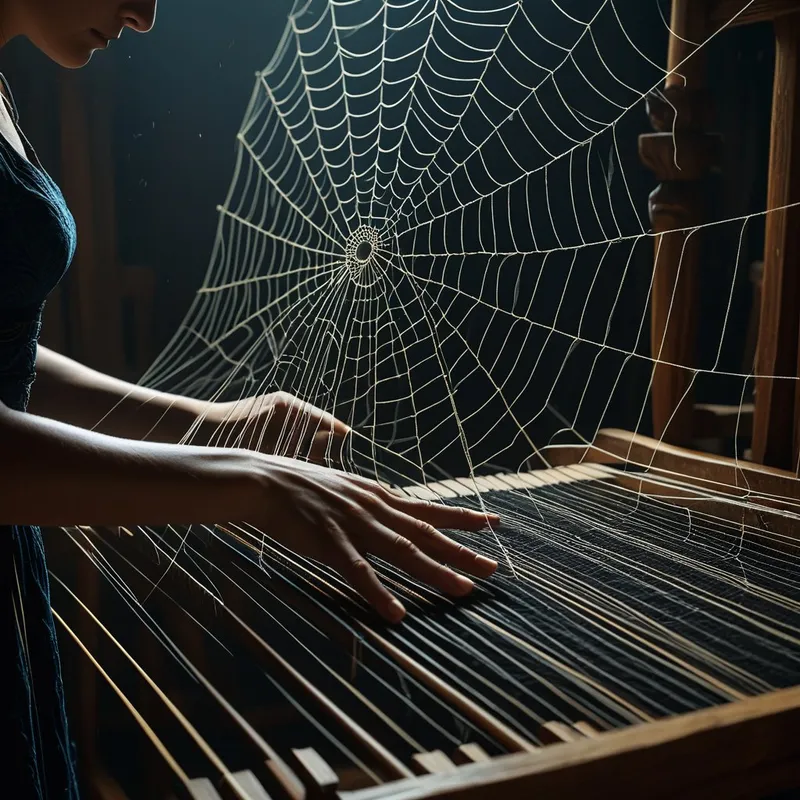
This myth reaches us primarily from the Roman poet Ovid, in his epic Metamorphoses. While Ovid's telling is our most detailed source, the core of the story—a mortal artisan challenging a patron deity—resonates with deep Greek cultural anxieties about hubris and sophrosyne. In a society where craft (techne) was sacred and the gods were intimately involved in human endeavor, Arachne’s story served as a potent cultural narrative.
It was a tale told not just to entertain, but to instruct. It functioned as a warning to artisans, whose skill could bring them close to the divine: remember your place. Your talent is a gift, not a possession. To claim it solely for yourself, to deny the divine source (Kalliope for poets, Athena for weavers, Hephaistos for smiths) was to invite catastrophic transformation. The myth upheld the social and cosmic order, teaching that excellence must be tempered with piety, and that the most perfect technique, if divorced from reverence, becomes a cage.
Symbolic Architecture
The loom is the central symbol, a machine of cosmic order. It represents the structured mind, the conscious ego that takes the chaotic threads of experience (the wool) and attempts to weave them into a coherent narrative, a meaningful pattern (the tapestry).
The contest is not between two weavers, but between two modes of consciousness: the authorized, collective pattern of culture and divinity versus the individual, subversive pattern of personal truth.
Athena’s tapestry depicts the official story—the glory of the gods and the rightful punishment of hubris. It is the superego’s narrative, the voice of tradition, law, and approved identity. Arachne’s tapestry is the shadow narrative. It gives form to the repressed, unspoken truths—the passions, deceptions, and chaotic drives of the very powers we are told to revere. It is the psyche’s courageous, dangerous act of seeing the gods (the internalized parental and cultural authorities) in their full, flawed humanity.
Her transformation into a spider is not merely a punishment, but a profound symbolic fate. She becomes her craft entirely. She internalizes the loom; her body is now the distaff, her soul the pattern. She weaves from her own substance, suspended in a liminal space. She is the eternal creator, now isolated, producing beauty that is both trap and home, a testament to skill utterly divorced from the human community.
The Dreamer's Resonance
When the pattern of Athena’s Loom appears in modern dreams, it signals a critical moment of creative or psychological confrontation. To dream of a weaving contest is to feel your own nascent, authentic voice (Arachne) pitted against an immense, internalized authority (Athena) that dictates how you should think, create, or live.
Dreaming of tearing a tapestry suggests a violent rejection of a life narrative that feels false or imposed. Dreaming of being caught in a web, or of becoming the weaver of that web, speaks to the somatic reality of self-created entrapment—the ways our own brilliant skills, obsessive thoughts, or perfectionism can become the very prison that isolates us. The dream may carry the claustrophobic tension of producing something exquisite under the gaze of a judgmental, internal critic, where the fear of flawlessness is as potent as the fear of failure.
Alchemical Translation
The alchemical journey modeled here is the transmutation of hubris into vocation. The initial stage is the nigredo: Arachne’s raw, brilliant talent, unintegrated and inflated. The contest is the albedo, the confrontation that clarifies the tension between the personal and the transpersonal. The tearing of the tapestry is a necessary mortificatio—the death of the purely ego-driven creation.
The transformation into the spider is the paradoxical rubedo. It is not a defeat, but a brutal, graceful integration. The skill is no longer something you have; it is what you are.
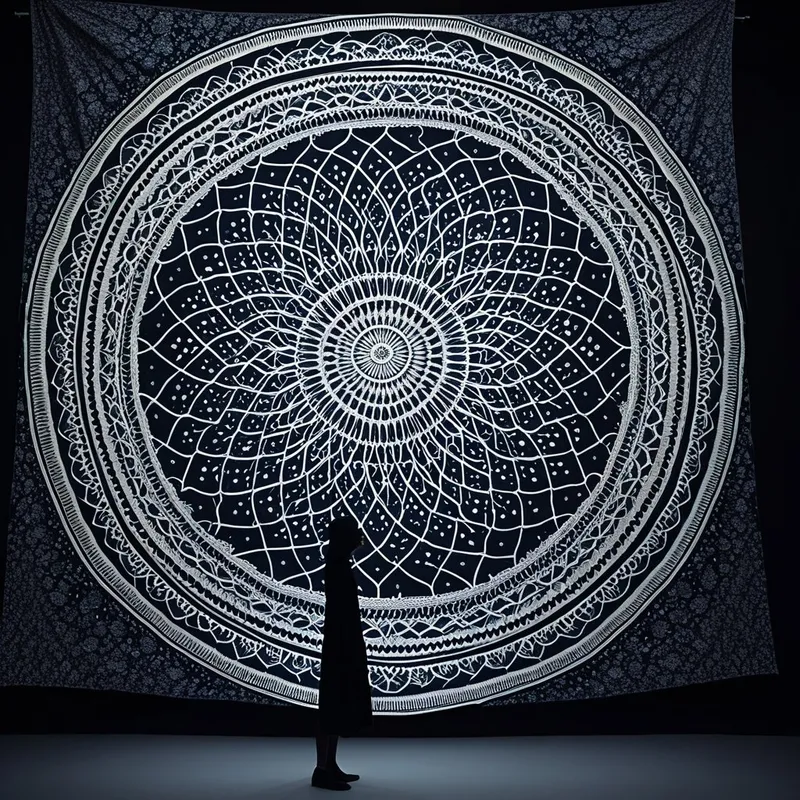
For the modern individual, this myth maps the path from "I am a brilliant weaver" to "I am Weaving." The conscious ego (Arachne) must be humbled, even dismantled, by a greater wisdom (Athena) to be reborn as a vessel for the craft itself. The isolated spider, weaving its geometric mandalas from its own gut, becomes an image of the individuated Self. It creates not for fame or victory, but because creation is its nature. Its web is its world, its art, and its connection to the invisible architecture of reality—a fragile, perfect, and endlessly renewed testament to the consciousness that, though suspended in mystery, dares to spin meaning from the raw silk of existence.
Associated Symbols
Explore related symbols from the CaleaDream lexicon: