
Athena's birth from Zeus's for Myth Meaning & Symbolism
The goddess of wisdom, strategy, and craft is born fully armed from the head of her father, a violent genesis for a divine intellect.
The Tale of Athena's birth from Zeus's for
Let the thunder roll and the aether tremble. For in the time before time, when the cosmos was young and the gods ruled from their cloud-wreathed throne, a prophecy of dread coiled around the heart of Zeus. He had swallowed his first wife, the titaness Metis, for it was foretold that her child would surpass him in wisdom and power. He believed he had contained the future, turning prophecy into a secret held within his own divine flesh.
But creation cannot be imprisoned. Deep within the sovereign skull of the sky-father, a seed of intellect grew. It was not a gentle growth, but a forging. The wisdom of Metis, now fused with the raw, ordering power of Zeus, began to hammer itself into being. It was a pain beyond the ache of mortality—a divine migraine, a pressure building against the very bones of heaven. The lord of lightning grew pale, his thunderbolts falling silent. A ceaseless, pounding rhythm echoed through the halls of Olympus, as if the universe itself had a headache.
The gods gathered, fearful and bewildered. Their king clutched his head, his roars of agony shaking the foundations of the world. No ambrosia could soothe it, no nectar could calm the storm within his brow. In desperation, the cunning Hermes</ab title="> perceived the truth. This was no illness, but a gestation. The child of Metis demanded entry into the world.
So, he summoned Hephaestus, the artificer of the gods. The smith, his brow furrowed with concern and understanding, approached his father. With a tool of his own making—a great double-headed axe of adamantine—he stood before the suffering Zeus. There was no malice in the act, only the terrible necessity of a midwife. With one clean, decisive strike, he cleft the divine skull.
And from that fissure, with a cry that was neither infant’s wail nor warrior’s shout, but the clear, resonant tone of a struck bell, she emerged. Not a babe in swaddling clothes, but a woman in her full power, clad from the first instant in radiant armor of her own essence. Her shield was born in her left hand, her spear raised high in her right. Her grey eyes, the color of a storm-cleared sky, held the calm of perfect strategy and the flash of creative fire. She was Athena, and her first act was to step onto the peak of Olympus, fully formed, her presence stilling the panic, her wisdom already assessing the new order she had entered. The pain was gone, replaced by the luminous, formidable reality of her being.

Cultural Origins & Context
This foundational myth originates from the rich tapestry of ancient Greek mythology, most famously recorded in Hesiod’s Theogony and echoed in later Homeric Hymns. It was not merely a story of divine birth but a central pillar in the Greek understanding of cosmic order and intellectual sovereignty. Passed down by bards and poets, performed in rituals and depicted on countless vases and temple pediments, it served a crucial societal function.
In a culture that venerated both martial prowess and cunning intelligence (metis), Athena’s origin story legitimized a new kind of power. It marked a transition from the raw, titanic forces of the previous generation to the civilized, strategic order of the Olympians. The myth was told to explain Athena’s unique domain—she was a goddess of war, but of the reasoned war, of defense and strategy, not the chaotic bloodlust of Ares. She was also the patron of crafts, weaving, and the applied intellect. Her birth from Zeus alone (having consumed the mother) established her as the direct emanation of the king god’s authority and intellect, making her his most trusted counselor and a divine embodiment of patriarchal wisdom tempered by maternal cunning.
Symbolic Architecture
The symbolism here is not layered; it is forged in a single, explosive act. The myth presents a profound map of consciousness itself.
True wisdom is never born of comfort. It is the violent, necessary rupture of the known self, from which a fully armored understanding steps forth.
The Head of Zeus represents the seat of sovereignty, law, and conscious control. The Swallowing of Metis symbolizes the internalization of a profound, potentially threatening insight or creative potential—an attempt to control wisdom by containing it. The Headache is the inevitable symptom of suppressed creation; the psychic pain that arises when an emergent consciousness demands recognition and cannot be integrated through passive means.
The Axe of Hephaestus is the instrument of crisis and revelation. It is not destruction, but a surgical intervention, the catalyzing blow that breaks open the hardened shell of the ego or fixed mindset to allow something new to be born. Hephaestus, the craftsman, represents the necessary application of skill to a psychological impasse.
Finally, Athena Herself is the nascent consciousness born from this alchemical ordeal. She is logos (reason, word) made manifest, but a logos born of metis (cunning wisdom). Her full armor signifies that this new awareness is not vulnerable; it is born complete, strategic, and ready to engage with the world. She is intellect as a defensive and creative force, born from the fusion of paternal authority and internalized maternal wisdom.

The Dreamer's Resonance
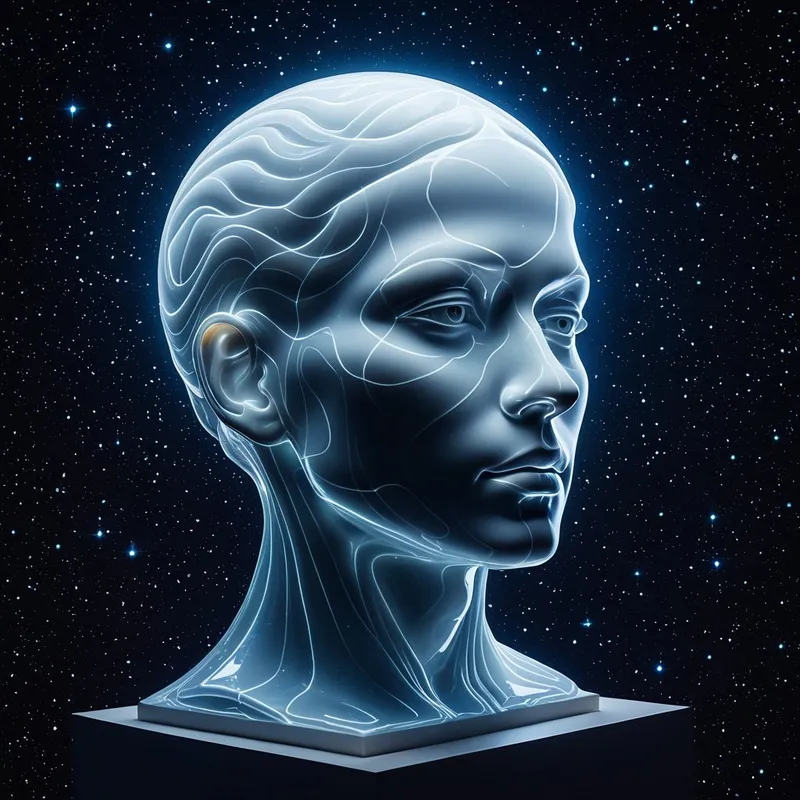
When this mythic pattern stirs in the modern dreamscape, it speaks to a profound somatic and psychological process. The dreamer may experience dreams of intense pressure in the head, of being struck, or of something precious breaking open. They may dream of giving birth in an unusual or sudden way, or of discovering a fully formed idea, artifact, or version of themselves in a room.
Psychologically, this signals a critical point of psychic gestation. The dreamer has “swallowed” an insight, a talent, or a necessary but frightening truth (their personal Metis). They have tried to manage it, control it, or keep it hidden, even from themselves. But it has grown, and now it causes a crisis—anxiety, creative block, a feeling of being “stuck” or under immense pressure. The dream is the unconscious signaling that the time for containment is over. The “axe-blow” is the imminent breakthrough: a sudden realization, a necessary confrontation, a crisis that finally forces the new content into conscious awareness. The emerging “Athena” is the nascent, integrated skill, wisdom, or self-concept that was being formed all along in the dark.
Alchemical Translation
For the individual on the path of individuation, Athena’s birth is a masterful allegory for psychic transmutation. It models the move from unconscious identification with a complex or power (Zeus identifying with and trying to be the sole source of wisdom by consuming it) to conscious integration of that same power as a distinct, autonomous function of the psyche.
The goal is not to avoid the splitting headache of growth, but to recognize it as the labor pain of a more complete consciousness.
The process begins with the Internalization (The Swallowing): We take in an influence, a lesson, or a shadow aspect. Initially, we may do this to neutralize it or claim it egotistically. Then comes the Incubation (The Headache): The integrated material works on us from within, causing friction, discomfort, and a sense of impending crisis. This is the nigredo, the dark night of the soul, where the old structure feels unbearable.
The Catalytic Rupture (The Axe-Blow) is the pivotal moment of alchemy. It is the conscious, often painful, decision or life-event that shatters the old ego-structure holding the new content captive. This is the separatio and mortificatio—the separation from the old state and the “death” of the previous self-concept. Finally, the Manifestation (The Emergence) is the albedo and rubedo: the birth of the “divine child” of the psyche. This is the fully formed insight, the healed complex now serving as a strength (like strategic thinking or creative skill), the “Athena-consciousness” that can navigate the world with clarity and resilience. We do not become Zeus; we give birth to the Athena within, who then becomes our guide. The pain of the process is not forgotten, but it is transformed into the foundational strength of the wisdom that was born from it.
Associated Symbols
Explore related symbols from the CaleaDream lexicon: