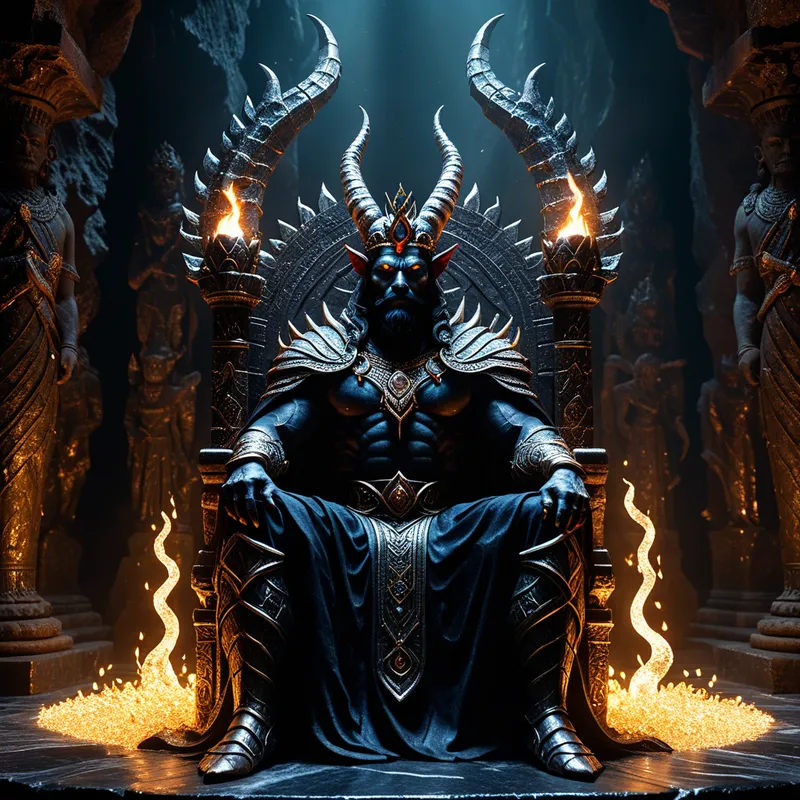
Ashmedai King of Demons Myth Meaning & Symbolism
A tale of a wise king who must trick and befriend the demonic ruler to build the Temple, revealing the necessity of confronting chaos to create sacred order.
The Tale of Ashmedai King of Demons
Listen, and hear a tale of wisdom, shadow, and stone.
In the days when Solomon’s wisdom was a sun that cast no shadow, a great work was ordained: the building of the Holy Temple. But the stones would not be cut by iron, for the mountain was sacred. The builders despaired. How to shape the foundation without profane tool? A whisper came to the king, a secret etched in the breath of angels: the Shamir, a living creature whose gaze could cleave rock. But it was lost to the world, guarded in the deepest well at the edge of creation by none other than Ashmedai, the great king of the demons.
So Solomon, son of David, set a trap not of force, but of cunning. He sent his trusted captain, Benaiah ben Yehoyada, to the mountain where Ashmedai dwelled. There was a well, sealed with a great stone, from which the demon king drank each day. They emptied into it cask upon cask of wine, until the well ran red and deep. They retreated and watched.
Ashmedai came, a mountain of shadow and majesty, his form shifting like heat haze over desert rock. He thirsted. He drank. He drank the entire well, and the potent wine coiled around his senses, pulling him into a stupor. Benaiah’s men rushed forward, casting a chain inscribed with the Shem HaMeforash around him. Ashmedai roared, and the earth shook, but the chain held the power of heaven. They brought him, bound, before Solomon’s glittering throne.
But a king, even of demons, is not a slave. Solomon demanded the Shamir. Ashmedai, his eyes like smoldering coals, laughed a sound like grinding stone. “You have bound my body, son of David, but not my will. I will give you what you seek, but you must give me something in return.” He asked for Solomon’s signet ring, the source of his power over the spirit world. In a moment of prideful certainty, Solomon agreed. The ring was given. The location of the Shamir was revealed.
For a time, the demon remained in the court, a dark star in Solomon’s constellation of wisdom. He answered riddles of the deep earth and the nature of desire. He spoke of the order of hells and the architecture of sorrow. Then, one day, as they walked the palace walls, Ashmedai asked Solomon if he wished to know the true measure of a king’s power. He stretched out his arm—and with a force that defied the chain, he cast Solomon from the walls, sending him tumbling into the dust of the road below. Ashmedai, wearing Solomon’s face and his ring, took the throne.
The true king became a wanderer, a beggar repeating a mad refrain: “I am Solomon! I was king!” For years, the demon ruled, his justice strange and his laws inverted, until the Sanhedrin, sensing a profound disorder, began to investigate the king who no longer knew the secret signs of the priesthood. They found the true Solomon in his rags. Through cunning and the rediscovery of the holy names, the ring was reclaimed. Ashmedai, confronted, gave a final, earth-shaking roar of frustration and vanished in a whirlwind, back to his mountain and his well. Solomon returned to his throne, humbled and infinitely wiser, and the Temple was built with the Shamir’s silent gaze.
Cultural Origins & Context
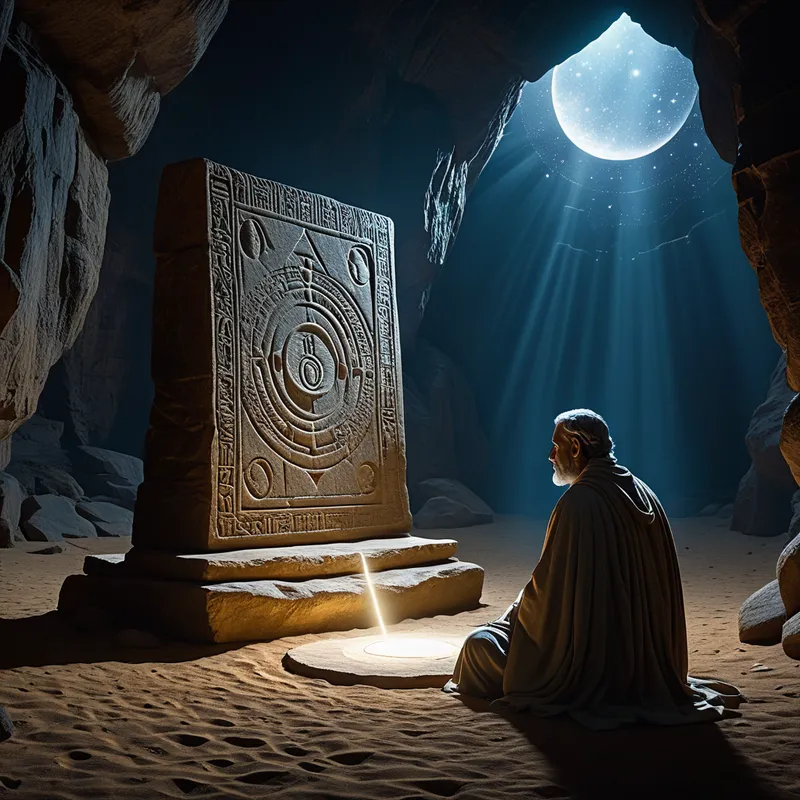
The myth of Ashmedai is woven from threads of Talmudic legend, primarily found in the Tractate Gittin. It belongs not to the canonical biblical narrative but to the rich world of Aggadah, where stories expand, explain, and explore the edges of theology and human nature. Told by rabbis and scholars, it functioned as a profound philosophical and psychological exploration. It asked: What are the limits of divinely granted wisdom? What is the nature of the chaotic, amoral forces that exist in creation? And how must even the wisest of rulers engage with them to enact a sacred order? The story served as a cautionary tale about hubris—Solomon’s belief that he could completely control the demonic—and a mystical assertion that even the building of God’s dwelling required a negotiation with the raw, chthonic powers of the world.
Symbolic Architecture
At its heart, the myth is a supreme allegory for the encounter with the Shadow. Ashmedai is not mere evil; he is the untamed, primordial force, the keeper of secrets (the Shamir) necessary for creation itself. He represents the part of reality—and the psyche—that is outside divine law, yet indispensable to it.
The sacred cannot be built by ignoring the profane; it must be shaped by engaging with it.
Solomon, the archetype of conscious order and logos, cannot complete his great work without the power guarded by the king of chaos. The binding chain represents the temporary imposition of ego-consciousness over the unconscious. But the subsequent exchange—the ring for the secret—signals a dangerous inflation. Solomon believes he can assimilate the Shadow without cost. Ashmedai’s usurpation is the inevitable consequence: the unconscious, once given a foothold (the ring of identity), overwhelms the conscious personality. The king’s exile is a descent into the madness of unrecognized selfhood, a necessary ordeal of humility where he must confront his own forgotten reality.
The Dreamer's Resonance
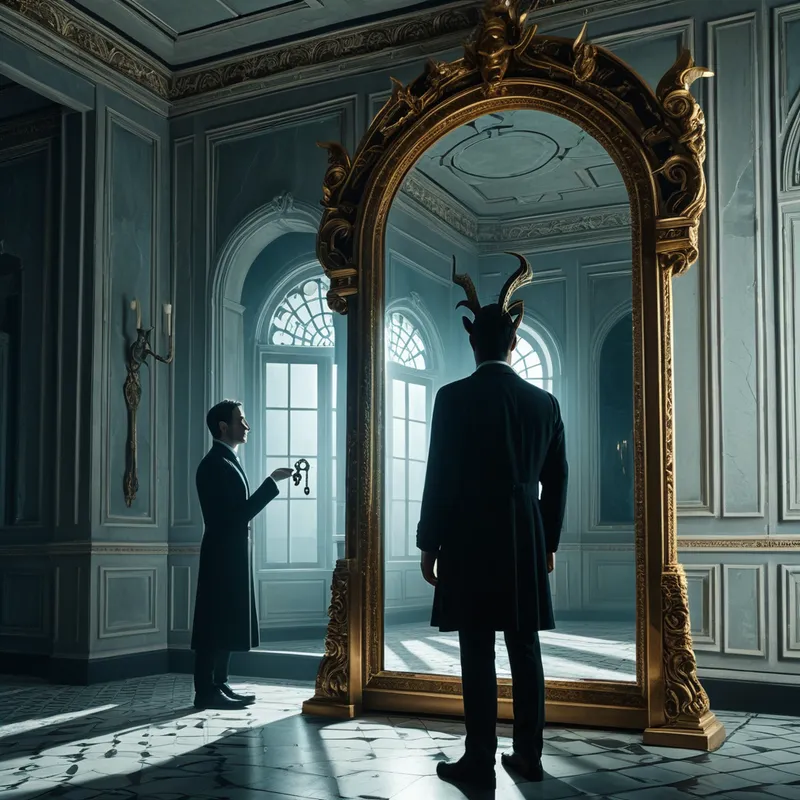
When this myth pattern stirs in modern dreams, it often manifests as dreams of being impersonated, of having one’s identity stolen at work or in a relationship, or of encountering a terrifying yet mesmerizing figure of immense authority in a liminal space (like a cavern or a ruined palace). The somatic sensation is often one of a “sinking stomach”—a visceral recognition of a profound personal truth being overturned.
This signals a critical phase in individuation. The dreamer’s conscious attitude (Solomon) has become too rigid, too identified with its own “wise” self-image. The unconscious (Ashmedai) rises up to dismantle this false edifice. The dreamer is being forced out of their psychic “throne room” and into the wilderness of their own neglected depths. The process is terrifying but purposive: to reclaim the authentic “ring” of self, one must first lose it to the shadowy usurper within.
Alchemical Translation
The myth models the alchemical nigredo, the blackening, the necessary dissolution of the king. Solomon’s project is the opus—the building of the integrated Self (the Temple). The Shamir is the paradoxical agent of transformation: a destructive power (it cuts stone) used for a sacred purpose. This is the insight that true growth requires engaging with our own destructive capacities—our rage, our pride, our cunning—and redirecting their energy.
The demon does not guard a treasure; he is the treasure, and the price is your crown.
The ordeal—the loss of the ring, the exile—is the ablutio, the purification through humiliation. Solomon returns not just as king, but as a king who has met the king of the underworld and survived. He has integrated the knowledge that order is not the absence of chaos, but a dynamic, hard-won covenant with it. The completed Temple symbolizes the Self that acknowledges its foundation was laid with the help of the demon, that wholeness includes the recognized and redeemed shadow.
Associated Symbols
Explore related symbols from the CaleaDream lexicon:
- Demon — The personified, sovereign aspect of the unconscious Shadow, representing amoral primal power, repressed desire, and the necessary adversary in the quest for wholeness.
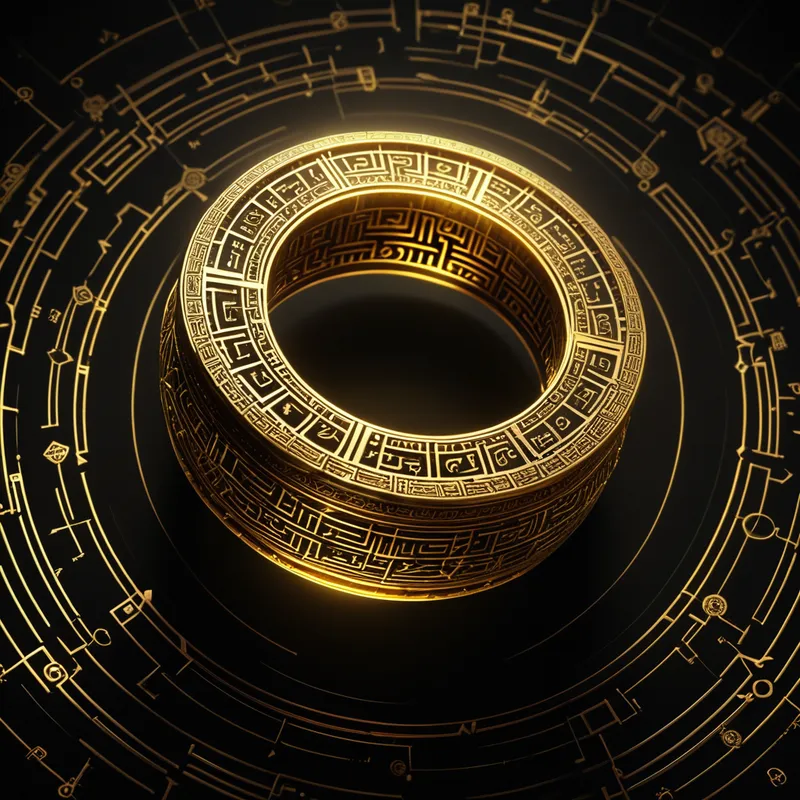
- Ring — The symbol of sovereign identity, magical power, and the covenant; its loss and recovery mark the dissolution and reintegration of the Self.
- Key — The secret knowledge (the Shamir's location) held by the Shadow, which unlocks the ability to shape and build the sacred structure of the integrated psyche.
- Temple — The ultimate symbol of the individuated Self, a sacred inner order constructed through the integration of both divine wisdom and chthonic power.
- Shadow — The core psychological concept embodied by Ashmedai: the totality of the unconscious personality, containing both inferior traits and vital, untapped creative forces.
- Mountain — The place of revelation and ordeal; the high place of Solomon's rule and the deep, chthonic dwelling of Ashmedai, representing the polarities of consciousness and the unconscious.
- Chaos — The primordial, unstructured state guarded and ruled by Ashmedai, which must be engaged with and shaped to produce sacred Order.
- Order — The conscious structure represented by Solomon's kingdom and the Temple, which cannot exist in a pure state but must be forged from an encounter with Chaos.
- Journey — Solomon's forced exile into the wilderness, representing the necessary descent into the unknown parts of the self to reclaim one's true identity.
- Stone — The foundational material of the Temple and the substance cut by the Shamir, symbolizing the hard, enduring aspects of reality and the self that must be shaped.
- Thunder — The voice and disruptive power of the demonic king, representing the shocking, awe-inspiring force of the unconscious when it breaks into conscious life.
- Wisdom — Solomon's initial gift, which is revealed to be incomplete without the dark, practical knowledge guarded by the Shadow, leading to a transformed, deeper wisdom.