Arcadia Myth Meaning & Symbolism
The myth of a primordial, mountainous paradise, ruled by the god Pan, where humanity lived in perfect, untroubled harmony with the wild earth.
The Tale of Arcadia
Listen. Before the clamor of cities, before the measured tread of armies, before the very concept of ‘history’ was born, there was a place. It was not a city of men, but a kingdom of the earth itself. Its name was Arcadia.
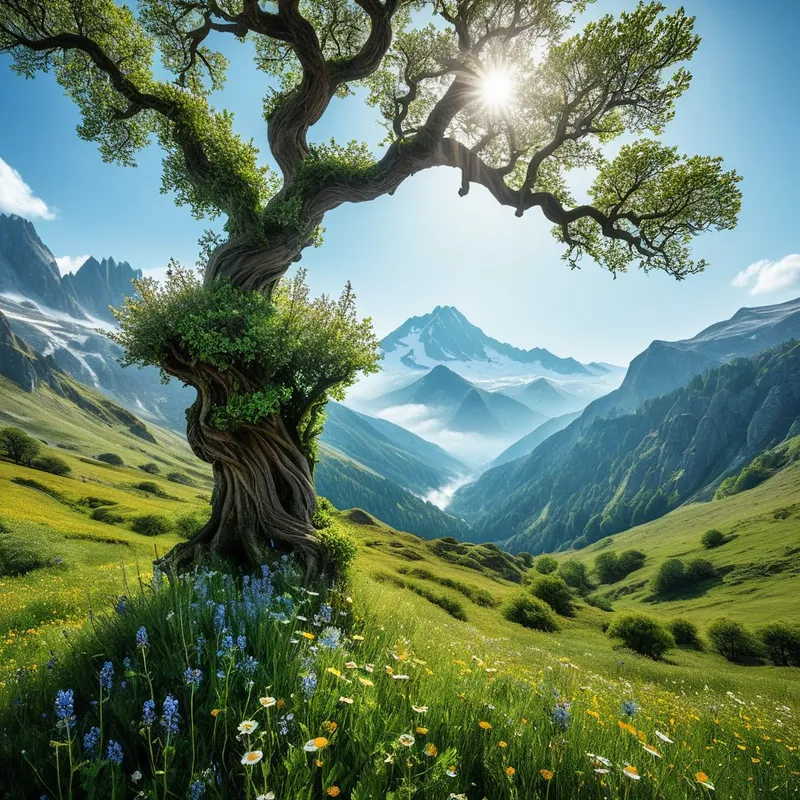
Here, the mountains were not barriers but the very bones of the world, cloaked in forests so deep and dark they whispered with the voices of the first days. The air was cool and sharp with the scent of pine and damp earth. Crystal streams, born from the tears of the Oreads, tumbled over stones worn smooth by eternity. Oak trees, ancient and gnarled as sleeping titans, held council in silent groves.
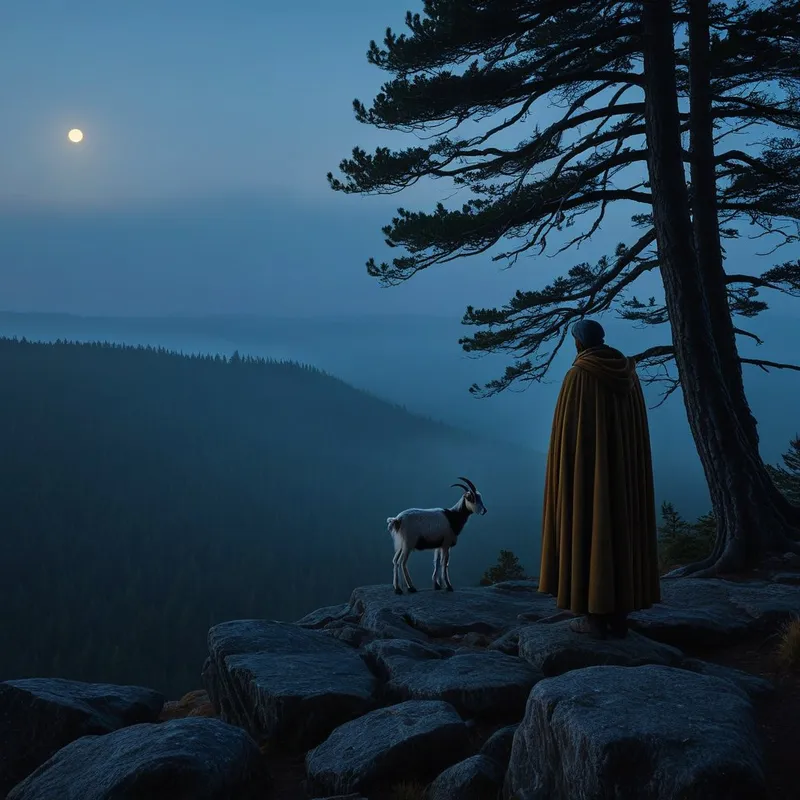
This was the domain of Pan. You would hear him before you saw him—a sudden, echoing melody from a shepherd’s pipe, the syrinx, that was neither entirely joyful nor sad, but held the wild truth of all things. His laughter was the rustle of leaves in a sudden wind; his anger, the terrifying stillness before a storm in the high passes. He was the soul of the place, goat-legged and horned, a shape that blurred the line between man, beast, and god.
The people of this land were not like others. They did not build walls to keep the wild out, for they were of the wild. They were the Proselenoi, the “before-the-moon” people, living in a time of perpetual, golden-hued twilight. Their conflict was not with each other, nor with the gods on high Olympus. Their only struggle was the gentle, daily rhythm of existence: tending flocks that wandered free, gathering acorns from the sacred oaks, and listening. Always listening to the land.
There was no grand war here, no epic quest for a golden fleece. The drama was the turning of the seasons. The rising action was the hunt, a sacred chase through dappled glades where hunter and prey were part of the same divine dance. The resolution was the evening hearth, the shared meal, the stories told under a canopy of stars so bright they seemed like holes in the fabric of night, revealing the pure fire of the Ouranos beyond.
This was the world as it was meant to be—a perfect, unspoken pact between humanity and the untamed world. A harmony so complete it needed no name, until the world outside gave it one: Arcadia. And then, as all tales of paradise must whisper in their final breath, it became a memory. Not lost to cataclysm, but to time, to the slow, inexorable turning of the world away from that primal intimacy. The music of the syrinx grew fainter, heard only in dreams and in the deep, quiet heart of the mountains that remembered.
Cultural Origins & Context
The Arcadia of myth is not a mere geographical region of the Peloponnese, though it shares its name. It is a cultural dream, a psychic artifact born from the Greek imagination’s confrontation with its own civilizing process. As the poleis like Athens and Sparta rose, with their complex laws, sophisticated arts, and political strife, the collective psyche conjured its opposite: a place untouched by these developments.
This myth was not codified in a single epic like the Iliad. Instead, it was woven through the fabric of Greek culture. It lived in the pastoral poetry of Theocritus, who idealized the simple life of shepherds. It was crystallized by the Roman poet Vergil in his Eclogues, transforming Arcadia into the definitive literary symbol of rustic bliss. Its societal function was multifaceted: a nostalgic critique of urban complexity, a spiritual touchstone for a connection to nature (embodied in the widespread worship of Pan), and a philosophical concept representing a prelapsarian state of natural virtue and happiness, explored by thinkers musing on the nature of civilization itself.
Symbolic Architecture
Arcadia is not a location on a map, but a coordinate in the human soul. It represents the primal unity—the state of consciousness before the birth of the ego that separates “I” from “Thou,” and humanity from the world.
Arcadia is the psychic substrate, the undifferentiated ground of being from which all consciousness and complexity emerges, and to which it secretly longs to return.
Pan is its ruling archetype. He is not the civilized Apollo with his lyre of measured harmony, but the god of the unconscious wild. His hybrid form symbolizes the unbroken continuity between human instinct, animal vitality, and divine immanence. The haunting music of his syrinx is the call of this undifferentiated state—a sound that evokes both profound peace and a touch of primal terror, the panic that bears his name. The Arcadians themselves, the Proselenoi, symbolize the innocent consciousness that lives within this unity, unaware of its own separation.
The myth’s central “event” is, paradoxically, a non-event. It is the absence of history, conflict, and linear narrative. This is its most powerful symbol: a state of being where the psyche is not driven by desire, lack, or heroic striving, but exists in a self-sufficient, cyclical present.
The Dreamer's Resonance
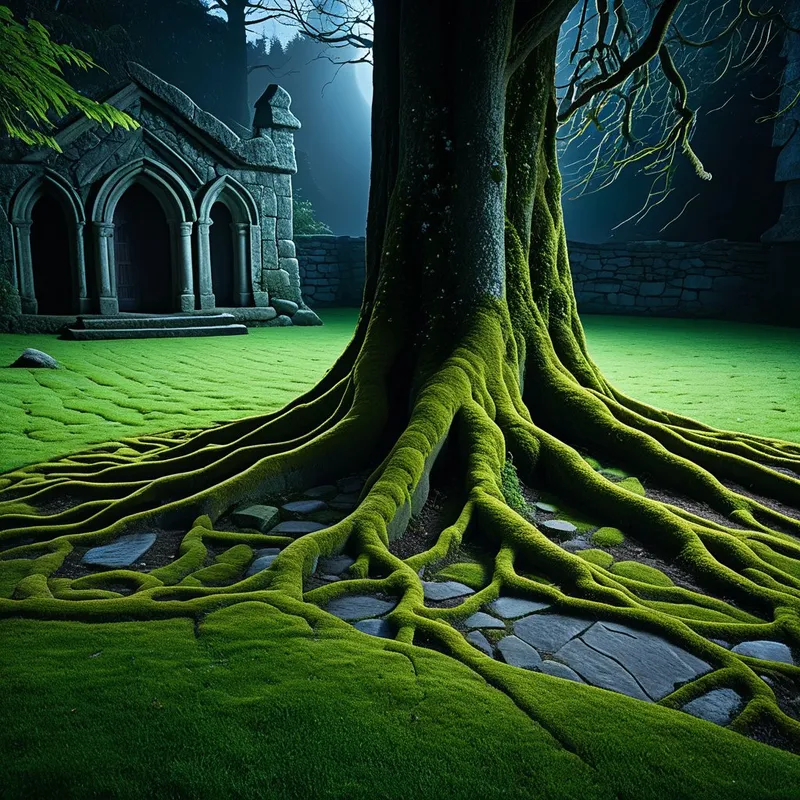
When the myth of Arcadia stirs in the modern dreamer, it rarely appears as a literal pastoral scene. Its resonance is more subtle, more somatic. One might dream of finding a hidden, overgrown garden behind their childhood home, or a silent, sunlit clearing in a familiar but impossibly vast forest. There is a palpable quality of peace, of weightlessness, and of profound belonging.
Psychologically, this signals a process of regression in service of the ego—not a pathological retreat, but a necessary homecoming. The conscious mind, weary from the fragmentation and performance of modern life, seeks the nourishing waters of the unconscious. The dream is an invitation to temporarily dissolve the rigid boundaries of the persona, to let the “civilized” self be quieted by the older, wilder music of the psyche.
The somatic experience can be a deep, releasing sigh held in the body for years, a feeling of the ground becoming solid and supportive beneath one’s feet, or a sudden, inexplicable welling of tears at the sight of something simple and natural—a single tree against the sky, the pattern of rain on a window. It is the soul recognizing its native country.
Alchemical Translation
The alchemical journey is often framed as a heroic opus of struggle and transformation. Arcadia presents the crucial, often overlooked first matter: the prima materia. It is the original, unspoiled state of the soul that must be remembered before it can be profitably worked upon. The modern individuation process does not begin with fighting dragons, but with remembering the garden.
The alchemy of Arcadia is the Negredo not of despair, but of simplicity. It is the black, fertile earth of the unconscious, teeming with potential life, before the seed of the differentiated self is planted.
For the individual, the “core struggle” modeled by this myth is the struggle to allow this regression, to grant oneself permission to seek this inner stillness without labeling it as escapism or failure. The “triumph” is the rediscovery of this inner ground. It is the transmutation of burnout into vitality, not by adding more, but by connecting to the original, undemanding source.
This is not the end of the journey. One cannot live permanently in Arcadia; even the myth acknowledges it is lost. But one can return to it as a sacred inner sanctuary. The modern individual must learn to be a citizen of two worlds: the complex, differentiated world of culture and achievement, and the simple, unified world of the Arcadian self. The true alchemical gold is the capacity to move between them, letting the peace and wholeness of the latter inform and heal the endeavors of the former. We do not conquer Arcadia. We remember we are from there, and we carry its music within us, a syrinx whose notes can soften even the hardest, most civilized heart.
Associated Symbols
Explore related symbols from the CaleaDream lexicon: