
Aphrodite's golden apple - the Myth Meaning & Symbolism
A golden apple inscribed 'for the fairest' sparks a divine beauty contest, leading to a mortal prince's fateful judgment and the seeds of epic war.
The Tale of Aphrodite's golden apple - the
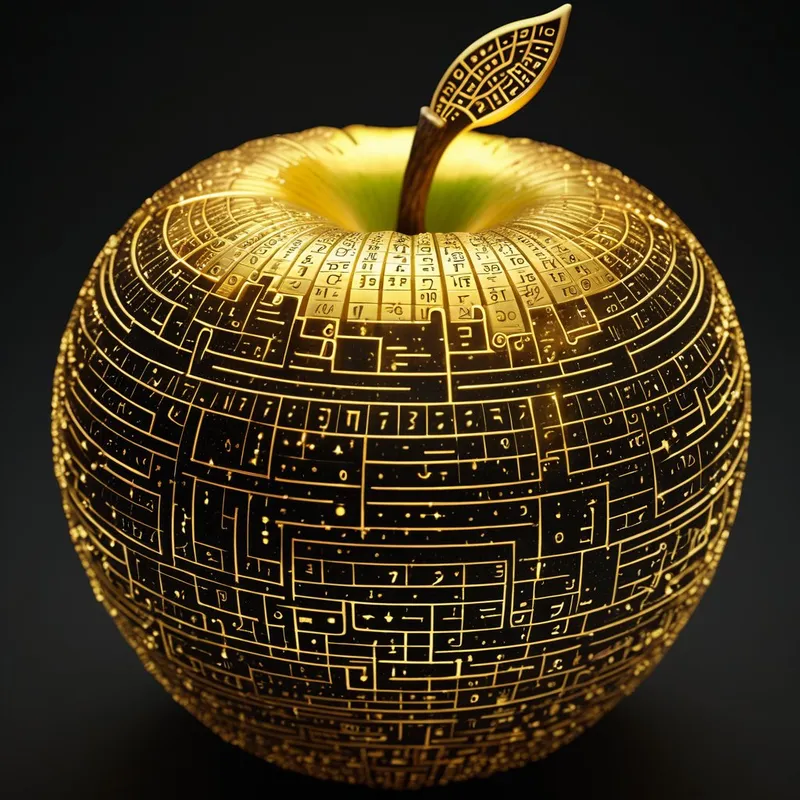
The air on Olympus was thick with the scent of ambrosia and the silent, simmering rivalries of the gods. It was a day of celebration, the wedding of the sea-nymph Thetis to the mortal hero Peleus. All were invited, all but one: Eris, whose very presence was a curse. Spurned and burning with a cold fury, she did not stay away. She came as a shadow to the edge of the festivities and cast her weapon—not a spear, but a promise. A single, flawless apple of purest gold, which rolled with a sound like thunder across the marble floor to land at the feet of the mightiest goddesses. Upon it, a phrase was etched in divine script: ΤΗΙ ΚΑΛΛΙΣΤΗΙ—For the Fairest.
The music died. The laughter ceased. In the sudden, brittle silence, three figures stepped forward. Hera</ab title>, regal and terrible in her majesty, her eyes holding the promise of empires. Athena, clad in gleaming armor, her gaze sharp with intellect and the glory of victory in battle. And Aphrodite, who needed no armor, for her power was the very air they breathed; she stood with a knowing smile, the scent of roses and the sea clinging to her.
“It is mine,” each declared, and the heavens trembled with their dispute. No god, not even Zeus himself, dared judge between them. So the poisoned apple was cast down to the mortal world, to a shepherd prince on the slopes of Mount Ida. His name was Paris, raised far from the gilded halls of Troy, unaware of his royal blood.
The mountain air grew heavy, then split with light. The three goddesses appeared before him, not as visions, but in terrible, breathtaking reality. They bade him choose. Hera offered all the kingdoms of the earth, the scepter of limitless power. Athena promised wisdom unmatched and fame as the greatest warrior of his age, his name sung for millennia. Then Aphrodite stepped forward. She did not speak of thrones or glory. She simply loosened the clasp of her shimmering robe, and in that gesture was the sum of all mortal yearning. She offered him the love of the most beautiful woman in the world.
Paris, the shepherd, the prince, the man, looked into the eyes of Power, the eyes of Glory, and the eyes of Desire. The apple grew heavy in his hand. The world held its breath. He reached out, and placed the golden fruit into the waiting hand of Aphrodite. In that moment, the fates of gods and men were woven into a single, tragic thread. For the most beautiful woman was Helen, and his prize would be a war that burned the world, and a city of ash. The apple was given, and the first stone of Troy’s fall was laid.

Cultural Origins & Context
This is not merely a Greek myth; it is a foundational node in the vast, interconnected network of Indo-European storytelling, a “global” tale in its exploration of universal human triggers. Known as the Judgment of Paris, its most complete surviving telling comes from the epic cycle poems that surrounded Homer’s Iliad, later refined by Roman poets like Ovid. It functioned as the essential prologue, the “why” behind the decade-long Trojan War. Bards would sing it not just as a story of divine pettiness, but as a profound etiology of suffering: how the grandest conflicts spring from the smallest, most personal seeds of envy, vanity, and choice.
In a society where honor (timē) and glory (kleos) were the currencies of immortality, the myth presented a devastating question. Paris’s choice was a rejection of the traditional heroic values embodied by Athena (prowess, wisdom) and Hera (sovereignty, order) in favor of the personal, chaotic, and destabilizing force of eros, championed by Aphrodite. It was a cautionary tale about the catastrophic cost of prioritizing personal desire over civic duty and cosmic order, explaining the “great why” behind a war that defined an age.
Symbolic Architecture
The myth is a perfect symbolic engine. At its core is the Apple of Discord itself. It is not a fruit, but a mirror. Inscribed “for the fairest,” it does not create discord but reveals the latent, unacknowledged vanity and rivalry that already exists. It objectifies the question of value: what is the highest good? Power? Wisdom? Love?
The apple is the unintegrated Self, a shining, whole object that, when projected upon, shatters the psyche into competing partial identities.
The three goddesses represent a trinity of archetypal life-paths or psychic forces available to the individual (and the culture). Hera is the Archetype of Sovereignty and Structure—the lure of social power, legacy, and institutional authority. Athena is the Archetype of Conscious Strategy and Craft—the path of intellect, disciplined skill, and victory through wisdom. Aphrodite is the Archetype of Erotic Attraction and Animate Connection—the call of beauty, passion, sensual experience, and personal, soul-stirring relationship.
Paris, the “judge,” represents the human ego at the crossroads of destiny. His choice is never free, for it is dictated by his own unconscious composition. He is not a hero of action, but of selection, and in choosing one goddess, he inevitably incurs the wrath of the others. This is the law of psychic economy: to fully embrace one archetypal energy is to exile its opposites, which then return as fateful, destructive forces (the wrath of Hera and Athena manifesting as the Greek armies).
The Dreamer's Resonance
When this myth stirs in the modern dreamscape, it rarely appears with classical drapery. The dreamer may find themselves in a sterile boardroom, a lab, or a blank hallway, presented with three doors, three job offers, or three potential partners. The overwhelming pressure of an “impossible choice” is the somatic signature. This is the psyche presenting its own divine tribunal.
The golden apple in a dream might be a glowing smartphone, a coveted award, a house key, or simply an inexplicable, radiant object that everyone wants. The dreamer, like Paris, feels both powerful in being chosen to judge and terrified of the consequences. This dream pattern emerges at life’s genuine crossroads—career shifts, commitment decisions, ethical dilemmas—where the path forward requires not just action, but a prioritization of core values. The anxiety is the ego sensing the archetypal stakes: whichever “goddess” you choose, you must make peace with the parts of life (and yourself) you will inevitably neglect or offend.

Alchemical Translation
The alchemical work modeled here is not in making the “right” choice, but in integrating the tribunal. The initial myth depicts a fatal splintering: one value is absolutized at the expense of all others, leading to catastrophe. The individuation process involves retrieving the apple from the three goddesses and recognizing it as one’s own inner unity.
The goal is not to judge between Hera, Athena, and Aphrodite, but to host them all at the same table, to acknowledge that the ego must serve, but not be enslaved by, each.
First, one must confront the Eris within—the inner capacity for discord, envy, and disruptive comparison that forces latent conflicts to the surface. This “strife” is not an enemy, but the necessary friction that initiates the work. The alchemist then engages in the sacred discriminatio: consciously examining the offerings of Power (Hera), Wisdom (Athena), and Desire (Aphrodite) not as external prizes, but as potential modes of being.
The true transmutation occurs when the seeker understands that the golden apple—the sense of wholeness and value (“the fairest”)—cannot be granted by any external archetype. It must be earned through the difficult, ongoing work of holding the tension between these competing inner claims. To build a life with the structure of Hera, informed by the wisdom of Athena, and animated by the passion of Aphrodite is the opus. The war (the inner conflict) ends not when one side wins, but when the psyche becomes a Troy capable of containing all its gods, turning the apple of discord into the philosopher’s stone of a coherent, multifaceted self.
Associated Symbols
Explore related symbols from the CaleaDream lexicon: