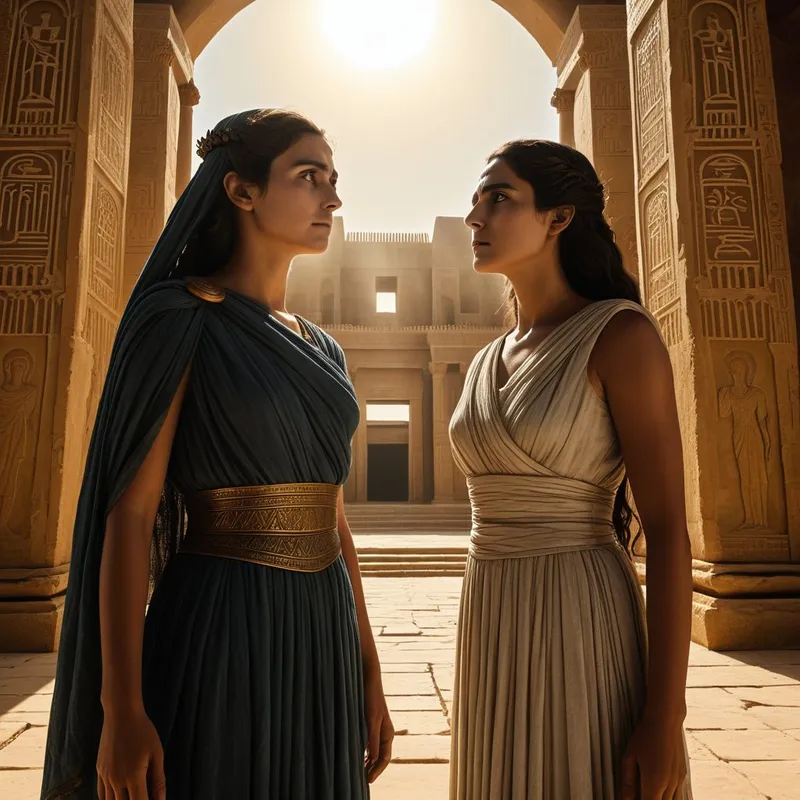
Antigone and Ismene Myth Meaning & Symbolism
Two sisters embody the soul's eternal conflict between defiant, sacred duty and pragmatic, earthly survival in the shadow of a cursed family.
The Tale of Antigone and Ismene
Listen. The story begins not with a birth, but with a death. Not one, but two. The air over Thebes is thick with the dust of fratricide. Two brothers, Eteocles and Polyneices, lie slain by each other's hand, their blood soaking the same patch of cursed earth their father, Oedipus, once walked.
Into this silence of shock step the sisters, the last daughters of the house of Labdacus. Antigone, her face carved from the same stone as her resolve, feels the law of the gods like a physical weight in her bones—the unwritten, eternal command to honor the dead, to grant her brother Polyneices the simple rite of burial, lest his soul wander forever. Ismene, her eyes wide with the terror of the living, sees only the new edict nailed to the palace gates, its words cold and final: the king, their uncle Creon, has declared Polyneices a traitor. His body is to rot, food for dogs and carrion birds. To touch it is to die.
The confrontation between them is a quiet storm. In the shadowed women's quarters, Antigone’s whisper is a blade. "Will you help me lift his body? Will you share the labor and the danger?" Ismene’s reply is a breath of despair. "We are women," she pleads, her voice trembling. "We cannot fight against men. We are ruled by the stronger. I must obey." Her love is real, but it is a love that kneels. Antigone’s love is a love that defies. "Then be what you seem," Antigone says, her words leaving a chill. "I will bury him. And if I die for it, good. I will lie with the one I love, a holy criminal."
So Antigone goes alone. Under a pitiless sun, she finds her brother’s corpse, a dark shape on the plain. With her bare hands, she scatters three handfuls of dry, thirsty dust—a token burial, a sacrament of dust. The guards catch her, dragging her before Creon. She does not deny it. She proclaims it. "Your law was not the law of Zeus," she tells the king, her uncle. "The justice of the gods below knows no such decree." Creon, his authority brittle as old clay, sees only rebellion. He sentences her to be entombed alive in a rocky cave, a living descent into Hades.
Ismene, her courage arriving too late, rushes in, begging to share the guilt, the sentence. But Antigone refuses her. "You chose life," she says, a final, terrible boundary drawn. "I chose death." They lead Antigone away. In the tomb, she hangs herself. Her death unleashes the chain of tragedy: her betrothed, Creon’s son Haemon, falls on his own sword over her body. Creon’s wife, hearing of her son’s death, takes her own life. Creon is left standing in a palace of ghosts, his worldly power a hollow shell, the gods' justice complete. And Ismene? The story leaves her in the silent aftermath, the sole survivor, bearing the unbearable weight of having chosen to live.
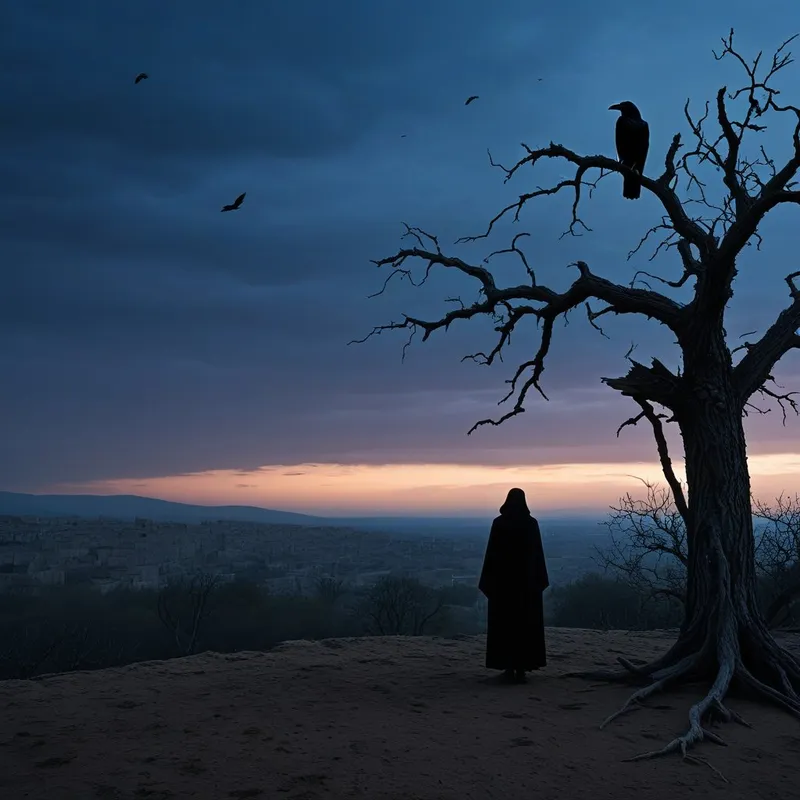
Cultural Origins & Context
This myth is the beating heart of Sophocles's play Antigone, part of the Theban cycle of legends that fascinated the Greek world. Performed in 5th century BCE Athens during the City Dionysia, it was not mere entertainment but a vital civic and religious ritual. The audience, living in a nascent democracy constantly negotiating the tension between individual conscience (nomos) and state law (polis), saw their deepest conflicts mirrored on stage.
The myth functioned as a cultural crucible. It asked the polis: Where does true authority lie? In the decrees of man or the unwritten, timeless laws of the gods (agraphoi nomoi)? The characters are not psychological case studies but archetypal forces: Antigone embodies the absolute claims of family duty and divine ordinance; Creon, the absolute claims of state security and political order; Ismene, the human voice of caution, survival, and tragic compromise. The storyteller, through the chorus, guides the audience through this moral labyrinth, offering no easy answers, only the devastating consequences of absolute positions. It was a collective meditation on hubris, piety, and the limits of power, ensuring the myth’s transmission not as a fable, but as a perennial question etched into the Western soul.
Symbolic Architecture
At its core, the myth presents the psyche’s fundamental schism. Antigone and Ismene are not two women, but two inseparable, warring principles within a single soul.
Antigone is the archetype of the Psychic Imperative. She represents the soul's non-negotiable truth, the inner law that, when violated, causes the very core of one's being to sicken. Her action is not political, but religious—a hieros gamos (sacred marriage) with death itself to preserve a cosmic order.
Ismene is the archetype of the Ego's Compromise. She is the voice of realism, adaptation, and social preservation. She loves as deeply, but her love is filtered through the lens of the possible. She is not cowardly, but conscious of context, of consequence, of the brutal mechanics of the waking world.
The unburied body of Polyneices is the symbol of the repressed, the dishonored, the aspect of our history or psyche deemed "traitorous" by our inner Creon (the rigid, ruling consciousness). Antigone’s ritual is the act of acknowledgment, however token, that must be performed for the soul to find peace. Creon’s tomb is not just a prison; it is the logical end of a consciousness that walls off the imperative—it becomes the sealed chamber where the soul, denied expression, turns its life-force against itself.
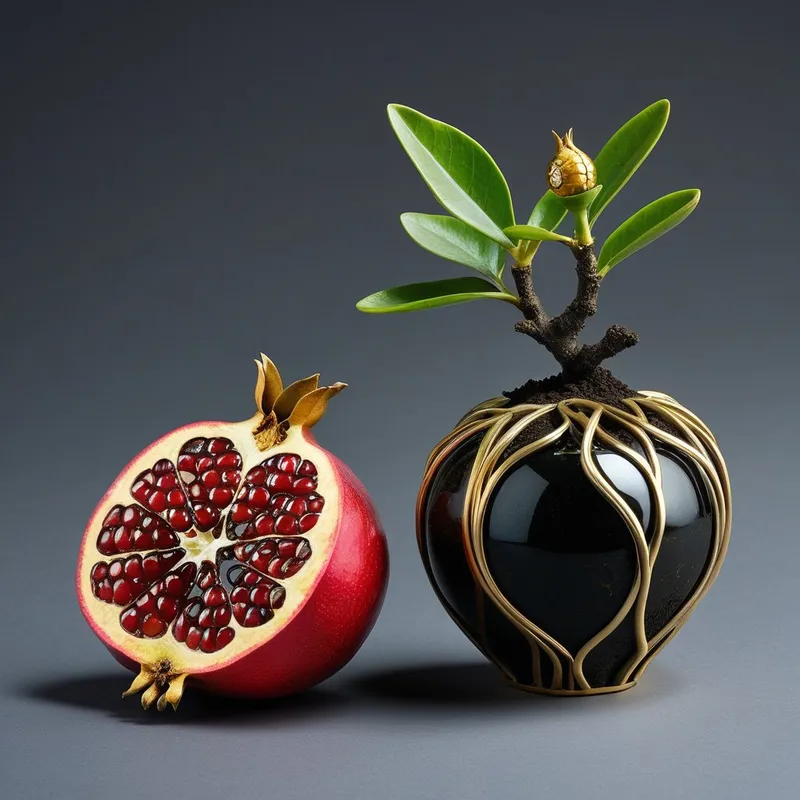
The Dreamer's Resonance
When this myth stirs in modern dreams, it signals a critical inner crossroads. You may dream of two sisters or brothers arguing fiercely over a forgotten grave, a locked door, or a family secret. You may be Ismene, paralyzed in an office, watching a colleague (Antigone) speak a devastating truth you know you should also speak, but cannot. You may be Antigone, desperately trying to bury a beloved pet or object in a public place where it is forbidden, flooded with a sense of sacred urgency.
Somatically, this is the experience of a "loyalty split." The body feels torn. A tightness in the chest (the heart's truth) battles with a knot in the stomach (the gut's fear). The dreamer is caught between the deep, often inconvenient call of the Self—to honor a neglected talent, to leave a soul-killing job, to confront a family pattern—and the ego's terrified, pragmatic calculations for safety, approval, and survival. The dream presents the conflict in its raw, archetypal form, forcing the dreamer to witness the two inner sisters in their stark, irreconcilable positions.

Alchemical Translation
The alchemical work modeled here is not about choosing Antigone over Ismene, or spirit over matter. It is the agonizing process of holding the tension between them until a third, transcendent position emerges—a consciousness that integrates the imperative and the adaptation.
The prima materia is the cursed family inheritance—the neurotic patterns, the traumas, the "sins of the fathers" we all carry. Polyneices' unburied corpse is this unprocessed material.
Antigone’s act is the nigredo, the blackening. It is the conscious, defiant descent into the taboo, the willingness to be labeled "wrong" or "crazy" by the inner and outer Creon to perform the essential, soul-making act of acknowledgment. This is the necessary rebellion that cracks the ego's tyranny.
Ismene’s survival is the albedo, the whitening. It represents the necessary, grieving wisdom that not every truth can be lived absolutely in the world without destruction. Her function is to carry the memory, the human cost, the story forward.
The ultimate goal is not Antigone’s martyrdom nor Ismene’s silent suffering, but the avoidance of Creon’s fate—the rigid consciousness that annihilates all life around it. The alchemical gold is a consciousness that can hear Antigone’s imperative and Ismene’s caution, that can find a way to "bury the dead" with wisdom, not just defiance; to honor the soul’s law with a creativity that seeks to preserve, not just destroy, one's place in the human community. It is the birth of an ethical life that answers to both heaven and earth, where duty to the soul and responsibility to the world are in constant, sacred, and creative negotiation.
Associated Symbols
Explore related symbols from the CaleaDream lexicon: