Antaeus Myth Meaning & Symbolism
A Libyan giant, son of Gaia, invincible while touching his mother Earth, until Heracles lifts him into the air and crushes him.
The Tale of Antaeus
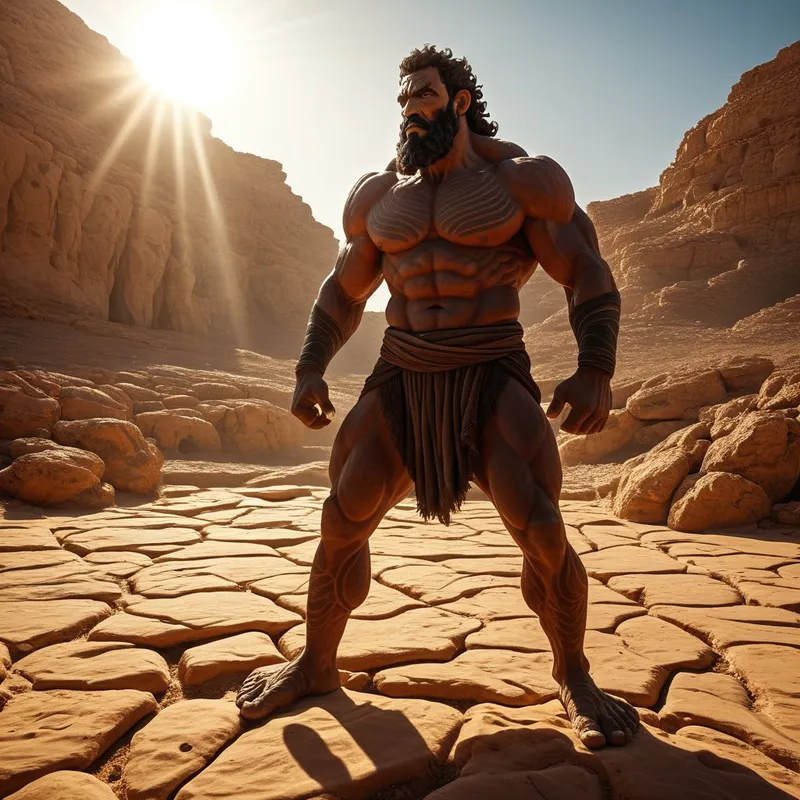
Hear now of the strength that is not strength, and the fall that is a rising. In the burning lands of Libya, where the sun is a hammer and the earth a forge, there dwelt a giant. Not of the Titans, nor of the later brood, but a son born of the deep, dreaming heart of the world itself. His name was Antaeus, and his mother was Gaia, the Earth.
He was a king of that barren place, and his law was the law of the wrestler. Any traveler who crossed his desolate realm was forced to a contest. Antaeus would challenge them, his laughter booming like stones tumbling in a dry riverbed. His strength was terrible, a flood of power that seemed without end. One by one, he would take these wayfarers, crush them in his immense grip, and add their skulls to the pillars of his father, Poseidon, a grim temple to his own invincibility.
For his power had a secret, whispered by the wind through the cracks in the ground. It was not his own. Every time his feet, broad and calloused, pressed against the dust and stone of Libya, his mother Gaia breathed her vitality into him. It was a transfusion of primal force, the very essence of life rising from the deep soil into his veins. To throw him down was only to renew him; contact with the ground was a resurrection. He was unconquerable, a true son of the Earth, and his hubris grew like a gnarled tree in that wasteland.
Then came the one whose labors were his legend. Heracles, the son of Zeus, weary and dust-caked from his own impossible journey to fetch the golden apples of the Hesperides, crossed into Antaeus’s domain. The giant saw him and smiled, a crack in a cliff face. The challenge was given, the ritual begun.
They grappled under the pitiless sun. Heracles, mightiest of mortals, felt a shock like he had never known. He threw the giant with a thunderous crash, but Antaeus rose stronger, laughing, the earth itself seeming to surge upward to meet him. Again and again, Heracles used his god-given strength, and again and again, Antaeus sprang back, revitalized, his power swelling with each contact with his mother. The hero’s muscles screamed; his breath came in ragged gasps. He was not fighting a giant, but the very land.
In that moment of exhaustion and clarity, a divine insight, perhaps from his patroness Athena, pierced the heat haze. He saw the truth not with his eyes, but with his spirit. The giant’s strength was not within; it was a loan, a cord that tied him to the ground.
With a final, desperate roar, Heracles locked his arms around the giant’s torso in a crushing bear hug. He planted his feet, called upon the last dregs of his own, unaugmented might, and lifted. He lifted Antaeus clear of the earth. The giant’s laughter died in his throat, replaced by a gasp of pure terror. The connection was severed. The flow of power ceased. Heracles felt the life, the terrible borrowed vitality, begin to drain from the giant’s form like water from a broken vessel. And there, suspended between the earth and the sky, denied his source, Antaeus weakened, faded, and was crushed. The invincible son of Gaia fell, not to a greater strength, but to a greater understanding.
Cultural Origins & Context
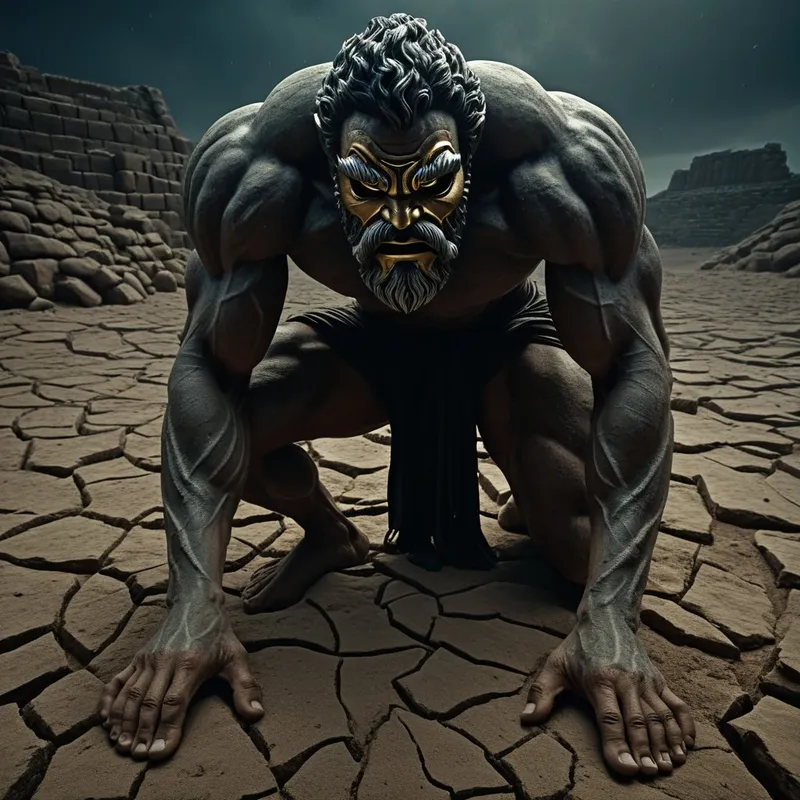
The myth of Antaeus comes to us primarily from the later Greek mythographic tradition, most notably in the accounts of Pseudo-Apollodorus. It functions as an episode within the larger cycle of the Labors of Heracles, specifically during his journey to the Garden of the Hesperides. This placement is significant. Heracles, on a quest for objects of ultimate value (the golden apples), must first overcome a challenge that tests not just brute force, but wit and perception.
The story served multiple societal functions. On one level, it was an etiological myth, explaining the barren, bleached-bone landscape of Libya—a land “tamed” by the hero. On another, it was a parable of Greek cultural identity pitted against the “other.” Antaeus, the Libyan giant, represents a raw, chthonic, and territorial power, deeply tied to a specific place. Heracles, the pan-Hellenic hero, represents a mobile, strategic, and civilizing force. The myth reinforces the Greek ideal of metis (cunning intelligence) triumphing over mere bia (brute force), even when that force seems supernatural. It was a story told to illustrate that no power, however great, is absolute if one can discern and sever its source.
Symbolic Architecture
At its core, the myth of Antaeus is a profound allegory for the relationship between the ego and its source of vitality. Antaeus represents a specific state of consciousness: one that is powerful, but entirely dependent on an external, unconscious source for its identity and strength.
The ego that knows only its borrowed strength is doomed the moment it is lifted from its source. True strength is that which you can carry with you into the void.
His mother, Gaia, symbolizes the unconscious, the earthly, instinctual, and ancestral foundation of the psyche. Antaeus’s invincibility is the inflation of an ego that believes its power is self-generated, when in fact it is in a state of perpetual enmeshment with the primal mother. He is not an individual, but an appendage of the Earth. His challenge to all travelers is the defense of this undifferentiated state—a refusal to be truly confronted or changed.
Heracles, in this symbolic reading, is the emerging consciousness, the heroic aspect of the psyche tasked with individuation. His initial attempts—using his own considerable, but conventional, strength—fail because he is fighting on the giant’s terms, within the giant’s paradigm. His triumph comes from a shift in strategy: he does not defeat the power, he understands it. Lifting Antaeus represents the critical act of psychological differentiation: separating the ego-complex from its unconscious, animating source to examine it, to see it for what it is. The crushing is not merely a physical victory, but the necessary dissolution of an outdated, dependent structure of the self. The power must be integrated, not merely channeled.
The Dreamer's Resonance
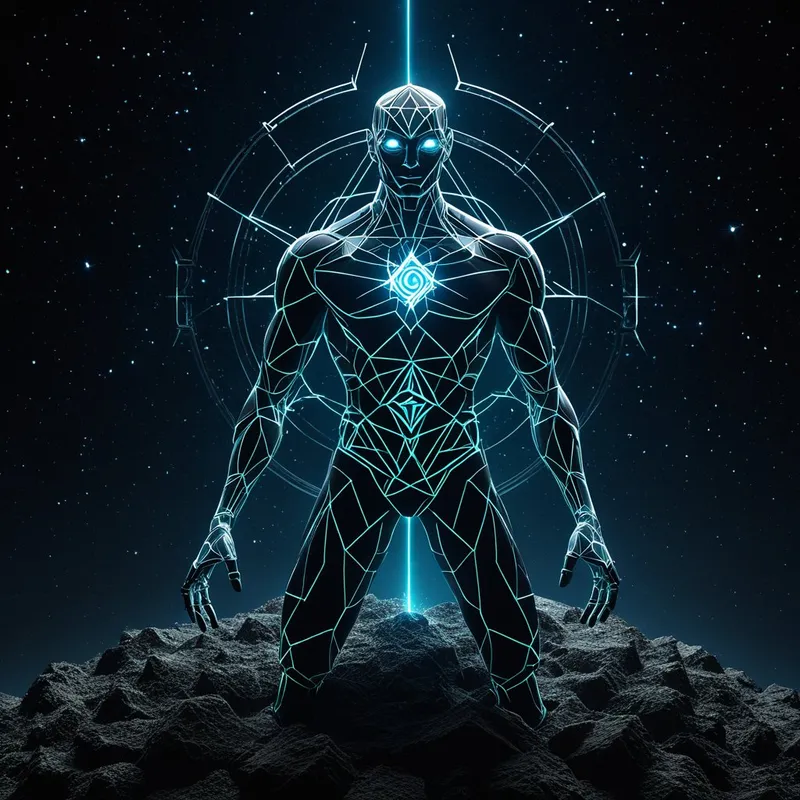
When this myth stirs in the modern dreamer, it often signals a profound crisis of grounding and identity. To dream of being Antaeus—feeling immensely powerful in a specific context (a job, a relationship, a role) but experiencing a terrifying, draining weakness when removed from it—points to a recognition of borrowed power. The somatic feeling is one of rootlessness, vertigo, and enervation. The dreamer may feel their “feet have been cut out from under them.”
Conversely, to dream in the role of Heracles, struggling to lift a heavy, earth-bound adversary, speaks to the psyche’s labor to differentiate. It is the hard work of lifting a dependent part of the self (a habit, a identification, a trauma) out of the fertile but confining soil of the unconscious and into the light of conscious awareness. This dream often comes with a feeling of immense strain and isolation, but also with a flicker of revelatory insight. The landscape of such a dream is frequently a wasteland—a personal Libya—representing a psychological state that has been stripped bare by the conflict, awaiting renewal on new terms.
Alchemical Translation
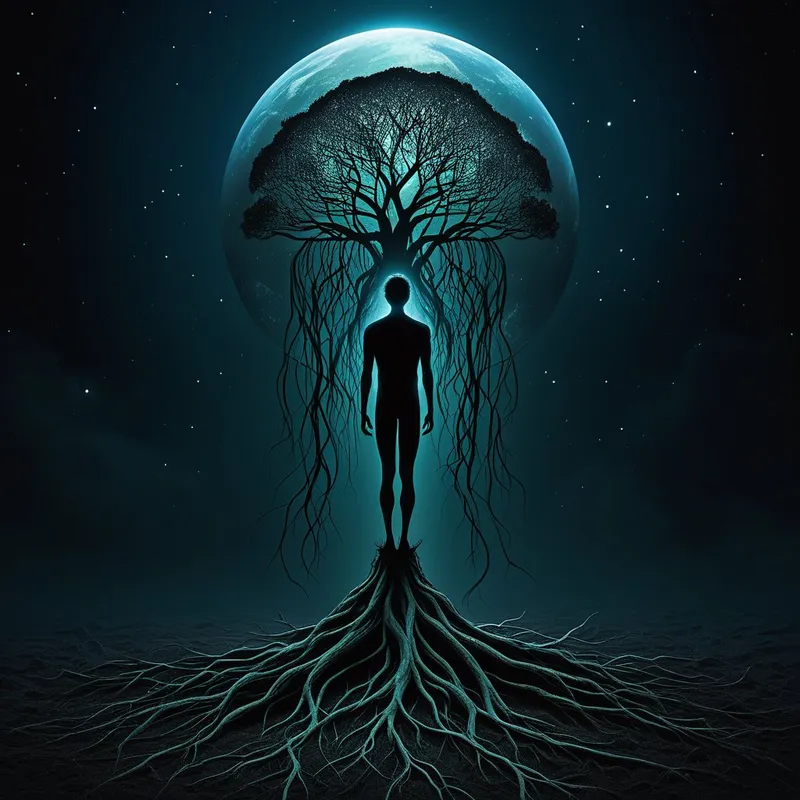
The alchemical process mirrored in Antaeus’s fall is the separatio—the essential separation of components that were fused in a primal, massa confusa. The psyche begins in a state of unconscious unity with the archetypal mother (Gaia). This grants life and potent, instinctual energy—the prima materia of the self. However, for the work of individuation to begin, this fusion must be broken.
Antaeus is the personification of the prima materia that refuses the work. He is content to be an eternal, powerful child of the Earth. Heracles’s labor is the ego’s first, truly heroic act: to enact the separatio against the will of the unconscious itself. Lifting the giant is the sublimatio—the lifting of the earthly into the realm of spirit and consciousness. It is a brutal, airless, and terrifying process.
The crushing is the mortificatio, the necessary death of an old form. But it is not an end. The borrowed strength of the Earth must die so that a strength owned by the individual can be born.
The triumph is not Heracles’s survival, but the transformation of his understanding. He does not gain Antaeus’s power; he learns its secret and thus transcends its condition. He leaves Libya having internalized the lesson of grounding. No longer needing to draw power blindly from the Earth, he can now choose his connection consciously. The golden apples he seeks next are not of mere immortality, but of a higher, more integrated knowledge. The alchemical gold here is a consciousness that is both grounded and free, drawing sustenance from the deep earth not out of dependency, but in a sacred, chosen relationship. The giant had to die so that the hero could learn what true strength—a strength that can withstand being uprooted—actually feels like.
Associated Symbols
Explore related symbols from the CaleaDream lexicon: