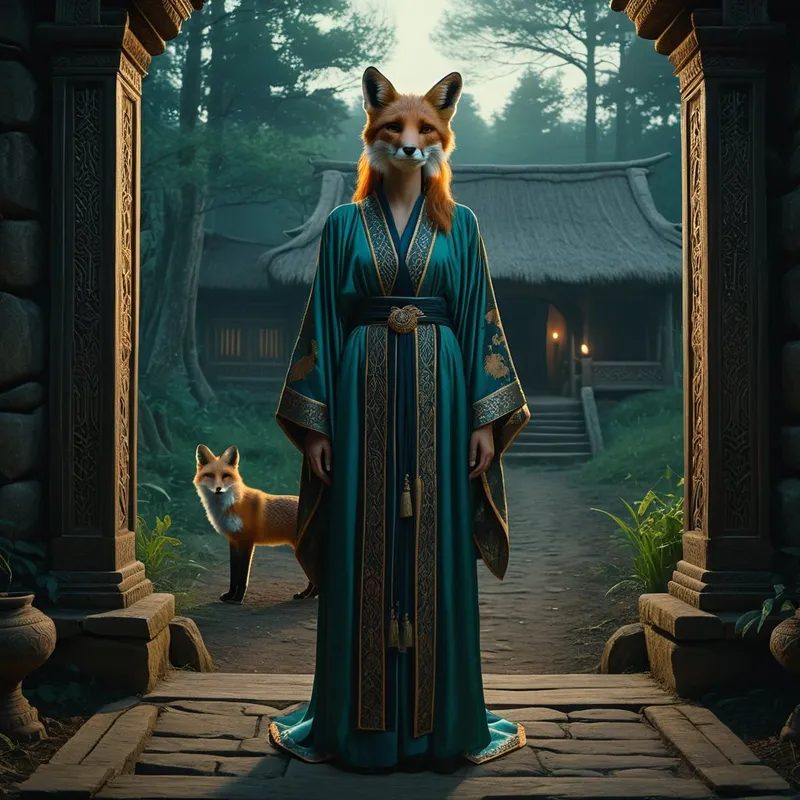
Animal Bride/Groom Tales Myth Meaning & Symbolism
A human breaks a taboo to love a being in animal form, initiating a perilous journey of trust, transformation, and the union of nature and culture.
The Tale of the Animal Spouse
Listen, and let the firelight carry you to a time when the boundary between the village and the wildwood was thin as a spider’s silk. In a humble dwelling at the forest’s edge, a lonely soul—a woodcutter with gentle hands, a weaver with a silent loom—yearns for a companion the world cannot provide. Their longing is a silent song that drifts into the deep green shadows, a prayer heard by the old, cunning spirits of the land.
One evening, as mist clings to the pine needles, the answer comes. It is not a prince or a maiden, but a creature of profound and unsettling beauty: a great white bear that speaks with a voice like rolling stone, or a fox with nine tails whose eyes hold the wisdom of forgotten stars, or a swan that sheds its feathers to reveal a form of heartbreaking grace. This being offers a contract, a sacred and perilous gamble: “I will be your spouse. I will bring you prosperity, protection, and a love that bridges worlds. But you must swear one oath. You must never look upon me in my true form. You must never ask my name. You must never burn the pelt that holds my shape.”
The human, heart swollen with a hope that overpowers fear, agrees. For a time, a miraculous harmony blooms. The hearth is warm, the fields are fertile, and children with eyes like the forest pool are born. The animal spouse works magic with quiet paws or swift wings, building a life that is both ordinary and enchanted. Yet, the human heart is a vessel that holds curiosity as deeply as love. Whispers from kin—voices of doubt and fear of the other—seep in. “What monster shares your bed?” they hiss. The forbidden question takes root, fed by suspicion and a desperate, human need to know, to possess fully, to dispel the mystery.
The taboo is broken. A lamp is lit in the dead of night; a sealskin is stolen from its hiding place; a name is uttered in a moment of anger or grief. The revelation is instantaneous and catastrophic. The spell shatters. The beloved spouse, caught in the act of transformation, lets out a cry of profound betrayal—a sound that is both animal lament and human heartbreak. “You have seen me,” the being says, its form now fully divine, fully wild, or tragically trapped between. “Now I must return. The bond is broken.” And with that, they are gone, vanishing into the mountain, the sea, or the starry sky, leaving behind a grieving partner, empty halls, and the crushing weight of a lost paradise earned and then forfeited by human hands.
Cultural Origins & Context
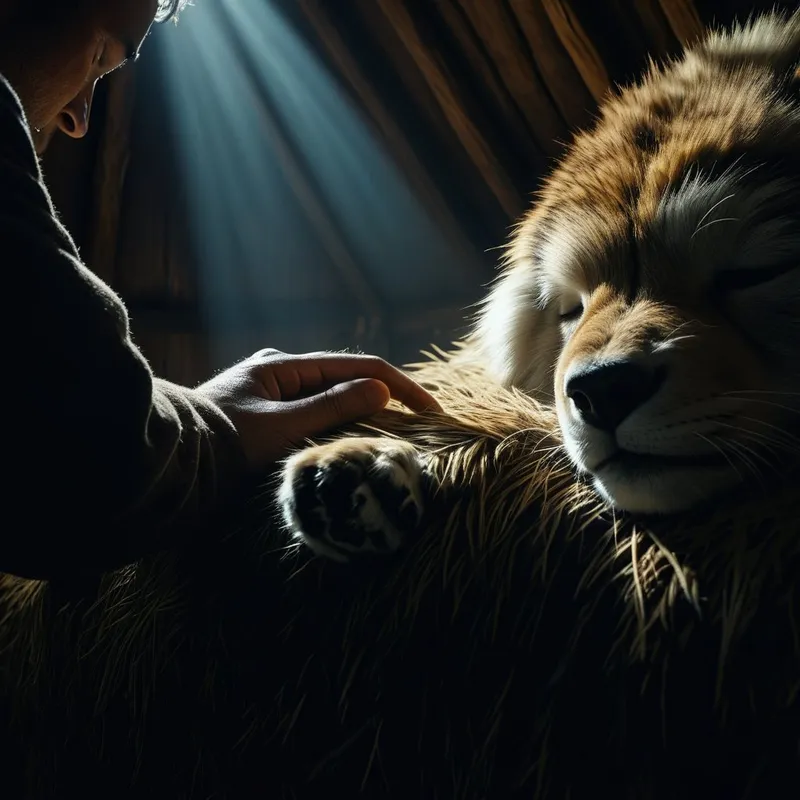
This is not one story, but a thousand, whispered across continents and millennia. We find it in the kitsune wives of Japan, the selkie husbands of Celtic shores, the swan maidens of Eurasian steppes, and the serpent husbands of Indigenous American tales. It is a foundational narrative of the oral tradition, told by firelight to explore the most delicate and dangerous of human endeavors: marriage, not just to another person, but to the unknown itself.
Its societal function was multifaceted. For hunter-gatherer and agrarian societies, it served as an etiological myth, explaining the sacred, contractual relationship between humans and the animal world—a relationship of respect, reciprocity, and clear boundaries. It was a cautionary tale about the perils of curiosity and the importance of keeping one’s word, especially in dealings with the numinous. Furthermore, it modeled exogamy (marriage outside one’s group), portraying the profound rewards and cultural tensions of bringing the “other” into the heart of the family and community.
Symbolic Architecture
At its core, the animal spouse is the ultimate symbol of the instinctual Self in its raw, unintegrated form. It represents the totality of our nature that exists outside the bounds of conscious personality and social conditioning—our vitality, our wild wisdom, our primal creativity, and our deep connection to the natural world.
The animal bride or groom is the soul in its feral state, offering its power in exchange for sanctuary in the human realm.
The human protagonist symbolizes the conscious ego, the part of us that dwells in the “village” of ordered life. The marriage is the potential for a sacred union between consciousness and the unconscious, culture and nature. The taboo—the single, non-negotiable rule—represents the necessary condition for this union to thrive: trust over knowledge, acceptance over dissection, relationship over possession. To break the taboo is the ego’s insistence on making the mysterious wholly conscious, on stripping the soul of its necessary otherness. It is the intellect trying to own the instinct, which always results in the instinct’s flight.
The Dreamer's Resonance
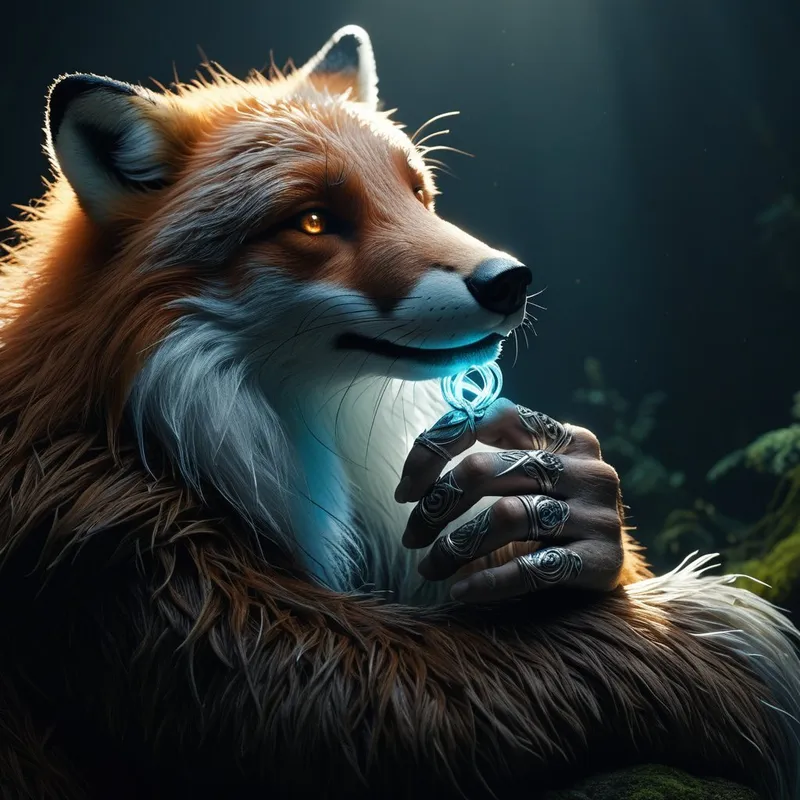
When this myth stirs in the modern dreamer, it often signals a critical moment of engagement with the instinctual Self. To dream of marrying or being partnered with an animal, or to discover an animal hidden within a loved one, points to a powerful, numinous connection being forged—or broken—within the psyche.
The somatic feeling is often one of awe mixed with anxiety, a thrilling yet terrifying intimacy. If the dream revolves around breaking a taboo—seeing the animal’s true face, losing its skin—it reflects a psychological process where the dreamer’s analytical mind or societal pressures are actively violating a deep, soul-level contract. This manifests as a feeling of profound loss, a creative dry spell, depression, or a sense of having “sold out” one’s authentic nature. The dream is the psyche’s lament for a wholeness that was within grasp but was sabotaged by the need for control, clarity, or social approval.
Alchemical Translation
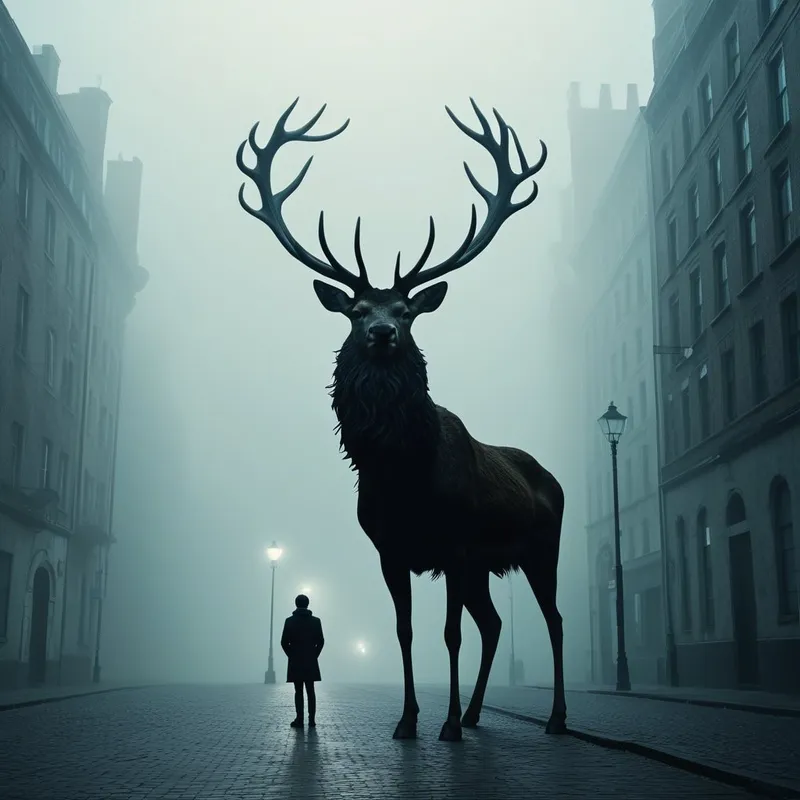
The alchemy modeled here is the coniunctio oppositorum—the sacred marriage of opposites that is the pinnacle of Jungian individuation. The myth provides a precise, if painful, roadmap for psychic transmutation.
The first stage is invitation: the conscious ego must acknowledge its loneliness and incompleteness within its walled city. It must yearn for the wild. The second is the covenant: the ego must agree to relate to the unconscious on its terms, not through force of will but through trust, symbolized by honoring the taboo. This is the stage of incubation, where the new, integrated life gestates.
The broken taboo is not a failure, but a necessary, if agonizing, phase of the work. It is the moment the ego truly sees the magnitude of what it sought to contain.
The final, often overlooked stage is the consequence and the quest. The spouse’s departure is not merely a punishment, but a relocation of the treasure. The integrated wholeness is not lost; it is returned to the unconscious, now guarded even more fiercely. This initiates the true hero’s journey for the modern individual: the long, arduous quest to win back the lost beloved. This quest demands true transformation—the shedding of the old, rigid ego-identity that caused the betrayal. One must become a shaman who can travel to the spirit mountain, a sailor who can dive to the sea kingdom, a person worthy of crossing the final boundary not as a conqueror, but as a humble petitioner who has learned the lesson of the taboo.
In the end, the myth of the animal spouse teaches that wholeness is a dynamic relationship, not a static possession. We do not capture and domesticate our wild soul. We learn its language, honor its mysteries, and build a hearth at the threshold where both worlds can meet, forever negotiating the sacred, fragile, and miraculous bond between who we are and all that we are meant to be.
Associated Symbols
Explore related symbols from the CaleaDream lexicon: