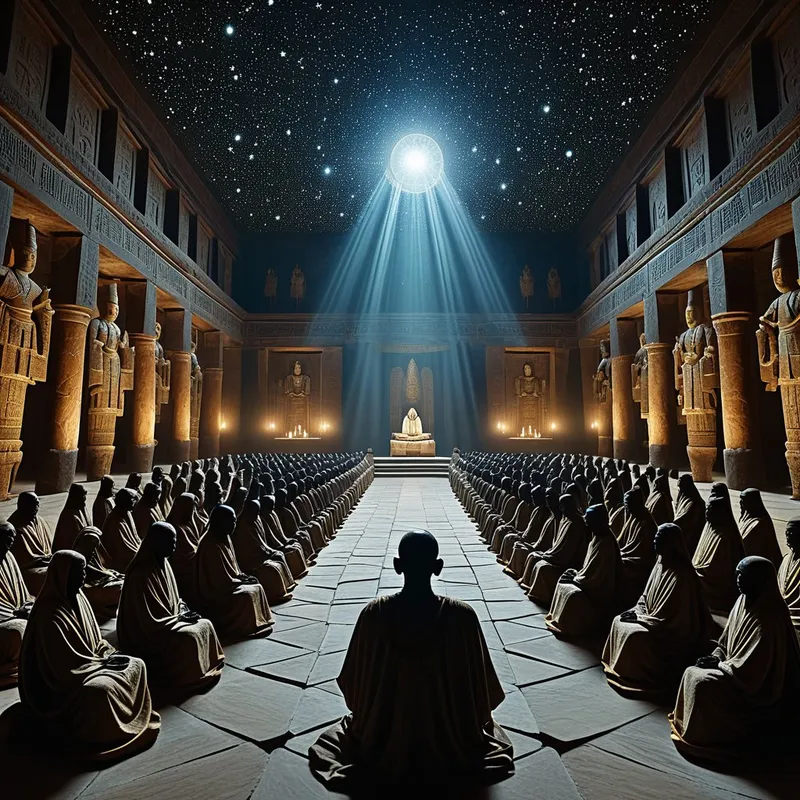
Ancestor Veneration Figures Myth Meaning & Symbolism
A timeless myth where the honored dead become living pillars of wisdom, guiding the present from the sacred ground of memory and lineage.
The Tale of Ancestor Veneration Figures
Listen. Before the first city was a thought, before the first king took a throne, there was the fire, the circle, and the names spoken into the smoke.
In the beginning, there was only the great forgetting. The dead passed through the final veil and were lost, their voices swallowed by the wind, their faces erased by the rain. The living were orphaned in time, stumbling forward with no memory of the path behind them, repeating the same sorrows, building their homes on sand. The world was a place of profound loneliness, for a people without a past are ghosts in the present.
Then, from the deep places of the heart, a new kind of fire was kindled. It was not the fire for cooking meat or warding off beasts. It was the fire of memory. A grandmother, her hands tracing the lines of her own face, saw her father’s smile in the curve of her grandson’s lips. She did not let the vision pass. As dusk bled into the land, she took a pinch of the season’s first grains, a fragment of a story, and cast them into the hearth. She spoke his name. Not as a whisper of grief, but as an invocation. “You are here.”
And he was.
It was not a ghost that answered, not a specter of fear, but a presence. A warmth that settled in the bones of the home, a knowing that entered dreams. Others began the practice. They set out a cup of clear water for a mother who thirsted in her final days. They placed a tool—a worn hammer, a silent loom—in a place of honor. They carved a shape from wood or stone, not as an idol, but as a seat. They spoke the stories aloud, the foolish deeds and the brave ones, the laughter and the failures, until the ancestors were no longer tales but members of the household, silent partners in the work of living.
The great conflict was not with a monster, but with the void of oblivion itself. The rising action was the daily, humble act of remembrance—the offering of food before it touched one’s own lips, the libation poured onto fertile earth, the name uttered in gratitude at a harvest or in a plea for guidance at a crossroads. The ritual became the loom on which the fabric of time was rewoven. The present thread was interlaced with the threads of all who had come before, creating a tapestry strong enough to hold the future.
The resolution was not an end, but a perpetual beginning. The ancestors, venerated, became the foundation. They were the first settler who chose this valley, the genius loci of the hearth. They were the judges in the heart’s court, the encouragers in the dark of night. The house with venerated ancestors stood firm. The village that honored its forebears knew who it was. The people were no longer orphans, but children of a great and living lineage, standing on the shoulders of those who now stood within them.
Cultural Origins & Context
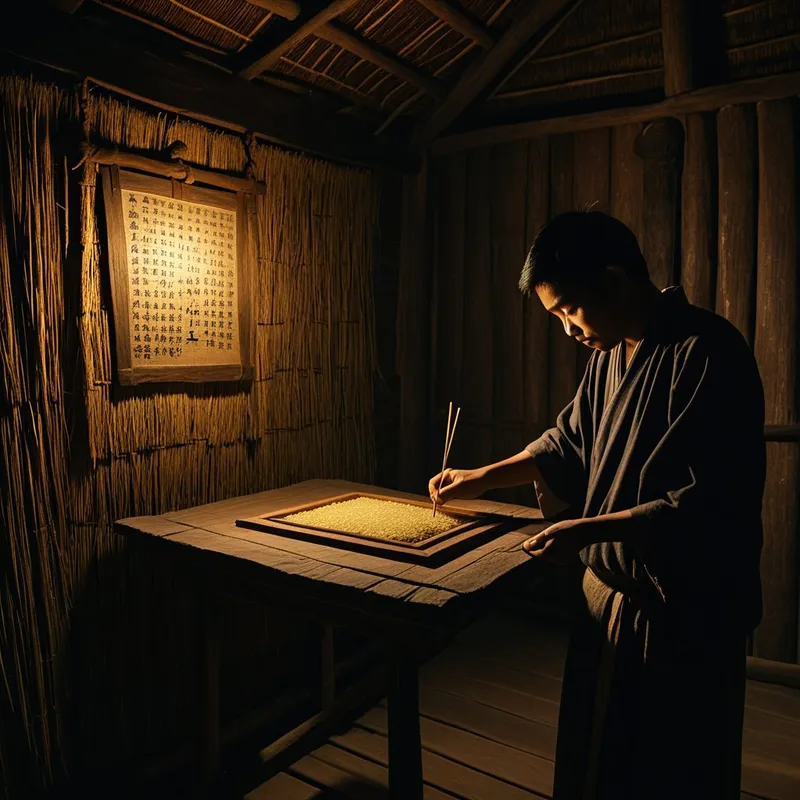
This is not a myth from a single scroll or epic, but the bedrock narrative of human culture itself. Its origins are as old as symbolic thought, emerging independently across the globe—in the African traditional lifeways, the veneration of the zǔxiān, the Roman Lares and Penates, the Indigenous practices of the Americas and Oceania. It was passed down not by bards in halls, but by mothers at cookfires, by fathers showing a child how to hold an heirloom tool, by elders leading the annual rites at the clan mound or family altar.
Its societal function was fundamental: it was the technology of identity and continuity. In a world without written history, the ancestors were the living library. They encoded law (what pleased them brought blessing, what offended them brought misfortune), morality, and practical survival knowledge. They legitimized leadership, connected the living to the land (as the ancestors were buried within it), and provided a psychological buffer against the terror of death. To be remembered was to achieve a form of immortality; to venerate was to ensure one’s own future remembrance.
Symbolic Architecture
Psychologically, the Ancestor Veneration Figures represent the internalized Other who is also Self. They are the psychic substrate of our being—the inherited patterns, the instinctual wisdom, the unresolved traumas, and the earned virtues of our lineage, both genetic and cultural.
The ancestor is not a relic, but a root. We do not look back at them from a distance; we look out from the vantage point they have given us.
The altar or spirit tablet is a profound symbol of the threshold between consciousness and the personal unconscious, where the contents of the past are held in a state of dynamic potential, ready to be consulted. The offering is the act of psychic energy investment—we feed the archetypal patterns with our attention and respect, and in return, they feed our sense of belonging and purpose. The conflict with oblivion is the eternal human struggle against meaninglessness. The act of remembrance is the ego’s service to the larger, transpersonal psyche, acknowledging that the “I” is built upon a mountain of “Thous.”
The Dreamer's Resonance
When this myth stirs in modern dreams, it often manifests as encounters with unknown yet familiar elders, discovering hidden rooms in one’s childhood home filled with portraits whose eyes follow you, or being given a cryptic, ancient object by a deceased relative. The somatic sensation is often one of profound grounding or, conversely, of being weighed down.
This dream pattern signals a process of psychic integration of lineage. The dreamer is being confronted by the “family soul,” the collective psychological inheritance. It may be a call to acknowledge strengths and resources (“the wise elder” ancestor) or a demand to confront inherited burdens, secrets, or patterns of suffering (“the hungry ghost” ancestor). The dream is the psyche’s native altar, where these figures appear to be fed with awareness, to be heard, and ultimately, to be reconciled with the dreamer’s contemporary life. It is shadow-work of a deeply genealogical nature.
Alchemical Translation
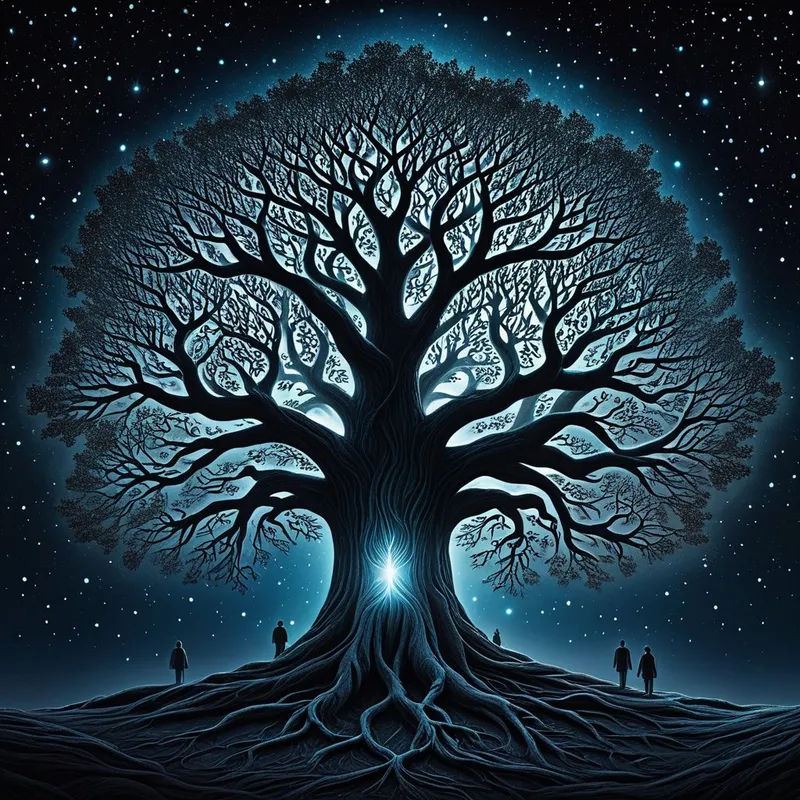
The alchemical process modeled here is the transmutation of the dead past into the living foundation. In individuation, we are not meant to be autonomous islands, but to consciously become who we already are—a unique confluence of ancestral streams.
The first stage (nigredo) is the felt poverty of rootlessness, the “orphan” state of modern alienation. The offering ritual is the albedo—the careful, conscious recollection. We “feed” the ancestral complexes by researching family history, acknowledging their realities, feeling their joys and sorrows. This whitens the leaden weight of the past into something more reflective.
The goal is not to live for the ancestors, but to live with them, so that you may live for yourself, and for those yet to come.
The rubedo, the reddening, is the integration. It is when the inherited trauma is consciously halted in its repetition, transformed into resilience. It is when the ancestor’s unfulfilled potential becomes the fuel for one’s own creativity. The ancestor venerated is no longer a external figure to placate, but an internal voice of guidance—the inner sage born from lineage. The final gold is a personality grounded in deep time, responsible to both the past and the future, capable of receiving wisdom and blessing it forward. The individual becomes, in a psychological sense, a worthy ancestor in the making.
Associated Symbols
Explore related symbols from the CaleaDream lexicon: