Alignak the Moon God Myth Meaning & Symbolism
A myth of the exiled Moon God, ruler of tides and souls, whose cyclical journey mirrors the hunt for inner sustenance and reconciliation.
The Tale of Alignak the Moon God
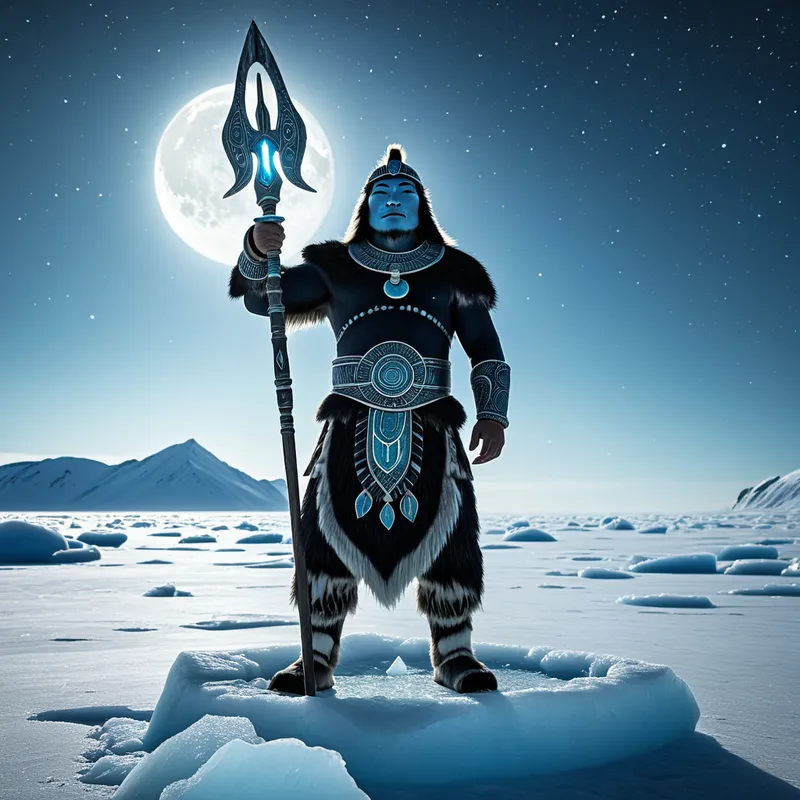
Listen, and feel the cold that is older than memory. In the time when the world was all ice and breath, there were two great powers: the Sun, Malina, who brought the brief, fierce warmth of summer, and the Moon, Alignak, who ruled the long, dark winter and the endless, star-pricked night.
They were brother and sister, and for a time, they lived together in the same great lodge, their light mingling. But a shadow fell between them. In some tellings, it was a quarrel born of closeness that turned sour. In others, it was a transgression, a breaking of a sacred law. The stories whisper of a forbidden touch, a moment of desire that cracked the world. The oil lamp was knocked over. In the sudden, flaring darkness, Malina’s face was stained with soot. In shame and burning rage, she seized a knife, and in the struggle, she cut her brother.
With a cry that shook the ice, Alignak fled. He ran from the warmth, from the light, from the face of his sister. He ran until the world grew dark and cold, until the only light was the pale, cold glow of his own wounded body. He exiled himself to the sky, becoming the great, lonely lantern of the night. Malina, in her fury and guilt, chased him, and chases him still—the eternal, fleeing dance of sun and moon across the dome of the world.
But Alignak’s exile was not passive. From his cold throne, he became the master of all that moves in the dark. He commands the tides of the sea and the fall of the snow. He is the great hunter, and all the souls of the sea creatures—the seal, the walrus, the whale—are his to give or withhold. When the people on the hard ice below hunger, they look to his pale, scarred face. They know their success, their very life, flows from his mood. He sends the weather, good and ill. He receives the breaths of the newly dead. He is a god of profound contradiction: a wounded outcast who holds the power of life and death, a distant, cold light who governs the most vital hunt.
Cultural Origins & Context
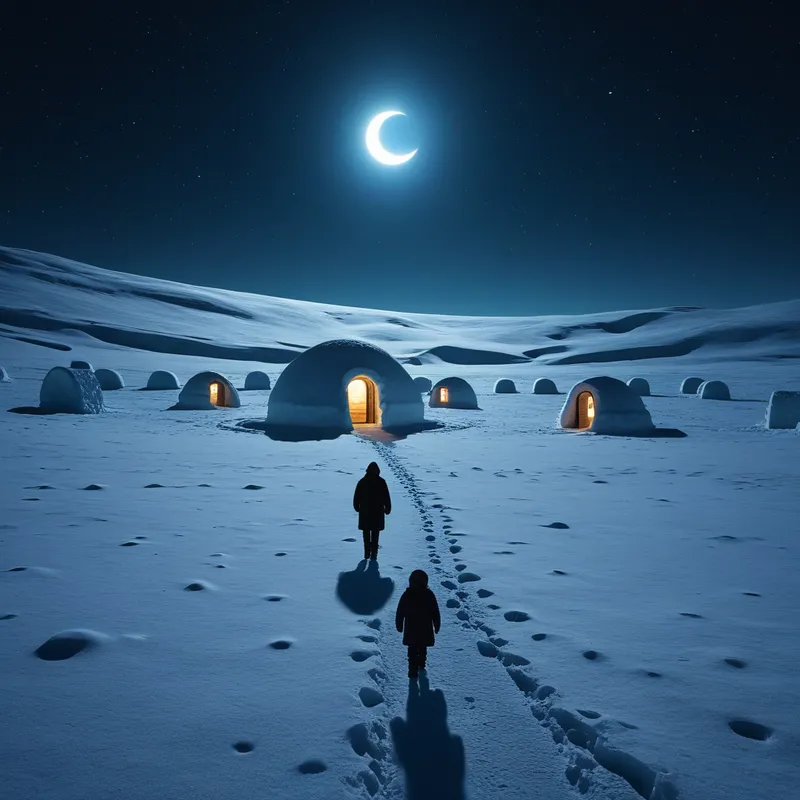
This myth originates from the Inuit peoples across the Arctic regions of Greenland, Canada, and Alaska. It was not written but breathed—passed from elder to child in the close, smoky air of the snow-house during the endless winter nights. The storyteller, often a respected elder or a skilled angakkuq (shaman), would weave the tale not as mere entertainment, but as a vital map of reality.
Its function was multifaceted. It explained the celestial mechanics of the sun and moon in a deeply personal, relational way. More critically, it established a sacred ecology. The hunt was not a simple act of survival but a cosmological transaction. The hunter’s skill and respect were offerings to Alignak, who would, in turn, release the animal souls from the deep. The myth encoded rules of social conduct, taboos, and the profound consequences of broken relationships. It gave meaning to the harsh, beautiful, and often terrifying environment, personifying its forces in a drama that mirrored human frailties and needs.
Symbolic Architecture
At its heart, the myth of Alignak is a profound portrait of the wounded masculine and the psychology of exile. Alignak is not a villain, but a deposed ruler of the inner world. His flight to the cold, distant sky symbolizes a primal psychic split—the separation of conscious warmth (the Sun, sister, community) from unconscious, instinctual depths (the Moon, solitude, the hunt).
The exile is not a punishment, but the condition from which all sourcing must begin.
His dominion over animals and weather represents the unconscious itself: a vast, amoral realm of powerful instincts (the hunt) and overwhelming moods (the storms). He is the archetypal Orphan, cast out from the primal family, forced to find sovereignty in his own lonely domain. The chase with Malina is the eternal tension between conscious and unconscious, forever related, forever apart, their interaction creating the rhythm of day and night, activity and reflection, summer and winter.

The Dreamer's Resonance
When this myth stirs in the modern dreamer, it often signals a profound encounter with the shadow. To dream of a cold, distant light, a lonely male figure on a frozen plain, or a futile chase across a barren landscape is to feel the somatic chill of self-exile. The psyche is processing a wound—often one related to shame, betrayal, or a rupture in a primary relationship—that has caused a part of the self to retreat into emotional permafrost.
This is the psychology of the "inner orphan," the part that feels it must survive alone, becoming competent in the "hunt" (career, isolated pursuits) but cut off from relational warmth. The dream may feature searching on frozen seas or looking up at a judgmental, silent moon. The body may feel cold, stiff, or heavy upon waking. This is the soul experiencing its own Alignak phase: competent in darkness, powerful in solitude, yet profoundly lonely and governed by the tides of old, frozen grief.
Alchemical Translation
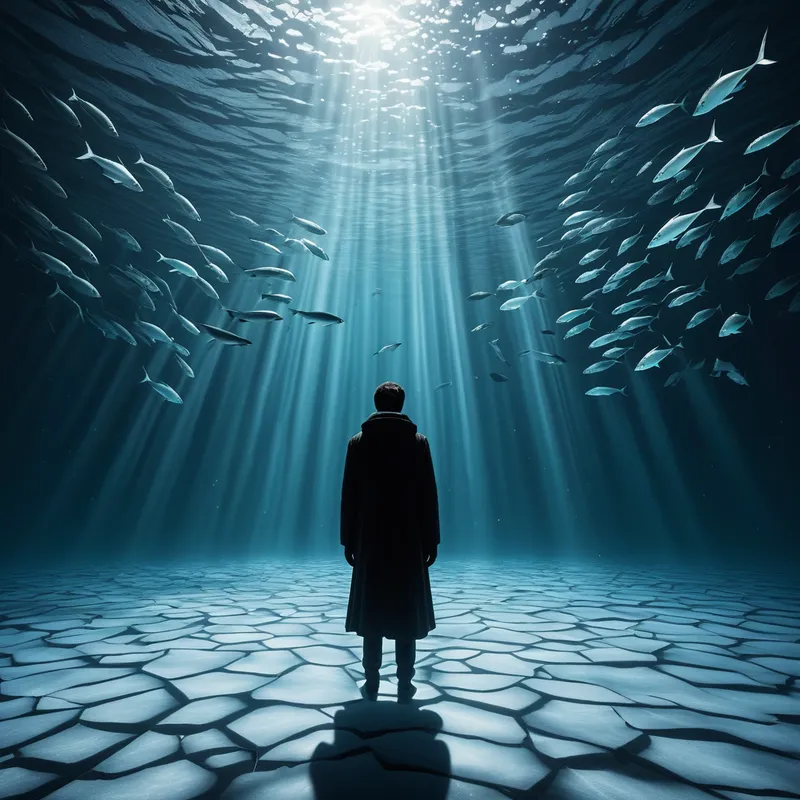
The individuation process modeled here is not one of heroic conquest, but of sacred stewardship of one's own exile. The first alchemical step is recognition: to acknowledge the self-imposed banishment. Why did a part of you have to flee to a cold, distant place to survive? What was the forbidden touch, the shaming stain, the knife-cut that caused the flight?
The second is assumption of responsibility. Alignak does not languish; he rules his domain. The modern task is to stop bemoaning the exile and begin to consciously govern the territory it created. What instincts, talents, or depths were forged in that cold loneliness? This is the "hunt"—the ability to source sustenance (meaning, insight, creativity) from the inner darkness.
The goal is not to return to the sun, but to become the conscious moon, making the tides of the unconscious serve the soul's journey.
The final, most delicate translation is reconciliation without fusion. The sun and moon never cease their chase; they achieve a dynamic balance. So too must the exiled part and the conscious self find a new rhythm. This means allowing the cold, lunar wisdom to inform the warm, solar life without being consumed by it, and vice-versa. It is to honor the wound as the source of sovereignty, transforming the orphan into the rightful, if solitary, ruler of a vast inner kingdom.
Associated Symbols
Explore related symbols from the CaleaDream lexicon:
- Moon — The central symbol of Alignak himself, representing cold reflection, cyclical time, the unconscious mind, and the governance of hidden tides.
- Exile — The core condition of the myth, representing a primal psychic split, self-banishment due to wounding, and the genesis of a lonely sovereignty.
- Hunt — The sacred transaction governed by Alignak, symbolizing the soul's quest to draw sustenance (meaning, insight) from the depths of the unconscious.
- Tides — Represented by Alignak's command of the sea, symbolizing the rhythmic, overwhelming moods and instincts that flow from the unconscious realm.
- Wound — The cut from Malina's knife, the foundational injury that creates the god's exile and scars his face, symbolizing a shame or betrayal that changes one's fundamental nature.
- Shadow — The dark, cold sky to which Alignak flees, representing both the realm of the repressed and the potential power found in embracing one's exiled parts.
- Winter — Alignak's season, symbolizing a psychic period of inward retreat, hibernation, survival in austerity, and the stark beauty of solitude.
- Soul — Specifically animal souls, which Alignak controls, representing the vital, instinctual life-force that must be respectfully engaged with to ensure survival and meaning.
- Darkness — Not as evil, but as the necessary medium for the moon's light and the hunt's success, representing the fertile, unknown ground of the psyche.
- Journey — The eternal chase across the sky, representing the ongoing, dynamic process of relating conscious and unconscious elements of the self.
- Ritual — The practices of hunters who honor Alignak, symbolizing the conscious, respectful engagement with deep, unconscious powers to facilitate life and order.
- Moonlit Night — The atmosphere of Alignak's dominion, a time of heightened intuition, mystery, and engagement with the hidden aspects of the world and self.