Ain Sof Myth Meaning & Symbolism
The myth of the boundless, unknowable divine source that contracts to create a vessel for existence, birthing the cosmos from its own infinite potential.
The Tale of Ain Sof
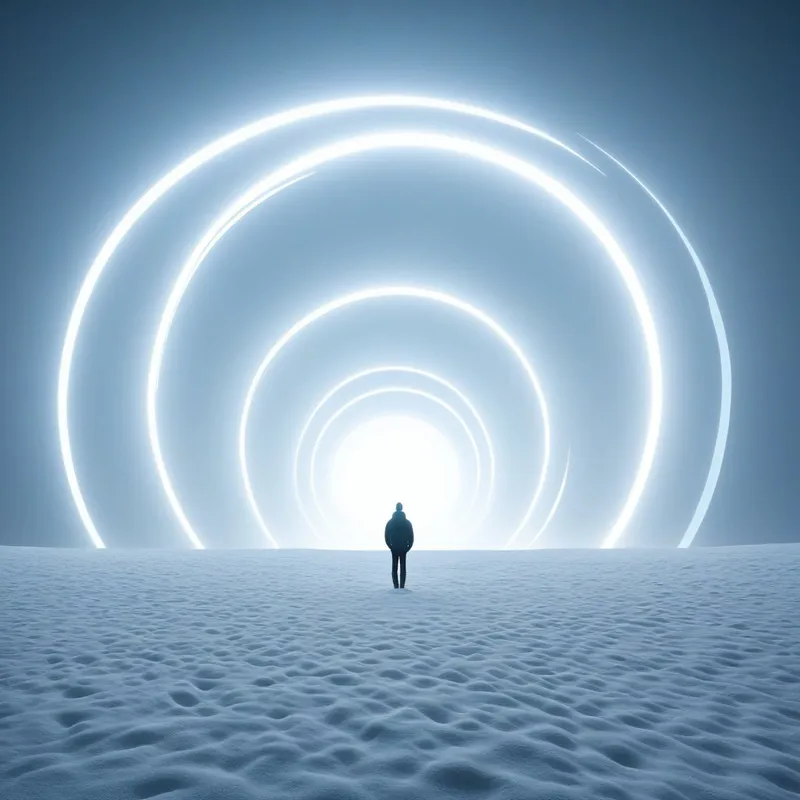
Before the Before, there was no story to tell. There was no teller, no listener, no space for the tale to unfold. There was only Ain Sof—the Endless. Not a god in a place, but the very condition of Is-ness, boundless and absolute. It was a light with no source, for it was all source; a thought with no thinker, for it was all mind. It filled all, was all, and in being all, it was also… nothing that could be known. No thing existed apart from it to behold it. It was the perfect, silent, undifferentiated All.
And within this endless ocean of pure potential, a yearning stirred. Not a need, for it lacked nothing. Not a loneliness, for it was complete. It was a desire for relationship—a wish for an Other to receive its infinite light, to know and be known. But how can light be received when there is only light? How can a gift be given when there is no one to hold it?
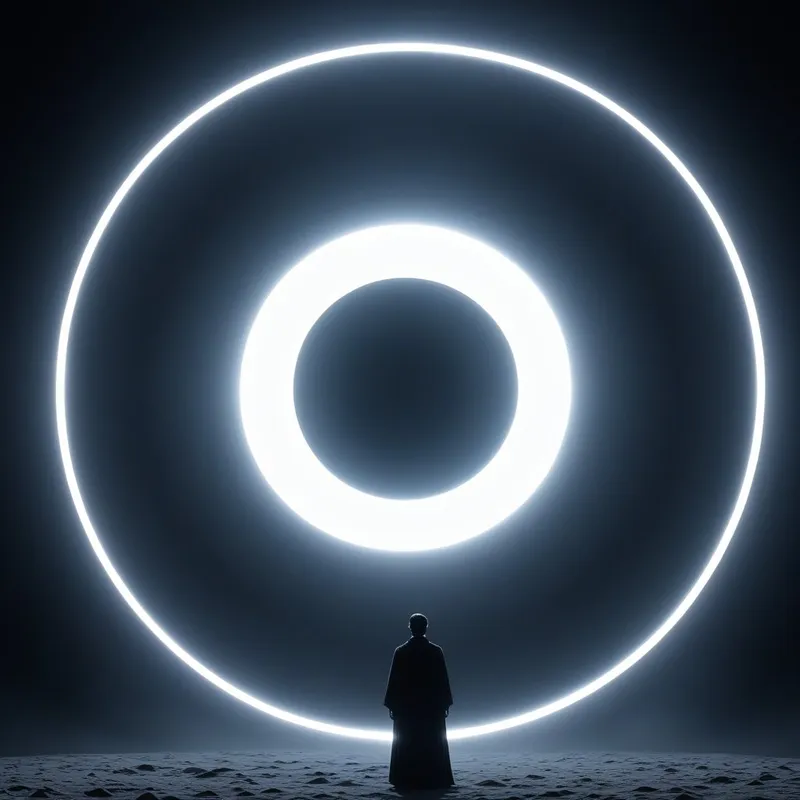
So, the Ain Sof performed the first and most profound act: it did not act. It withdrew. It contracted into itself. Imagine the sun gathering its rays back into its core, not to dim, but to make room. In the heart of the infinite light, a point of absence appeared. A hollow sphere, a womb of perfect, receptive darkness. This was the Tzimtzum. It was not an act of moving away, but of breathing in, creating a sacred emptiness within itself.
Into this prepared vessel, this chalice of absence, a single, focused ray of the Endless Light descended. A river of divine emanation, called the Kav, pierced the darkness. But the vessel, newly formed and fragile, could not bear the fullness. It shattered. Vessels of light burst, and sparks of the divine scattered into the void, falling, mingling with the broken shards of the vessels themselves.
From this cosmic catastrophe—the Shevirat HaKelim—the world of multiplicity was born. The sparks became the hidden divinity in all things; the shards became the shells of matter, of separation, of pain. The story of creation became, in that instant, the story of gathering. The scattered light now yearns to return, to be lifted from the fragments, to restore the vessel. And the Ain Sof, having made room, now waits at the boundary of the circle it created, its infinite light surrounding all, the source from which the ray came and to which all sparks long to return.
Cultural Origins & Context
The myth of Ain Sof is the foundational narrative of Kabbalah, emerging most fully in the medieval period with texts like the Zohar. It was not a story for public squares but for whispered study in small, devoted circles of mystics. Transmission was oral and secretive, passed from master to initiated disciple, for these were not merely tales but maps of the divine anatomy and the soul's journey.
Its societal function was profoundly psychological and cosmological. In eras of exile and persecution, it offered a radical, internalized theology. God was not merely a distant king but the very fabric of being, and human action—through prayer, intention, and ethical living (Tikkun Olam)—was granted cosmic significance. The myth provided a framework for understanding the presence of evil and fragmentation in the world (the broken shards) and imbued daily life with the sacred task of restoration, linking the fate of the individual soul directly to the healing of the divine structure itself.
Symbolic Architecture
The myth presents a symbolic architecture of the psyche's origin. Ain Sof represents the unconscious plenum, the totality of psychic potential before the dawn of ego-consciousness. It is the undifferentiated state of the infant, where self and world are one.
The first act of consciousness is not an expansion, but a contraction. To know anything, we must first not know everything.
The Tzimtzum is the primordial act of attention. It is the ego's necessary birth—a withdrawal of identification with the All to create a bounded space (the self) where experience can be had. The Shevirat HaKelim symbolizes the inevitable trauma of incarnation. The pure light of potential (our innate wholeness) meets the limitations of form (our body, our family, our culture) and shatters into the multitude of our complexes, talents, wounds, and desires—the "sparks" of our true self scattered and buried.
The Dreamer's Resonance
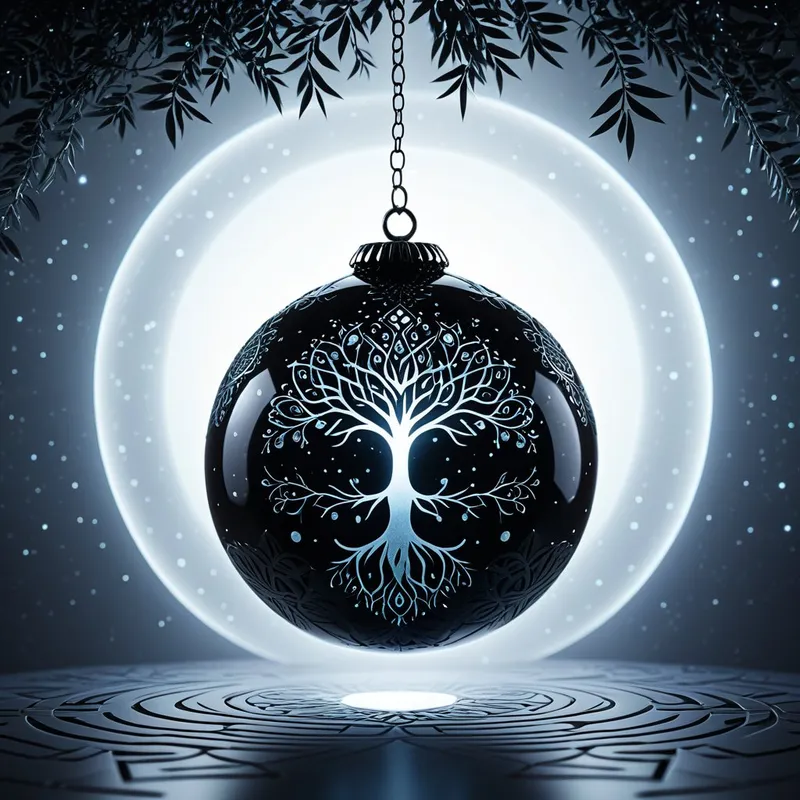
When this myth stirs in the modern dreamer, it often manifests not as a linear story, but as profound somatic and spatial experiences. One may dream of being in an overwhelming, featureless white light where identity dissolves, echoing the pre-Tzimtzum state—a sign of potential psychic overload or a call to release rigid ego-identification.
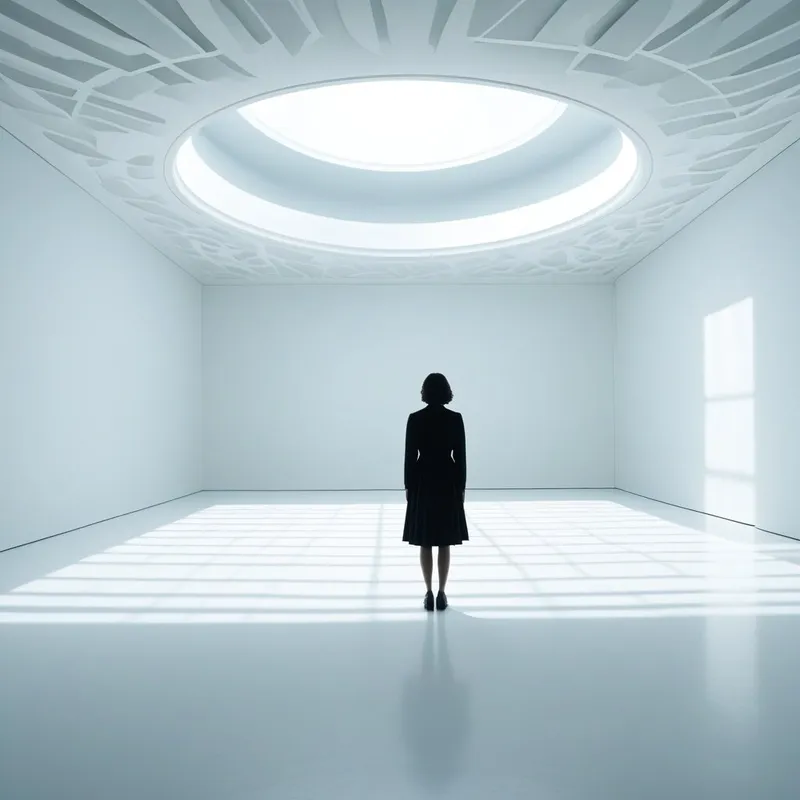
More commonly, dreams of creating a sacred, empty room within a crowded house, or of carefully gathering scattered, glowing fragments in a dark landscape, resonate with the core process. These dreams signal a psychological Tzimtzum: a conscious decision to create inner space through withdrawal from compulsive doing or external noise. The gathering of sparks is the painstaking inner work of individuation—reclaiming lost parts of the self (anger, creativity, vulnerability) from the "shells" of shame or neglect that have encased them.
Alchemical Translation
The alchemical journey modeled here is the transmutation of unconscious wholeness into conscious individuality. The prima materia is the Ain Sof state—our latent, unbounded potential. The nigredo, or blackening, is the Tzimtzum: the terrifying but necessary descent into limitation, form, and apparent separation from the source. It feels like a loss, a cosmic loneliness.
The vessel is created by its own absence. The self is defined by what it chooses to set aside.
The Shevirat HaKelim is the chaotic separatio and mortificatio, where the unified self is broken apart by life's experiences. The long work of Tikkun, gathering the sparks, is the alchemical coagulatio and unio mentalis. It is not about returning to the original, unconscious unity of Ain Sof. That is impossible and would be a dissolution of the hard-won self. Instead, it is about consciously re-relating the gathered, differentiated fragments—the integrated personality—back to the source. The healed vessel is not the original, empty one; it is a new, more complex vessel, seasoned by the shards, now capable of consciously holding and reflecting the divine light. The modern individual's triumph is thus not in being the undifferentiated All, but in becoming a conscious, finite center that can authentically say "I am," while forever knowing itself as a unique spark of the infinite "I Am."
Associated Symbols
Explore related symbols from the CaleaDream lexicon: