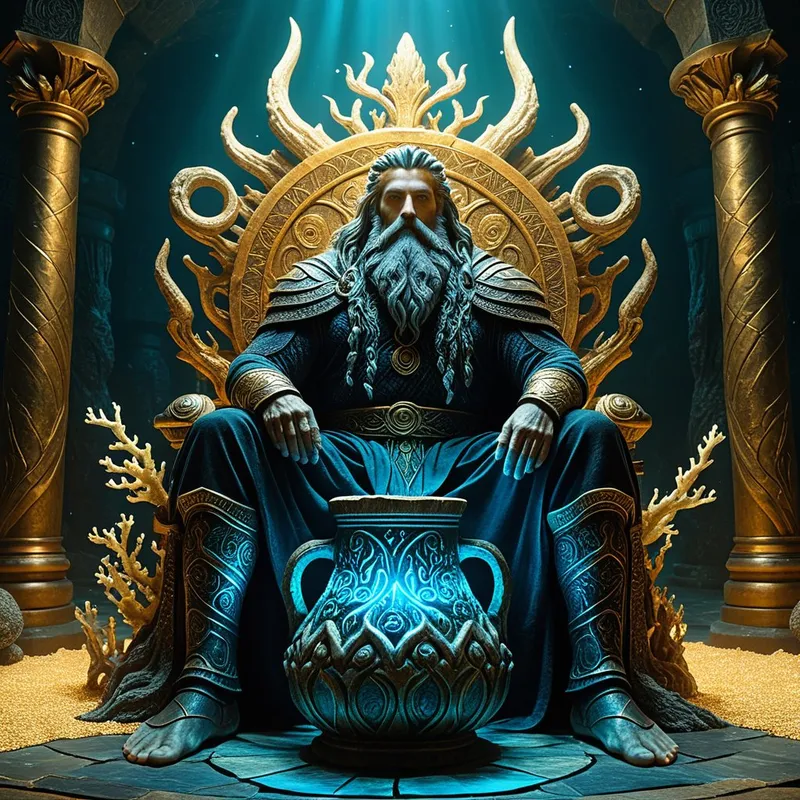
Aegir Myth Meaning & Symbolism
The myth of Aegir, the deep-sea host, where gods confront the primal chaos of the unconscious in a hall lit by liquid gold.
The Tale of Aegir
Listen, and let the salt-spray fill your lungs. Far from the sunlit realms of Æsir and the fertile fields of the Vanir, where the roots of the Yggdrasil plunge into unknowable depths, lies a hall not built by hands. This is the domain of Aegir, and his hall is the sea itself. Its walls are the crushing pressure of the abyss, its roof the endless ceiling of water, and its light… ah, its light is a stolen, liquid gold that glows from the god himself, for in this sunless deep, fire cannot burn.
Aegir is a host of the old ways, a jötunn who commands a respect even the gods must heed. When the urge for a feast beyond the ordinary strikes the Odin and his kin, they do not summon; they journey. They descend from Asgard, crossing the threshold from known to unknown, to sit as guests in the belly of chaos.
The hall is vast, echoing with the groan of deep currents. The benches are lined, not with heroes, but with gods uneasy in a realm that does not obey their will. Aegir’s wife, Rán, moves with the silence of a riptide, her net ever-ready for those who stray. The feast is laid, but the air thrums with a tension deeper than the sea. For Aegir has one condition: he possesses mighty cauldrons, but none large enough to brew ale for all the gods of the cosmos. The feast cannot begin until this vessel is found.
The task falls to Thor and his companion Loki. They voyage to the fortress of the giant Hymir, a being as old and immovable as the continental shelf. Through bluff and brawn, they secure the cauldron—a mile-deep well of brass—and flee, with Hymir and an army of many-headed giants in furious pursuit. Thor turns, raises his hammer Mjölnir, and shatters the mountainsides upon them, stilling the chase. The cauldron is borne into the deep.
Now, in Aegir’s hall, the brewing begins. The cauldron, filled with the sea’s own water, becomes a vortex. The ale that flows from it is not like mead of Valhalla; it is dark, profound, and carries the taste of ancient secrets. As the gods drink, the golden light of Aegir washes over them. The sea, through the ale, enters them. Jests are made, boasts are roared, but the laughter echoes strangely against the watery walls. Loki’s tongue grows sharp, his eyes reflecting the abyssal dark, and the seeds of a later, more terrible feast—where words will become deadly weapons—are sown here, in this pressure chamber of the psyche. The feast is both celebration and confrontation, a temporary truce where the gods of order willingly immerse themselves in the source of all disorder, drinking deep of the very chaos they forever hold at bay.
Cultural Origins & Context
The figure of Aegir emerges from the Norse worldview not as a systematized deity of a state religion, but as a personification of an overwhelming, daily reality: the sea. For the coastal and seafaring Norse, the ocean was the ultimate source of bounty and the most immediate face of death. It was úthaf, the "outer sea," a trackless realm of monsters, storms, and mysteries. Aegir and Rán were the numinous faces of this reality.
These myths were not scripture, but living stories, told in longhouses during the dark winters, preserved in the skaldic poetry of the skalds. The primary source for Aegir’s feast is the poem Lokasenna ("Loki’s Flyting"), contained within the Poetic Edda. Here, the narrative frame is the feast itself, which sets the stage for Loki’s vicious verbal assault on every god present. This context is crucial: the myth served a societal function beyond entertainment. It explored the fragile boundaries of community and hospitality (grith), the dangerous power of unchecked speech, and the humbling truth that even the gods were subject to forces older and more vast than themselves. The feast at Aegir’s was a narrative device to bring the divine community into a space where their usual hierarchies and powers were muted, forcing confrontations that mirrored human social tensions.
Symbolic Architecture
Aegir is not merely a sea god; he is the psychological embodiment of the collective unconscious. His hall, located beyond the familiar realms, represents the deep, autonomous psyche into which consciousness must occasionally descend.
The feast in the sunless hall is the ego’s necessary, terrifying negotiation with the unconscious. One does not command this realm; one attends as a guest, under its rules.
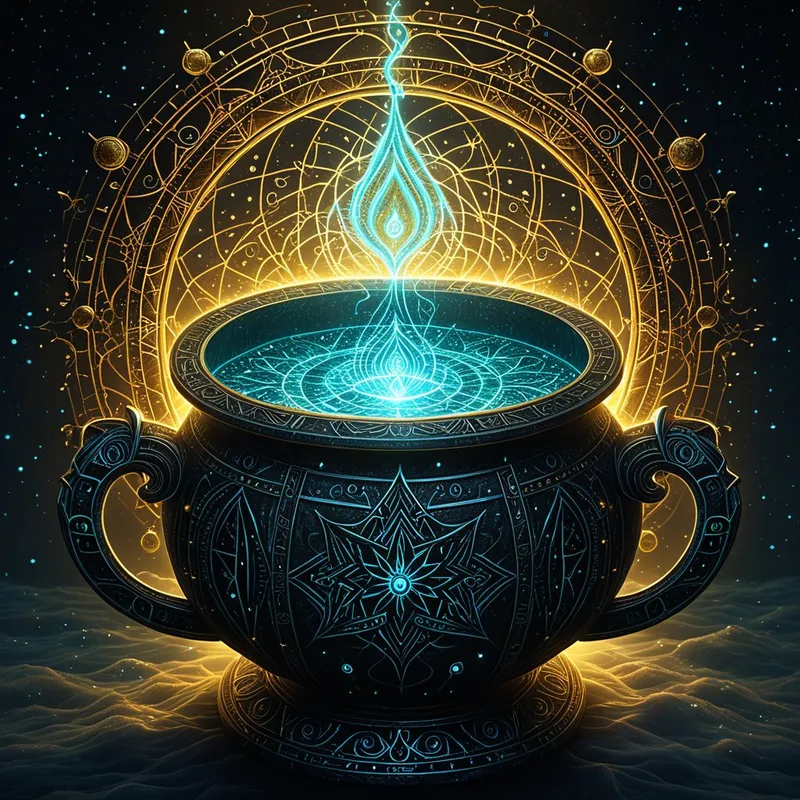
The great cauldron is the central symbol. It is the vessel of transformation, where the raw, undifferentiated waters of the unconscious ("sea water") are alchemically brewed into intoxicating ale—the symbolic substance of inspiration, poetry, and profound insight, but also of madness and revelation. The cauldron must be won from a giant, Hymir, signifying that the capacity for deep psychological work (the vessel itself) is hard-won, often requiring a heroic struggle with our own primordial, resistant nature.
Aegir’s golden light, replacing fire, is the luminescence of the unconscious itself—a cold, inner light that illuminates without warmth, revealing truths we might prefer to leave in darkness. The entire myth models a sacred hospitality: to be whole, the conscious self (the gods) must periodically accept an invitation to dine with its own depths, to ingest the very substance of the unknown.
The Dreamer's Resonance
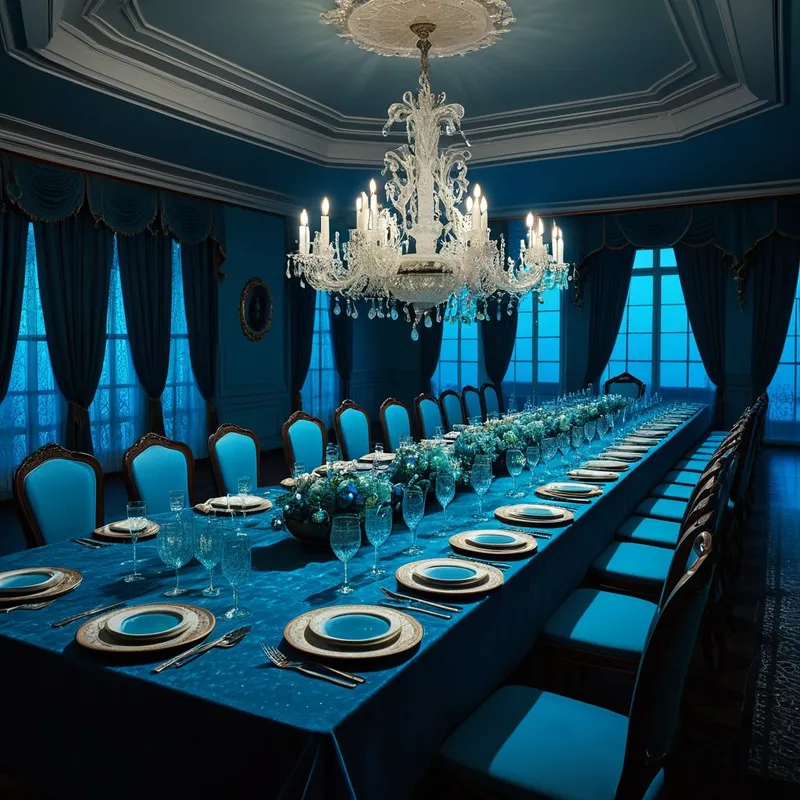
When this myth stirs in the modern dreamer, it often manifests as dreams of vast, submerged architecture—sunken ballrooms, basement halls flooded with dark water, or parties held in aquariums. The somatic feeling is one of pressure, of moving in a thick medium, and a profound ambivalence: the scene is often beautiful yet eerily silent, festive yet lonely.
Psychologically, this signals a process of immersion into the emotional and instinctual substrata of the psyche. The dreamer is being "hosted" by a deep, autonomous complex—perhaps a long-ignored grief, a tidal rage, or a creative potential that feels alien and overwhelming. The figure of Aegir may appear as a powerful, impersonal presence (a landlord, a silent host, a vast room itself), while Rán may manifest as a captivating but dangerous feminine figure or a sudden, engulfing emotional wave. The dream is an indicator that the ego is in a state of necessary saturation. It is not a time for action, but for receptivity, for allowing the deep waters of the unconscious to reveal what they must. Resistance to this "feast" often precedes periods of emotional flooding or psychic stagnation.
Alchemical Translation
The alchemical journey modeled by Aegir’s myth is that of solutio—the dissolution. In the laboratory of the soul, this is the stage where fixed, rigid structures of the personality (the gods in their accustomed roles) are deliberately dissolved in the aqua permanens, the permanent water of the unconscious.
Individuation requires that we become our own host in the deep hall, brewing the chaotic waters of our nature into the mead of self-knowledge.
The modern individual undertaking this work first must "secure the cauldron"—that is, develop the ego strength and container (through therapy, ritual, art, or disciplined introspection) to hold the potent, potentially overwhelming contents of the deep psyche. Then, one must willingly descend, accepting Aegir’s invitation. This is the courage to sit with depression, to explore ancestral trauma, to entertain the forbidden thought or the outlawed feeling.
The feast is the act of integration. Drinking the dark ale is the conscious assimilation of what was previously unknown: a reclaimed shadow aspect, a buried talent, a primal fear faced and named. The golden light that illuminates this process is not the comforting sun of conscious optimism, but the stark, revealing light of inner truth. It is a cold clarity. The triumph is not conquest, but the achieved capacity to be a gracious guest in your own depths, to honor the Aegir within as the eternal host of your most profound, terrifying, and creative potentials. The feast never truly ends; the cauldron is always brewing, and we are forever both guest and ingredient in the mysterious hall of the self.
Associated Symbols
Explore related symbols from the CaleaDream lexicon: