Achilles- nearly invu Myth Meaning & Symbolism
A hero blessed with near-invulnerability, whose single hidden weakness becomes the focal point of fate, mortality, and the price of a divided self.
The Tale of Achilles- nearly invu
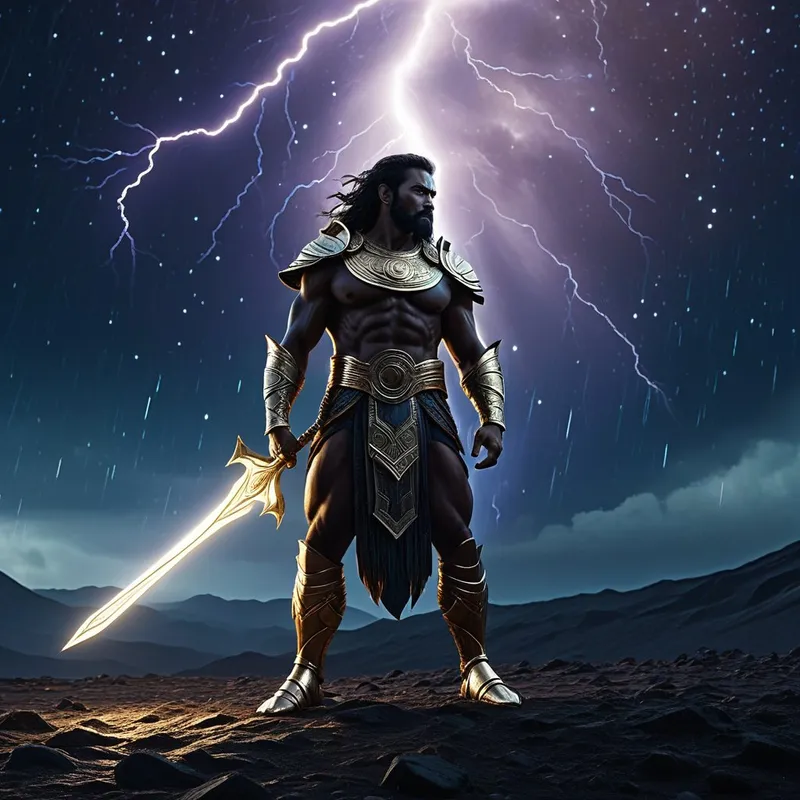
Hear now the tale of the one who was almost perfect. In the time before time was measured, when the breath of the divine still stirred the dust of the mortal world, a child was born under a portentous sky. His mother, a being who walked the line between the earthly and the eternal, looked upon her son and saw the shadow of a short, brilliant flame. She knew the wars of men, their envy and their spears. She desired for him not just strength, but preservation.
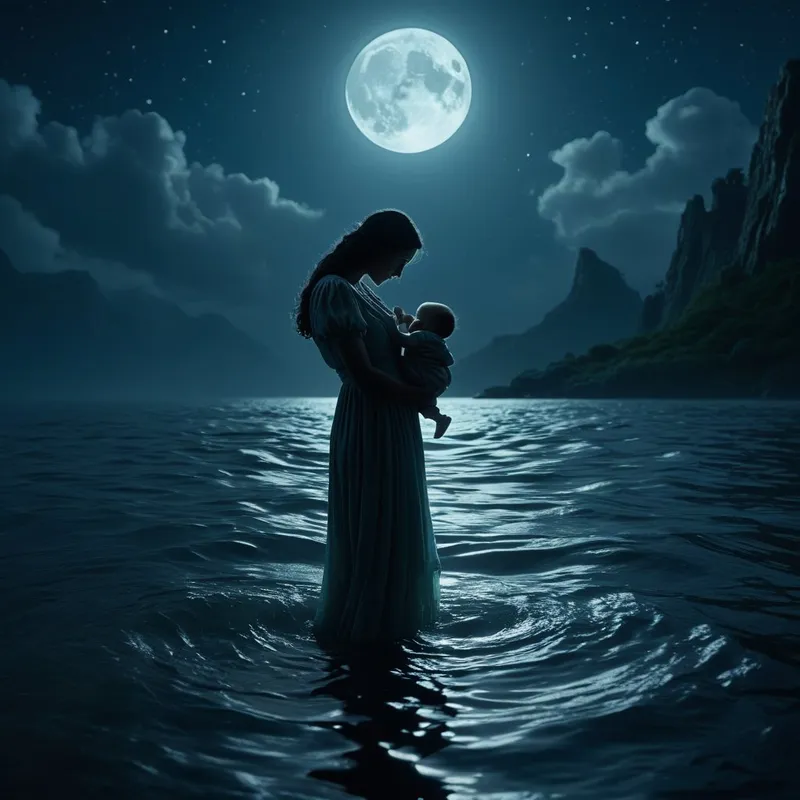
So she journeyed to the secret place where the waters of forgetting and becoming met in a silent pool. Under the cold eye of the moon, she took the infant, holding him by a single, tiny ankle. She immersed him, and the sacred waters worked their alchemy, sealing his skin not with flesh, but with a destiny of inviolability. It was a baptism of adamant, a gift of near-godhood.
But where her fingers held him, where the mortal grip of a mother’s love met the divine intent, the waters did not touch. A patch of skin, no larger than a coin, remained soft, pink, and utterly human. It was the anchor, the tether. The place where he was still her child, and still of this world. She sealed this secret in her heart, a hidden dread to balance her divine hope.
The boy grew not as a boy, but as a force of nature. He became the warrior who stood where armies broke, the champion whose name was whispered like a prayer and a curse. Arrows shattered against his chest. Blades turned from his limbs as if from stone. He moved through the great conflict, the War of Winds and Walls, with the terrible beauty of an unstoppable storm. Men saw in him the end of fear, the triumph of will over wound. He was the living shield, the un-killable spear.
Yet, in the quiet tent, he would sometimes feel a phantom ache, a whisper at the back of his ankle. A memory of a grip, of being held. He dismissed it as the echo of old bruises from training. But the cosmos does not forget a debt. Fate, which cannot abide a closed circle, seeks always the opening.
The conflict reached its fever pitch. The air was thick with the smoke of pyres and the din of desperation. From the high ramparts, a figure guided not by strength but by knowledge took aim. The arrow was not special. The bow was not blessed. But the aim was true, directed by the silent map of a mother’s fearful love, now betrayed to the world. It flew not for the broad back or the guarded heart, but for the small, forgotten place where the hero was still just a man.
It struck the heel.
There was no clang of metal, only the soft, terrible sound of puncture. The great warrior did not fall from a mighty blow, but from a sudden, profound silence within. The unassailable fortress fell through a single, open window. He looked down, not in anger at his foe, but in a moment of shocking, intimate recognition. At the small wound. At the trickle of life where no life should be able to escape. In that instant, he was not the invulnerable hero, but simply the held child, finally released. The myth of perfection dissolved into the truth of the man, and the man returned to the earth from which even the greatest are made.
Cultural Origins & Context
The pattern of Achilles- nearly invu is not the property of a single scroll or epic, but a psychic fossil found in the bedrock of human storytelling. Its most famous naming comes from the Hellenic tradition, but its architecture is universal. We find it in the Norse Balder, slain by a sprig of mistletoe; in the Celtic hero Diarmuid and his "love spot"; in the Slavic tales of warriors whose strength is contained in a hidden external object, like a needle in an egg.
This was not merely entertainment for firelit nights. It was a foundational narrative technology. Bards and shamans used this story to teach a terrifying and necessary truth: that the cosmos is balanced. That absolute power is an illusion, and that every strength casts a specific, corresponding shadow. It functioned as a societal check on hubris, a reminder to the mighty that destiny (Moira, Wyrd, Karma) always reserves a right of reply. The story was passed down not to create fear, but to cultivate a specific kind of wisdom—the wisdom of the hidden flaw, which is the very thing that keeps one in relationship with the web of life.
Symbolic Architecture
At its core, this myth is the ultimate map of the divided self. The "invulnerability" is not just physical; it represents the persona, the constructed self we present to the world—armored, competent, seemingly impervious to criticism, need, or hurt. It is the part of us that says, "I am strong. I need nothing. I cannot be wounded."
The gift of invulnerability is also a curse of isolation; it walls off not only harm, but also the nourishing touch of the real.
The vulnerable spot is the shadow, the Achilles' heel of the psyche. It is the repressed wound, the unhealed childhood memory, the secret shame, the hidden dependency, the soft love we are afraid to show. It is the part of the self that was "held back" from the transformative waters of adaptation and socialization. Crucially, it is not a mistake or a failure. It is the tether. It is the guarantee of humanity, the connection to the mother (the unconscious, the source), and the entry point for fate (the Self, the totality of the psyche). The myth tells us that our greatest weakness and our point of ultimate connection are the same place.
The Dreamer's Resonance
When this myth stirs in the modern dreamer, it often manifests not as a classical hero, but through potent symbols of flawed perfection. You may dream of an unbreakable machine with a single, frayed wire; a towering, flawless skyscraper with a crack in its foundation; or your own body being metallic and strong, except for one area that feels inexplicably tender and soft.
Somatically, this can coincide with feelings of inexplicable fragility during times of great success, or a nagging injury or pain in the ankle, knee, or lower back—the "support" structures. Psychologically, this dream pattern emerges when the persona has become too rigid, too successful at walling off vulnerability. The unconscious sends the image of the flaw as a corrective, a lifeline. It is the psyche's attempt to re-establish circulation to a part of the self that has been numbed or excluded. The dream is not foretelling literal doom, but signaling a critical need for integration. The "arrow" in the dream is often the piercing insight, the sudden emotional truth, or the life circumstance that finally reaches the repressed content.
Alchemical Translation
The individuation process modeled here is not about "fixing" the weak spot, but about consciously relating to it. The heroic ego's task is not to achieve perfect, seamless armor. That is the mother's fantasy, which leads to a brittle and fate-tempting existence. The alchemical work is to turn the unconscious vulnerability into a conscious vulnerability.
The goal is not to become invulnerable, but to become whole; to bring the hidden heel into the light of awareness, so it may walk the earth with grounded humility.
The first stage is immersion—facing the transformative waters of self-examination. The second is recognition—discovering, often with shock, where we are still held by old fears, where we are tender. The third and crucial stage is withdrawal—not to re-dip and try again for perfection, but to consciously hold that spot as sacred. This is the translation: the "heel" ceases to be a fatal flaw and becomes the point of grounding, the connection to the humus, the human. It becomes the source of empathy, the root of compassion for others' flaws, and the very thing that allows for authentic relationship. The hero does not triumph by avoiding the arrow, but by understanding, before it flies, that the arrow's target is the key to his humanity. In owning his vulnerability, he transmutes his destiny from a tragedy of fate into a meaningful journey of a complete being.
Associated Symbols
Explore related symbols from the CaleaDream lexicon: