Achilles' Chariot Myth Meaning & Symbolism
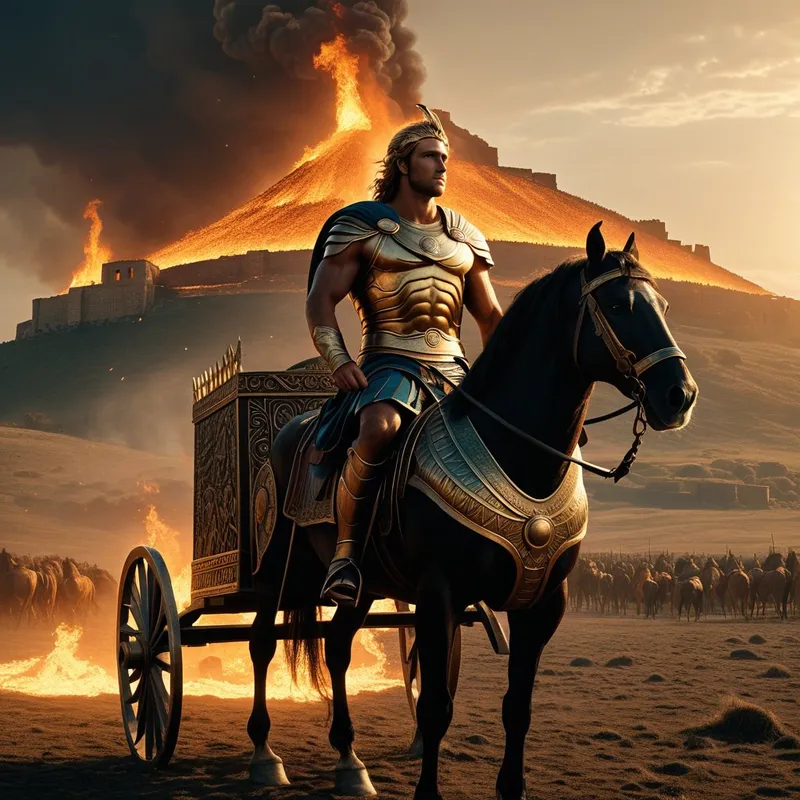
The god-forged chariot that carries Achilles to his final, fateful vengeance, a vessel of divine wrath and tragic destiny on the plains of Troy.
The Tale of Achilles’ Chariot
Hear now of the fire that fell upon the plain of Troy, a fire not of burning pitch but of a man’s soul, given form by a god’s hand. The great [Achilles](/myths/achilles “Myth from Greek culture.”/) was adrift in a sea of black grief, his beloved Patroclus lying cold, his armor stripped by the enemy. His wail tore the air, a sound so raw it stilled the battle. His divine mother, [Thetis](/myths/thetis “Myth from Greek culture.”/), rose from the foam, her heart breaking for her son’s mortal pain.
She ascended to Olympus, not to plead, but to demand. She stood before the forge of [Hephaestus](/myths/hephaestus “Myth from Global/Universal culture.”/), [the divine smith](/myths/the-divine-smith “Myth from Various culture.”/) whose lameness belied his power. “My son must return to the war,” she said, her voice the sound of a deep tide. “He needs arms no mortal can break, a chariot no earth-born horse can pull.” [Hephaestus](/myths/hephaestus “Myth from Global/Universal culture.”/), remembering Thetis’s kindness, nodded. Fire roared in his celestial workshop. Bronze flowed like [water](/myths/water “Myth from Chinese culture.”/), tin and silver and gold dancing in the flames. He did not merely craft; he sang form into being.
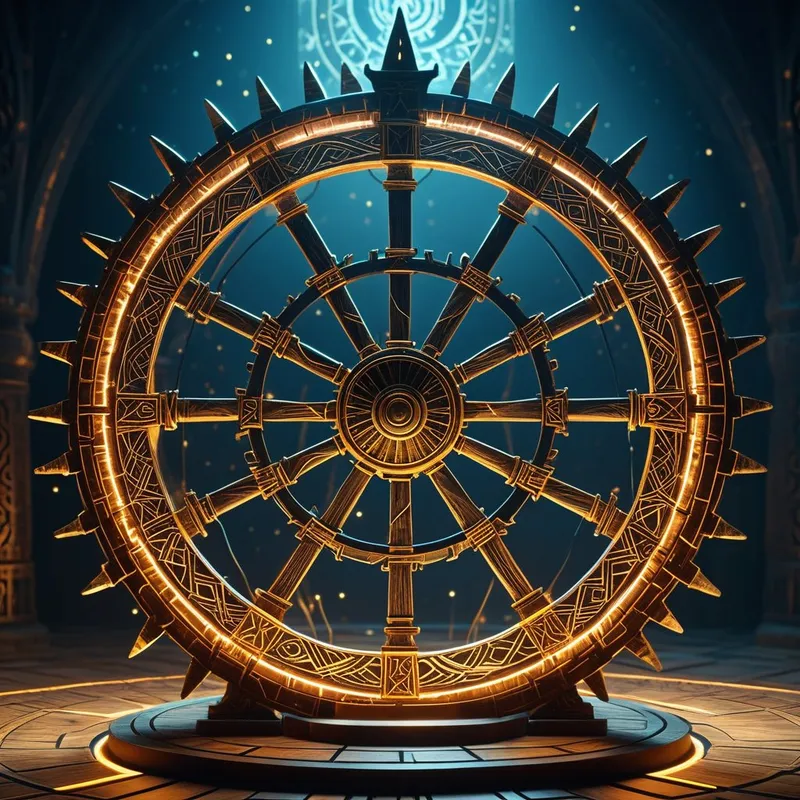
A shield was born first, a cosmos upon its surface, depicting the heavens, [the earth](/myths/the-earth “Myth from Hindu culture.”/), cities at peace and war, the very wheel of life. Then came the greaves, the corselet, the helmet with its terrible golden crest. Finally, [the chariot](/myths/the-chariot “Myth from Tarot culture.”/). Its frame was of imperishable wood and gold, its wheels bound with bronze, revolving on axles of silver. But its soul was its team: two immortal stallions, Xanthos and Balios, born of the storm-wind [Zephyrus](/myths/zephyrus “Myth from Greek culture.”/) and a harpy. They were not beasts, but forces—wind given flesh, fury given form.
Achilles, clad in this god-skin, stepped onto the chariot. The air crackled. He took the reins, and the earth itself seemed to tremble. He drove not onto a battlefield, but into a realm of pure consequence. [The immortal](/myths/the-immortal “Myth from Taoist culture.”/) horses knew his heart; they became an extension of his rage. He scourged the plain, a divine tempest in human shape, seeking one man: Hector. [The river](/myths/the-river “Myth from Buddhist culture.”/) Scamander rose against him, choked with corpses, and Achilles fought the very waters. But the chariot held, a vessel of purpose against [chaos](/myths/chaos “Myth from Greek culture.”/).
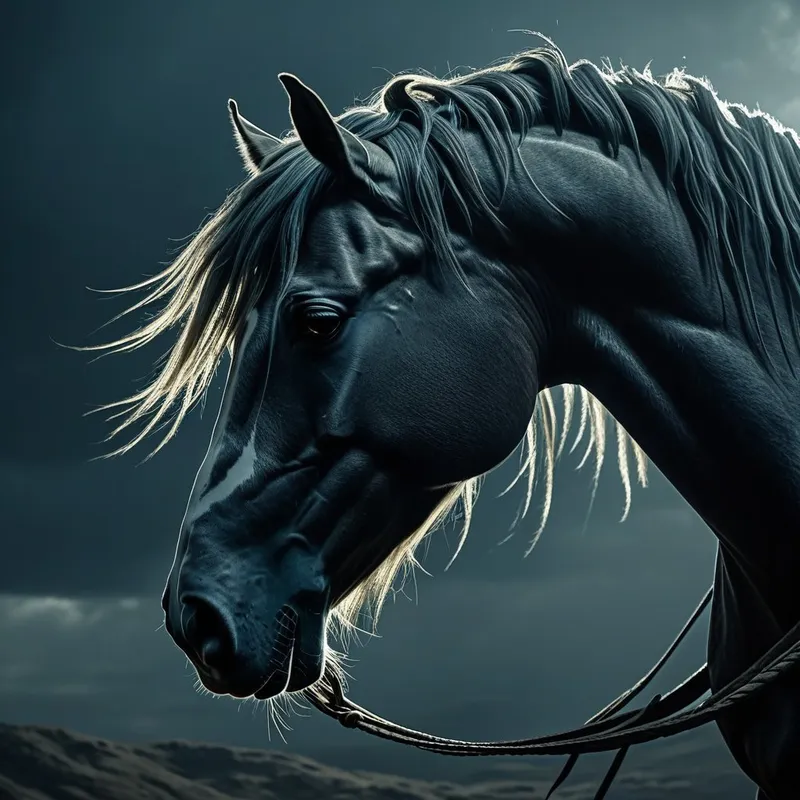
When he found Hector before the gates of Troy, the chase was not of two men, but of fate circling its prey. Three times they raced around the sacred walls, the chariot’s thunder the only sound in [the world](/myths/the-world “Myth from Tarot culture.”/). And then, it was over. Vengeance was done. But as Achilles stood triumphant, the horse Xanthos, its mane like flowing darkness, bowed its head. The goddess Eris loosened its tongue, and it spoke, its voice the echo of a tomb: “A great man you have slain. But your own [death](/myths/death “Myth from Tarot culture.”/) strides close behind. The day of your doom is fixed.” Achilles, calm now in the eye of his storm, nodded. He knew. The chariot had carried him to the peak of his glory, and from that peak, the only path was down.
Cultural Origins & Context
This myth is not a sidebar to the Iliad; it is its molten, beating heart. It reaches us primarily through [Homer](/myths/homer “Myth from Greek culture.”/)’s epic, the foundational text of Greek culture, recited by [bards](/myths/bards “Myth from Celtic culture.”/) for centuries before being written down. The chariot of Achilles represents a pinnacle of epic technology and divine favor. In the Late Bronze Age world [Homer](/myths/homer “Myth from Greek culture.”/) evokes, the chariot was not merely transport; it was the ultimate weapon of the aristocratic warrior, the tank of its day, a symbol of status, mobility, and shock power.
The crafting scene by Hephaestus taps into deep cultural reverence for the demiourgos—the skilled artisan who bridges the human and divine through craft. The Greeks saw the making of a supreme artifact as a cosmological act. By detailing the shield’s creation—a microcosm of the world—Homer elevates Achilles’ re-armament to a re-creation of order itself. The myth functioned as a meditation on the limits of human agency. Even the greatest hero is dependent on divine tools and is subject to prophecies spoken by his own possessions. It reinforced a worldview where human action, however glorious, unfolds within a framework of immutable moira set by the gods.
Symbolic Architecture
The [chariot](/symbols/chariot “Symbol: The chariot signifies control, direction, and power in one’s journey through life.”/) is far more than a [vehicle](/symbols/vehicle “Symbol: Vehicles in dreams often symbolize the direction in life and the control one has over their journey, reflecting personal agency and decision-making.”/); it is a perfect symbolic [vessel](/symbols/vessel “Symbol: A container or structure that holds, transports, or protects something essential, representing the self, emotions, or life journey.”/) for the [psyche](/myths/psyche “Myth from Greek culture.”/) of Achilles at its most potent and most doomed.
It is, first, the Embodied Rage. After the passive, internal [grief](/symbols/grief “Symbol: A profound emotional response to loss, often manifesting as deep sorrow, yearning, and a sense of emptiness.”/) of his withdrawal, his rage must become active, externalized, and directed. The chariot is that externalization—a mobile [fortress](/symbols/fortress “Symbol: A fortress symbolizes security and protection, representing both physical and psychological safety from external threats.”/) of [fury](/symbols/fury “Symbol: An intense, overwhelming rage that consumes the dreamer, often representing suppressed anger or a primal emotional eruption.”/) that allows his [emotion](/symbols/emotion “Symbol: Emotion symbolizes our inner feelings and responses to experiences, often guiding our actions and choices.”/) to move across the [landscape](/symbols/landscape “Symbol: Landscapes in dreams are powerful symbols representing the dreamer’s emotional state, personal journey, and the broader context of life situations.”/) and enact its will. It transforms paralyzing [grief](/symbols/grief “Symbol: A profound emotional response to loss, often manifesting as deep sorrow, yearning, and a sense of emptiness.”/) into world-altering [action](/symbols/action “Symbol: Action in dreams represents the drive for agency, motivation, and the ability to take control of situations in waking life.”/).
Second, it is the [Conduit](/symbols/conduit “Symbol: A passage or channel that transfers energy, information, or substance from one place to another, often hidden or structural.”/) of the Divine. Forged by a god and drawn by immortal [offspring](/symbols/offspring “Symbol: Represents legacy, responsibility, and the future self. Often symbolizes creative projects or personal growth.”/) of wind spirits, the chariot temporarily elevates Achilles beyond the purely [human](/symbols/human “Symbol: The symbol of a human represents individuality, complexity of emotions, and social relationships.”/) [realm](/symbols/realm “Symbol: The symbol of ‘Realm’ often signifies the boundaries of one’s consciousness, experiences, or emotional states, suggesting aspects of reality that are either explored or ignored.”/). When he rides it, he is a hybrid [creature](/symbols/creature “Symbol: Creatures in dreams often symbolize instincts, primal urges, and the unknown aspects of the psyche.”/): a mortal man wielding divine power. This symbolizes the peak experience of the [hero](/symbols/hero “Symbol: A hero embodies strength, courage, and the ability to overcome significant challenges.”/), where individual will aligns with, and is amplified by, transpersonal forces.
The chariot is the moment the personal wound is forged into an impersonal force; it is grief alchemized into destiny.
Finally, it is the Vehicle of Inescapable [Fate](/symbols/fate “Symbol: Fate represents the belief in predetermined outcomes, suggesting that some aspects of life are beyond human control.”/). The [prophecy](/symbols/prophecy “Symbol: A foretelling of future events, often through divine or supernatural means, representing destiny, fate, and hidden knowledge.”/) from Xanthos is the core of the [symbol](/symbols/symbol “Symbol: A symbol can represent an idea, concept, or belief, serving as a powerful tool for communication and understanding.”/). The very [instrument](/symbols/instrument “Symbol: An instrument symbolizes creativity, communication, and the means by which one expresses oneself or influences the world.”/) of his [triumph](/myths/triumph “Myth from Roman culture.”/) is also the [herald](/myths/herald “Myth from Greek culture.”/) of his doom. The chariot carries him inexorably toward both his greatest victory (killing Hector) and his predetermined [death](/symbols/death “Symbol: Symbolizes transformation, endings, and new beginnings; often associated with fear of the unknown.”/). It represents the paradoxical [journey](/symbols/journey “Symbol: A journey in dreams typically signifies adventure, growth, or a significant life transition.”/) where achieving one’s ultimate [purpose](/symbols/purpose “Symbol: Purpose signifies direction, meaning, and intention in life, often reflecting personal ambitions and core values.”/) simultaneously consumes [the self](/myths/the-self “Myth from Jungian culture.”/) that sought it.
The Dreamer’s Resonance
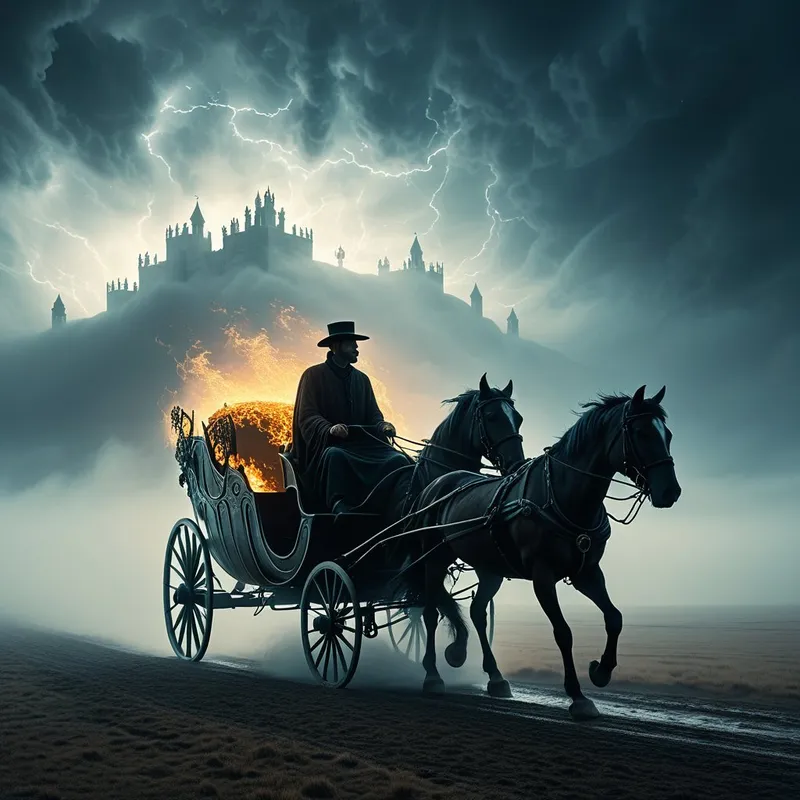
When this myth stirs in the modern unconscious, it rarely appears as a literal chariot. The dreamer may find themselves in a powerful, perhaps uncontrollable vehicle—a car that accelerates on its own, a train on a fixed track, a spacecraft. The feeling is one of immense, focused power coupled with a deep, somatic knowledge of a looming [terminus](/myths/terminus “Myth from Roman culture.”/).
This dream pattern signals a critical psychological process: the mobilization of the entire psyche toward a single, non-negotiable goal. It often follows a period of profound loss or betrayal (the death of Patroclus). The dream-ego is no longer debating or hesitating; it has harnessed immense, perhaps frightening energy from the depths (the divine forge, the immortal horses) and is now in motion. The somatic sensation is of being driven, of a fateful momentum. The anxiety in such a dream comes from the prophecy—the unconscious knowledge that this total commitment will change everything, that the old self cannot survive this journey intact. It is the psyche’s dramatization of a point of no return.
Alchemical Translation
The process modeled here is the alchemy of individuation through total, fateful commitment. The “base metal” is the raw, personal pain of Achilles’ grief and shame. The “divine forge” of Hephaestus represents the transformative fire of the unconscious—the workshop where raw emotion is worked upon by archetypal, shaping forces beyond [the ego](/myths/the-ego “Myth from Jungian culture.”/)’s control.
The chariot is the Symbolic Vessel of the Integrated Psyche. The immortal horses (instinctual, storm-born power) are yoked to the god-forged chariot (a structure of conscious purpose and divine craft). The hero (the ego) must learn to drive this formidable union. This is the task: to take the reins of one’s own immense, often chaotic inner powers and direct them with purpose toward a meaningful confrontation with one’s “Hector”—the outer obstacle that mirrors an inner complex.
The fatal prophecy is not a failure, but the completion of the formula. True transformation requires the sacrifice of the former self. Achilles, the wrathful, grieving individualist, must die so that his legend—his meaning within the larger story—can live.
The journey in the chariot is not about avoiding fate, but about meeting it with such totality that one’s life becomes a necessary clause in the story of the world. The modern individual’s “chariot” is the conscious vehicle they construct to carry their deepest purpose, knowing full well that riding it to its destination will irrevocably transform who they are.
Associated Symbols
Explore related symbols from the CaleaDream lexicon: