Achelous Myth Meaning & Symbolism
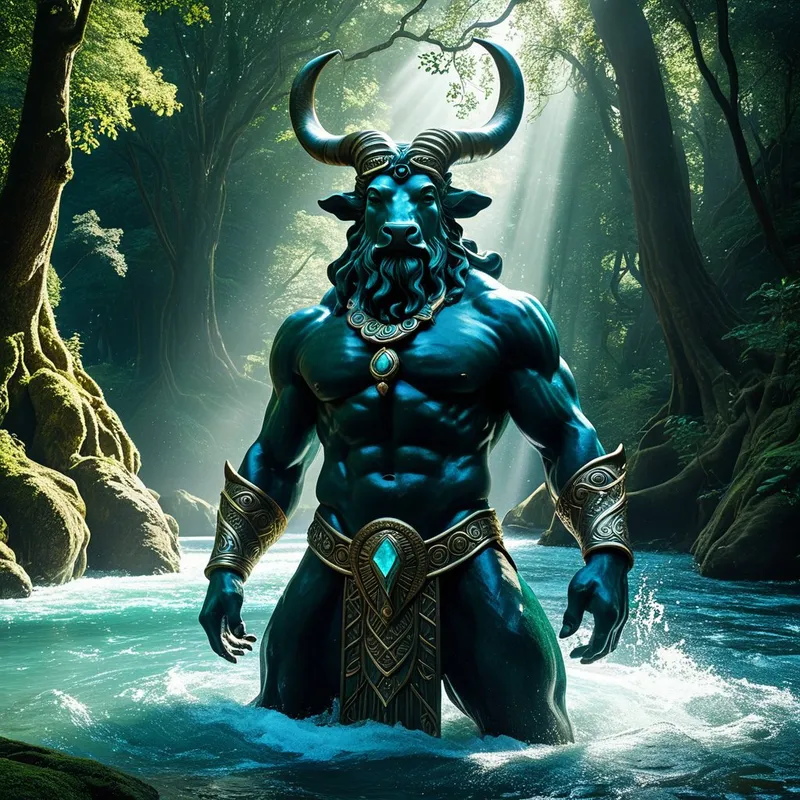
The shape-shifting river god Achelous battles Heracles for the hand of Deianeira, embodying the primal, untamed power of water and the psyche's fluid nature.
The Tale of Achelous
Listen, and hear the tale of the oldest of waters, the lord of liquid silver who carves the land with his will. His name is Achelous, son of Oceanus and Tethys. His voice is the roar of the cataract, his body the winding course of the deepest river in Hellas. He desired Deianeira, a princess of Calydon whose beauty was like the still surface of a mountain lake. But so too did the son of Zeus, the hero whose name shakes the earth: Heracles.
The contest was set not on a battlefield, but in her father’s hall. The air was thick with the smell of smoke, sweat, and anticipation. Achelous did not come as a man. First, he appeared in his terrible, primal majesty—a bull of living water, his hide shimmering like a river under storm-light, his breath a hot mist, his horns like polished obsidian aimed at the heart of the world. Heracles, his own skin gleaming with oil and resolve, met the charge. The hall trembled as god and hero locked together, a groan of timber and a crash of pottery underscoring their struggle.
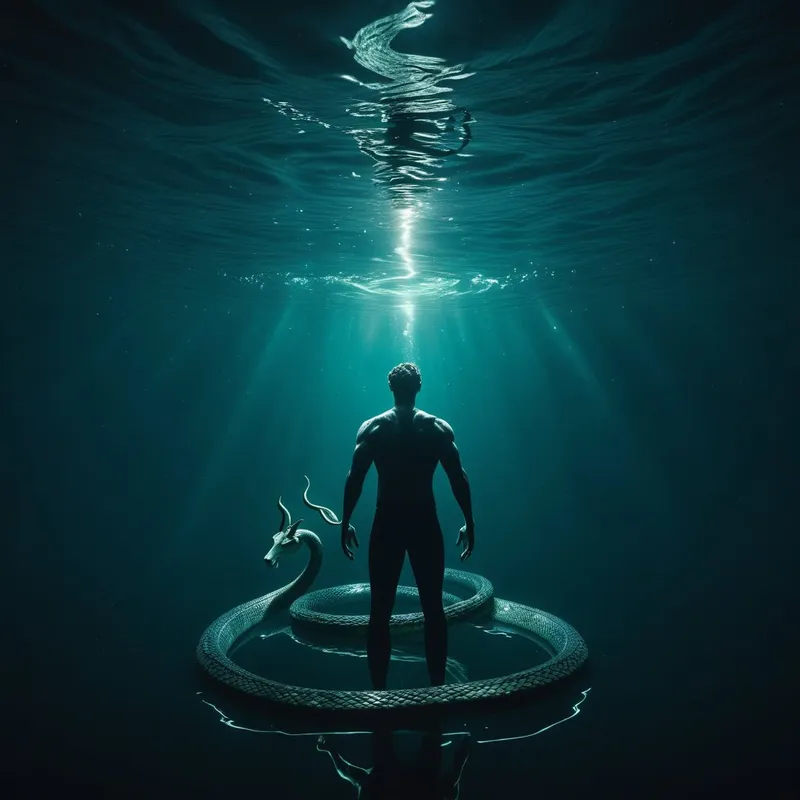
But Achelous is the shape-shifter, the essence of fluidity. As Heracles found purchase, the bull melted away. In its place coiled a monstrous serpent, scales like a thousand dark mirrors, its hiss the sound of a raging torrent confined. It wrapped around the hero, a crushing, cold embrace. Yet Heracles, laughing a laugh that held no mirth, simply tightened his own grip, his fingers seeking the hinge of the serpent’s jaw.
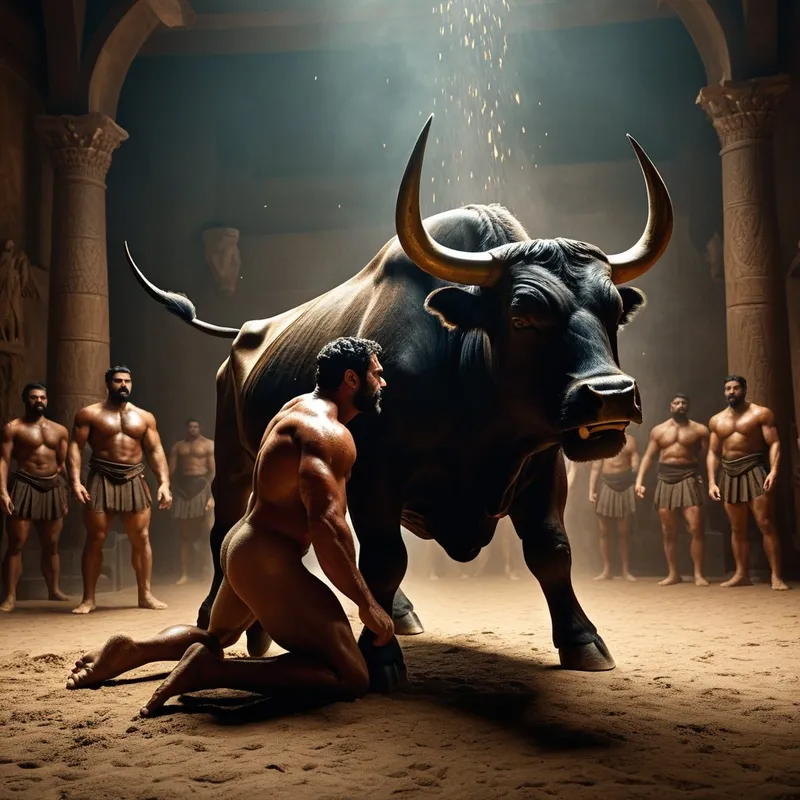
Feeling the strength of the demigod, Achelous flowed into his third and most cunning form: a man, but a man who was the river itself. Now they wrestled as equals, limb against limb, a dance of sheer force. Dust filled the air, kicked up from the trampled earth floor. The onlookers saw not two figures, but a blur of straining muscle and flashing water. Heracles, his footing sure, finally twisted and threw the river god down, a knee planted on his chest. Achelous, desperate, tried to vanish into a trickle, to escape back to his watery bed. But Heracles held fast. With a final, wrenching heave, he tore one of the god’s mighty horns clean from his head.
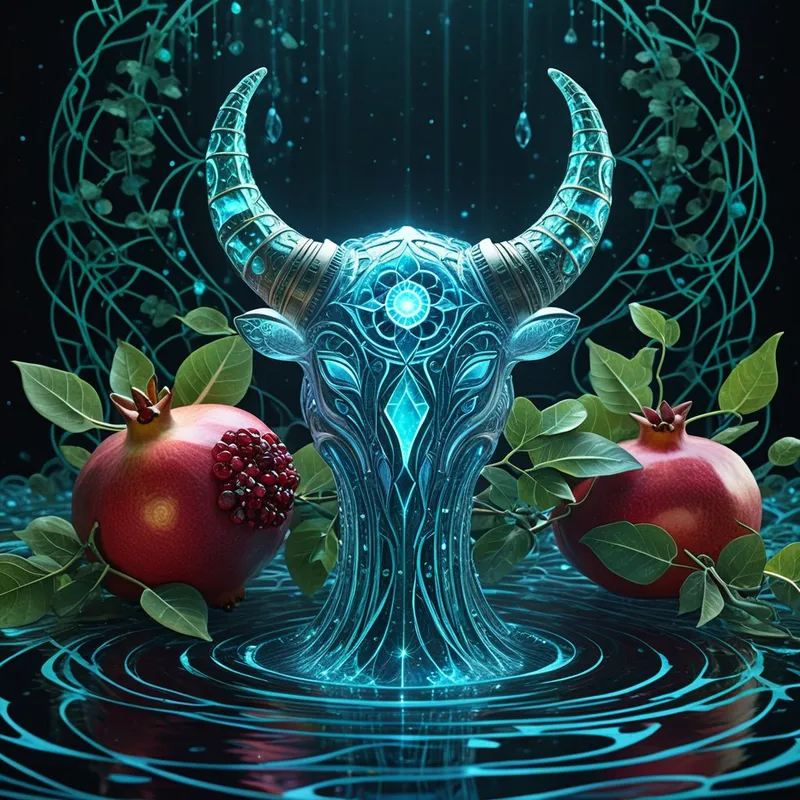
A bellow of pain and loss echoed, not through the hall, but through the very land, a seismic shudder of divine agony. The horn, broken, pulsed with celestial light. From it spilled not blood, but a cornucopia of earth’s bounty—grapes, pomegranates, figs, a river of fruit and grain. The Naiads took the horn, filled it with flowers, and it became the Cornucopia. Defeated, humbled, Achelous slipped away, returning to his eternal flow. Heracles took Deianeira as his bride, his prize won not from a monster, but from the oldest power of the land itself.
Cultural Origins & Context
The myth of Achelous is not merely a story of a wrestling match; it is a geological and theological narrative etched into the Greek landscape. As the personification of the Achelous River—the longest in Greece, flowing between Aetolia and Acarnania—the god was a tangible, daily reality for the people who lived on his banks. His annual floods, which carved the land and deposited fertile silt, were his movements; his dangerous currents were his temper.
This story was preserved most famously in the poetry of Hesiod and later in the plays of Sophocles and the dialogues of Plato. It was a tale told to explain the origin of the Cornucopia, a central symbol in fertility rites and a common motif in art representing the bounty of nature and the state. Societally, it functioned on multiple levels: as an etiological myth (explaining a natural feature and a cultural symbol), as a hymn to the untamable power of nature, and as a foundational story asserting that even the oldest, most fluid divine forces could be engaged with, challenged, and forced to yield their gifts to human (or heroic) civilization.
Symbolic Architecture
At its core, the myth of Achelous is a profound drama of the psyche’s fundamental elements confronting the conscious ego. Achelous is not a monster to be slain, but a primordial power to be wrestled with and integrated.
He represents the unconscious in its raw, dynamic, and shape-shifting nature. His three forms—bull, serpent, man—are not random. The bull symbolizes brute, instinctual force and fertile potency. The serpent represents wisdom, cunning, the chthonic (underworld) energies, and the fluidity of life force (the kundalini of later traditions). The man is the personified, conscious aspect of this natural power, the face we try to put on the deep, wild currents within us. Achelous is the water of the psyche itself: essential, life-giving, capable of carving canyons of character, but also dangerous, overwhelming, and impossible to grasp firmly.
To wrestle the river god is to engage directly with the source of one's own vitality, a process that is inherently violent, intimate, and transformative.
Heracles, the ego-consciousness fortified by divine lineage (the Self), enters this contest for a specific prize: union with Deianeira, whose name means "husband-destroyer" or "man-destroyer." She symbolizes the elusive, transformative aspect of the anima—the inner feminine that promises wholeness but also demands a supreme struggle with one's own depths. The battle is for the right to relate to this profound inner figure. The ego does not "kill" the unconscious; it contends with it, and in doing so, forces it to yield its creative power—the Cornucopia.
The Dreamer's Resonance
When this myth stirs in the modern dreamer, it announces a period of profound internal contest. To dream of wrestling a shape-shifting being, especially one connected to water, signals that long-held structures of identity are being challenged by fluid, powerful forces from the unconscious.
The somatic experience might be one of struggling against a weight that changes form—feeling pinned by a bull’s strength, then constricted by a serpent’s coils, then matched by a shadowy double. Psychologically, this is the process of confronting the multifaceted shadow. The "bull" may manifest as raging, unprocessed anger or rampant physical desire. The "serpent" may be repressed intuitive knowledge or a sly, self-defeating cunning. The "man" may be the aspect of oneself one recognizes but cannot control. The dreamer is in the hall of their own psyche, and the prize—the Deianeira figure—could be a new relationship, a creative project, or a deeper level of self-acceptance that feels just out of reach until this inner battle is engaged.
Alchemical Translation
The alchemical process mirrored here is not the mortificatio (killing) of the prima materia, but its forceful separatio and subsequent coniunctio. Heracles does not destroy Achelous; he separates the horn from the god. This is the critical act of differentiation: the conscious ego, through immense effort, extracts a specific, nourishing potential from the undifferentiated flow of the unconscious.
The broken horn is the wound that becomes the womb of abundance. It is the point where relentless pressure transmutes raw, instinctual power into sustainable, cultural creativity.
For the modern individual on the path of individuation, the myth models a necessary violence. We must "wrestle" with our own fluid, shape-shifting nature—our moods, our complexes, our archaic impulses. We cannot let them rule us (be carried away by the river), nor can we ignore them. We must engage them directly, in the confined space of conscious attention (the hall). The goal is not to "win" by annihilation, but to compel a transformation. The loss of the horn is Achelous’s wound, but from it flows the Cornucopia for the world.
The individual’s "horn of Amaltheia" is their unique gift, their creative fertility, which only emerges when they have had the courage to grapple with the deepest, most ancient stream of their own being and break something free from it. The river god, diminished but not dead, returns to his course—just as our unconscious continues to flow, now in a slightly altered bed, having yielded its treasure to the shaping hand of consciousness. The struggle itself is the act of soul-making, forging a self capable of both holding the flow and offering its fruits.
Associated Symbols
Explore related symbols from the CaleaDream lexicon: