
Aar Aiyy Light Spirits Myth Meaning & Symbolism
A myth of celestial light spirits who descend to ignite the world's soul, battling primordial darkness to weave consciousness into the fabric of being.
The Tale of Aar Aiyy Light Spirits
Listen. Before the wind had a name to whisper, before the rivers learned their courses, the world lay in a deep and dreaming slumber. It was not a peaceful sleep, but a heavy, silent one—a vast expanse of taiga and tundra under a sky so thick with stars it seemed a solid dome of ice. The earth was full of potential, but it was potential locked in frost, a story waiting for its first word. This was the domain of Kharaan, the great, unmoving shadow that dwelled in the roots of the mountains and the depths of the still lakes.
Then, from the farthest, coldest point in the celestial vault, a stirring began. Not a sound, but a gathering of intention. They were the Aar Aiyy. Think not of angels with wings, but of condensed starlight given gentle purpose, beings whose bodies were woven from the last sighs of dying stars and the first gleams of nascent ones. They were the children of the upper world, the realm of pure spirit, and they looked upon the sleeping lower world with a profound, aching love.
Their leader, if such a word applies to a chorus of light, was a spirit known as Uruŋ. Uruŋ perceived the silence not as emptiness, but as a plea. The world was not dead; it was dormant, its immense soul—the Kut—trapped in the embrace of Kharaan. To awaken it was their calling, but the cost was inscribed in the very fabric of their being.
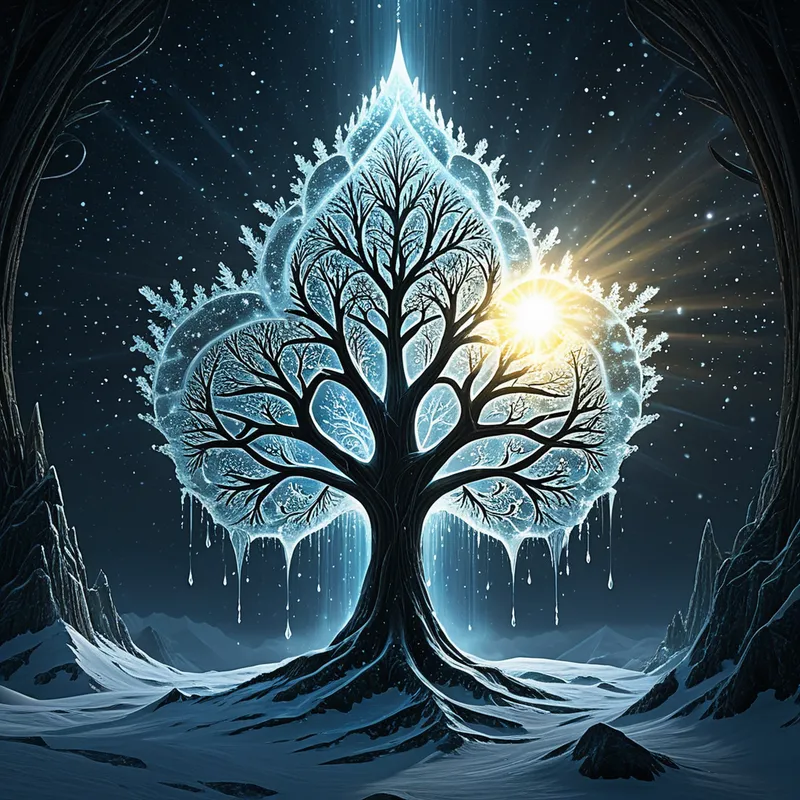
One by one, the Aar Aiyy began their descent. It was not a flight, but a willing fall, a sacrifice of altitude for agency. As they pierced the barrier between worlds, their brilliant, unified light began to fracture and dim. The oppressive weight of Kharaan pressed upon them, a cold so profound it sought to extinguish their essence. The first to reach the frozen earth did so not as blazing suns, but as faint, trembling embers. They touched the colossal Aal Luuk Mas, the World-Tree that connected all realms, and found its sap frozen, its branches bare.
This was the conflict: not a battle of swords, but of presence. The Aar Aiyy had no weapons but their own substance. Uruŋ, burning brighter than the rest, pressed its light-form against the thick, dark ice at the tree's base. A searing hiss filled the void—the first sound. The light did not melt the ice; it transmuted it. Where Uruŋ faded, a slow, golden sap began to weep from the tree. Another spirit poured itself into the barren soil, and where its light was swallowed, the first tough grasses pushed through. A third let its essence scatter on the wind, and the air, once still, began to carry the scent of pine and distant rain.
They were not conquering the darkness. They were marrying it. Each point of light sacrificed its celestial purity to become something new: the glint in an animal’s eye, the spark of life in a seed, the flicker of understanding in the first human soul. Uruŋ, the last and brightest, gathered the remnants of its brethren’s light and, with a final, silent song of release, cast it not outward, but inward, into the heart of the sleeping Kut. The world-soul shuddered. A pulse, like a single, mighty heartbeat, echoed through stone and forest. The shadow of Kharaan did not vanish; it receded, becoming the necessary contrast, the fertile soil, the deep pool of potential from which the now-awakened world could grow.
The Aar Aiyy were gone as they were. But in the dappled sunlight on a stream, in the warmth of a hearth fire, in the guiding gleam of the North Star, their sacrifice flickers on. They became the light within things, not the light upon them.
Cultural Origins & Context
This myth originates from the Sakha (Yakut) people, whose worldview is deeply animistic and shamanic. In the vast, severe landscape of northeastern Siberia, where winter darkness is profound and the summer sun is relentless, the interplay of light and dark is not merely meteorological; it is the fundamental drama of existence. The Aar Aiyy narrative is a cornerstone of this cosmology, passed down not through written texts but through the oral traditions of oyuun (shamans) and master storytellers during long winter nights and communal festivals.
Its societal function was multifaceted. Primarily, it was an etiological myth, explaining the origin of consciousness, life, and the sacred balance between the upper (Ürüŋ Aiyy) and lower (Orto Doidu) worlds. It provided a spiritual rationale for the Sakha’s reverence for nature—every tree, stone, and animal contains a fragment of that sacrificed celestial light, a piece of the kut. Furthermore, it modeled the ultimate act of altruism and creative duty. The myth served as a template for the shaman’s own journey: to traverse worlds, negotiate with spirits, and often sacrifice personal well-being for the healing and balance of the community, mirroring the Aar Aiyy’s descent.
Symbolic Architecture
The myth’s power lies in its stark, beautiful symbolism of the psyche’s own genesis. The sleeping world represents the unconscious in its pure, potential state—teeming with life but unformed, awaiting the catalyzing spark of consciousness (the Aar Aiyy). Kharaan is not evil, but the undifferentiated, chaotic ground of being, the massa confusa of the alchemists. It is the necessary "other" against which consciousness defines itself.
The first act of creation is not an assertion of will, but a sacrifice of unity. Light must consent to be fragmented to know itself in reflection.
The Aar Aiyy symbolize the archetypal force of the Creator. Their descent is the incarnation of spirit into matter, of idea into form. This is always a painful diminishment—the perfect concept is compromised by the limitations of reality. Aal Luuk Mas, the World-Tree, is the axis of the psyche itself, the connecting structure between the divine (superconscious), the human (ego-consciousness), and the chthonic (the unconscious). The light-essence becoming the world’s kut signifies that our innermost vitality, our soul, is not merely biological, but has a transpersonal, celestial origin.
The Dreamer's Resonance
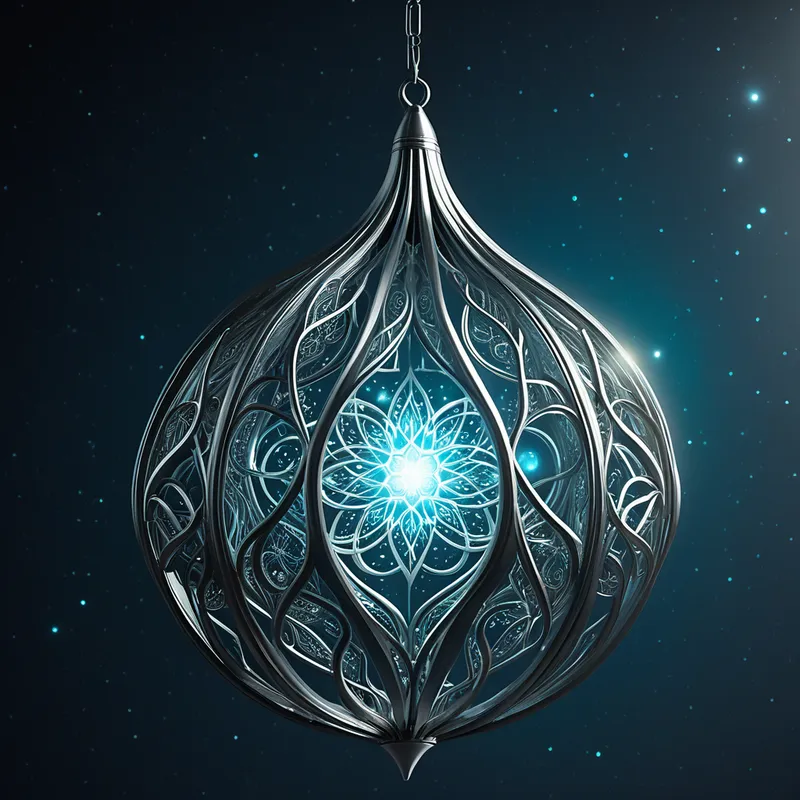
When this myth stirs in the modern dreamer, it often manifests as dreams of fragile, precious light sources in vast darkness: a single candle in an endless cave, a flashlight with dying batteries in a deep forest, or trying to protect a small flame from a howling wind. The somatic experience is one of acute vulnerability mixed with a fierce, protective determination.
Psychologically, this signals a critical phase of individuation. The dreamer is engaged in the labor of bringing a nascent aspect of their psyche—a talent, a truth, a feeling long buried—into the light of day. The "Kharaan" in the dream is the inner resistance: depression, shame, fear, or sheer inertia that seeks to maintain the status quo of unconsciousness. The struggle to keep the light alive is the ego’s effort to sustain this new, fragile consciousness against the pull of the old, familiar darkness. It is the dream-equivalent of the Aar Aiyy’s sacrifice, where the dreamer must spend their own psychic energy to nurture this new growth.
Alchemical Translation
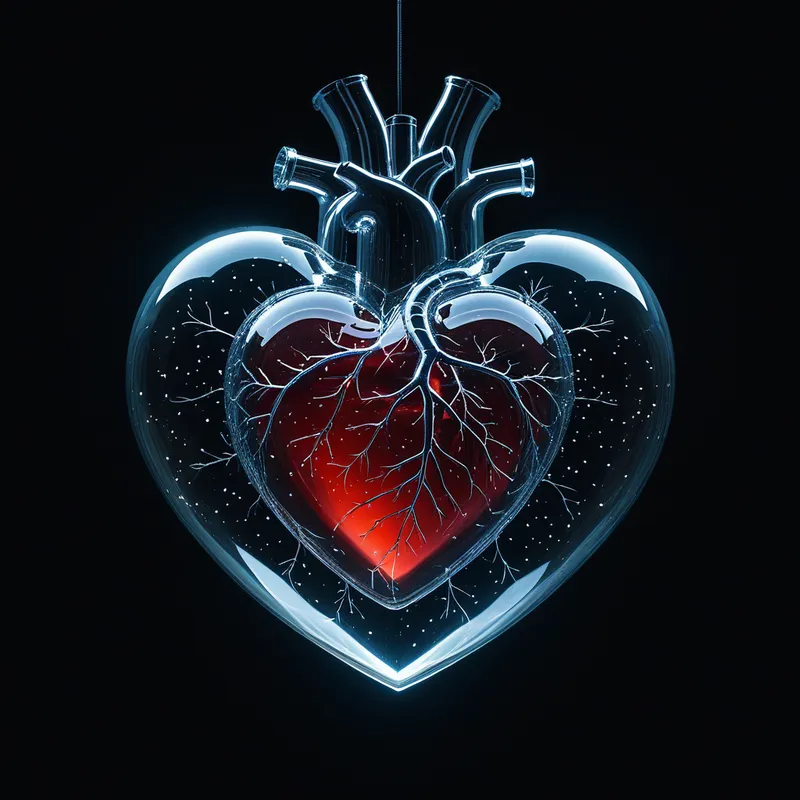
The Aar Aiyy myth is a perfect allegory for the alchemical opus, the process of psychic transmutation. The goal of alchemy is not to create gold but to produce the Lapis Philosophorum, the integrated self. This begins with the nigredo: the blackening, the encounter with the primal, chaotic darkness (Kharaan). The celestial spirits (the pure, unconscious content) must descend into this massa confusa.
Their fragmentation and dimming represent the albedo—the whitening. The pure spirit is broken down, "killed" in its original form, to be cleansed and prepared. The moment Uruŋ ignites the world-soul is the citrinitas, the yellowing or dawning of a new awareness within the very substance of the psyche.
The ultimate creation is not an object made, but a state of being realized. The light does not illuminate the world; it becomes the world’s capacity to see itself.
Finally, the distribution of light into all things signifies the rubedo, the reddening or completion. The transformed substance—now the awakened kut—is returned to and integrated into every facet of life. For the modern individual, this translates to the long, often difficult work of taking an insight from the realm of pure inspiration (the upper world), enduring the compromises and challenges of actualizing it in one’s life (the descent and sacrifice), until it ceases to be a separate "idea" and becomes instead the very texture of one’s personality and perception—a light now lived from within.
Associated Symbols
Explore related symbols from the CaleaDream lexicon:
- Light — The core substance of the Aar Aiyy, representing pure consciousness, spirit, and the creative impulse that must sacrifice its unity to give form to the world.
- Tree — The Aal Luuk Mas, or World-Tree, symbolizing the axis of the psyche, the connection between all levels of being, and the structure through which spiritual light is transmitted into earthly life.
- Darkness — Kharaan, representing the fertile, chaotic, primordial unconscious from which all form emerges and which provides the necessary contrast for light to be perceived.
- Sacrifice — The central action of the myth, depicting the necessary dissolution of a higher, purer state to catalyze life and consciousness in a lower, denser realm.
- Spirit — The essential nature of the Aar Aiyy as celestial beings, denoting the non-material, animating principle that seeks embodiment.
- Star — The origin point of the light spirits, symbolizing distant, perfect ideals and the celestial blueprint that guides incarnation.
- Seed — The encapsulated potential of the sleeping world, which requires the catalytic sacrifice of light to germinate and begin its growth into manifest form.
- Soul — The Kut, or world-soul, which is the recipient and vessel of the sacrificed light, becoming the animated, conscious essence within all living things.
- Dream — The initial state of the world, representing the latent, unconscious potential that exists before the dawn of active consciousness and creation.
- Rebirth — The ultimate result of the myth, not as a cyclical return, but as the first awakening—the birth of a conscious universe from its own unconscious depths.
- Journey — The perilous descent of the spirits from the celestial to the earthly realm, mirroring the soul's journey into incarnation and the ego's journey into the depths of the unconscious.
- Heart — The focal point of the final transformation, where Uruŋ ignites the world-soul; symbolizing the center of being where spiritual truth is realized and integrated.