The Alchemical Fire: Dreaming of Wrath
The Somatic Echo
It begins not as a thought, but as a pressure. A tectonic ache in the jaw, a silent scream held in the tendons of the neck. The body becomes a sealed vessel, a pressure cooker where a primal heat builds with no release valve. The breath turns shallow, held hostage in the upper chest. The hands may curl into fists in sleep, or the spine may arch against the mattress, a bowstring pulled taut. This is the somatic echo of wrath: a silent, systemic overload. It is the body’s intelligence reporting a catastrophic breach—not of a simple rule, but of a foundational covenant. The psyche’s immune system has detected a profound violation of its core integrity, and this is the fever that announces the infection. Before an image forms, the dreamer is already a landscape under siege, feeling the tremors of a coming quake.
The Dreamer's Log
The dreamer stands in a sterile, infinite server room. Rows of silent black towers hum. On a central console, a single monitor flashes with a cascading stream of error codes—INTEGRITY_VIOLATION, BOUNDARY_FAILURE. The dreamer tries to type a command to stop it, but their fingers find only a heavy, cold obsidian stone where the keyboard should be. A wave of pure, soundless fury rises, threatening to shatter the glass walls of the entire complex.
This dream is an alchemical report: the system’s logic has been corrupted by a fundamental breach, and the conscious mind’s tools for repair have been petrified, leaving only the raw, mineral heat of a reactive force.

The False Lead
Wrath in dreams is not the flash-in-the-pan irritation of daily annoyances. It is not road rage or a sharp retort. To mistake it for mere “anger issues” is to confuse a volcano for a match. The dream of wrath does not chronicle a moment of lost temper, but documents a structural failure. It signals a scenario where negotiation, adaptation, or compromise—the psyche’s usual diplomats—have been utterly invalidated. This is not about a transgression of preference, but a dissolution of a core boundary so essential that the entire internal system registers it as an existential threat. The fury is proportional not to the event, but to the depth of the fracture it reveals.
Psychological Architecture
When wrath dreams erupt, they illuminate a shadow architecture built on swallowed truths and unenforced boundaries. This is the territory of the exiled self. Imagine an internal family where one member—often the one who says “No,” who holds the line, who embodies righteous force—has been locked in a soundproof basement for years, labeled “dangerous” or “unacceptable.” The daily self manages, accommodates, bends. But with each bend, a silent debt of dignity is incurred. The dream is the moment the soundproofing fails. The wrath is the voice of that exiled part, not with a grievance, but with a final, thermodynamic verdict. Its appearance is an act of profound shadow work, forcing a confrontation with the cost of our own capitulations. The individuation process here is brutal and clear: to become whole, one must re-incorporate the capacity for holy fury, the part of us that would rather see the temple burn than see it defiled.
Mythic Resonance
We see this in the myth of Demeter. When her daughter Persephone is taken into the underworld, Demeter does not merely grieve; she unleashes a wrath that stops all growth on earth. She does not negotiate with Hades or plead with Zeus. She makes the entire world barren, forcing the gods to confront the consequence of violating a sacred bond. Her wrath is not chaotic evil; it is a precise, systemic withdrawal of life-force, a demonstration of the non-negotiable law she embodies. Similarly, in the Bhagavad Gita, the warrior Arjuna is paralyzed by grief and moral confusion on the battlefield. Krishna does not counsel peace, but awakens him to his dharma, his sacred duty, which includes the righteous wrath of the warrior who must uphold cosmic order against chaos. In both, wrath is the inevitable, purifying fire that follows the rupture of a divine covenant.
Symbolic Nodes
- Volcanoes/Erupting Earth: The pressure of unmetabolized violation seeking catastrophic release.
- Shattering Glass or Mirrors: The fragmentation of a perceived reality or self-image under strain.
- Wildfires or Uncontrollable Blazes: The cleansing, destructive force that consumes old, compromised structures.
- Broken Tools or Weapons: The failure of civilized, controlled methods of defense or repair.
- Silent Screams/Frozen Fury: The somatic imprisonment of the reactive impulse.
- Judge’s Gavel or Implacable Law: The emergence of an inner, merciless justice that overrides personal sentiment.
Archetypal Resonance
The energy of dream wrath resonates most powerfully with The Shadow Ruler.
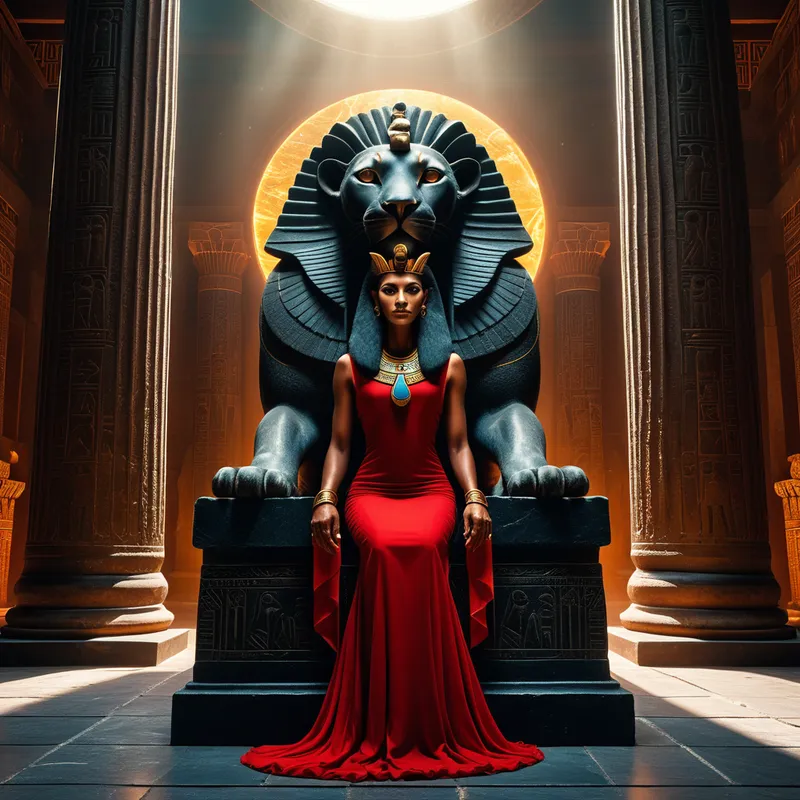
The core Ruler archetype seeks to create order, structure, and sovereignty from chaos. Its shadow emerges when that order is externally imposed, rigid, and maintained through tyrannical control or when, conversely, the inner sovereignty has been so thoroughly sacked that the only remaining response is a tyrannical, reactive fury. The somatic echo of clenched power is the shadow Ruler’s body, a fortress under siege. The alchemical potential lies in recognizing this fury not as a random attack, but as the distorted cry of a dethroned sovereign—the part of you that knows, absolutely, how you must be treated to remain intact. The heat of the wrath is the energy needed to reclaim that inner throne, to transmute the tyranny of reaction into the authority of a clear, enforced boundary.
The Alchemical Process
The transmutation of wrath is the most perilous of alchemical operations. It requires containing the fire, not venting it. The initial, reactive fury is the prima materia—the leaden, toxic emotion. The alchemical vessel is the conscious self who chooses to hold the heat without acting it out destructively. This is the nigredo, the blackening: sitting in the suffocating pressure of the justified rage, feeling its full, annihilating weight. The “heat” is the unbearable tension between the urge to destroy the other and the knowing that true power lies in restructuring the self. As the heat is sustained, a separation occurs. The dross—the bitter narratives of victimhood, the fantasies of revenge—begins to burn away. What remains in the crucible is not pacification, but a purified, diamond-hard core of sovereign will. This is the rubedo, the reddening: the birth of an unassailable inner authority. The transmuted wrath is no longer a weapon pointed outward, but the immutable boundary stone of the self, radiating a calm, formidable “No” that needs no shouting.

The Integration Protocol
Question 1: Where in my waking life have I accepted a "hairline fracture" in my integrity, a compromise that my body registered as a catastrophic breach?
Question 2: If my dream wrath were not a chaotic emotion but a precise, surgical instrument, what outdated structure within me or my life is it attempting to excise?
Question 3: What would my "sovereign fury" protect or make space for, if it were fully integrated? What tender, creative, or true part of me is it trying to build a fortress around?
Action 1 (Somatic Reclamation): For one minute, stand with your feet firmly planted. Clench every muscle in your body as tightly as possible—fists, jaw, abdomen, legs. Hold the tension of the unscreamed scream. Then, in one slow, controlled exhalation, release everything completely, going limp. Repeat twice. This ritualizes the containment and release cycle, grounding the fury in the body's wisdom.
Action 2 (Unstructured Writing): Set a timer for 10 minutes. Write a "Letter of Indictment" from your dream wrath. Do not censor. Let it list the crimes, the violations, the betrayals in the rawest, most archaic language possible. Do not send it. Burn it or shred it ceremonially. This externalizes the shadow Ruler's decree, freeing you from its unconscious hold.
Action 3 (Boundary Ritual): Physically demarcate a small, sacred space in your home—a shelf, a corner. Place an object there that represents an immovable boundary (a stone, a piece of iron). Each time you pass it, silently state one non-negotiable truth about your own worth. This builds the new internal architecture the wrath was demanding.
Final Validation
To dream of wrath is to be chosen by a fire that terrifies you. It is a testament to a pain so deep that your psyche can only speak it in the language of cataclysm. This is not a sign of brokenness, but of a profound and stubborn wholeness fighting its way to the surface. The fury is not your enemy; it is your exiled lawmaker, your dethroned queen, returning from the waste with a demand for your sovereignty. The journey is through the heat, not around it. And on the other side of that blistering passage waits not a gentler you, but a more complete one—forged, formidable, and finally free to build a world where such fires are no longer needed.