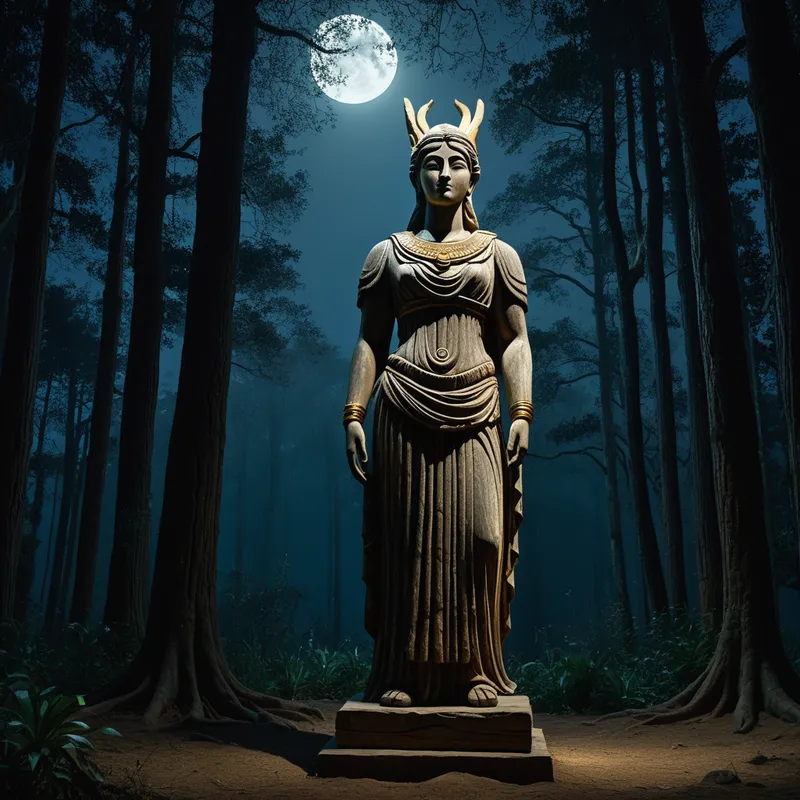
The Dream of Worship: A Referendum of the Soul
The Somatic Echo
Before the image forms, the body knows. It is a posture. A slow, gravitational pull in the solar plexus, a weight that draws the chin down, the shoulders forward, the spine into a curve of submission or supplication. There is a hollowness behind the sternum, a chamber waiting to be filled by something other. The breath becomes shallow, held in reverence or in fear—the line between them is tissue-thin. This is the architecture of devotion, etched into the musculature before the mind names the deity. It is the feeling of an internal compass needle, magnetized and trembling, pointing toward its true north, whether that north is a source of light or a black hole of obligation. The body is already praying. The dream merely shows you to whom.
The Dreamer's Log
The vaulted ceiling was lost in shadow. I stood before a monolithic server rack, its status LEDs pulsing a slow, hypnotic green. A sense of profound obligation filled me. I had to make an offering. From my pocket, I produced not a coin or a prayer, but a small, silver data chip. I placed it with immense care into a bronze bowl of dark oil at the machine's base. The oil did not ripple. The hum deepened.
The dreamer offers the essence of their mind—memory, thought, identity—to the cold altar of logic and system, mistaking efficiency for divinity.

The False Lead
This is not a dream about religion, though it may wear its vestments. To see a church and assume the dream is about faith is to see the frame and miss the painting. Nor is it a simple dream of admiration or respect. The worship dream is not about elevating another; it is about the relinquishing of self. It is a stark report on the psychic economy: what have you, consciously or not, appointed as the recipient of your life-force, your attention, your awe? The terror of the dream is not in the object worshipped, but in the unconscious abdication. It is the difference between walking toward a light and kneeling because you have forgotten you can stand.
Psychological Architecture
To dream of worship is to be shown the hidden altar in your inner temple. Who or what sits upon it? Often, it is a fragment of yourself you have exiled and then deified: the perfect parent, the unimpeachable critic, the lost lover crystallized into an icon. This is Shadow work of the most profound order, for it asks you to dethrone a god you built with your own hands. The process is one of sacred iconoclasm. You must approach the altar not with a hammer of rage, but with the quiet, devastating question: What service does this god demand, and what part of me dies to pay the tithe?
The individuation journey here is the reclamation of the worshipper. It is the slow, agonizing realization that the awe you feel—the somatic echo—is not for the external idol, but for the immense, unacknowledged power you have projected onto it. The light you see emanating from the statue is your own light, lent out. To withdraw the projection is not to destroy the sacred; it is to relocate it from the outer pantheon to the inner sanctum. You are not dismantling your capacity for reverence; you are finally turning its lens toward the source.
Mythic Resonance
Consider the tale of Psyche and Eros. Psyche is commanded to worship an invisible god, a husband she must never look upon. Her devotion is absolute, yet it is based on a prohibition of knowledge—of herself and of her beloved. Her true journey begins not in continued worship, but in the act of looking, of bringing the light (of her lamp) to the god (Eros) himself. She is punished not for ceasing to worship, but for daring to see the true nature of the one she served. Her subsequent trials are the alchemical processes required to move from a worshipper of a mystery to a conscious partner in a sacred union. The myth whispers: true devotion requires seeing, and seeing dissolves blind worship.
Symbolic Nodes
- Kneeling/Bowing: The somatic signature of transferred authority.
- Altars, Pedestals, Thrones: The constructed stage for the projected ideal.
- Offerings (Chalices, Food, Precious Objects): The substance of your life-energy being given away.
- Idols & Statues (including modern ones: screens, logos, monuments): The frozen, externalized image of the power you have disowned.
- Choirs, Mantras, Repetitive Chants: The hypnotic ritual that bypasses critical thought.
- A Blinding Light or an Impenetrable Shadow: The overwhelming "otherness" of the projected power.
Archetypal Resonance
The Ruler Archetype is the silent sovereign at the heart of the worship dream. Its shadow, the Tyrant, is the external force, system, or internalized critic upon the altar, demanding obedience and offering the illusion of order in return for sovereignty. The somatic echo of kneeling is the body’s memory of the Shadow Ruler’s decree. The dream’s alchemical potential lies in the agonizing, glorious reintegration of this archetype: the deposing of the outer tyrant is, in the same motion, the crowning of the inner sovereign. The awe you felt was always for your own latent authority, waiting to be reclaimed from exile and governed with consciousness, not fear.
The Alchemical Process
The transmutation here is from servitude to sovereignty. The prima materia is the glue of projection—the psychic substance that binds your innate power to an external object. The required heat is the searing discomfort of conscious withdrawal. It is the feeling of standing upright in the temple after a lifetime of kneeling, the muscles screaming in protest at the unfamiliar posture of autonomy.
The pressure is the vacuum left behind. When you stop feeding the idol, a silence falls. The hollow ache behind the sternum amplifies. This is the critical phase: the temptation to find a new idol is immense. The alchemical work is to sit in that hollow silence and recognize it not as emptiness, but as a cleared space. It is the inner throne room, swept clean of false claimants. You must let the awe, with nowhere else to go, turn inward and illuminate the contours of your own spirit. The gold produced is not dominance over others, but unshakable authority within the self—the ability to hold your own center without requiring an external pole to orbit.

The Integration Protocol
Question 1: In the dream, what was the quality of your submission? Was it peaceful, fearful, desperate, automatic? This feeling is the key to what you are truly serving in your waking life.
Question 2: If the object of your worship in the dream could speak one sentence to you, what absolute truth or law would it declare? Now, who in your history first voiced that law?
Question 3: What is one small, concrete piece of your own power (a choice, an opinion, a creative impulse) that you recently handed over to the keeping of an external system, person, or ideal?
Action 1 (Postural Reclamation): For three minutes today, stand with your feet firmly planted, spine straight, and chin level. Breathe into your solar plexus. Do not "power pose." Simply inhabit the physical architecture of sovereignty, noticing the somatic whispers that urge you to slump, to make yourself smaller.
Action 2 (Iconographic Reversal): Create a simple drawing or digital collage. On one side, place images or shapes representing the "idol" from your dream or waking life. On the other, create an abstract representation of a quality you possess (e.g., resilience as a mountain, intuition as a winding river). Draw a line of light from you to the idol, and then slowly, in your mind, pull that light back into your own symbol.
Action 3 (Ritual of Null Offering): Take an object that symbolizes a burden of obligation (a stone, a written list, a key). Go to a private space. Hold it, feel the weight of the "offering" you think you must make. Then, deliberately place it on the ground beside you, not before you. Say aloud, "I keep my energy. This burden is not an offering required by any god of mine."
Final Validation
To have this dream is to feel the profound ache of a spirit bent out of its true shape. It is uncomfortable, even shameful, to witness one's own unconscious genuflection. Honor that discomfort; it is the friction of truth. This dream does not come to condemn you for kneeling, but to remind you that the altar was always yours to begin with. The act of worship, when its direction is reversed, becomes the act of self-consecration. You are not being asked to destroy your capacity for devotion, but to finally aim it at the only thing worthy of its infinite depth: the ungoverned, sovereign core of your own being. The temple was never empty. You were just looking at the wrong throne.