The Alchemy of Willpower: Forging the Sovereign Self in the Dream Crucible
The Somatic Echo
Before it is a thought, willpower is a sensation. It is not the clenched fist, but the tremor in the diaphragm that precedes it. It is the low, tectonic hum in the marrow of your bones, a vibration of potential energy held at the precipice of kinetic release. You feel it as a magnetic pull in the solar plexus, a gravity well of intention that draws all your disparate parts—the anxious child, the weary manager, the hopeful artist—toward a single, silent point of focus. It is the body’s deep knowing of a threshold: the breath held before the plunge, the muscles coiling not in tension, but in readiness. This echo is the raw, unrefined ore of your agency, waiting in the dark of your somatic self for the catalyst of a dream to begin its transmutation.
The Dreamer's Log
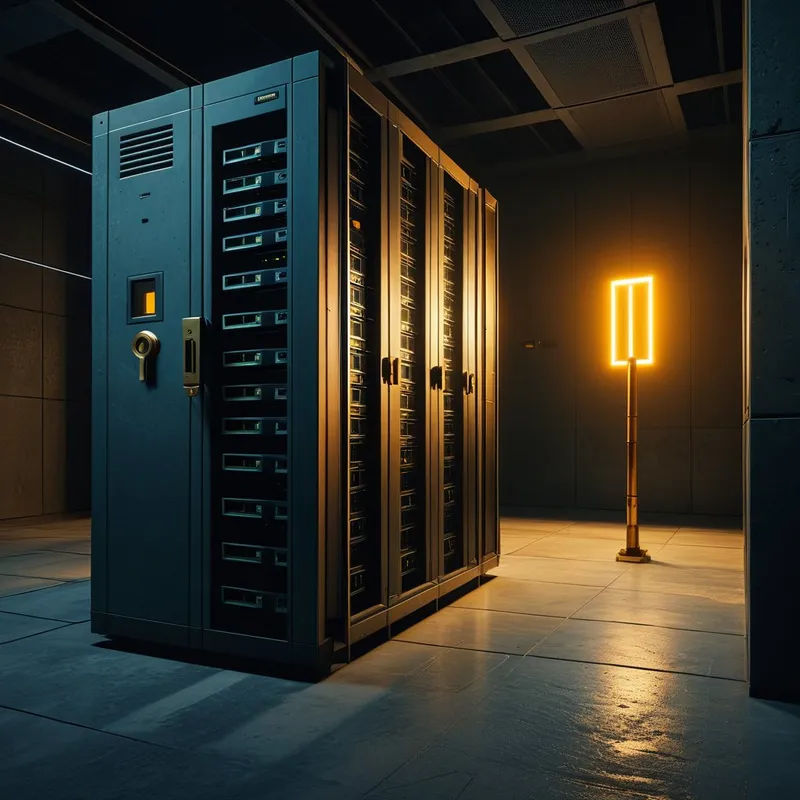
The dream is always the same: I am standing in a vast, abandoned data center. Rows of silent, monolithic servers hum with a dormant power. I know, with absolute certainty, that I must initiate the core sequence. My hand moves toward a console, but it is not my hand—it is a ghost-limb, disconnected and slow. I try to speak the command, but my voice is a rustle of dead leaves. The system awaits. The key is in me, and I am frozen by the sheer magnitude of the "on" switch.
In this frozen moment, the dream alchemically reveals that will is not the command itself, but the terrifying permission to become the one who is worthy of giving it.
The False Lead
Willpower, in the dreaming mind, is often mistaken for its shadow: mere stubbornness, or the ego’s brittle insistence on control. A dream of pushing against an immovable wall is not a call to push harder. A dream of a broken tool is not about finding a stronger one. These are the false leads. The dream is not concerned with the force you exert upon the world, but with the integrity of the instrument from which force is generated. It points not to an external obstacle, but to an internal schism—a civil war between parts of yourself where will has been hijacked by a subcommittee of fear, obligation, or an old, forgotten vow. The theme of willpower, therefore, is the profound structural shift from being a battlefield to becoming the sovereign who can negotiate its peace.
Psychological Architecture
To engage this theme is to enter the silent council chamber of your internal family. Here, the Protector part, armored in "shoulds," argues for safe inaction. The Orphan pleads not to be abandoned if you change. The Pleaser negotiates for external approval at the cost of internal truth. Willpower emerges not when one part defeats the others, but when the conscious Self—the seat of your awareness—steps forward not as a dictator, but as a compassionate, firm leader. It is the process of individuation in its most grounded form: differentiating your core will from the cacophony of inherited scripts and traumatic reflexes. This is shadow work of the highest order, for it requires you to befriend the very inertia you despise, to understand the loyal, if misguided, protection it offers. The grief here is for the time lost under foreign rule. The terror is in the awesome responsibility of your own throne.
Mythic Resonance
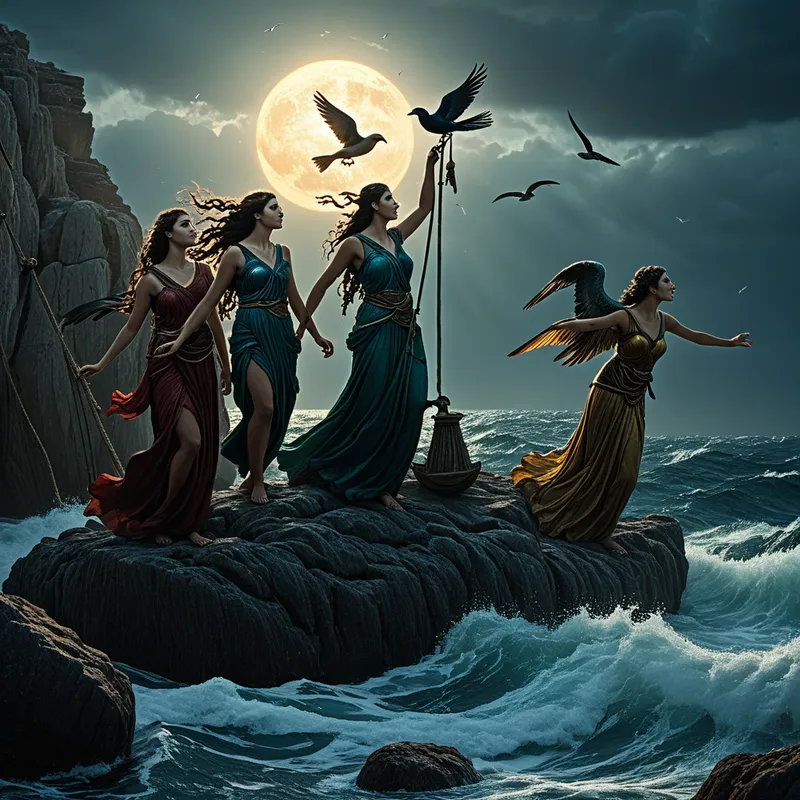
We see this eternal process in the myth of Theseus in the Labyrinth. The labyrinth is not just the external maze of Minos; it is the tangled, internal architecture of his own lineage and fate. The sword is his inherited will, but the thread of Ariadne is something subtler—the slender, unwavering line of his own conscious intention, his connection to a purpose beyond mere survival. He does not bulldoze the maze; he moves through it, anchored by his thread, integrating the path as he goes. His willpower is not the killing of the Minotaur alone, but the terrifying, thread-held journey to the center of himself to face the beast of his own chaotic, half-bull nature. The myth tells us that true will is navigational. It is the capacity to hold your course through the internal dark.
Symbolic Nodes
- Frozen or Paralyzed Limbs: The disconnect between intention and enactment.
- Broken or Ineffective Tools: A fractured sense of agency or outdated methods of asserting will.
- Forgotten Passwords/Lost Keys: The search for the authentic command that unlocks your own energy.
- Immobile Vehicles (Car, Ship): The stalled journey of the Self, lacking the directed force to move.
- Unresponsive Technology: The feeling that your internal systems are on standby, awaiting the correct, sovereign command.
- A Heavy, Yet Precious, Object: The burden and value of your own potential, which you must choose to lift.
Archetypal Resonance
The core energy of willpower resonates most powerfully with The Ruler Archetype. This is not the shadow Ruler, the tyrant who controls from fear, but the sovereign who creates order from authentic authority. Its somatic echo is the upright spine, the grounded posture, the calm center in the storm—the physical embodiment of stable command. The Ruler’s alchemical potential lies in its capacity to end internal civil war, to establish a benevolent hierarchy where all parts of the psyche are heard, but the integrated Self holds the final, compassionate authority. It transforms the chaotic energy of conflicting impulses into the directed power of a kingdom working in concert toward a shared vision.
The Alchemical Process
The transmutation of willpower requires the heat of conscious tension. This is the psychological pressure that arises when you hold a deep desire in one hand and the full, unvarnished truth of your current resistance in the other, and you refuse to let go of either. It is the crucible of the sleepless night where you can no longer blame the labyrinth and must admit you have been afraid to pick up the thread. This heat is generated by the courageous question: "What part of me is invested in my powerlessness?" The raw lead of paralysis is not discarded; it is subjected to this sustained, compassionate inquiry until it reveals its hidden gold—the legitimate need for safety, the loyal protection of an old wound. The sovereign will is forged when you can honor that need without letting it dictate your laws. The grief of lost time becomes the fuel. The terror of the throne becomes its foundation.
The Integration Protocol
Question 1: In the dream, where exactly did the sense of "I" reside? Was it in the frozen body, observing it, or in the space between the intention and the action?
Question 2: If your paralysis or broken tool had a voice, what is it sincerely trying to protect you from? What catastrophe does it believe it is preventing?
Question 3: What one, small, sovereign choice have you been deferring? Not a life-changing decision, but a simple, daily "I choose this" that you have been outsourcing to habit, others, or fear?
Action 1 (Somatic Reclamation): For one minute today, stand with your feet firmly planted. Place a hand on your solar plexus. Breathe into that space, and with each exhale, silently state a simple, true declaration that begins with "I choose..." (e.g., "I choose to finish this sentence."). Feel the declaration in the body, not just the mind.
Action 2 (Unstructured Scripting): Take a blank page. Write at the top: "The Council of My Will." Let different parts of you speak. Let the Procrastinator write its case. Let the Critic voice its fears. Let the Dreamer state its desire. Do not judge or edit. Then, in a different color, let your Sovereign Self write a final, integrative decree that acknowledges all voices but makes a clear, kind decision.
Action 3 (Ritual of the Key): Find a physical object—a stone, a ring, an old key—to serve as a token of your sovereign will. Once a day, hold it. Recall a moment, however small, where you felt a flicker of authentic, un-coerced choice. Imprint that feeling onto the object. This is not magic, but neural ritual—training your psyche to recognize and anchor the sensation of your own agency.
Final Validation
It is profoundly difficult to face the places within where your own will has gone into exile, where you have lived as a subject in your own kingdom. That friction, that sense of being a ghost in your own machine, is the precise evidence of your sovereignty straining to be born. The dream does not show you your weakness; it maps the fault lines where your greatest strength is waiting to be excavated. You are not broken. You are in formation. The will you seek is not a weapon to be found, but a crown you must, with trembling hands and steady heart, choose to fit upon your own head. The throne has always been empty, waiting for its only rightful occupant: you.