The Sovereign’s Crucible: Dreams of Will
It begins not as a thought, but as a density. A weight in the solar plexus, a slow, tectonic pressure behind the sternum. The body knows will long before the mind claims it. It is the somatic echo of a force gathering—a potential energy held in the marrow, in the quiet tension of a muscle not yet flexed. It feels like the moment before a storm breaks, a silent, charged fullness. Or conversely, it can feel like a hollowing, a vacuum in the gut where agency should be, a ghost-limb sensation for a power you cannot locate. This is the visceral ground from which dreams of will emerge: the body’s ancient, wordless report on the state of your sovereignty.
The Dreamer’s Log
You stand before a seamless, featureless wall in a vast, empty hall. In your hand is a heavy, ornate iron key, cold to the touch. You know, with absolute certainty, that this key opens a door within this wall, but you cannot find the keyhole. The only instruction is a whisper in the still air: “The lock is not on the wall.”
This dream is an alchemical riddle of will: the instrument of agency is present, but its application requires a paradigm shift from seeking external mechanisms to recognizing the lock is an internal, structural condition.

The False Lead
Will, in the dreaming psyche, is not mere stubbornness, obstinacy, or the brute-force application of desire. To mistake it for simple determination is to confuse the engine for the steering. Nor is its absence simply “bad luck” or external oppression. The dream is not complaining about the world’s resistance; it is conducting a diagnostic on your internal governance. When will appears as a problem—a missing key, a broken tool, a paralyzed limb—it is not signaling a lack of effort. It is revealing a fracture in the foundational agreement between your conscious intentions and the deeper, often unconscious, councils of the psyche that must ratify them.
Psychological Architecture
The architecture of will is built in the shadowlands. It is the negotiated treaty between the ego—the “I” that wants—and the internal family of exiled selves, protectors, and ancient instincts. A weak will is often a democracy in deadlock, where the inner orphan’s fear vetoes the explorer’s curiosity, or the shadow ruler’s tyranny silences the creator’s voice. The dream of the unmovable object or the un-wieldable tool exposes this civil war. Conversely, dreams of omnipotent will—moving mountains with a glance—often signal a psychic coup, where one partial self has usurped the throne, creating a brittle, totalitarian state that is powerful but inhuman. True will, the kind that dreams ultimately seek to forge, is not the victory of one part over others, but the emergence of a centralizing principle—a Self that can hold the tension of opposites, integrate the shadow, and direct the system’s immense energy with conscious consent. This is the individuation of will: from fragmented desire to coherent purpose.
Mythic Resonance
We see this alchemy in the myth of Theseus and the Minotaur. The will is not merely the sword Theseus carries into the Labyrinth; it is the clew—the ball of thread given by Ariadne. The heroic thrust (the sword) is useless without the mindful, patient, circuitous act of recording the path (the thread). The will that slays the monster is the same will that must remember its way back to consciousness, integrating the journey. It is a dual action: penetration and return, force and memory. Similarly, the Norse myth of the god Tyr placing his hand in the wolf Fenrir’s mouth as a pledge of good faith, only to have it bitten off, speaks to the profound cost of sovereign choice. True will often requires a sacred sacrifice—a binding agreement where we willingly risk a part of ourselves (a comfort, an old identity, a security) to bind a chaotic, destructive power and establish a new, lawful order.
Symbolic Nodes
- Keys, Tools, or Weapons: That feel useless, too heavy, or missing entirely.
- Paralysis or Super-Strength: The body refusing or exceeding normal limits.
- Immovable Objects vs. Irresistible Forces: Walls, boulders, stalled vehicles vs. tidal waves, avalanches, unstoppable machines.
- Broken Machinery or Vehicles: Cars without brakes, phones that won’t dial, pens out of ink.
- Governance Scenes: Empty thrones, broken scepters, signing or being unable to sign a momentous document.
Archetypal Resonance
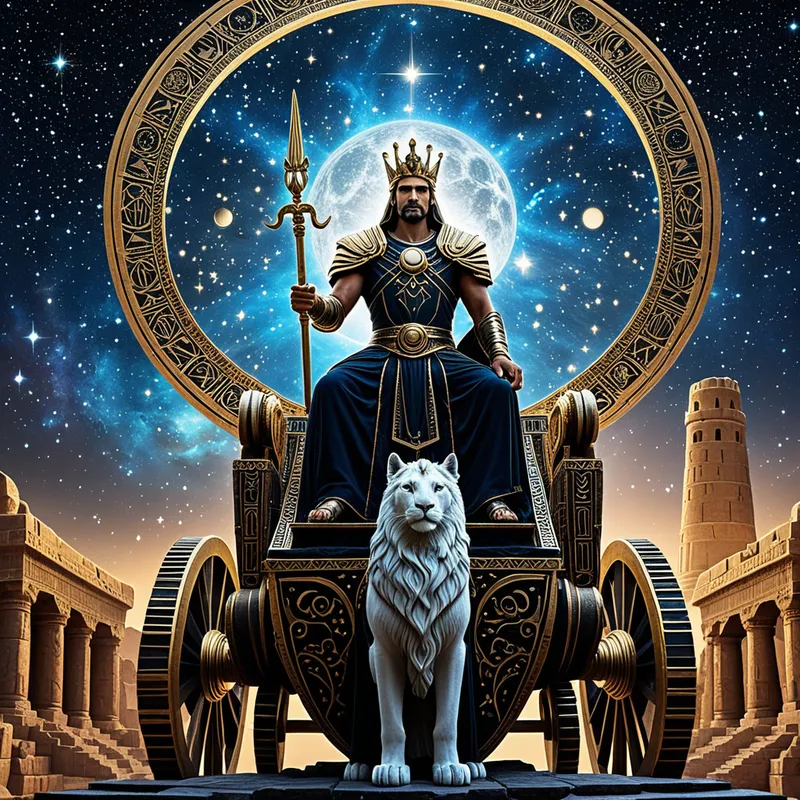
The drama of will finds its purest expression in The Ruler Archetype. The Ruler’s core energy is the establishment of order, the taking of responsibility, and the conscious direction of a kingdom—which, in the psyche, is the totality of one’s inner and outer life. The somatic echo of the emerging Ruler is that deep, central pressure—the weight of the crown being felt before it is seen. Its shadow, the Tyrant or Control-Freak, manifests in dreams as the brittle, omnipotent force that creates sterile order through fear, or as the paralyzed figure who cannot act for fear of imperfect control. The alchemical potential of the Ruler archetype in dreams of will is the transformation from chaos or tyranny into sovereignty: the earned, compassionate, and effective authority that brings the inner world into harmonious, purposeful alignment.
The Alchemical Process
The transmutation of will is an operation of Pressure and Permit. The pressure is the heat generated by the conscious confrontation with your own fragmentation—the grief of your indecision, the terror of your own latent power, the frustration of internal deadlock. This is the nigredo, the blackening, where the old, dysfunctional structure of agency is dissolved. The permit is the crucial, counterintuitive phase. It is not about forcing a decision, but about consciously, and with great humility, granting amnesty to the inner parts that have been blocking the way. You permit the orphan to feel its fear, the rebel its rage, the jester its doubt. This listening is the albedo, the whitening, where the elements are separated and clarified. From this clarified inner space, a new directive can emerge not from a single voice, but from the integrated council. This is the rubedo, the reddening: the birth of a will that is both firm and fluid, decisive and compassionate—a sovereign act.

The Integration Protocol
Question 1: In the dream, where did you feel the sensation of will or its absence most vividly in your body? Describe its texture, temperature, and weight.
Question 2: If the obstacle or tool in your dream were a part of your own psyche—a protector, an exile, a manager—what might its positive intention be? What is it trying to control or prevent?
Question 3: What one, small, almost insignificant choice have you been avoiding or delegating? What would it feel like to claim complete, quiet ownership of it?
Action 1 (Somatic Anchoring): For one minute, place your hand on your solar plexus. Breathe into that space. Do not try to do anything. Simply feel the physical reality of your center. Notice any impulse, resistance, or emptiness as pure sensation, without narrative.
Action 2 (Council of Parts): Engage in unstructured writing. Let your hand write a sentence that begins with “I want…” Then, let another voice (a fearful one, an angry one, a lazy one) respond. Don’t argue or solve. Just let the internal debate be recorded, giving each “part” a voice without judgment.
Action 3 (Ritual of the Small Sovereignty): Choose a tiny, physical domain you normally neglect—a drawer, a shelf, a digital desktop. Dedicate 20 minutes to imposing a new, intentional order upon it. As you do, silently state: “I exercise my will here, with care.” Feel the micro-act of governance in your body.
Final Validation
To dream of will is to be assigned the most difficult and glorious of tasks: to become the author of your own life in a story you did not initially choose. The confusion, the paralysis, the sense of a missing tool—these are not signs of failure. They are the precise, painful, and honorable evidence that you are no longer content to be a subject in your own kingdom. You are feeling the weight of the crown. The integration is not a sudden acquisition of force, but a slow, deliberate learning of sovereignty—how to rule with listening, to choose with compassion, and to direct the vast, wild energy of your being not as a conqueror, but as a conscious, responsible, and ultimately loving monarch. The key was never for the wall. It was for the lock you carry within.