The Inner Coup: On Dreams of Usurpation
The Somatic Echo
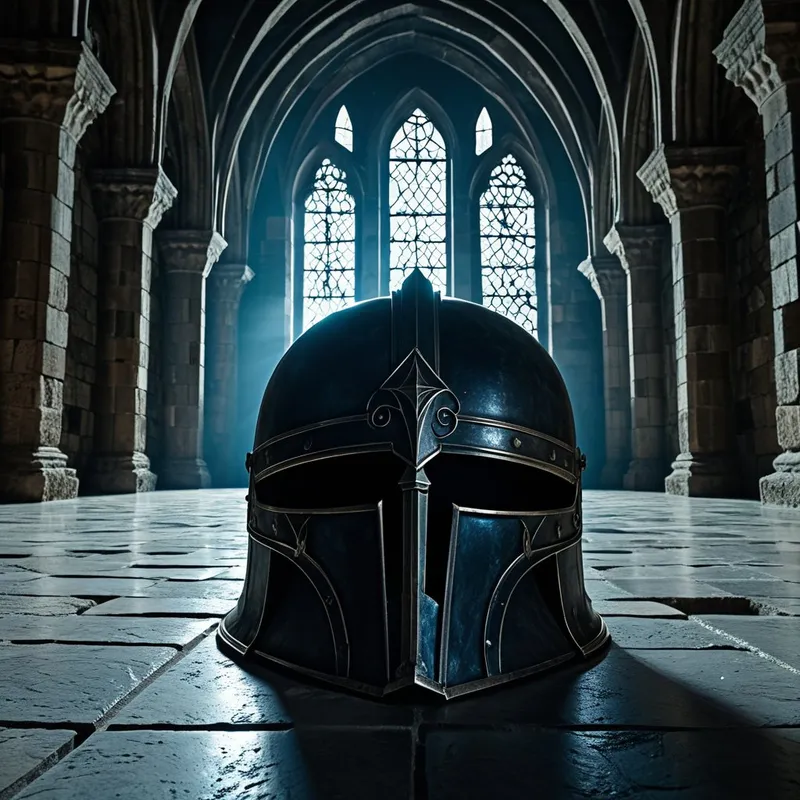
It begins not as a thought, but as a hollowing. A cold vacancy behind the sternum, where certainty once resided. The breath becomes shallow, a guarded thing, as if the lungs themselves are no longer under your command. There is a phantom weight on the shoulders—not the burden of responsibility, but the eerie lightness of its absence. It is the visceral sensation of a throne room within you, suddenly, chillingly empty. The body knows a coup has occurred long before the mind can name the usurper.
The Dreamer's Log
I stood before the master console of a vast, silent ship. Every screen showed my reflection, but the eyes were not mine. I reached for the brass ignition key, but my hand passed through it like smoke. From the shadows behind the main viewer, a figure with my face calmly inserted a different key—a jagged shard of obsidian—and the entire system hummed to a life I did not authorize.
The dreamer is not being attacked by an outsider, but witnessed by a latent self who has grown tired of waiting for an invitation to power.

The False Lead
This is not a dream about simple misfortune, a bad day, or an external competitor. To mistake usurpation for mere "bad luck" is to personalise a structural event. The terror here is not of loss, but of replacement. The old regime—a set of beliefs, a self-image, a way of being—has not been challenged; it has been made obsolete. The usurper does not steal what is yours; it reveals that what you thought was yours was never truly inhabited by you. It is the difference between a palace being ransacked and a palace being discovered to have always had a different, more rightful occupant sleeping in a hidden wing.
Psychological Architecture
Usurpation dreams are the psyche’s most elegant and brutal form of shadow work. They stage an internal family systems drama where a long-exiled part—the ambitious Rebel, the cunning Shadow Ruler, the ruthless Magician—has finally marshalled its resources. It has studied your weaknesses, not to harm you, but because it has been forced to live in the cracks of your identity. This "usurper" is often a cluster of energies you disowned for being too powerful, too chaotic, too demanding. You labelled it arrogance, cruelty, or madness, and banished it. But a disowned self does not die; it governs its own dark province, gathering strength. The dream is its declaration of independence. The ensuing inner conflict is the alchemical nigredo, the blackening, where the old, brittle structure of the ego must dissolve so a more authentic sovereignty can be forged.
Mythic Resonance
We see this eternal drama in the tale of King Arthur and Mordred. Arthur, the once and future king, represents the established, conscious order—noble, structured, but perhaps grown rigid. Mordred, born of hidden lineage and illicit desire, is not merely an enemy knight; he is the king’s own unrecognized shadow, the consequence of repressed actions and denied truths. His uprising is not a random invasion but a systemic feedback loop, the ignored consequence returning to claim the throne. The kingdom falls not because of a weak king, but because a king failed to integrate the full spectrum of his own kingdom’s—and his own—nature.
Symbolic Nodes
- A throne room gone cold.
- Your signature fading from a document.
- A familiar house with rearranged, unfamiliar furniture.
- A mirror reflecting a stranger wearing your clothes.
- A beloved tool or instrument that no longer responds to your touch.
Archetypal Resonance
The core energy of usurpation vibrates with the frequency of The Shadow Ruler. This is not the Ruler in its mature, sovereign form, but its shadow twin: the Tyrant and the Control-Freak, born from a deep, frantic insecurity about one's right to govern. The somatic echo of hollowness is the Shadow Ruler’s native terrain—the terror of the empty throne. Its alchemical potential, however, is immense. This usurping force, however terrifying, carries the raw, unrefined will to power that the conscious ego has been too timid or "nice" to claim. Its coup is a brutal invitation to stop managing a persona and start embodying an authentic authority, transforming the tyrannical need to control into the sovereign capacity to command one's own inner realm.
The Alchemical Process
The transmutation of usurpation requires the heat of conscious humiliation and the pressure of absolute honesty. The first stage is to cease seeing the usurper as an enemy and to recognize it as a disinherited heir. This is the separatio—distinguishing the healthy need for power from the childish need for control. The intense psychological heat comes from sitting in the hollow throne room and asking, "What have I been refusing to rule over? My creativity? My anger? My boundless desire?" The pressure is applied by withdrawing the projection—the external boss, partner, or rival you blame—and realizing the coup is internal. The old "you" must die, not to be destroyed, but to be metabolized. The molten gold healing the obsidian throne is this realization: true sovereignty is not defended, but shared. You integrate the usurper, and in doing so, you are no longer a monarch of a small, well-lit room, but the steward of a vast, shadowed, and complete kingdom.

The Integration Protocol
Question 1: Where in my waking life do I feel like a benevolent caretaker of a role, rather than its rightful, embodied authority? Question 2: What powerful aspect of myself did I learn to label as "dangerous" or "unacceptable," and where might it be currently governing in exile? Question 3: If the usurper in my dream were not a thief, but a messenger, what single, uncomfortable truth is it delivering about the current state of my inner kingdom?
Action 1 (The Hollow Inventory): For one day, perform a somatic audit. Each time you feel that hollow, usurped sensation (in a meeting, in a conversation), don't chase a thought. Place a hand on the sternum. Breathe into the vacancy. Do not fill it. Simply acknowledge its presence as a physical space. Action 2 (The Usurper's Manifesto): Engage in an unstructured writing exercise. Let the "usurper" from your dream write a first-person manifesto. Do not censor. Let it state its grievances, its vision for your shared realm, and the reasons it felt a coup was necessary. This is creative intelligence gathering. Action 3 (The Ritual of Shared Sovereignty): Find a small object that symbolises your old, rigid authority (a old key, a specific pen, a particular chair). In a private ritual, acknowledge its service. Then, physically place beside it an object that represents the usurper's energy (a strange stone, a piece of dark cloth, a shard of glass). Leave them side-by-side for a lunar cycle, observing how your relationship to the concept of "power" subtly shifts.
Final Validation
To dream of usurpation is to be invited into a terrifying and magnificent rite of passage. It feels like an ending because it is. It is the end of an illusion of control, the end of a borrowed identity. This grief is real; honour it. But within that hollow throne room lies your greatest liberation. The usurper is not your destroyer, but your most faithful dissident—the part of you that would rather burn the kingdom to the ground than let you live one more day as a ghost in your own life. Heed its brutal call. The integration of this shadow is how a subject becomes a sovereign.