
The Alchemy of Unprocessed Anger: From Somatic Echo to Sovereign Fire
The Somatic Echo
Before it is a story, it is a sensation. A tectonic pressure building in the jaw, a silent scream fossilized behind the teeth. A low-grade hum in the solar plexus, a reactor core buried under layers of polite sediment. The shoulders become geological strata, bearing the weight of unspoken nos. The hands, in sleep, might clench into fists against the pillow, a mute rebellion of the musculature. This is unprocessed anger: not the flash of fury, but its older, colder sibling. It is the energy of a boundary violated, a truth suppressed, a no swallowed whole and left to ferment in the dark. It feels like a contained explosion—a star collapsing inward, generating a density that warps the inner landscape. The body knows the score long before the mind dares to read it. This echo is the first whisper of a forgotten language, the somatic signature of a self in exile from its own power.
The Dreamer's Log
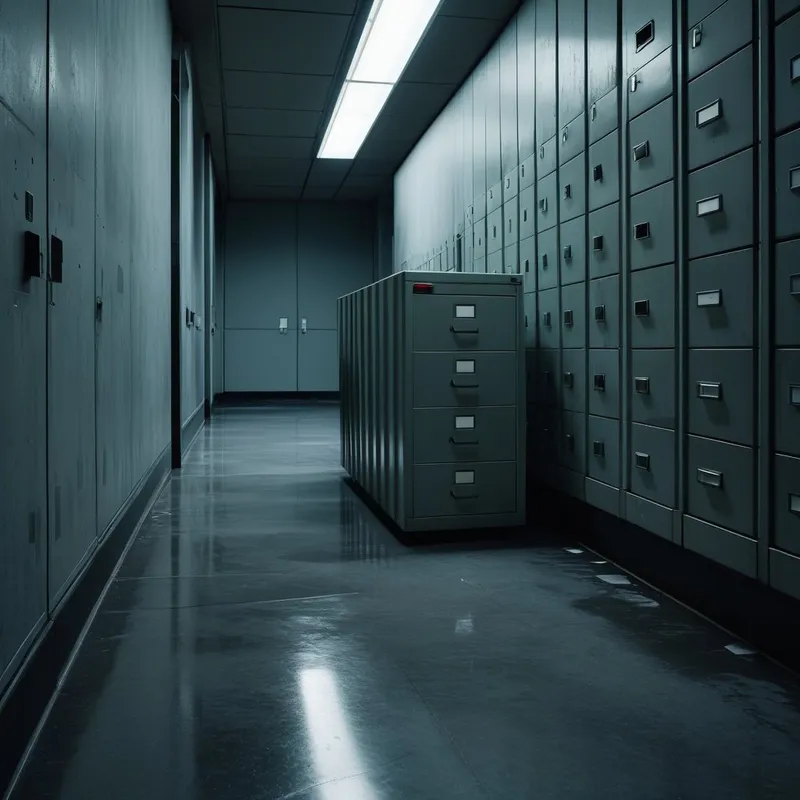
I am walking down an endless, dimly lit corridor in a brutalist office building I don’t recognize. The air is stale and cold. I pass a dented, grey filing cabinet, and I know, with a certainty that bypasses thought, that it contains every unfair compromise, every swallowed protest, every time I said “fine” when I meant “fuck you.” I try to open a drawer, but it’s jammed shut. I pull harder, and a thick, tar-like substance begins to seep from the seams, coating my hands. I wake with my heart pounding, my fingers tingling.
This dream is not a memory, but a live extraction. The filing cabinet is the psyche’s cold storage; the black tar is the somatic residue of unexpressed force, now demanding tactile recognition.
The False Lead
This is not about being an “angry person.” That is a caricature, a shadow play of the real drama. Unprocessed anger in dreams is rarely the spectacle of shouting or violence. It is not a character flaw, but a systemic signal. Do not mistake the pressure of the dam for the nature of the water it holds. The dream is not diagnosing you as hostile; it is revealing where your life force has been diverted, contained, and forced into a corrosive state. It is the difference between a forest fire (processed rage) and the slow, acidic seepage of industrial waste into a water table (unprocessed anger). One is a crisis of transformation; the other is a crisis of structure.
Psychological Architecture
To process this material is to engage in a profound act of psychic archaeology. You must descend not to blame, but to reclaim. That clenched jaw holds a truth you were not safe to speak. That heavy shoulder carries a burden you were conditioned to believe was yours alone to bear. In the framework of Internal Family Systems, these are not flaws, but exiled parts—protectors who took the raw, fiery energy of a wounded self and buried it, lest its expression cause greater abandonment or harm. They are the loyal soldiers who absorbed the impact and now stand frozen at their posts, holding a line that may no longer need to be held.
The individuation process here is the reintegration of the warrior who was disarmed. It is the slow, respectful dialogue with that inner sentry, thanking it for its service while gently informing it that the war is over, or at least, the battlefield has changed. The goal is not to discharge the anger at someone, but to reclaim the energy from the event. This is shadow work of the highest order: making conscious the power you had to disown in order to belong, to be loved, to be safe. The anger is not the problem; its imprisonment is.
Mythic Resonance
Consider the myth of Hephaestus, the lame god of the forge, thrown from Olympus. His is not a story of quick wrath, but of smoldering, creative fury. Cast out, he channels his indignation and pain into the deepest of arts: crafting unparalleled wonders in the volcanic heat of his subterranean workshop. His anger, unprocessed by the heavenly court, becomes the source of his sovereignty and his genius. He transforms rejection into a unique, unassailable power.
Or witness Medusa, whose visage turns men to stone. She was not born a monster, but made one through violation and exile. Her rage is geologic, a petrifying gaze that is the ultimate expression of a boundary so utterly violated that it can only respond with absolute, defensive force. Her myth speaks to the terror of a woman’s anger when it has been cornered and demonized—a power so potent it must be contained in narrative by being severed.
Symbolic Nodes
- Jammed Locks, Stuck Doors, Sealed Containers: The psyche’s infrastructure of suppression.
- Volcanoes, Furnaces, Smoldering Embers: The latent, pressurized heat of the emotion.
- Broken Tools, Dulled Blades, Rusted Machinery: The atrophy of one’s capacity to affect change or set boundaries.
- Tar, Sludge, Toxic Spills: The viscous, contaminating residue of unexpressed energy.
- Caged or Muzzled Animals (especially predators): The instinctual self, restrained.
- Silent Characters Screaming: The somatic truth breaking through the narrative lie.
Archetypal Resonance
The energy of unprocessed anger resonates most powerfully with the The Shadow Rebel.
The Rebel archetype’s core impulse is to tear down what is not authentic, to disrupt stagnation in the name of a deeper truth. In its shadow form, this energy cannot find constructive expression. It becomes the outlaw without a cause, the anarchic impulse that turns inward or lashes out indiscriminately. The somatic echo—the pressure, the heat, the clenched silence—is the Shadow Rebel in lockdown. It is revolutionary energy forced into the role of a silent prisoner, its fury becoming self-toxic because it has no channel, no worthy cause to serve. The alchemical potential here is immense: to liberate this archetype from its shadow prison is to reclaim the sacred right to say no, to dismantle internalized oppression, and to forge a personal sovereignty that is not granted, but declared. The transmutation turns silent sabotage into conscious, life-affirming rebellion.
The Alchemical Process
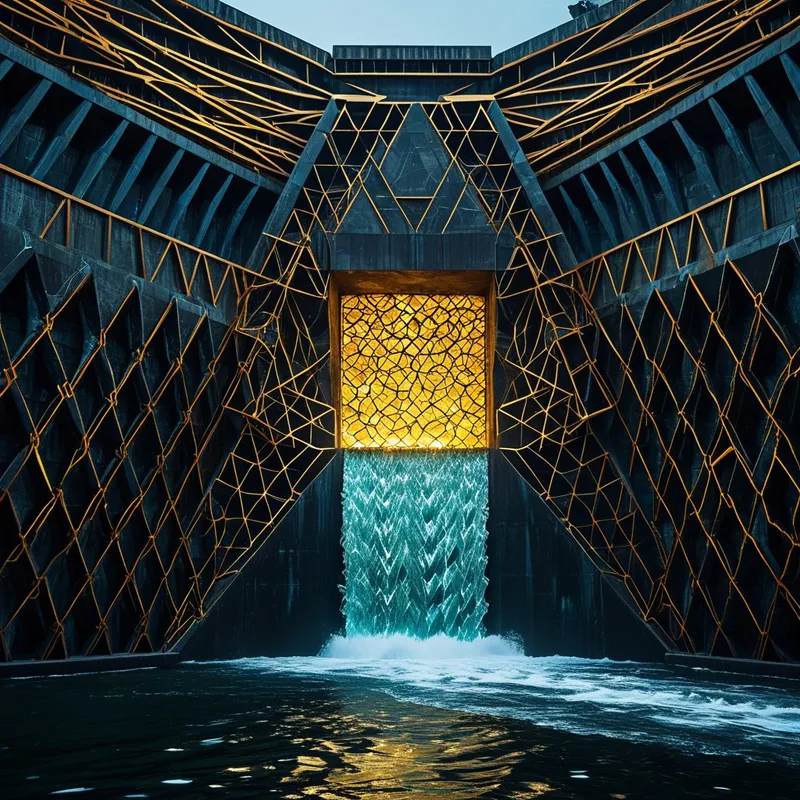
The alchemy of anger is a process of liquefaction and redirection. The first stage, calcinatio, is often mistaken for the entire work. It is the heat of feeling the feeling fully—allowing the somatic echo to become a conscious wave without acting it out. This is the furnace. But to leave it here is to risk burnout.
The crucial stage is solutio: dissolution. This is the painful, liberating act of dissolving the identity of “the one who must not be angry.” It is letting the story around the anger—the justification, the shame, the fear of consequences—melt away, leaving only the pure, hot mineral of the felt experience. Finally, coagulatio: the precipitation of a new form. The energy of the anger, now separated from its old, corrosive story, is free to re-coagulate as clarity, as unwavering boundary, as the fuel for passionate creation or the calm, firm power of the no. The molten ore is forged into a sword that cuts away what does not serve, or a plowshare that tills new ground. The heat is not eliminated; it is harnessed. The pressure is not released chaotically; it is channeled into a new architecture of the self.
The Integration Protocol
Question 1: Where in my body do I feel a sense of "stuck" pressure or dense heat when I think of a situation where my boundaries were crossed? Don't analyze why, just locate the sensation.
Question 2: If the anger in my dream had a voice, what one sentence is it trying to say that I have never fully allowed myself to speak, even in private?
Question 3: What outdated loyalty—to a person, a family rule, or an old self-image—is this unprocessed anger protecting me from having to confront or release?
Action 1 (Somatic Mapping): For one week, carry a small notebook. When you feel that familiar clench, hum, or weight, pause. Note the time, the sensation (e.g., "jaw lock"), and the immediate context (e.g., "colleague interrupted me"). Do not judge or analyze. You are merely collecting data on the somatic footprint of your boundaries.
Action 2 (Unsent Letter of Indignation): Set a timer for 15 minutes. Write a letter to the person, institution, or even the younger version of yourself connected to this anger. The only rule: you must use the phrase "I am furious that..." at least five times. Do not send it. Burn it, shred it, or seal it away. The act is in the unedited expression.
Action 3 (Ritual of Reclamation): Find a small stone. Hold it, and project into it all the dense, heavy, hot energy of the unprocessed feeling. Then, take it to a moving body of water—a river, the sea, even a strong stream. Throw the stone in, not to discard the energy, but to symbolically return it to flow. State aloud: "I reclaim my right to my own force. I redirect this energy to my sovereignty."
Final Validation
This work is not for the faint of heart. It requires the courage to sit in the dark with a part of yourself you were taught to fear, to listen to its grating, uncomfortable truth. It is messy, and it is heavy. But know this: that anger is not a flaw in your design. It is a testament to your aliveness, a signal flare from a self that refused to be completely extinguished. It is the raw ore of your sovereignty. By daring to process it, you are not becoming an angry person. You are becoming a whole one—reclaiming the fire that was always yours, not to burn the world down, but to light your own way forward, with a warmth and a power that can no longer be contained or denied.