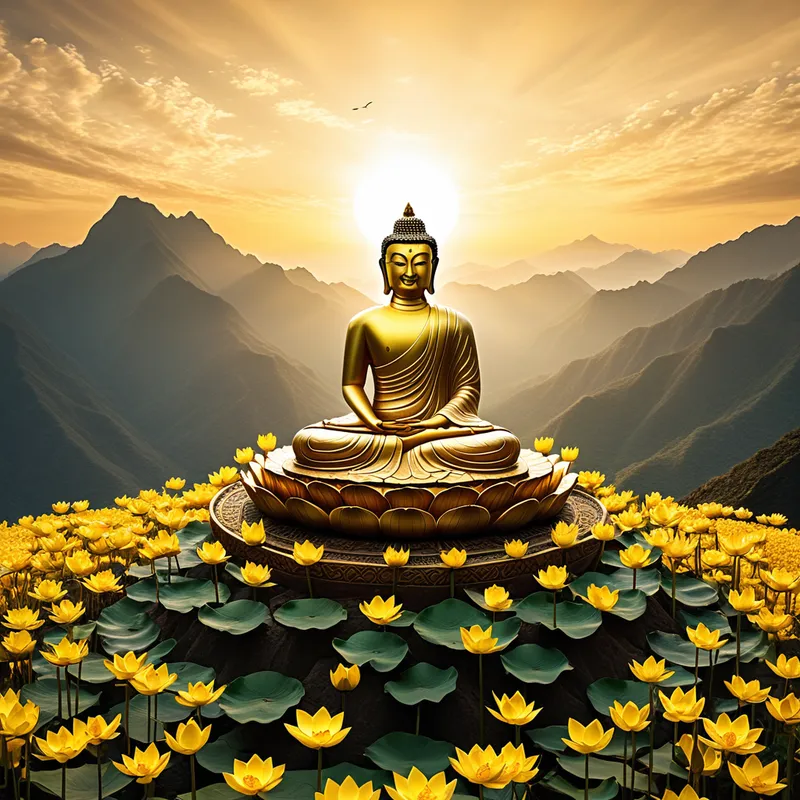
The Dream of Universalism: Dissolving the Inner Citadel
The Somatic Echo
It begins not as a thought, but as a sensation. A deep, resonant hum in the marrow of your bones, a feeling of immense, silent pressure that is not oppressive but expansive. It is the somatic echo of a boundary dissolving—the psychic skin that separates you from everything else becoming porous, translucent. You may feel a vertigo not of falling, but of rising into a vastness; a weightlessness that carries the terror and awe of being unmoored from the familiar dock of your singular identity. The breath becomes slow and deep, as if the lungs are learning to breathe for a larger body. This is the body sensing the approach of the universal: a gravity well of connection, pulling the isolated parts of your internal family system toward a center that is everywhere and nowhere.
The Dreamer's Log
I stood in the center of a library that had no end. Each book on the endless shelves was bound in a different material—leather, bark, metal, light. I reached for one, and as my fingers touched its spine, I understood the story of the tree that became its cover, the miner who extracted its metallic thread, the scribe whose joy and fatigue were pressed into its pages. I was not reading; I was remembering from a place I had never been.
The dream is an alchemical dissolution of the subject-object divide, where to perceive a thing is to know its entire lineage of becoming.

The False Lead
This is not a dream of mere empathy or intellectual understanding. Universalism is not the polite acknowledgment of other perspectives, nor is it the spiritual bypass of claiming "we are all one" to avoid the gritty, painful work of relationship. The false lead is to mistake this profound structural shift for a simple mood of benevolence or a vague sense of connectedness. It is not an emotion. It is a fundamental reorganization of the psyche’s architecture, where the very software of perception is rewritten. It is the difference between looking at the ocean and being the watershed.
Psychological Architecture
The shadow work here is the deconstruction of the inner citadel. We are born architects of separation, building walls to protect a fragile, nascent self. We create categories: me/not me, safe/unsafe, mine/yours. This is necessary. But in adulthood, these walls become a prison, isolating parts of the self from each other—the exiled orphan, the tyrannical ruler, the desperate lover all shouting across fortified courtyards. The dream of universalism applies a silent, immense pressure to these walls. It is the process of Individuation in its most radical form: not just becoming a well-defined self, but becoming a self so defined it recognizes its own boundaries as permeable membranes in a larger organism. The grief that arises is for the loss of a simpler, solitary identity. The terror is of drowning in the totality. The work is to hold that tension until a new structure emerges—not a walled city, but a nodal point in a living network, distinct yet inseparable.
Mythic Resonance
We see this in the myth of the Net of Indra. In the celestial abode of the deity Indra, there hangs a net that stretches infinitely in all directions. At each knot in the net is a perfectly polished jewel. Each jewel reflects every other jewel in the net, and each reflection contains the reflections of all the others, ad infinitum. This is not a metaphor for mere interconnection, but for interpenetration—the profound truth that each individual entity contains the structure and essence of the entire cosmos within itself. The dreamer in the infinite library is touching a single jewel in that net. We also hear it in the alchemical dictum, "As above, so below; as within, so without," which is not an analogy but an ontological statement of universalism: the pattern of the self is the pattern of the world.
Symbolic Nodes
- Infinite Libraries or Archives: Knowledge not as owned, but as a field one inhabits.
- Vast, Empty Spaces (Domes, Plains, Space): The container that makes connection possible.
- Networks, Webs, or Lattices of Light: The visible structure of interconnection.
- Transparent or Dissolving Walls: The permeability of psychic boundaries.
- A Single Object Containing Multitudes (a seed, a drop of water, a gem): The holographic principle.
- Merging with a Landscape or Sky: The literal somatic experience of expansion.
Archetypal Resonance
The Sage Archetype is the active principle here, but not as a distant scholar. This is the Sage in its ultimate expression: the knower who understands that to truly know a thing, one must cease to stand apart from it. The Sage’s drive is not for facts, but for wisdom—the living pattern that connects. The somatic echo of universalism—the hum, the pressure, the expansive vertigo—is the Sage’s consciousness expanding beyond the confines of the individual skull, seeking the blueprint of the whole. The alchemical potential lies in this archetype’s capacity to hold paradox: to be a specific point of awareness that is simultaneously aware of itself as a function of the entire system. The shadow Sage fears this loss of distinct perspective, becoming dogmatic, clinging to a single, "correct" map of a territory that is inherently fluid. The universalist dream invites the Sage to surrender the map and become the territory.
The Alchemical Process
The transmutation is from part to participant. The prima materia is the grief of separateness and the terror of annihilation. The heat is applied through the sustained, unbearable tension of two truths: "I am a discrete self" and "I am not separate from the whole." This is the alchemical solve et coagula—dissolve and recombine—applied to the psyche. You must let the familiar structure of your isolated identity dissolve in the solvent of this vast awareness. The pressure is the courage to not retreat, to not re-solidify the walls in panic. In this crucible, the sovereign self is not destroyed; it is re-contextualized. It becomes a conscious, willing organ of a larger body. Sovereignty is no longer about control over a personal kingdom, but about the clarity and responsibility of your unique function within an infinite living system. You transmute terror into awe, and grief into a profound, unsentimental belonging.

The Integration Protocol
Question 1: In your waking life, where do you most fiercely defend the boundary between "me" and "not me"? Is it with possessions, ideas, emotions, or roles?
Question 2: What exiled part of your own internal family system feels most "not me"? What would it mean to welcome its story as an essential thread in your totality?
Question 3: If your awareness were not located behind your eyes, but was a field that included what you see, how would your relationship to a tree, a stranger, or a problem change?
Action 1 (Grounding Expansion): Sit quietly and feel the physical boundaries of your body. Then, with each exhale, imagine that boundary becoming softly luminous and slightly porous. With each inhale, draw in not air, but a sense of the space around you. Feel yourself as a dense node in a field of space, not an object separate from it.
Action 2 (Holographic Writing): Take a single, small object (a stone, a key, a leaf). Write its biography for 10 minutes without stopping. Write not just its history with you, but imagine the history of its materials—the forces that formed it, the hands that shaped it, the places it has been. Let your identity as its "owner" dissolve into your role as its biographer, a node in its story.
Action 3 (Ritual of Return): Go to a natural, expansive place (a hill, a large park, a shore). Find a spot to stand. Acknowledge the separate, individual self you arrived with—its worries, its story. Then, offer a silent acknowledgment to three expanding circles: the immediate ecosystem around you, the broader bioregion, and the planetary system. Feel your individual self as the speaking, sensing point of this nested whole. Leave a simple offering (a breath of gratitude is enough).
Final Validation
This expansion is not easy. The psyche is wired for survival, and survival has long meant fortification. To feel those walls soften can trigger a primal alarm. Honor that fear; it protected you. And then, consider the possibility that a deeper safety exists not in the citadel, but in the network. The dream of universalism is not an annihilation, but an invitation to a more profound kind of sovereignty—where you are no longer a lonely monarch guarding a tiny kingdom, but a vital, conscious cell in the breathing body of the world. The integration is the lifelong, beautiful practice of learning to live as that cell, fully yourself, and fully inseparable.