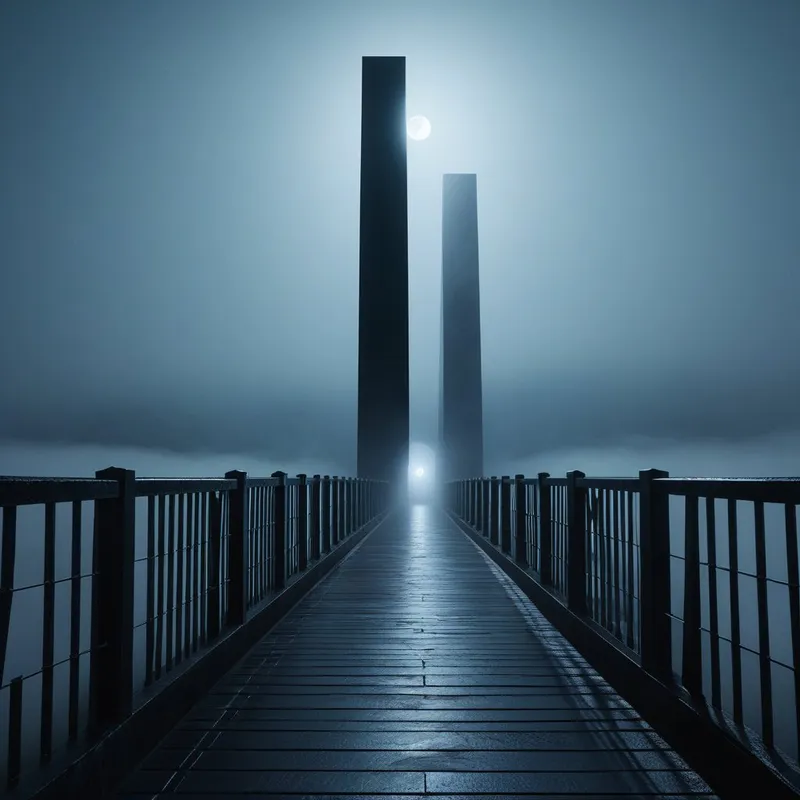
The Sacred Terror of the Threshold: Dreams of Transition & Liminality
It begins not as a thought, but as a hollowing. A specific, visceral emptiness in the solar plexus, a sensation of being between breaths, between heartbeats. The ground beneath your feet feels present but insubstantial, like standing on a platform you know is about to retract. There is a low-grade hum in the bones, a somatic echo of a frequency that belongs neither here nor there. This is the body’s first, wordless recognition of liminality—the sacred, terrifying, and profoundly creative space of the threshold. It is the psychic waiting room where the old contract with yourself has expired, and the new one has not yet been inked. In dreams, this architecture of becoming is rendered not in concepts, but in landscapes.
The Somatic Echo
Before the mind conjures a train station or a doorway, the body knows. It registers transition as a subtle vertigo, a loss of magnetic north. You feel unmoored, a slight but persistent disorientation as if the internal gyroscope is recalibrating to a destination it does not yet know. There can be a paradoxical fatigue—not of exertion, but of suspension. It is the weight of the question mark. Muscles may hold a faint, anticipatory tension, ready for a launch or a landing that never comes. The breath becomes shallow, held in the intermediary space between inhalation and exhalation. This is the corporeal truth of liminality: you are a verb in search of its new tense.
The Dreamer's Log
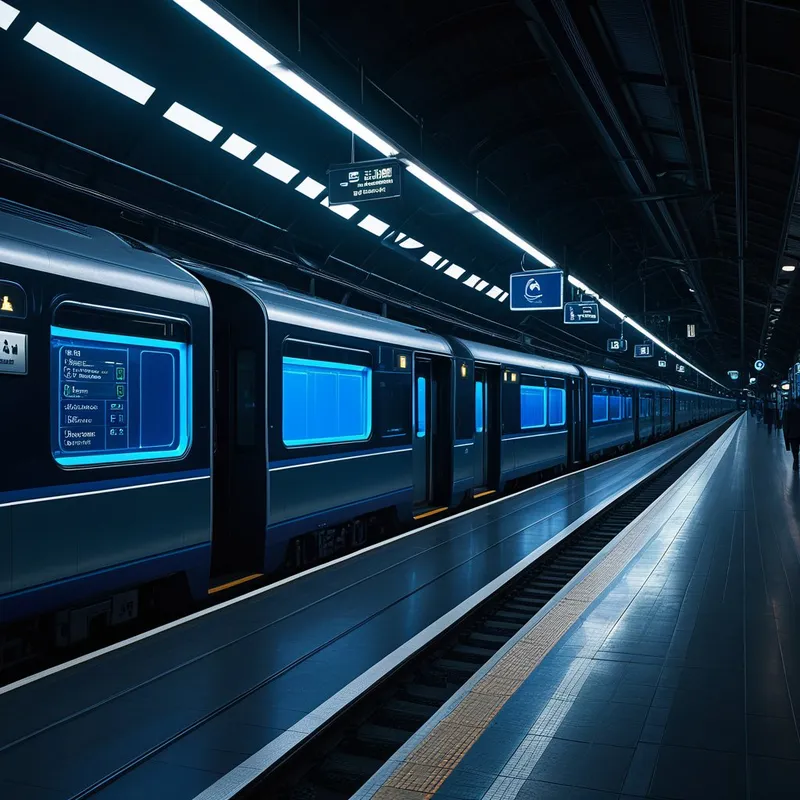
The dream is always the same: I am in a vast, abandoned train station at an hour that feels like 3 AM. The air is cool and smells of ozone and old concrete. A single, doorless train car hums with a soft, interior blue light on the platform. I know I must board it, but my feet are fused to the tiles. The destination board flickers, cycling through names of cities I’ve never heard of, then blanks to a steady, luminous grey.
This is not a dream about missing a train. It is the psyche’s perfect portrait of the self at the threshold of a profound internal migration, holding the tension between the known platform and the unknown destination. The alchemical interpretation: The soul is preparing for a departure it has already consented to, but the ego-clay has not yet finished drying.
The False Lead
Do not mistake this for mere indecision or circumstantial "bad luck." Liminality is not procrastination. Procrastination is a refusal of the threshold, a retreat back into the familiar, even if it is painful. The liminal dream state is the opposite—it is the courageous, if terrifying, act of staying in the nowhere. It is not a sign of failure, but of profound engagement with a necessary death. This theme is also distinct from chaos; chaos is formlessness without potential. Liminality is formlessness pregnant with form. It is the chrysalis, not the disintegration.
Psychological Architecture
To stand in this psychic corridor is to do the deepest Shadow work. It requires a voluntary dissolution of the internal family system that has governed your inner kingdom. The protective Manager parts, who built your old identity for survival, must be thanked and temporarily stood down. The exiled Firefighter parts, who numb or distract from pain, must be heard but not allowed to hijack the journey. The work of liminality is to hold council with these parts in the empty station, acknowledging their fear while gently insisting: We cannot stay here. This is the core of Individuation—not a heroic battle, but a patient, often grief-filled, unpacking of the self in transit. You are not becoming someone new; you are discovering who was always there, buried beneath the architecture of adaptation.
Mythic Resonance
This universal firmware runs through all human myth. Consider Inanna, the Sumerian goddess, descending through the seven gates of the Underworld. At each threshold, she is stripped of a royal garment or symbol of her power—her crown, her lapis beads, her robe. She enters the final chamber naked and bowed, only to be killed and hung on a hook. This is not punishment, but the necessary protocol of transition: to move from one state of being (Queen of Heaven) to another (Queen of Heaven and Earth), the old identity must be systematically deconstructed. The return journey, where she reclaims her attributes, is the integration. We walk this same path in our dreams of empty airports and featureless hallways, being stripped not of physical items, but of outdated self-concepts, defenses, and stories.
Symbolic Nodes
- Thresholds: Doorways, gates, arches, bridges, tunnels, shorelines.
- Vehicles in Stasis: Empty trains, planes at gates, cars with no keys, elevators between floors.
- Neutral Territories: Hallways, waiting rooms, lobbies, airports at dawn, empty parking garages.
- Ambiguous Weather: Fog, mist, the silent moment before a storm, still dawn light.
- Unfinished or Ruined Spaces: Construction sites, abandoned buildings, scaffolding, rooms being painted.
- Suspended Animation: Floating in water, flying without direction, watching a paused screen.
Archetypal Resonance
The energy of liminality is most purely channeled through The Explorer Archetype. Not the Shadow Explorer, who is aimless and alienated, but the core Explorer in its most essential, seeking phase. This archetype does not resonate with the comfort of the destination, but with the magnetic pull of the horizon itself. Its somatic echo is that restless, humming potential in the limbs, the feeling that truth lies just beyond the next ridge. The alchemical potential of the Explorer in this space is its willingness to trade the map for the compass, to value the question over the answer. It provides the courage to stand on the empty platform and feel, beneath the fear, the thrilling current of pure potential—the understanding that the blank destination board is not a failure of information, but an invitation to inscribe your own coordinates.
The Alchemical Process
The transmutation here is of formlessness into form. The prima materia is the grief and terror of the dissolved self, the feeling of being nobody and nowhere. The alchemical vessel is your conscious awareness, your willingness to abide in the discomfort without fleeing into old narratives or frantic action. The required heat is not dramatic flame, but the slow, persistent pressure of sustained attention on this empty space. It is the heat of asking, "What is here, in this nothingness?" without demanding an immediate answer. This pressure cooks the psychic matter until, from the void, the first subtle, authentic impulse arises—not from the old Manager, but from the core Self. The leaden feeling of being lost is transmuted into the golden sovereignty of self-origination. You realize you are not waiting for a train; you are learning to become the track, the engine, and the journey itself.

The Integration Protocol
The work is to befriend the threshold, to make a home in the hallway long enough to hear its whispers.
Question 1: In the feeling of suspension, what old identity, role, or story is most reluctant to be left behind on the platform? What part of you is clinging to the familiar tile? Question 2: If the blank destination board in your dream could display one true word—not a city, but a state of being (e.g., "Wholeness," "Freedom," "Expression")—what word would your deepest self choose? Question 3: What small, almost invisible thing can you feel gratitude for within this liminal space itself? Not for where it leads, but for its unique quality of silence, potential, or emptiness?
Action 1 (Somatic Anchoring): When you feel the hollow vertigo of transition, place both feet flat on the floor. Press down gently. Breathe into the soles of your feet and silently acknowledge: "I am here, in the between. This is the ground of becoming." Do not try to change it. Just inhabit the sensation for three full breaths. Action 2 (Liminal Mapping - Creative Expression): Take a large sheet of paper. In the center, draw or paint a simple representation of your current "empty station" from your dream or feeling. Without planning, let lines, shapes, or colors radiate out from it representing possible directions. Let it be abstract, messy, and non-linear. This is not a map to follow, but a visual record of the potential field you are standing in. Action 3 (Threshold Ritual): Physically enact a minor transition with reverence. Before walking through your front door, pause for a full breath on the threshold, consciously releasing the energy of the outside world. As you cross, set a simple, silent intention for the energy you wish to carry inward (e.g., "peace," "clarity"). This micro-ritual trains the psyche to respect and navigate thresholds with awareness instead of anxiety.
Final Validation
This space is difficult because it is meant to be. Its discomfort is the friction of transformation, the necessary grind of the old shell against the new shape struggling to emerge. To feel unmoored is not a sign that you are failing the transition; it is the definitive proof that you are in it. The profound sovereignty awaiting you on the other side is not a prize for enduring the hallway, but a quality forged in its very emptiness. You are not falling apart. You are being rearranged by a wisdom deeper than fear. The platform is empty because you are the only one who can board the train. The destination is blank because you are the only one who can write it.