The Alchemy of the Threshold: Dreams of Transition and Passage
The Somatic Echo
Before the mind conjures a bridge, a tunnel, or a doorway, the body knows the crossing. It is a low-frequency hum in the bones, a subtle vertigo as if the ground beneath you has become liquid. There is a hollowing in the chest, not of loss, but of preparation—a space being cleared. The breath catches, suspended between the inhale and the exhale. This is the somatic signature of transition: the visceral awareness that the internal architecture is no longer sound. The old psychic furniture no longer fits the rooms of your becoming. It is the feeling of being between stories, where the last chapter has ended but the next has not yet found its first word. The body, in its ancient wisdom, registers the shift long before the conscious self can name it, trembling on the precipice of a form it has not yet grown into.
The Dreamer's Log
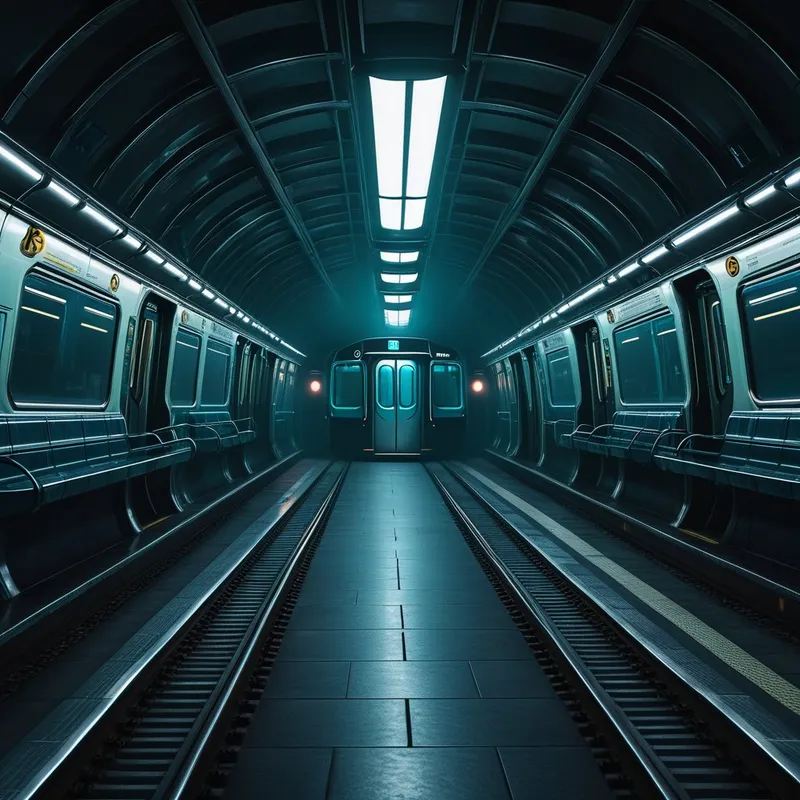
The dream is always the same: standing on the platform of a cavernous, forgotten subway station. The tiles are cracked, the lights flicker with a sickly yellow pulse. A single train car, impossibly sleek and silent, glides to a stop. Its doors sigh open, revealing an interior of warm, bioluminescent light. The destination board is blank. To step in is to be consumed by a profound, terrifying quiet. To stay is to fossilize in the damp air.
This is the psyche’s ultimatum: to board the vehicle of the unknown self, or to remain a curator of your own ruins.
The False Lead
This theme is not about a simple change of circumstance—a new job, a move, the end of a relationship. Those are its costumes. The dream of Transition and Passage speaks to the structural metamorphosis beneath the event. It is not "bad luck" or "a rough patch"; it is the necessary, often brutal, recalibration of your entire operating system. To mistake it for mere misfortune is to pathologize the birth pangs of a deeper consciousness. The anxiety is not a sign you are off course; it is the friction of a soul outgrowing its casing.
Psychological Architecture
Here, in the shadowlands of passage, the work of Individuation becomes architectural. You are not just learning a new skill or adopting a new belief. You are the site and the contractor, dismantling load-bearing walls of identity you once thought were permanent. The Shadow work is profound: you must meet the exiled parts of yourself that were formed in response to the old structure—the Orphan who learned to be small in those rooms, the Rebel who vowed to burn it all down, the Caregiver who plastered over every crack. Transition demands you invite these internal family members to the negotiating table, not as problems to be solved, but as witnesses to the demolition. They must see the blueprint of the new foundation, or they will sabotage the construction, clinging to the familiar prison of the past. This is the death of a pattern, not just a phase, and it requires grieving the self that was perfectly adapted to a world that no longer exists.
Mythic Resonance
We see this eternal process in the descent of Inanna, the Sumerian goddess of heaven and earth, who must pass through seven gates to the underworld. At each, she is stripped of a royal garment or symbol, until she arrives naked and dead on the hook. This is not punishment, but the essential algorithm of profound transition: to gain a new level of being, you must surrender the trappings of the old one, layer by layer, until you stand in the terrifying purity of your unmade self. Similarly, the Buddhist concept of the Bardo—the transitional state between death and rebirth—mirrors this psychic territory. It is a liminal space of pure potential, where the forms of the past have dissolved and the forms of the future have not yet coalesced. The dream is your personal Bardo, a sacred and disorienting workshop where the soul is reforged.
Symbolic Nodes
- Bridges, Tunnels, Hallways, Staircases: The connective tissue between known and unknown states.
- Vehicles (Trains, Boats, Cars without Drivers): Autonomous systems carrying you through the transition.
- Doors, Gates, Archways, Thresholds: Points of decision and irreversible entry.
- Passports, Tickets, Keys: Energetic permissions or tools required for the passage.
- Being Lost in an Airport or Train Station: The anxiety of the liminal state itself.
- Crossing a Body of Water (River, Ocean): Navigating the emotional/ unconscious substrate of change.
- Changing Clothes or Shedding Skin: The literal alteration of identity.
Archetypal Resonance
The energy of Transition and Passage resonates most deeply with The Explorer Archetype. This is not the Explorer on a sunny hike, but the one in the depth of the uncharted forest, where the maps have burned. The core drive here is the yearning for the frontier within, the courage to leave the known world of a former identity to discover a truer, more authentic self. The somatic echo—the restlessness, the hollow preparedness—is the Explorer’s fuel. Its alchemical potential lies in its willingness to trade the false comfort of the familiar for the terrifying freedom of the authentic. However, this theme often activates in tandem with its shadow: the Aimless Wanderer, who confuses motion for meaning, circling the same internal territory in new disguises, afraid to actually arrive and commit to the new self being born. The true alchemy is to move from Wanderer to Navigator, using the dream itself as a compass.
The Alchemical Process
The alchemy of Transition is Dissolution (Solve). This is the first, most terrifying stage: the breaking down of existing forms into their primal matter. The "heat" is the sustained discomfort of the liminal state—the grief, the anxiety, the identity vertigo. The "pressure" is the conscious refusal to re-solidify into an old, familiar shape out of fear. You must let the old self-concept, with its certainties and defenses, liquefy. This is not a passive melting, but an active participation in your own deconstruction. You hold the space of not-knowing. You allow the questions to live without forcing answers. You witness the internal family system panic as its roles blur. In this cauldron of uncertainty, the heavy elements of a outmoded personality sink, and the lighter, essential elements—your core values, untamed curiosities, buried strengths—rise to the surface. This nigredo, this blackening, is essential. The new structure cannot be built on the old, cracked foundation. Sovereignty is born from the courage to endure this formless, fertile night.
The Integration Protocol
Question 1: In the dream, what am I being asked to leave behind on the platform, in the old room, or on the near shore? Is it an object, a feeling, or a version of myself?
Question 2: What is the quality of light, sound, or atmosphere inside the vehicle, the tunnel, or through the doorway? Does it repel or attract my bodily sense?
Question 3: Who, from my internal family system (the Critic, the Pleaser, the Inner Child, etc.), is most afraid of this passage, and what do they need to hear from my adult, sovereign self to feel safe enough to cross?
Action 1 (Somatic Anchoring): When you feel the vertigo of transition in waking life, place both feet firmly on the floor. Breathe into the hollow sensation in your chest. Instead of trying to fill it, acknowledge it as sacred space—the clearing where the new structure will be built. Whisper, "This is the feeling of becoming."
Action 2 (Cartography of the Threshold): Create a non-linear map or drawing of your transition. On one side, sketch symbols of the "old country" of yourself. On the other, intuitive marks for the "new territory." In between, draw the bridge, tunnel, or chaotic waters. Do not aim for art; aim for a psychic document. Let the lines, shapes, and colors express what words cannot.
Action 3 (Ritual of Consecration): Find a physical threshold—a doorway, a gate, a footbridge. Stand before it. Name one specific, outgrown pattern of being you are consciously leaving behind. Step across. On the other side, pause and state one quality of the self you are moving toward (e.g., "I step toward fluidity"). Perform this with solemn intent; you are programming your nervous system with the blueprint of passage.
Final Validation
To dream of passages is to be chosen by a profound and difficult grace. It means your psyche is alive, courageous, and engaged in the only work that ultimately matters: the continual becoming of your true form. The disorientation is not a sign of failure, but of fidelity to a depth that shatters shallow containers. Honor the grief for what is dissolving. Then, feel for the new architecture humming in your bones, waiting for you to have the courage to inhabit it. The bridge exists because you are already capable of the crossing.