
The Alchemy of the Fading Spotlight: Dreams of Transient Fame
The Somatic Echo
It begins not as a thought, but as a hollowing. A sudden vacancy behind the sternum, as if a vital organ has been quietly removed and replaced with dry ice. The skin remembers the heat of a thousand admiring eyes, but now feels only the cool draft of their absence. There’s a metallic taste on the tongue—the aftertaste of applause turned to static. The body, that faithful recorder, holds the ghost-limb sensation of a crown that was never truly yours to wear, yet whose weight shaped your posture. This is the visceral landscape before the dream-images of crumbling stages, vanishing audiences, and forgotten names ever coalesce. It is the echo of a self that was briefly amplified by an external chorus, now returning to its natural, unaccompanied volume. The grief is specific: not for the loss of a thing you owned, but for the dissolution of a reflection you momentarily believed was your face.
The Dreamer's Log
She stands on a grand stage, receiving a standing ovation that ripples like liquid gold. As she bows, the applause begins to pixelate, dissolving into a sound like falling sand. The faces in the crowd blur, then recede into a deep fog, until she is alone, holding an award that crumbles to ash in her hands.
This is the psyche’s stark rehearsal: a live demonstration of the fundamental law that all external validation is, by its nature, a loan, not an asset.
The False Lead
This theme is not a prophecy of failure or a warning of impending obscurity. To interpret it as such is to be seduced by its most literal costume. It is not about the fear of never “making it,” but the far more profound terror of what happens after “it” has been made and then unmade. It is not about bad luck or a fickle public; it is about the internal architecture that gets built upon the shaky ground of borrowed significance. The dream is not diagnosing a lack of talent or worth, but highlighting an over-identification with a role that the soul was never meant to inhabit permanently. The grief here is alchemical fuel, not a verdict.
Psychological Architecture
Beneath the spectacle of the fading spotlight lies a critical piece of Shadow work: the reconciliation of the Performing Self with the Private Self. The Performing Self is that internal family member who learned to secure love, safety, and meaning through impact, visibility, and approval. It is a brilliant strategist, a shapeshifter who knows exactly which mask will earn the roar of the crowd. In dreams of transient fame, this part is being forced to confront its core vulnerability: its existence is contingent on an audience.
The Individuation process here is one of brutal, loving repatriation. The soul is recalling its projections. Every cheer that faded in the dream was a piece of your own authority, loaned out and now returning home—often feeling like a loss because we mistake the loan for a gift. The process feels like a demotion but is actually a consolidation. You are being asked to transfer your capital from the volatile, public stock market of opinion to the silent, sovereign vault of internal valuation. The stage crumbles so that the ground beneath your feet can be rediscovered. It is the ego’s inflation being gently, or not so gently, punctured, not to harm it, but to restore it to its proper size—a faithful servant to the Self, not its mistaken master.
Mythic Resonance
We see this eternal drama in the story of Icarus. The myth is not merely about hubris and a fall; it is about the nature of the wings themselves. They were crafted from feathers and wax—borrowed elements, impermanent by design. His flight was spectacular, a brush with the sun (the ultimate spotlight), but the apparatus was never meant for permanent residence in that rarefied air. The tragedy is not the flying, but the forgetting of the wings’ transient, crafted nature. Similarly, the Babylonian king Nebuchadnezzar, in the Book of Daniel, is driven to live as a beast for seven years. His famous decree, “Is not this great Babylon, which I have built?” echoes the dream’s pinnacle. His subsequent fall into madness is the archetypal “transient fame” correction—a stripping away of the royal identity to force contact with a more animal, and thus more real, stratum of being. Both myths speak to the necessary dissolution of a constructed, brilliant identity to make room for the true, often more humble, sovereign.
Symbolic Nodes
- A Crumbling Stage or Podium: The foundation of the public identity losing integrity.
- A Fading Spotlight or Dying Microphone: The withdrawal of focused external attention and voice.
- An Audience That Turns Away or Dissolves: The retraction of collective projection.
- A Trophy That Tarnishes, Cracks, or Turns to Dust: The ephemeral nature of conferred honor.
- A Name Being Erased from a Marquee or Scroll: The anxiety of legacy and memory.
- Being Backstage After the Show, in Sudden, Deafening Quiet: The confrontation with the unadorned self.
Archetypal Resonance
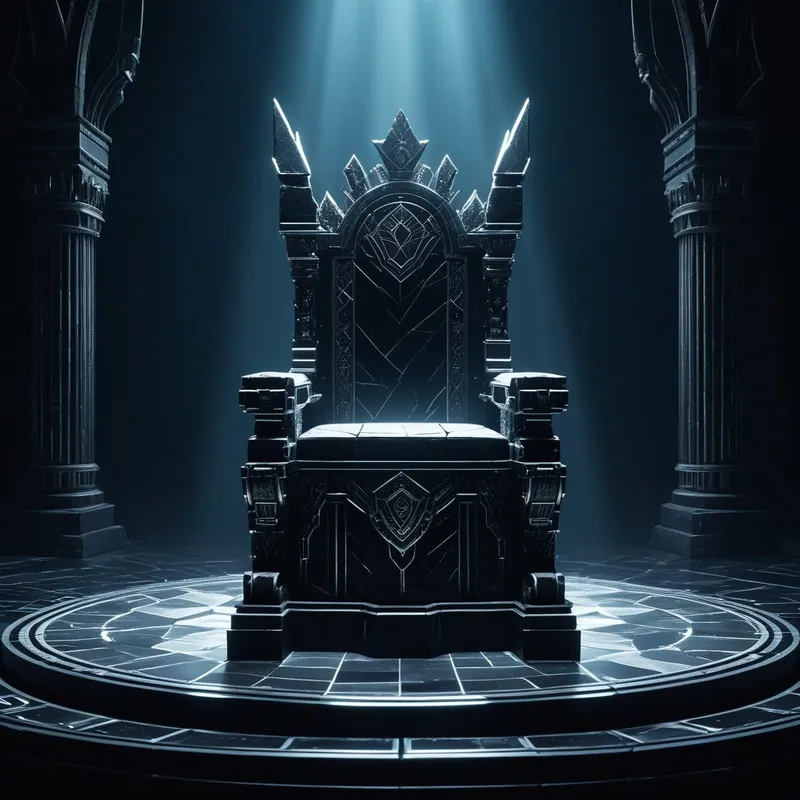
The energy at the core of the Transient Fame dream is that of The Shadow Ruler.
The Shadow Ruler archetype is activated in its full, poignant vulnerability here. Its core desire—for control, order, and a legacy—becomes twisted into a desperate need to control the uncontrollable: the perceptions, memories, and affections of others. The somatic echo of hollowness is the Shadow Ruler’s throne room found empty. The alchemical potential lies in the fire of this humiliation. It forces a fundamental question: “If I cannot rule this external kingdom, what is the true domain over which I am sovereign?” The transformation demands the melting down of the crown of approval to forge the signet ring of inner authority—a shift from ruling subjects to governing the self with integrity, a far quieter but infinitely more stable reign.
The Alchemical Process
The transmutation of Transient Fame is the Opus Contra Naturam—the work against nature—of ceasing to look outward for the substance of the self. The prima materia is the addictive nectar of public validation. The heat is applied in the cold silence after the applause, in the visceral pain of the hollowing. This is the nigredo, the blackening, where the glittering false self is burned away, leaving only the ash of “Who am I without my audience?”
The pressure is the sustained commitment to endure that question without rushing to fill the void with a new performance. The albedo, the whitening, occurs when you begin to listen to the qualities of that silence itself. It is not empty; it is full of the subtle sounds of your own breath, heartbeat, and untouched thoughts. The rubedo, the reddening, is the birth of a new valuation system. You no longer create or act to be seen, but because the act itself is the truth of you. The spotlight, now internal, illuminates the work, not the worker. The sovereign is born not when the crowds return, but when their coming or going ceases to dictate the laws of your inner kingdom.

The Integration Protocol
Question 1: In the dream, what was the source of the fame? Was it a skill, a role, a piece of art, or simply the act of being seen? What does this tell you about which part of you is most hooked on external validation?
Question 2: Where in your waking life do you feel the faint, lingering echo of that “hollowing” sensation? Is it after posting on social media, leaving a meeting, or finishing a project? Track the somatic residue.
Question 3: If you were to imagine your sense of worth as a kingdom, what would its currency be? Is it gold mined from external praise, or is it an internal resource? Describe this resource in non-abstract terms (e.g., "the currency is resilience, minted each time I choose integrity over approval").
Action 1 (The Silent Audience): For one week, engage in a creative or expressive act with the explicit rule that you will not share it with anyone. Write a poem, sketch, hum a melody, or arrange some stones. The entire purpose is to complete the circuit of creation and appreciation within yourself alone. Break the reflex of external completion.
Action 2 (Sovereign Grounding): Stand barefoot. Feel the ground. Silently declare, “This is my domain.” Not the house, not the job title, not the social circle. The literal ground beneath your feet and the vertical column of your body occupying space. Do this when you feel the pull to seek validation. Anchor in your physical sovereignty.
Action 3 (The Decommissioning Ritual): Find a physical object that represents a past achievement or identity you cling to for status (an old award, a uniform, a business card). In a private moment, thank it for its service. Then, actively decommission it. Place it in a box at the back of a closet, bury it in the garden, or ritually alter it (paint it black, wrap it in cloth). This is not destruction, but a conscious relocation from the throne room to the archives of your history.
Final Validation
The ache of the fading spotlight is real. It is the pain of a beautiful, necessary illusion dissolving. To feel it is not a sign of weakness, but of a psyche deep enough to have reached for a larger reflection, even if that mirror was held by others. Honor that grief; it is the proof that you dared to be seen. Now, the work is to turn that same courageous attention inward, to become both the artist and the audience, the ruler and the realm. The fame was transient because it was a lesson, not a destination. Its passing clears the air, leaving only you—not lesser, but undeniably, irrevocably real. Your sovereignty begins precisely where the applause ends.