The Alchemy of Time: When Dreams Dissolve Chronology
The Somatic Echo
Before the mind can form the image of a stopped clock or a runaway calendar, the body knows. It is a sensation in the gut—a hollow, vertiginous pull, as if the floor of your being has become a slow-moving carousel. The breath catches, not in panic, but in a profound suspension. The heart may beat with the erratic, syncopated rhythm of a skipped record, a thump-thump… thump… thump-thump-thump, that defies its own metronome. There is a weight, ancient and cold, settling in the marrow—the somatic memory of all the yesterdays you thought you’d left behind, and a chilling breeze from all the tomorrows that may never arrive. This is the visceral ground from which dreams of temporality grow: not as an intellectual puzzle, but as a tectonic shift in the felt sense of existence.
The Dreamer's Log
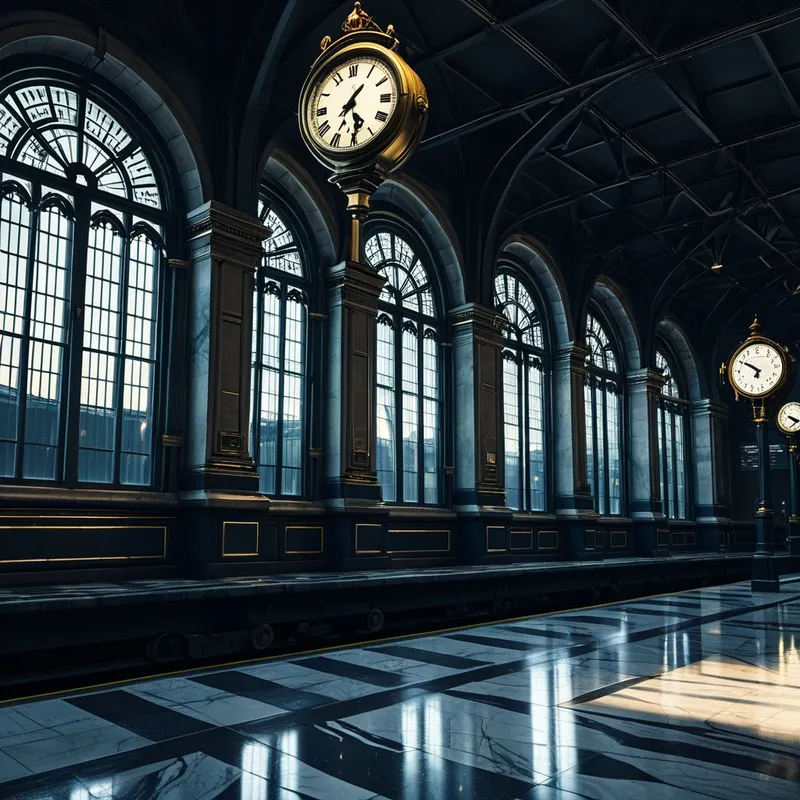
I am standing in the grand central station of a city I’ve never seen. The vaulted ceiling is lost in shadow. Every clock on the wall—dozens of them, in brass and oak and digital neon—tells a different, impossible time. Some race forward, their hands blurs. Others are frozen. One near the ticket booth is counting backward. The trains are all silent, dark, and empty. I am waiting, but I have forgotten for what, or whom.
This dream is not about being late. It is the psyche’s stark declaration that the internal timetable you’ve been living by—the schedule of healing, achievement, or arrival—has been rendered obsolete by a deeper, more chaotic truth.
The False Lead
Do not mistake this theme for simple anxiety about deadlines or nostalgia for the past. Those are its surface costumes. The terror of temporality is not about managing time but about confronting its fundamental illusion as a linear, external force. It is not a warning of “bad luck” or a premonition of literal loss. The dream is not saying you will be late for your meeting; it is revealing that the very stage upon which the meeting was supposed to occur is dissolving beneath your feet. The grief is not for a specific memory, but for the comforting, familiar prison of past-future thinking itself.
Psychological Architecture
To dream of time’s collapse is to be summoned to the deepest strata of Shadow work. Here, the psyche’s exiled parts—the child who believes they have forever, the adolescent who burned years in rebellion or shame, the elder who hoards moments like scarce coins—all clamor at once. They are no longer neatly filed in the cabinet of “then.” They are now. This is the Individuation process in its most disorienting phase: the deconstruction of the chronological self. The ego, which built its identity on a coherent story of progression (“I was that, then I learned, now I am this”), finds its foundation liquefying. The pressure is immense. It feels like madness. Yet, this is the necessary alchemical solve—the dissolution—that must precede the coagula, the reconstitution of a self that can hold past, present, and potential in a single, sovereign gaze. You are not losing time. You are being asked to stop being had by it.
Mythic Resonance
We see this eternal struggle woven into the fabric of our oldest stories. The Greek titan Chronos (often conflated with Cronus) devours his children, a brutal metaphor for time consuming all it creates. This is the raw, unconscious terror—the fear that life is merely a meal for an insatiable force. Yet, there is also Kairos, the god of the opportune moment, depicted with a lock of hair on his forehead but bald behind. Kairos represents the pregnant, qualitative moment of right action that can only be seized as it approaches, never once it has passed. The dream of temporality is the psyche wrestling with both gods: the crushing weight of Chronos and the elusive, razor’s-edge opportunity of Kairos. It asks: Have you been living under the tyranny of the devouring father, or do you have the presence to grasp the fleeting lock of the liberating son?
Symbolic Nodes
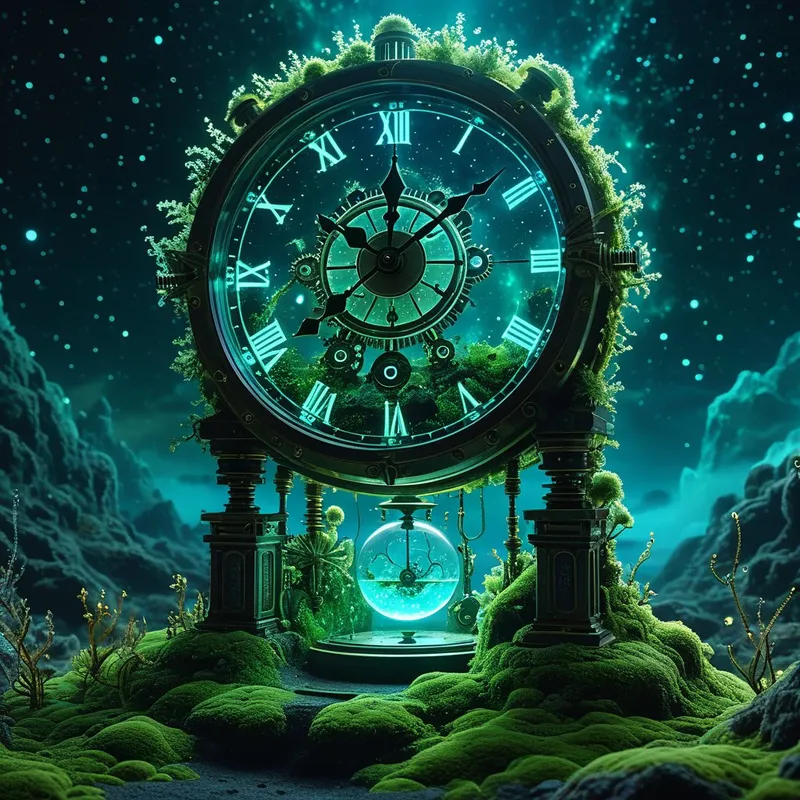
- Malfunctioning Clocks & Watches: Gears grinding, hands spinning or frozen, faces cracked.
- Deserted Stations & Empty Timetables: The architecture of transition, void of movement or purpose.
- Repeating Rooms or Landscapes: Loops without progression, the groundhog day of the soul.
- Rapid Growth or Decay: A plant blooming and withering in a breath; a building crumbling as it is being built.
- Meeting Someone from Different Life Stages Simultaneously: Your childhood self, your current self, and your elderly self in one room.
- The Sun or Moon Stuck in the Sky: The celestial timekeepers in arrest.
Archetypal Resonance
The core energy of the temporality dream is most acutely felt through The Sage Archetype—specifically, its shadow aspect. The pure Sage seeks timeless truth, wisdom that stands outside the fray of years. But the Shadow Sage is dogmatic, judgmental, and trapped in the illusion of knowing. It is the internal voice that says, “You should have learned this by now,” or “It is too late to change,” weaponizing chronology as a cage for the spirit. The somatic echo of the hollow vertigo is the Shadow Sage’s throne room collapsing. The alchemical potential lies in allowing this judgmental, time-bound “knower” to dissolve, so the true Sage—the witness who perceives the eternal pattern within the temporal flux—can emerge. This is the shift from being a prisoner of time’s narrative to becoming the sovereign author of its meaning.
The Alchemical Process
The transmutation here is from Chronos to Kairos—from quantified duration to qualified presence. The prima materia, the leaden base matter, is the grief and terror of time perceived as loss, lack, and relentless pressure. The alchemical fire is applied through the intense, voluntary act of suspended judgment. This is the heat. It means, in waking life, consciously interrupting the inner Shadow Sage’s commentary (“too late,” “wasted time,” “not enough”). The pressure is the conscious dwelling in the discomfort of the somatic echo—sitting with the vertigo, the hollow pull, without rushing to fill it with distraction or a new, improved schedule.
In this crucible, a profound separation occurs. The identity fused with your timeline begins to crack. What evaporates is the belief that you are your history or your potential. What remains, the philosopher’s stone, is a radical, embodied presence. This sovereignty is not the ability to manage time, but the capacity to inhabit the eternal now—the nunc stans—where all power and choice actually reside. You stop trying to fix the clocks in the station and realize you are not a passenger waiting for a train. You are the station, the clock, and the space between.
The Integration Protocol
Question 1: In the dream, where was your attention focused? On the malfunctioning mechanism itself, on finding the correct time, or on the empty space around it?
Question 2: What one story from your past do you feel is “over,” yet still defines you? What one story about your future do you cling to as a necessary salvation?
Question 3: If you could not use the concepts of “past” or “future” to explain who you are, what single, felt sensation in your body right now would you point to as your core?
Action 1 (The Suspended Breath): For one minute, three times a day, stop. Do nothing. Do not review the past or plan the future. Simply feel the air entering and leaving your body, and the weight of your body on the chair or floor. Let the mind’s chatter about time be background noise you do not engage with.
Action 2 (The Timeless Map): Take a large sheet of paper. In the center, place a dot or a symbol representing “This Moment.” Without thinking in chronological order, begin drawing lines, shapes, and words radiating out. Let memories, future hopes, fears, and people emerge not by date, but by the emotional or thematic charge they hold in relation to your center now. This is a map of your psychic territory, not your timeline.
Action 3 (The Kairos Anchor): Choose a small, portable object—a stone, a ring, a key. Designate it as your Kairos anchor. For one week, whenever you feel the anxiety of time (rushing, regret, dread), hold this object. Let it physically ground you. With it in hand, ask silently: “What is the one right action, the one true gesture, available to me in this breath?” Then act on that, however small.
Final Validation
It is terrifying to feel the walls of time soften and blur. To question chronology is to question the very architecture of the self you have painstakingly built. This disorientation is not a sign of breaking, but of a profound awakening. The dream does not come to destroy you, but to liberate you from the tyranny of the tick and the tock. You are not being erased from time; you are being invited to become so present, so utterly real, that you step into the timeless dimension from which all time flows—and there, you finally come home to the only moment that has ever existed, or will ever exist: this one. Now. Breathe.