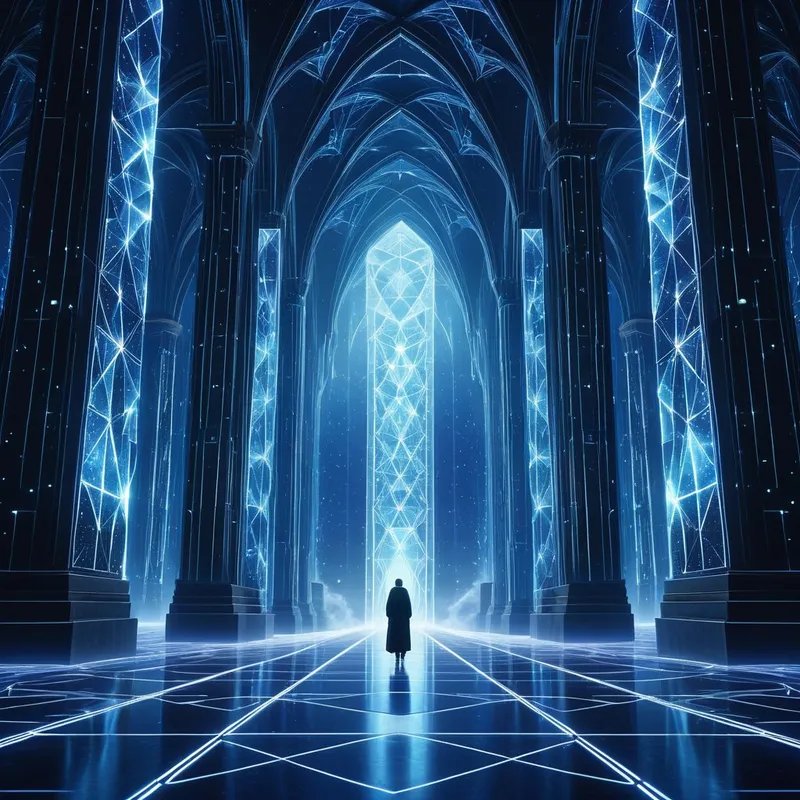
The Architecture of the Soul: Dreams of Systematic Thinking
The Somatic Echo
Before the mind grasps the blueprint, the body knows the architecture. It arrives not as a thought, but as a sensation: a deep, internal hum, a low-frequency vibration that feels less like sound and more like a tectonic plate shifting within the chest. There is a pressure, a density—the feeling of invisible walls being erected or dismantled in the dark. The breath becomes measured, automatic, as if following a pre-written protocol. The jaw may clench with the effort of holding a complex, unspeakable equation. In the gut, a cold, precise geometry forms, a grid of anxiety or a lattice of anticipation. This is the somatic echo of systematic thinking: the psyche preparing its ground for a fundamental restructuring. It is the silent hum of the mainframe before the code executes, the deep breath before the universe rewrites its laws.
The Dreamer's Log
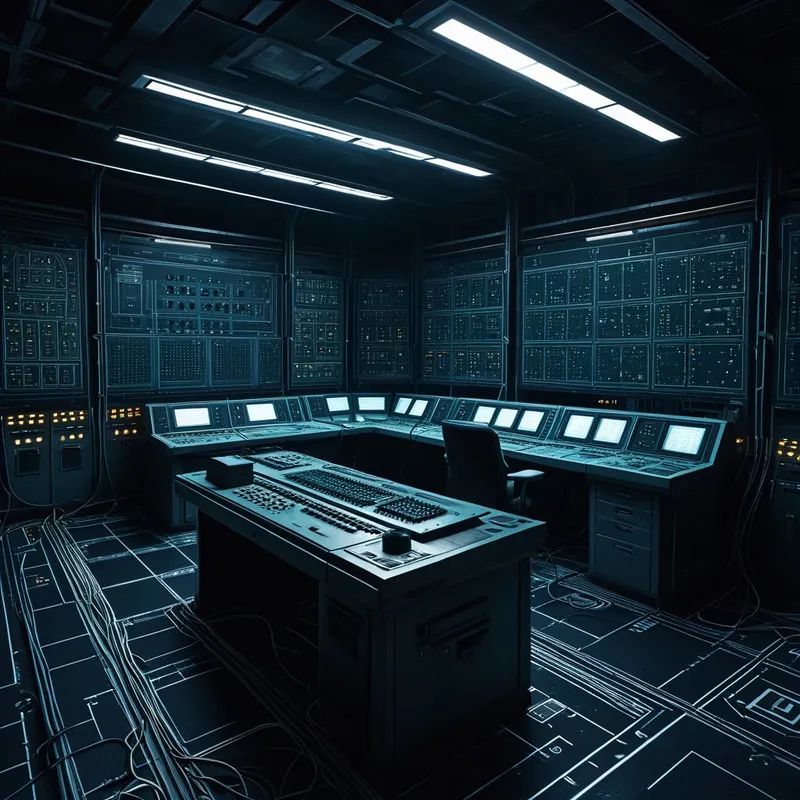
The dreamer stands in a vast, derelict control room, walls lined with dead screens. In the center, a single console glows with indecipherable, scrolling glyphs. They know, with dream-certainty, that they must input a sequence to prevent a silent, catastrophic systems failure, but the logic is a language they’ve forgotten. Their fingers hover, trembling, over keys that keep rearranging themselves.
This is the alchemy of the forgotten cipher: the conscious mind, orphaned from the deeper, instinctual logic of the soul, faces the terror of a system it built but can no longer command.
The False Lead
This is not a dream about being smart, logical, or efficient in the waking world. To mistake it for a simple puzzle to be solved, a work problem leaking into sleep, is to commit a profound error of literalism. It is not about external systems of order—calendars, spreadsheets, traffic flows. Nor is it a portent of "bad luck" or things "breaking down." The terror here is not of chaos, but of a perfect, functioning system that has become alien, autonomous, and antithetical to life. The false lead is to try and debug the dream’s code; the true path is to question the programmer.
Psychological Architecture
Here, we descend into the shadow of the psyche’s own IT department. Systematic thinking in dreams exposes the hidden, often archaic, operating systems of the Self. These are the core beliefs, the trauma responses, the relational patterns that run in the background like silent, unquestioned daemons. They are the "if-then" statements of worthiness: If I am perfect, then I will be safe. If I anticipate every flaw, then I will not be hurt. The dream presents these not as feelings, but as structures—control rooms, circuit boards, labyrinths, clocks.
The individuation process at play is one of conscious re-architecting. The Shadow work is to meet the internal System Administrator—that cold, efficient, often cruel part that believes total control is the only path to safety. This is not an enemy to be destroyed, but a protector to be thanked and retired. Its rigid logic once saved you. Now, its unyielding architecture stifles your becoming. The work is to feel the grief of that old system—the grief for the child who needed such absolute rules to survive—and, from that molten core of compassion, to write a new, more fluid, more intelligent code. One that allows for paradox, for the irrational spark of creativity, for the glorious bug of the unexpected.
Mythic Resonance
We hear this theme in the myth of Daedalus and the Labyrinth. Daedalus, the ultimate systematic thinker, architect of a structure so perfectly complex it could contain the uncontainable Minotaur. The labyrinth is not just a prison for the beast; it is a prison for the mind that conceived it, a monument to a logic that turns in on itself. Daedalus’s salvation—and his tragedy—comes not from navigating the system, but from transcending its very paradigm with wings made of wax and feather, a solution born of inspiration, not calculation. The system’s greatest flaw was its assumption that the only way out was through its own logic.
We see it too in the Hindu concept of Maya, often simplified as "illusion." More precisely, Maya is the divine systematic thought—the phenomenal world as a complex, coherent, and beautifully rendered projection of the Absolute. To be trapped in systematic thinking is to be ensnared by the compelling reality of the projection, mistaking the interface for the source code itself. The awakening is not to destroy the projection, but to remember the projector.
Symbolic Nodes
- Control Panels & Consoles: The interface with your inner directives.
- Labyrinths/Mazes: The complexity of your own psychological pathways.
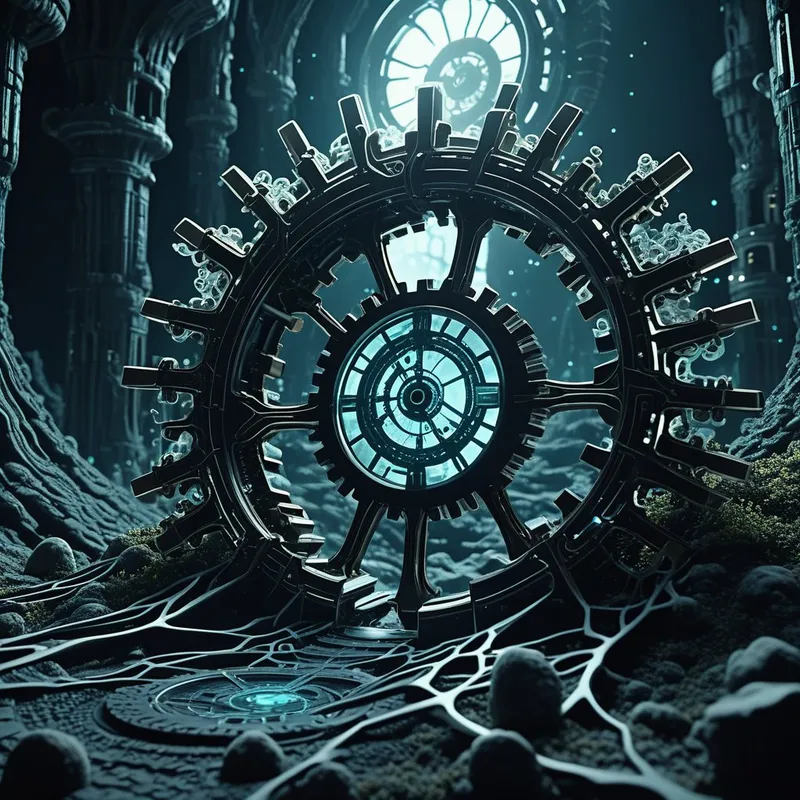
- Clockwork Mechanisms: The feeling of being a cog in your own life.
- Blueprints & Schematics: Unconscious plans for the Self.
- Grids, Nets, & Cages: Invisible structures of belief and limitation.
- Failing or Glitching Machinery: The old system becoming unsustainable.
- Incomprehensible Code or Glyphs: Wisdom from the unconscious not yet translatable to consciousness.
- Empty Command Centers: The alienation of the ego from the soul's true governance.
Archetypal Resonance
The energy here resonates most powerfully with The Shadow Ruler. This is not the Sovereign who governs with wisdom and order for the good of the whole kingdom of the Self, but the Tyrant and Control-Freak who insists on absolute, rigid dominion. Its core energy is the terror of chaos, which it mistakes for any form of spontaneity, emotion, or unpredictability. The somatic echo of this archetype is that cold, clenched pressure—the body held in the tyrannical grid. Its alchemical potential, however, is immense: within this obsessive need for control lies the latent capacity for true, benevolent sovereignty. The heat of the alchemical process is the unbearable tension between the system's demand for order and the soul's demand for life, a pressure that can, if endured, force the Shadow Ruler to abdicate its throne of fear and be reborn as a true steward of the inner realm.
The Alchemical Process
The transmutation here is from Rigid System to Fluid Intelligence. The prima materia, the base matter, is the cold, metallic grief of isolation—the grief of a consciousness that believes it must alone compute the universe to be safe. The alchemical vessel is the human heart, capable of holding the searing contradiction between the mind's logic and the soul's mystery.
The required heat is Sustained Paradox. It is the pressure of holding two "true" but incompatible realities: I must have control and Control is an illusion. It is the friction of allowing a glitch in the program, a feeling to disrupt the protocol, a moment of "irrational" beauty to crash the system. This heat feels like anxiety, like madness, like the terrifying dissolution of everything you thought kept you coherent. The old, crystalline structures of defense must melt into a liquid state. In this liminal, molten flux, the true magic occurs: the elements of logic and intuition, order and chaos, separation and connection, begin to recombine at a fundamental level. They are not reconciled by a higher logic, but are woven into a new substance: a Resilient, Adaptive Intelligence. This is the Philosopher's Stone of the psyche—not a fixed answer, but a living, responsive capacity to navigate complexity without needing to dominate it. The gold is sovereignty: the ability to use systems without being used by them.
The Integration Protocol
Question 1: Where in your waking life do you feel the cold, internal hum of the control room? Is it in a relationship, your work, your relationship to your own body or creativity? Name the "system" that currently feels most autonomous and alien.
Question 2: If the glitching console in your dream could speak one sentence of compassion to the part of you that built it, what would it say? Listen for the voice beneath the logic.
Question 3: What is one tiny, beautiful, "irrational" act—a spontaneous gesture, a moment of daydreaming, an appreciation of nonsense—that your inner System Administrator would flag as a "critical error"? Can you commit that error with full awareness?
Action 1 (Somatic Debugging): When you feel the clenched-grid anxiety of systematic overload, stop. Place a hand on your sternum. Breathe into that pressure for three cycles. On the fourth, imagine your breath as a soft, golden light that does not fix the grid, but gently dissolves its sharp corners, turning the rigid lines into flowing, liquid strands. Feel the shift from crystal to fluid in your body.
Action 2 (Unstructured Glyph): Take a blank page and pens. Without intention, let your hand draw a "system"—not a representation of anything, but lines, shapes, connections, and blocks that feel like your internal architecture. Don't label it. Then, with a different colored pen, let your hand "edit" or "glitch" this drawing. Add a wild curve through a straight line, a splash of color outside the lines, a nonsensical symbol in a blank space. This is a visual dialogue between the System Administrator and the Soul.
Action 3 (Ritual of Decommissioning): Write down on a small slip of paper the core, rigid rule your dream-system seems to enforce (e.g., "I must know the sequence to be safe"). Speak aloud to this rule: "I acknowledge you. You served a purpose. Your service is now complete." Then, safely burn the paper (or tear it into tiny pieces and scatter it). The act is not about destroying a part of yourself, but ceremonially releasing an outdated protocol from active duty.
Final Validation
It is terrifying to feel the foundations of your own mind quake, to watch the trusted interfaces of your logic flicker and fail. This terror is not a sign of weakness, but a testament to the enormity of the transformation underway. You are not breaking down; you are being upgraded. The very fact that you dream in systems means your psyche possesses a formidable, architectural power. It is a power that once built walls for survival and is now being asked to design bridges for wholeness. The control room is not your prison; it is the workshop where your soul is learning to forge a new kind of order—one born not of fear, but of a deep, fluid, and unshakable sovereignty. The final sequence to input is not one of knowledge, but of surrender: the courage to let the old system fail, so a more intelligent life can boot up in its place.