The Dream of Spectatorship: Reclaiming the Stage of Your Own Life
The Somatic Echo
It begins not as a thought, but as a posture. A subtle, pervasive ache in the shoulders, a weight that pulls you back into the chair of your own spine. The breath becomes shallow, held in the upper chest, as if you are perpetually waiting for permission to exhale fully. There is a coldness in the hands, a disconnect between the impulse to reach out and the physical signal to move. The body becomes a vessel of potential energy with no release valve, a coiled spring rusted into stillness. This is the somatic signature of the spectator—a living paradox of being intensely present yet utterly removed, feeling the drama of existence through a thick pane of glass.
The Dreamer's Log
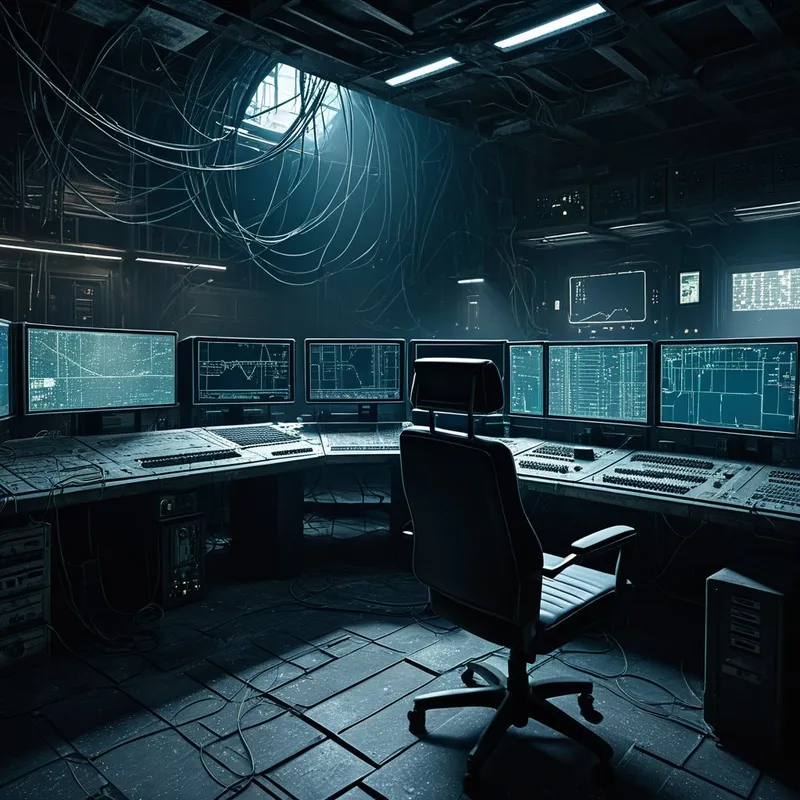
You are in a high-tech control room, surrounded by banks of monitors showing every detail of a vibrant, chaotic city. You see a crisis unfolding on a street corner—a figure in distress—and your hand instinctively moves toward a panel of glowing controls. But your fingers pass through the holographic interfaces like smoke. You are not the operator; you are only here to watch the system run itself. The dream ends with you pressing your forehead against the cool, unyielding glass, your breath fogging the scene you cannot touch.
This dream is an alchemical signal: the psyche has identified a critical subsystem where your executive function has been outsourced to an internal autopilot, leaving the core Self as a ghost in its own command center.
The False Lead
This is not a dream about laziness, apathy, or simple indecision. To mistake spectatorship for a character flaw is to blame the prisoner for the bars. It is not the absence of desire, but the presence of a sophisticated, internal redirect. The terror or grief you feel is not about inaction itself, but about witnessing your own vitality being processed by something else—a habituated pattern, a frozen trauma, a borrowed identity that now operates the controls. The dream is not reporting a failure of will; it is mapping a hijacking of agency.
Psychological Architecture
Beneath the glass of the spectator’s booth lies a psychological architecture of profound complexity. This is the domain of what we might call the Internal Board of Directors—a consortium of inherited voices, protective schemas, and archaic survival strategies that have, with the best of intentions, voted to suspend your direct authority. They fear the chaos of your unmediated engagement with life. The Shadow work here is not to battle these internal figures, but to recognize their origin as exiled protectors. The Individuation process demands a gentle, firm re-negotiation of terms. You must turn your gaze from the captivating screen of external drama and look instead at the empty operator’s chair within. Who, or what, convinced you to vacate it? The journey from spectator to sovereign involves feeling the profound grief of time spent watching your own life narrative unfold without your authorship, and the even deeper terror of reclaiming the pen.
Mythic Resonance
We see this eternal drama in the myth of Persephone. For half the year, she is Queen of the Underworld, a ruler with agency and depth. But in the other half, she returns to the surface, to her mother Demeter’s realm, often depicted in a state of passive, floral beauty—a spectator to the world above that once was hers. Her myth encapsulates the cyclical human experience of sovereignty and surrender, of being an actor in one sphere and a watched ornament in another. It speaks to the compartmentalization of self that spectatorship dreams so painfully reveal. Likewise, the tale of the Lady of Shalott, cursed to only view the world through a mirror’s reflection, weaves the tragedy of indirect experience—where to look upon life directly is to invite a shattering of the fragile, self-imposed prison.
Symbolic Nodes
- Windows, Glass, Screens: The transparent barrier that separates experience from embodiment.
- Empty Chairs, Control Panels, Unused Tools: Symbols of abdicated agency and dormant potential.
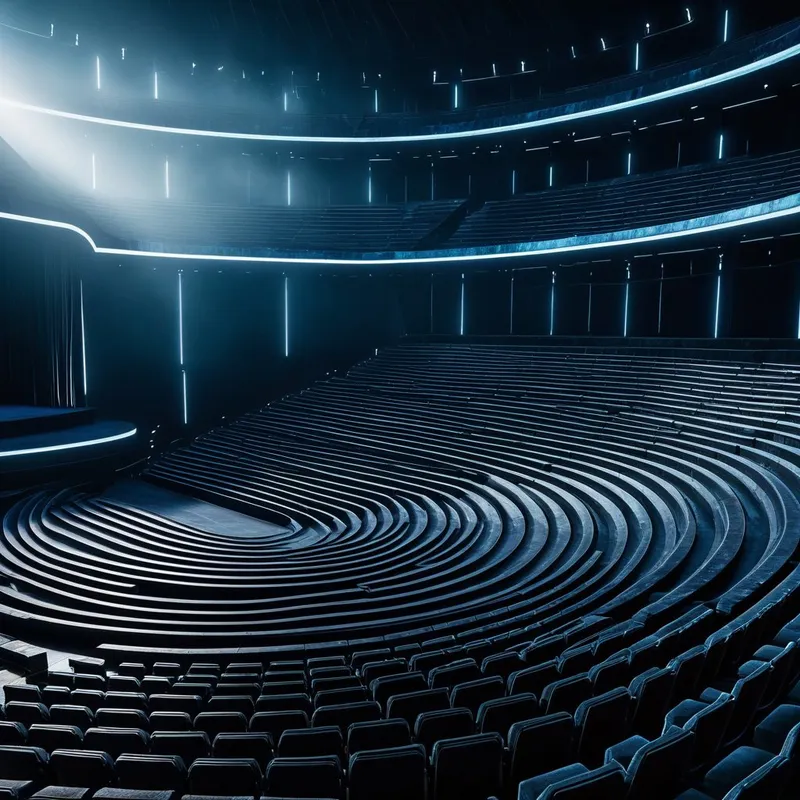
- Stadiums, Theaters, Galleries: Architectures designed for collective observation, highlighting the individual’s passive role.
- Muted or Silenced Voices: An inability to speak or be heard within the dream’s action.
- Watching a Doppelgänger or Stranger Live Your Life: The ultimate image of self-alienation.
Archetypal Resonance
The Shadow Ruler is the archetypal force most active in the theme of spectatorship. This is not the absence of power, but its profound corruption into control. The Shadow Ruler fears authentic, messy sovereignty and instead institutes a rigid, internal bureaucracy of avoidance. It creates the perfect, sterile observation deck to safely manage the perceived threats of genuine engagement, emotion, and risk. The somatic echo of frozen potential is its governance. Its alchemical potential lies in its undeniable infrastructure—the very control rooms and stages it built can be reclaimed. The energy of management, once turned inward to suppress, contains the blueprint for turning outward to orchestrate a true and authentic life.
The Alchemical Process
The transmutation of spectatorship requires a specific, intense heat: the heat of conscious, embodied frustration. This is not the cool anger of blame, but the white-hot grief of realizing you have been complicit in your own exile. The alchemical vessel is the body itself. You must allow the visceral ache of passivity—the clenched jaw, the held breath, the restless legs—to become fully felt, not as a symptom to be solved, but as the prime matter of change. The pressure is applied by asking, in the midst of the dream-like waking trance: "What action is my body longing to take that my mind is vetoing?" The old rule of the Shadow Ruler is "Safety through observation." The new gold of sovereignty is forged in the mantra, "I consent to the consequences of my own touch." You melt the glass of the observation pane not by breaking it, but by leaning into it until your warmth and its coldness become one, and the barrier ceases to exist.

The Integration Protocol
Question 1: In the dream, and in your waking life, what specific emotion arises just before the impulse to act is silenced or redirected? Is it fear, grief, overwhelm, or perhaps a deep, old shame?
Question 2: If the part of you that forces you to watch were a protective entity, what catastrophe does it genuinely believe it is preventing by keeping you in the spectator's seat?
Question 3: What one, small, physical action have you recently admired in another person that felt utterly forbidden to you? (e.g., the way they said "no," the way they reached for something they wanted, the way they occupied space).
Action 1 (Somatic Reclamation): For five minutes, sit or stand and do nothing but intend to move. Feel the specific muscles that activate with the desire to reach, step, or speak. Do not follow through with the action. Simply map the sensation of pure, unexpressed intention in your body. This grounds the energy of agency in your nervous system.
Action 2 (Narrative Re-write): Take the dream vignette from your log. Now, write or draw the next 60 seconds. But in this version, the glass shatters, the controls solidify, or your voice finds its sound. Do not write an epic. Write a single, concrete, immediate action your dream-self takes to transition from observer to participant. This creatively rehearses the neural pathway.
Action 3 (Ritual of Entry): Choose a mundane, daily threshold—your front door, your car door, the door to your workspace. For one week, each time you cross it, pause. Place your hand flat on the frame or handle. Silently state: "I enter here as the author, not the audience." This ritualizes the reclamation of space and agency.
Final Validation
The pain of spectatorship is a high-order pain. It is the pain of a consciousness that has evolved beyond mere survival and now longs for its birthright: creative sovereignty. To feel this ache is not a sign of weakness, but a testament to your depth. The very fact that you dream of watching means a part of you is already awake to the truth of your absence. That witness is your first and most powerful ally. It is the part that never agreed to the exile. From that seat in the dark theater, it is now turning to you, handing you not just the script, but the pen, and whispering the only direction that matters: "Begin."