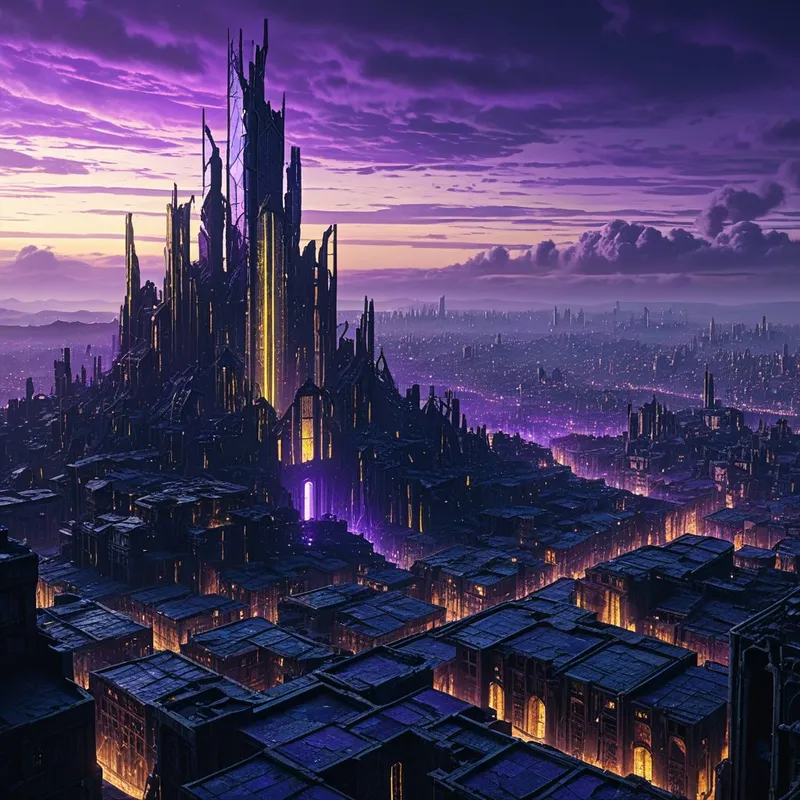
The Dream of the Broken World: Alchemizing Societal Critique
The Somatic Echo
It begins not as a thought, but as a weight. A low-grade hum in the bones, a subtle pressure behind the sternum—the somatic echo of a structure out of alignment. It’s the feeling of walking through a grand, familiar building and sensing, deep in your marrow, that the foundation has shifted. The air tastes of static and rust. Your body, that ancient instrument, registers the collective dissonance long before your mind formulates the critique. This is the visceral prelude: a grief for a world you thought was solid, a terror that you are complicit in its fractures, and beneath it all, a strange, electric current of potential. It is the ache of an internal family system where the inner Orphan weeps, the inner Rebel rattles its cage, and the inner Sovereign waits, un-crowned, in the shadows.
The Dreamer's Log (Case Vignette)
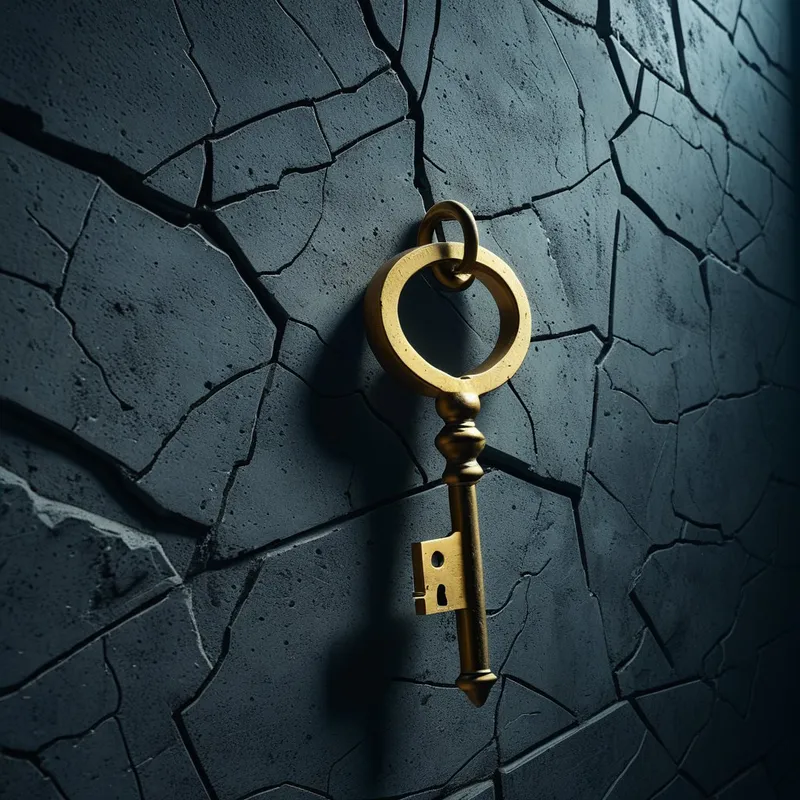
I stood before a vast, featureless concrete wall that stretched to the horizon. It was cold and silent. In my hand, I held a single, ornate key that felt both impossibly heavy and feather-light. I knew, with dream-certainty, that the wall was wrong—a monument to a forgotten error—and that my key could undo it. But there was no lock to be seen.
The alchemy here is not in finding the lock, but in realizing the key is not for the wall, but for the dreamer’s own paralyzed hand.
The False Lead
This is not a dream of mere personal bad luck or social anxiety. To mistake it for such is to pathologize a prophecy. The dream of societal critique is not your psyche complaining about traffic or politics. It is a structural diagnosis. It points not to your failure to adapt to a broken system, but to the system’s failure to sustain the soul. The terror is not of external chaos, but of the profound responsibility that comes with seeing the crack in the world—a responsibility that whispers, if you can see it, you must, in some way, address it. The false lead is to externalize the entire dream, to believe the work is "out there." The true work always begins in the internal architecture that mirrors the external collapse.
Psychological Architecture
When the dream presents a broken society, it is holding up a mirror to the dreamer’s own internal governance. Which inner voice has been tyrannical? Which vulnerable part has been exiled behind a wall of concrete rationality? What sacred, creative law has been violated in the name of efficiency? This is the deepest Shadow work. The crumbling cityscape is the visible manifestation of unlived life, suppressed grief, and disowned power within. The process of individuation here is a rebellion against internalized dogma. It requires you to become a citizen of your own psyche first—to hold council with your inner exiles, to question the laws written by fear, and to draft a new constitution based on soulful integrity. The critique of the outer world is the catalyst for the re-founding of your inner world.
Mythic Resonance
We see this in the story of Cassandra, gifted with the clarity of prophecy but cursed to never be believed. Her agony is not just in seeing the fall of Troy coming, but in the cellular torment of bearing a truth the collective consciousness refuses to integrate. The societal critique dream often carries this Cassandra-energy: a devastating, lonely clarity. Conversely, there is the alchemical thread of the Mortificatio in the Nigredo stage, where the old, rigid form must be dissolved into black chaos before the new can be born. The dream does not show you the new city. It shows you the necessary, terrifying dissolution of the old one, trusting you can endure the blackness until the first light of your own authority dawns.
Symbolic Nodes
- Crumbling Architecture: Falling skyscrapers, cracked foundations, decaying public monuments.
- Silent or Screaming Crowds: Masses of people who are either eerily mute or emitting a soundless scream.
- Non-Functional Tools: Phones with dead screens, cars without engines, keys without locks.
- Toxic or Altered Environments: Air that is thick and unbreathable, rivers of sludge, a sun that gives no warmth.
- Absurd or Cruel Bureaucracy: Endless lines to nowhere, nonsensical paperwork, barred gates with no guardians.
Archetypal Resonance
The energy here is most potently that of The Rebel Archetype. Not its shadow of wanton destruction, but its luminous core: the sacred destroyer who clears away the obsolete to make space for the new. The somatic echo—the pressure, the electric potential—is the Rebel’s energy building, a force that says "this no longer serves life." Its alchemical potential is immense: it provides the fierce, necessary heat to melt down internalized structures of oppression, compliance, and fear. The Rebel does not critique from a place of cynical superiority, but from a deep, aching love for what could be. It is the archetype that grants the courage to say "no" to the outer world’s demands, so you can finally hear the "yes" of your own soul.
The Alchemical Process
The transmutation here is from critical paralysis to sovereign authorship. The prima materia is the grief and rage at the broken world. The heat is applied through a ruthless, compassionate inquiry: "How does this outer brokenness live inside me? Where have I built internal walls? Where have I silenced my own voice to keep the peace?" This is the Calcinatio—the burning away of the persona that adapted to the sick system. The pressure is the sustained tension of holding two truths: the world is wounded, and you are responsible for your inner realm. The key is to stop trying to fix the dream’s monolithic wall and to instead use its energy to dismantle your own internal barricades. As you do, the leaden despair of the critic is transformed into the golden authority of the one who builds from the ruins. You become the architect of your own reality.
The Integration Protocol
Question 1: In the dream’s broken landscape, what one rule, structure, or "way things are done" felt most suffocating or absurd? Can you name its echo in your daily life?
Question 2: If the dream's environment (the wall, the toxic air, the silent crowd) were a part of your own psyche, what would it be? A defense mechanism? A buried emotion? A forbidden desire?
Question 3: What is the smallest, most sovereign "no" you can say today to an external demand that violates your inner peace? What is the corresponding "yes" it makes space for?
Action 1 (Somatic Reclamation): When you feel the "weight of the world," stop. Place your hands on your sternum and your lower abdomen. Breathe deeply into that pressure for two minutes. Do not try to analyze it. Simply acknowledge its presence as energy, not fate.
Action 2 (Unstructured Cartography): Take a large piece of paper. Without thinking, draw the "map" of the dream’s society using only shapes, lines, and textures—no representational images. Then, with a different colored pen, draw the flow of your own energy moving through it. Where do you get stuck? Where do you find a hidden passage?
Action 3 (Ritual of Sacred Disobedience): Identify one tiny, unconscious "law" you follow (e.g., "I must answer that email immediately," "I cannot rest until X is done"). Consciously break it. Do it not with rebellion, but with the serene authority of one who is rewriting an internal code. Note the sky does not fall.
Final Validation
To dream of a world in collapse is a terrifying gift. It means your psyche is not asleep at the wheel. It is awake, and it is howling at the moon of collective unconsciousness. This pain is not a sign that you are failing to cope; it is a sign that you are alive enough to feel the rupture. The integration is not about saving the world. It is about allowing the world’ crisis to initiate you into your own sovereignty. Let the dream’s critique dismantle the internal statues to dead gods. From that cleared ground, you will not build a better cage. You will finally feel the sun on your skin, and remember what it is to be free.