The Internal Caste System: Dreams of Social Stratification
The Somatic Echo
Before the mind conjures images of gilded ballrooms or factory floors, the body knows. It is a specific, leaden gravity—a sensation of being pinned to a particular stratum of air. Your shoulders carry an invisible, immovable weight, as if the atmosphere itself has density and grade. The breath becomes shallow, rationed, as if the oxygen belongs to a higher floor. There is a clenching in the jaw, a fortress against words deemed unfit for your station, and a hollow ache in the solar plexus—the seat of personal power—feeling like an empty vault in a system where your currency is counterfeit. This is the somatic architecture of hierarchy made flesh: a lived-in map of where you believe you are allowed to exist.
The Dreamer's Log (Case Vignette)
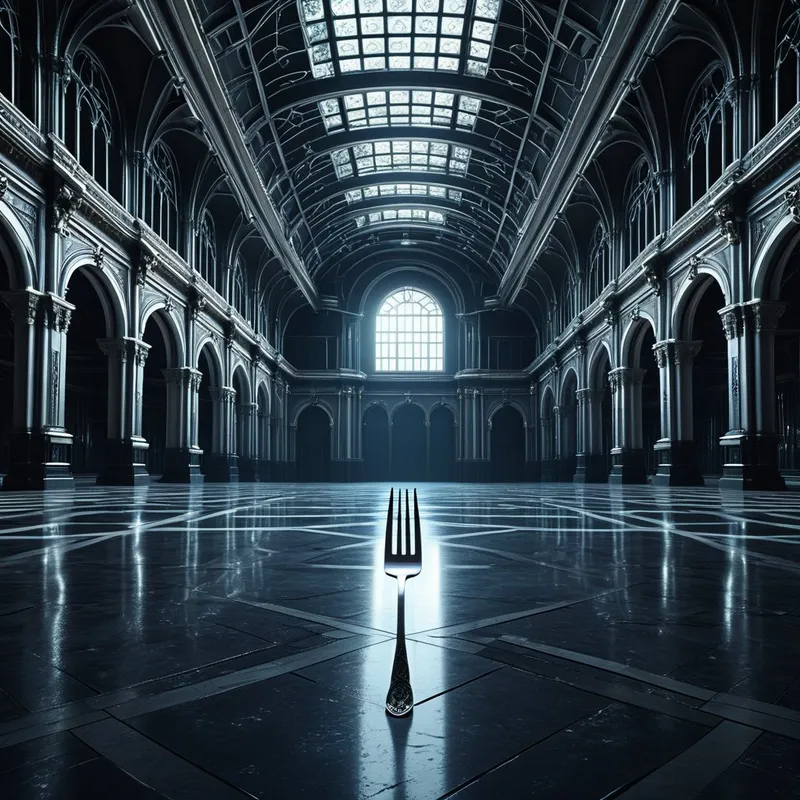
You are in an endless, opulent ballroom, a cavern of crystal and whispered judgment. Everyone is dancing a complex, silent waltz, their positions flawlessly ordained. You stand frozen at the edge, holding not a glass, but a single, ornate silver fork. You know, with dream-certainty, that to join is to know the steps, and to know the steps is to belong. But the fork is useless here; it belongs to a different script, a different meal entirely. The terror is not in exclusion, but in the paralyzing clarity of the rules you did not write.
Alchemical Interpretation: The fork is the soul’s true tool, rendered absurd by a context that only values the pre-choreographed dance, forcing a confrontation between authentic function and imposed performance.
The False Lead
This is not a dream about mere social anxiety or the fear of a party faux pas. To interpret it as such is to mistake the earthquake for a trembling glass. Nor is it a simplistic prophecy of “rising to the top” or a warning of “falling through the cracks.” The dream of social stratification is not about your place on an external ladder. It is the psyche’s stark revelation of the internalized ladder itself—the invisible scaffolding you have built inside your own being, upon which you constantly judge, rank, and exile parts of yourself. It is the architecture of your own worth, made visible.
Psychological Architecture
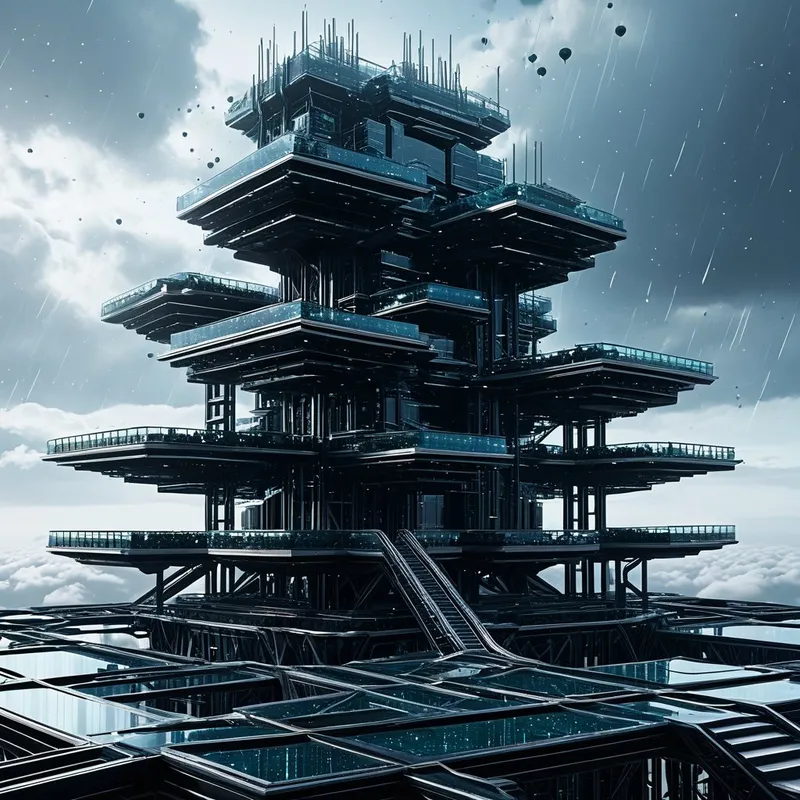
The shadow work here is an archaeology of the self. You are tasked with descending the internal staircase, floor by floor, to meet the exiled tenants. In the penthouse lives the Achiever, polished and anxious, convinced love is a reward for altitude. In the mid-level apartments, the Pleaser works tirelessly, hanging curtains to hide the view of the floors below. In the basement, shrouded in shame, resides the Wild One, the Needy Child, the Furious Rebel—all parts deemed “low status,” uncouth, or too costly for the building’s reputation.
Individuation is not about evicting these tenants or promoting one to the top. It is the radical, destabilizing act of dissolving the floors themselves. It is recognizing that the Pleaser and the Rebel are siblings, that the Achiever’s drive is fueled by the Child’s fear of abandonment. The process feels like structural collapse—a terrifying loss of the known order. Yet, this collapse is the precondition for building a true home, a psyche organized not by vertical hierarchy, but by the horizontal ecology of relationship. Sovereignty is born when you become the land, not the landlord.
Mythic Resonance
We see this eternal drama in the myth of Cinderella. The core of the tale is not the glass slipper or the prince; it is the hearth. Cinderella is not merely a servant; she is spatially assigned to the ashes, the literal bottom of the domestic hierarchy. Her stepfamily’s cruelty is the enforcement of this stratified order. The fairy godmother’s magic is not just a wardrobe change; it is a temporary, glorious suspension of the caste system itself, allowing her essence to be seen outside its confines. The story resonates because we all know the ache of being assigned to a psychic hearth, our brilliance hidden in ash.
Similarly, the Indian concept of Dharma (often simplified as duty) is deeply entwined with the societal structure of Varna. The tension lies in the conflict between one’s prescribed social duty (svadharma) and one’s intrinsic nature (svabhava). The dream of stratification often plays out this exact conflict: the exhausting performance of a role on an assigned tier, while the soul’s true nature clamors from a different, inarticulable place.
Symbolic Nodes
- Staircases, Elevators, Escalators: The mechanics of vertical movement, often broken, crowded, or leading nowhere.
- Uniforms, Crowns, Rags: The costumes of assigned rank.
- Impenetrable Glass Walls/Windows: Seeing but not touching, the illusion of access.
- Abandoned or Useless Tools (like the fork): Symbols of authentic skill with no place in the current order.
- Waiting Rooms, Lines, Checkpoints: The somatic experience of deferred value and controlled access.
- Architectural Layers: Balconies overlooking pits, basements, penthouse suites.
Archetypal Resonance
The energy at the core of this theme is The Shadow Ruler.
This is not the Sovereign who governs from integrated wholeness, but the internal Tyrant and Control-Freak who enforces a rigid, fear-based hierarchy. Its voice is the somatic echo of clenched jaw and shallow breath—the enforcer of “shoulds” and “musts” that maintain the internal caste system. It is the psychic bureaucrat that exiles the wild, the vulnerable, and the messy to the lower floors, believing order is synonymous with worth. The alchemical potential lies in dethroning this Shadow Ruler not through rebellion, but through understanding: its desperate control is a misguided attempt to create safety. By listening to its fear, we can transmute its rigid rule into the true Ruler’s capacity for wise, compassionate order—an order that includes, rather than exiles, all parts of the self.
The Alchemical Process
The transmutation here is The Dissolution of the Internal Monarchy. The base material is the leaden, toxic belief that some parts of you are inherently more valuable than others. The prima materia is the grief of having exiled your own wholeness and the terror of the chaos that might follow if the hierarchy falls.
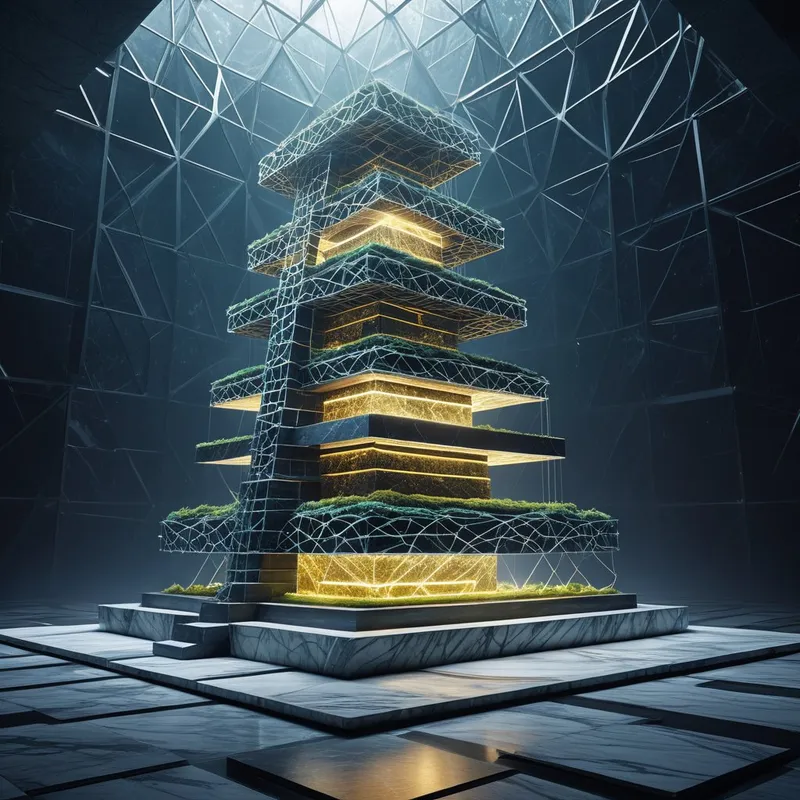
The required heat is the sustained, uncomfortable awareness of your own internal rankings. It is the pressure of catching yourself in the act: when you shame your own need (“Don’t be so weak”), when you privilege achievement over rest (“Laziness is for losers”), when you police your own joy (“Act your station”). This heat is applied by pausing at these moments and asking the exiled part: “What are you here for?” The old structure must be rendered liquid, chaotic. This feels like a loss of identity, a profound disorientation. From this liquid state, the new form crystallizes: not a pyramid, but a round table. Sovereignty emerges when every exiled part—the orphan, the rebel, the child, the king—is given a seat and a voice. The gold is the integrated self, whose worth is intrinsic and non-negotiable, no longer contingent on its position relative to anything else.
The Integration Protocol
Question 1: In the dream’s social structure, what specific action, word, or feeling would have gotten me ejected from the room? That is likely a disowned part of myself knocking at the door.
Question 2: Where in my waking life do I feel a similar “leaden gravity” or “shallow breath”? What unspoken rule of worth or conduct am I trying to obey in that space?
Question 3: If my psyche were not a hierarchy but an ecosystem, what role does the part I judge as “lowest” play? What essential function does it serve for the whole?
Action 1 (Somatic Cartography): For one day, track the physical sensations of hierarchy. Note when your body clenches, shrinks, or puffs up in social or professional settings. Don’t judge the feeling; simply map it. This grounds the archetype in your living tissue.
Action 2 (Exile’s Manifesto): Engage in unstructured, stream-of-consciousness writing from the perspective of your most “shameful” or “low-status” part. Let it speak without censorship. What does it want? What does it feel? What is its true name? This is a creative audience with your inner exile.
Action 3 (Ritual of Re-Seating): Create a simple, private ritual. Place several objects on a table, each representing a different “part” of you (e.g., a stone for the resilient orphan, a feather for the free spirit, a key for the achiever). Arrange them in a circle. Light a candle in the center. Verbally welcome each to the table. This externalizes the shift from pyramid to round table.
Final Validation
The dream of social stratification is a heavy one. It carries the weight of centuries of cultural programming and personal wounding. To feel its gravity is not a sign of weakness, but of profound sensitivity to the invisible architectures that shape human suffering. Your discomfort is the friction of your soul against its own cages. This dream is not a sentence to a fixed place; it is a master blueprint, delivered in the dead of night, showing you the exact design of the prison you can now choose to dismantle. The work is deep, for it asks you to become the architect of your own liberation, stone by internal stone. You are not the prisoner on a tier. You are the ground upon which the entire structure rests, and you are learning, at last, to claim your full, unbounded territory.