The Dream of Being Seen: Alchemy of the Inner Witness
The Somatic Echo
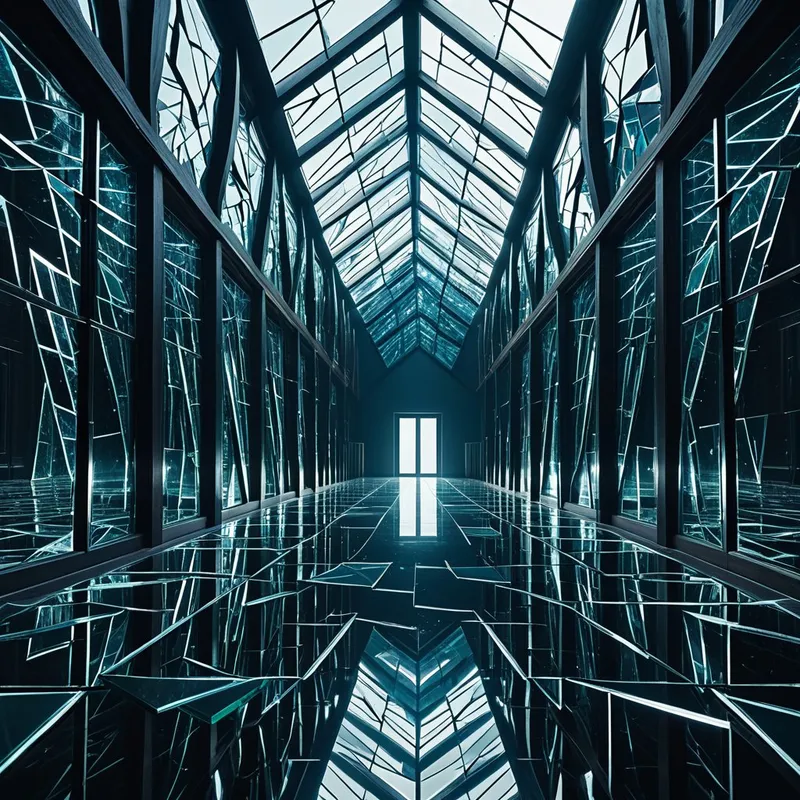
It begins not as a thought, but as a pressure. A subtle tightening at the base of the skull, a coolness spreading across the shoulders as if a draft has found its way into a sealed room. The breath becomes shallow, held in the upper chest, while the stomach knots into a silent, watchful fist. There is a prickling on the skin, the uncanny sensation of a gaze resting upon you from an unseen quarter. This is the somatic echo of self-consciousness: the body’s ancient alarm system, signaling that you have become an object in your own subjective field. You are both the observer and the observed, and the space between these two poles crackles with a silent, electric dread. It is the feeling of being on stage without knowing your lines, of existing within a fragile shell that feels transparent to a judging, invisible world.
The Dreamer's Log
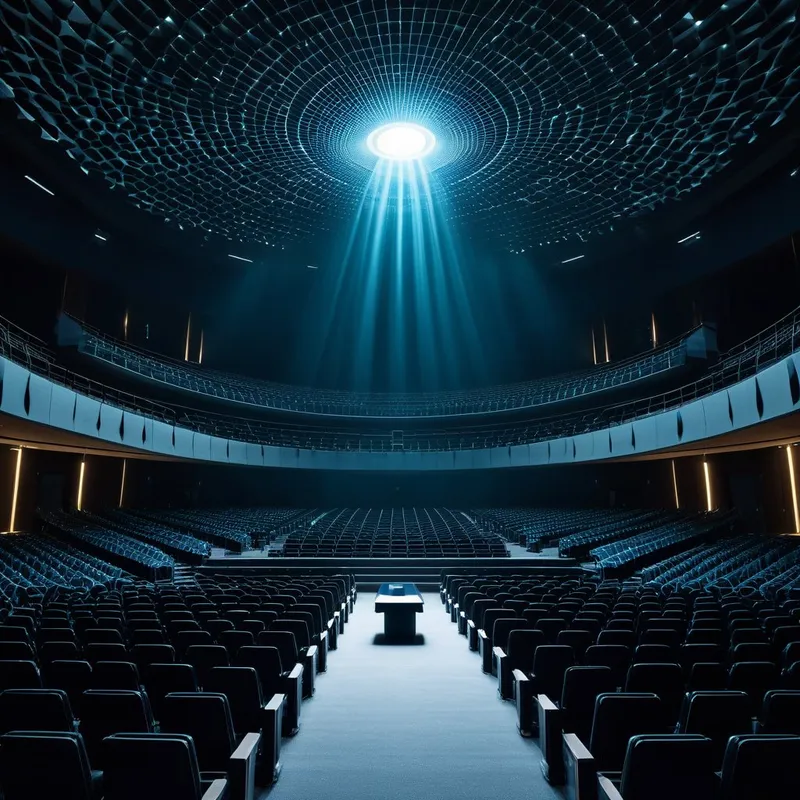
You are standing at a podium in a vast, empty lecture hall. The seats are shadowed, but you feel the weight of countless eyes upon you. Your notes are blank pages that keep multiplying. A single, ancient projector whirs to life, but instead of casting an image, its beam of light simply holds you in its center, illuminating you for an audience you cannot see.
This dream is not about public speaking anxiety. It is an alchemical image of the psyche projecting its own critical awareness onto a void, creating an audience from the raw material of its own fear. The blank pages are the unformed self, awaiting the inscription of a voice that dares to speak without a script.
The False Lead
This theme is not about social awkwardness or a simple fear of judgment. To mistake it for such is to confuse the symptom for the disease. The dream of being watched is not a report on your popularity or performance. It is a profound signal from the deep psyche that a fundamental structural shift is underway. It is the ego’s experience of the Self beginning to observe it. The terror is not of others, but of the emergence of a larger, more conscious You—a you that can see all your parts, your postures, your pretenses. This is the birth pang of true self-awareness, often mistaken for its shadow, shame.
Psychological Architecture
Beneath the felt sense of exposure lies a silent civil war within the internal family. One faction, the Inner Critic, has commandeered the watchtower. It projects its harsh commentary onto the blank screen of the world, making you believe the judgment is coming from out there. Its ally is the Performer, a part that frantically tries to choreograph your every move to please this imagined audience. Meanwhile, the Exiled Child—the part that simply wants to exist, to play, to be spontaneous—is locked in a basement, feeling ashamed of its very needs.
The individuation process here is the painful, glorious dethroning of this regime. It is the slow, somatic realization that the eyes you feel are your own. The watcher in the dream is the nascent Inner Witness, the aspect of consciousness that can observe all these parts—the Critic, the Performer, the Child—without identifying with any of them. This is shadow work of the highest order: reclaiming the power of your own gaze from the tyranny of projected criticism. You must turn toward the feeling of being watched and, with immense courage, meet your own eyes in the dark.
Mythic Resonance
We see this architecture in the myth of Actaeon. The young hunter, wandering freely in the forest (the unconscious), accidentally stumbles upon Artemis, the goddess of the wild, bathing in a sacred pool. He sees the naked, divine truth. As punishment, he is transformed into a stag and torn apart by his own hounds. The classic reading is a warning against trespass. But the alchemical reading is profound: Actaeon’s crime was not seeing, but being seen seeing. He was caught in the act of witnessing, and his own domesticated instincts (the hounds) turned on him. The dream of self-consciousness is this moment of being “caught” by a truth about yourself—a truth your own trained, critical mind (the hounds) is not yet ready to accept, and so it turns to rend you.
Symbolic Nodes
- Mirrors, Windows, & Cameras: Instruments of reflection and capture, questioning where the "you" truly resides.
- Empty Rooms with a Focal Point: Podiums, stages, empty chairs—arenas for a performance where the actor is unsure of their role.
- Blurred or Hidden Audiences: Crowds in shadow, silhouettes behind screens, the sense of being broadcast.
- Malfunctioning or Revealing Technology: Projectors showing your thoughts, microphones amplifying your heartbeat, transparent walls.
- Ill-Fitting or Absent Clothing: The archetypal exposure, the vulnerability of the persona being stripped away.
Archetypal Resonance
The energy at the core of this theme is that of The Shadow Ruler. Not the sovereign who governs with wisdom from a secure center, but the Tyrant who rules through constant surveillance and control. This Shadow Ruler is the internalized critic-king who demands a perfect performance to maintain a fragile, illusory order. Its somatic echo is the stiffened spine and held breath of a subject under inspection. Its alchemical potential, however, is immense. The heat of this discomfort is meant to melt the tyrannical structure, not to destroy the throne, but to transform it. The goal is to reclaim the Ruler’s authority—not to control how you are seen, but to author the foundational law of your own being: I am that which witnesses, not that which is performed.
The Alchemical Process
The transmutation of self-consciousness into sovereignty requires the heat of conscious, abiding discomfort. You must willingly sit in the crucible of exposure without fleeing into performance or shame. This is the solve: the dissolution of the belief that you are the image being judged. You allow the feeling of being watched to wash over you, and you ask, gently, “Who is it that feels watched?” The pressure then increases: you must cease feeding the imagined audience. Stop editing your internal monologue for their benefit. Let the sentences trail off. Let the gestures be awkward. This stage feels like psychic death—the death of the managed self.
Then comes the coagula, the coagulation of the new substance. From the ashes of the performer, the Inner Witness solidifies. This is not an act of creation, but of revelation. It was always there, the silent awareness behind the panicked commentary. Sovereignty is born when you realize the watcher and the watched are made of the same substance—your own consciousness—and you choose to identify with the watcher. The gaze turns inward, not with criticism, but with the curious, compassionate attention of a sovereign surveying their own vast and varied domain.

The Integration Protocol
Question 1: In the dream, who or what did you feel was watching you? If you gave that watcher a voice, what is the first judgmental sentence it would speak? Now, who does that voice sound like inside you?
Question 2: Where in your waking life do you feel this same somatic echo—the tightened shoulders, the guarded breath? Is it when you speak your truth, when you express a desire, or when you are simply at rest?
Question 3: If the feeling of being watched is your own consciousness circling back on itself, what is it that this deeper part of you is so urgently trying to see and acknowledge?
Action 1 (The Unobserved Hour): For one hour, engage in an activity you love with the explicit intention that no one will ever know about it, see it, or hear of it. Do not document it, plan to share it, or perform it well. Simply paint badly, walk without a destination, hum a made-up song. Let the activity exist outside the economy of perception.
Action 2 (Mirror Gazing): Sit before a mirror in soft light. Look not at your features, but into your own eyes. Set a timer for five minutes. Breathe. As the feelings of awkwardness or criticism arise, silently acknowledge them: “Ah, there is the performer.” “There is the critic.” Keep returning your gaze to the witness behind your own eyes, the one who is watching all these parts come and go.
Action 3 (The Broadcast Journal): Take a notebook. At the top of a page, write: “This is a live feed of the unedited interior.” For ten minutes, write down every thought, sensation, and fragment of internal commentary with zero censorship, as if you were broadcasting raw data to a completely non-judgmental, alien receiver. Let it be messy, trivial, shocking, or boring. The goal is not a product, but the practice of existing without an internal censor.
Final Validation
The weight of those unseen eyes is real. The ache in your shoulders from carrying the expectation of a thousand glances is not your imagination. It is the honest labor of a psyche straining under the burden of a fractured identity. This difficulty is the measure of the transformation at hand. You are not breaking under scrutiny; you are being forged in its fire. The dream is not a sentence to eternal performance, but a sacred map. It is showing you the location of the inner watchtower, and handing you the keys. The sovereignty you seek does not come from perfecting the image, but from daring to turn off the projector, step out of the beam of light, and sit, finally unseen and unscripted, in the nourishing dark of your own authentic presence. The audience dissolves because it was always you. And in that silence, you become both the theater and the sole, compassionate witness to the miraculous play of your own existence.