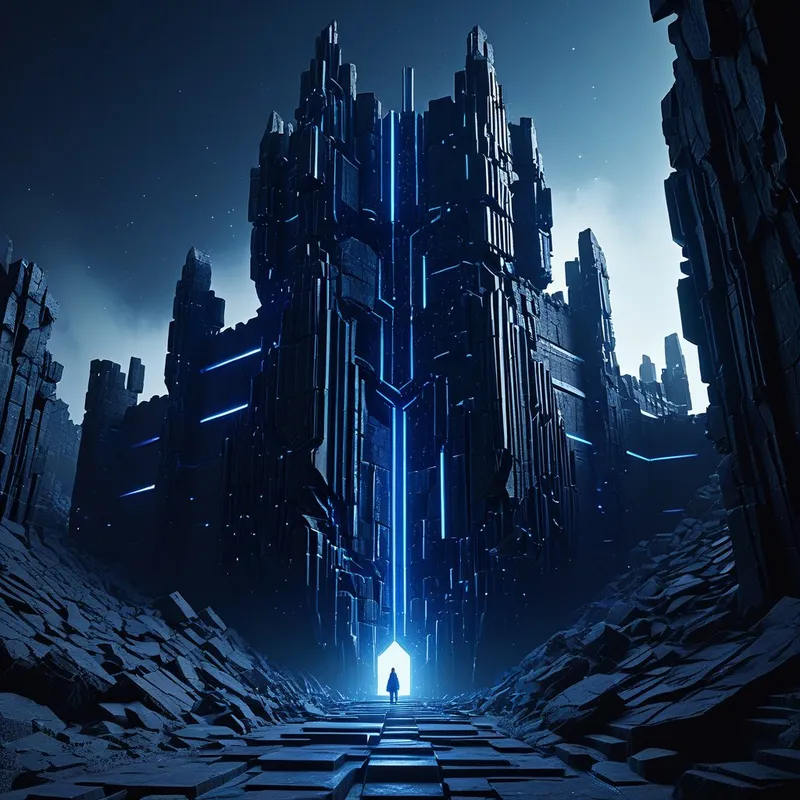
The Alchemy of the Fortress: Dreaming of Security
The Somatic Echo
Before the mind conjures images of locks, walls, or alarms, the body knows the theme of Security. It arrives not as a thought, but as a texture. It is the low-frequency hum in the bones, a subsonic tremor that speaks of foundations. It is the specific, hollow coldness that gathers in the solar plexus—not the sharp sting of fear, but the deep, sinking chill of exposure. The breath becomes shallow, held in the upper chest as if the diaphragm itself has gone rigid, armoring against a fall that has already happened internally. The shoulders enact a silent, ancient protocol, rolling forward to shield the heart’s vulnerable server. This is the somatic prelude: the body, your first and most honest architecture, reporting a structural integrity check. It whispers of load-bearing walls under silent stress, of systems operating on outdated firmware, of a sovereignty felt in the gut long before it can be claimed by the conscious self.
The Dreamer's Log
The dream is always the same: you are standing in the heart of a vast, humming data center, rows upon rows of server racks stretching into darkness. Your task is simple—insert the master key to initiate the final backup. But your hand, clutching the cold iron, is empty. The key is gone. The low hum of the machines begins to warp, pitching into a warning whine as lights flicker from steady blue to a panicked, pulsating red. You are both the administrator and the breach.
Alchemical Interpretation: The lost key signifies not a failure of protection, but the psyche’s revelation that the old encryption—the outdated identity, the brittle defense—must be lost for a more profound encryption, written in the language of your own essence, to be generated.

The False Lead
Do not mistake this for a simple dream of anxiety or bad luck. The theme of Security is not about the burglar at the door, the forgotten password, or the unstable bridge. Those are its costumes. To interpret it as such is to remain in the lobby of the self, fussing with the guest list while the foundation shifts in the cellar. This dream is not reporting on external threat levels; it is conducting a deep audit of your internal governance. It asks the foundational question: Upon what, and whom, have I built my sense of “I”? The terror it presents is not of invasion, but of dissolution—the terrifying, necessary discovery that the walls you thought kept danger out have also kept your wholeness in.
Psychological Architecture
The work here is Shadow work of the most structural kind. It is the painstaking archaeology of the self, digging through the strata of adopted personas, inherited fears, and trauma-formed bastions. You discover that your inner fortress was often designed by a frightened child, using blueprints provided by others. Its moats were dug by abandonment, its walls raised by criticism, its gates sealed by betrayal. The Individuation process demands you become the architect of your own citadel. This is not an act of violent demolition, but of conscious, compassionate retrofitting. You must meet the exiled parts—the Orphan who built the wall, the Rebel who wants to blow it up, the Ruler who polices it—and listen to their logic. Only then can you redesign from a place of integrated authority, where security is not a static defense but a dynamic, flowing intelligence—a permeable membrane that discerns rather than merely denies.
Mythic Resonance
We see this eternal process in the myth of the Minotaur’s labyrinth. The labyrinth was built by King Minos not to protect his kingdom, but to hide his shame—the monstrous offspring of his own broken oath. It is the ultimate false security: a complex, impenetrable defense that consumes resources and requires regular sacrifice, all to conceal a foundational flaw within. The hero Theseus does not simply slay the monster; he must first be given the thread by Ariadne, a symbol of connection to a love and clarity outside the system of shame. The true victory is not the beast’s death, but the unraveling of the labyrinth itself, the re-integration of the monstrous shadow and the dissolution of the isolating structure it necessitated. Your dream is your Ariadne, offering the thread of somatic awareness back to your own core.
Symbolic Nodes
- Locks, Keys, & Keycards: Mechanisms of access and denial. Who holds the authority? Is it you?
- Walls, Gates, Fences: Boundaries. Are they permeable, crumbling, or suffocating?
- Alarms & Sirens: The internal alert system. Is it calibrated correctly, or is it all false alarms?
- Foundations & Basements: The subconscious, the structural integrity of the self.
- Empty Rooms & Corridors: Unexamined or abandoned aspects of the psyche, feeling unoccupied and vulnerable.
- Data Streams & Servers: The flow and storage of personal identity, memory, and life-force energy.
Archetypal Resonance
The energy at the core of the Security theme is that of The Ruler Archetype. The Ruler’s core desire is for control, not for its own sake, but to create a prosperous, orderly, and secure kingdom—in this case, the kingdom of the self. The somatic echo of hollow dread is the Shadow Ruler’s report: a kingdom in chaos, its laws ineffective, its borders porous, its sovereign absent or tyrannical. The alchemical potential lies in the maturation of this archetype, moving from the Shadow’s rigid, fear-based control to the Sovereign’s wise, compassionate governance. This is the shift from building walls out of terror to establishing boundaries from love, from policing internal exiles to integrating them into a harmonious council.
The Alchemical Process
The transmutation here is from fortress to sanctuary. The required heat is the unbearable vulnerability of feeling utterly exposed—the moment the last false wall dissolves. The pressure is the weight of full responsibility, the end of blaming external architects for your internal layout. In this crucible, the base metal of fear—the need for absolute, external guarantee—is subjected to the acid truth: no such guarantee exists. This dissolution is not a defeat, but the necessary breakdown. From this liquid state, the gold of sovereignty is precipitated. It is an authority that does not come from thick walls, but from a resilient, centered core. Security ceases to be a noun (a thing you have) and becomes a verb (a state you generate), an active, intelligent relationship with the flowing reality of life, capable of discernment, adaptation, and grounded power.
The Integration Protocol
Question 1: Where in my waking life do I feel that low, humiliating chill of exposure—not to danger, but to the truth of my own unmet needs or unexpressed power?
Question 2: What ancient, inner "law" or rule—perhaps one I never agreed to—is still governing my sense of safety, and what would happen if I repealed it?
Question 3: If my current sense of security were a structure, what single, load-bearing beam is made of the flimsiest material (e.g., another's opinion, a financial number, a title)?
Action 1 (Somatic Cartography): For one week, carry a small notebook. Each time you feel that "security flutter" in your gut or chest, note the time, context, and one word for the sensation. Do not analyze. You are mapping the fault lines in your somatic architecture.
Action 2 (Creative Decryption): Draw your internal fortress. Use no representational shapes. Instead, use colors, textures, and abstract lines to depict its walls, its core, its gates. Then, with a different color, draw the flow of your life energy around and through it. Where is it blocked? Where does it leak?
Action 3 (Ritual of Sovereignty): Find a stone that fits comfortably in your palm. Sit quietly, holding it. Imagine downloading into this stone every outdated fear, external expectation, and brittle defense that has falsely guarded you. Then, go to a body of water—a river, the sea, a lake—and with gratitude for its past service, throw the stone in. You are not discarding protection; you are returning borrowed armor and claiming your innate, organic resilience.
Final Validation
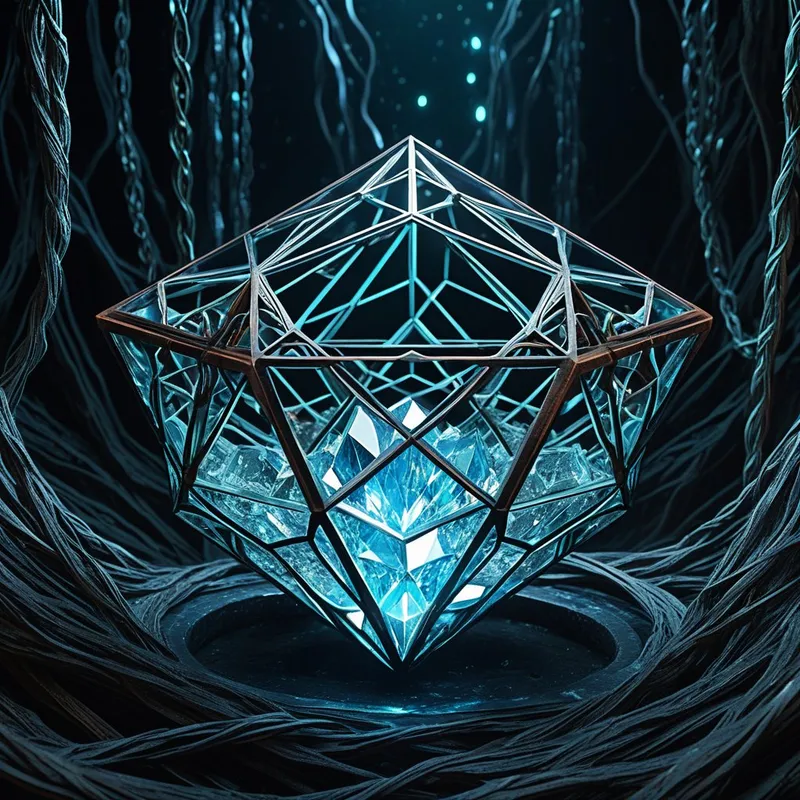
To dream of breached security is to feel, in the most visceral way, the terrifying gift of your own becoming. It is undeniably difficult; it is the psyche’s equivalent of being told to rebuild your home’s foundation while still living inside it. Honor the fear. It is the intelligent alarm of a system that knows it must evolve. But within that very disruption lies the profound invitation: to stop renting your sovereignty from the ghosts of past hurts and the opinions of others, and to become the unshakable, benevolent architect of your own existence. The true fortress was never outside you. It is the diamond-core clarity that forms when all the false walls finally fall.