The Dream of Resurrection: An Alchemy of the Broken Self
The Somatic Echo
It begins not as a thought, but as a pressure. A deep, tectonic ache in the marrow of your being, a silent hum in the hollow of your chest where something vital once lived. This is the somatic echo of resurrection—the body remembering a wholeness the conscious mind has long forgotten. It is the ghost-limb sensation of a lost self, a dormant passion, a buried truth. You may feel it as a profound fatigue that sleep cannot touch, a weight that is not heaviness but density, as if your very cells are compacting, preparing for a seismic event. The air around you tastes of ozone, charged with the potential that precedes a storm. This is the visceral prelude: the deep system sensing that the ground must break for the seed to rise.
The Dreamer's Log
The dreamer stands in the ruins of their childhood home, now an open-air museum of crumbling drywall and exposed wires. In the center of the floor lies their old smartphone, its screen a spiderweb of black cracks. As they watch, a soft, violet light begins to pulse from within the fractures, not to repair the glass, but to send out fine, bioluminescent threads that weave into the soil beneath the foundation, stitching the broken device to the earth itself.
This is the alchemy of the obsolete: the shattered interface of an old identity becoming the neural network for a new, rooted consciousness.

The False Lead
Resurrection is not resuscitation. It is not the desperate, CPR-pumping attempt to revive a life that has reached its natural terminus, to glue the pieces of a shattered vase back into its original, fragile form. That is the territory of the Shadow Caregiver—the martyr clinging to what is gone. Nor is it merely a stroke of "good luck" or a sudden escape from a streak of misfortune. To mistake resurrection for simple relief is to confuse the birth of a universe with the clearing of a storm. The dream of resurrection announces a structural change, not a circumstantial one. It speaks of the core self, not the conditions around it.
Psychological Architecture
The architecture here is one of collapse and re-founding. In the language of internal family systems, it is the moment when the exiled part—the one you buried with shame, grief, or trauma—ceases its silent weeping in the basement of your psyche and begins to knock. Not with fists, but with the slow, insistent tap of a root against stone. The shadow work of resurrection involves turning toward that sound, not to pacify it, but to witness its raw, unmetabolized truth. It is the death of the manager who built the museum of your old life, and the firefighter who kept the ruins safely contained.
This is the individuation process in its most volcanic phase: you are not adding a new room to the house of your personality. You are discovering that the house was built on a dormant caldera, and the ground is now giving way to reveal the primordial fire beneath. The grief you feel is for the familiar floorboards, the known walls. The terror is of the open sky now visible through the collapsed roof. The process is the slow, courageous act of learning to breathe that new, unbounded air.
Mythic Resonance
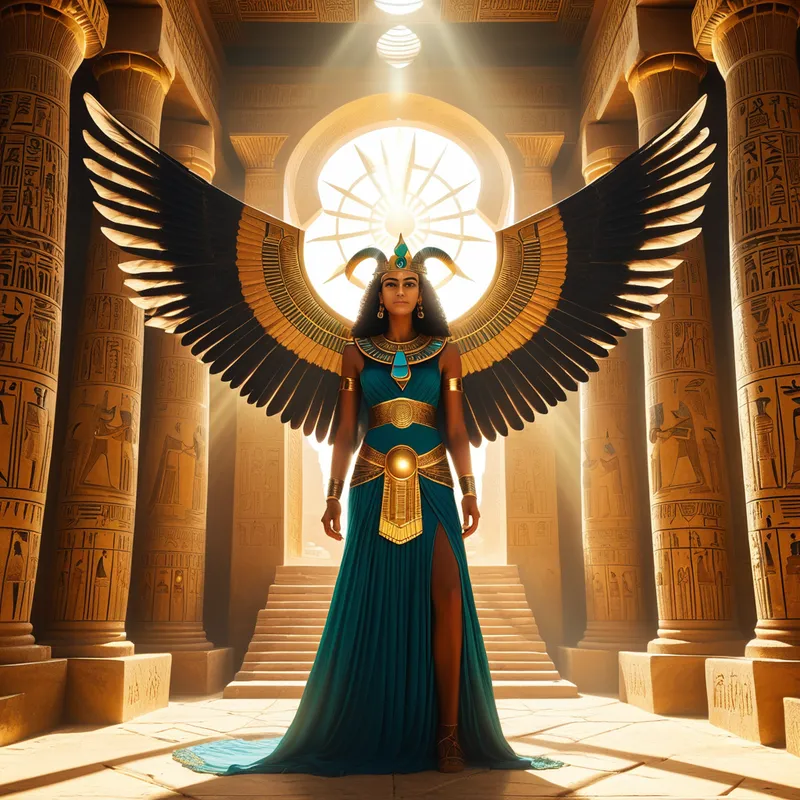
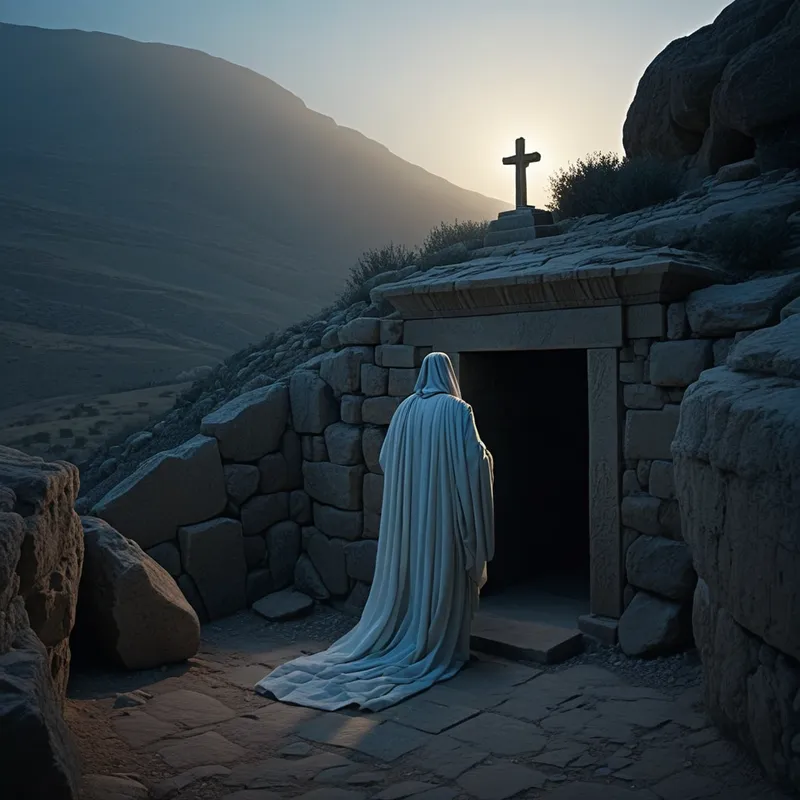
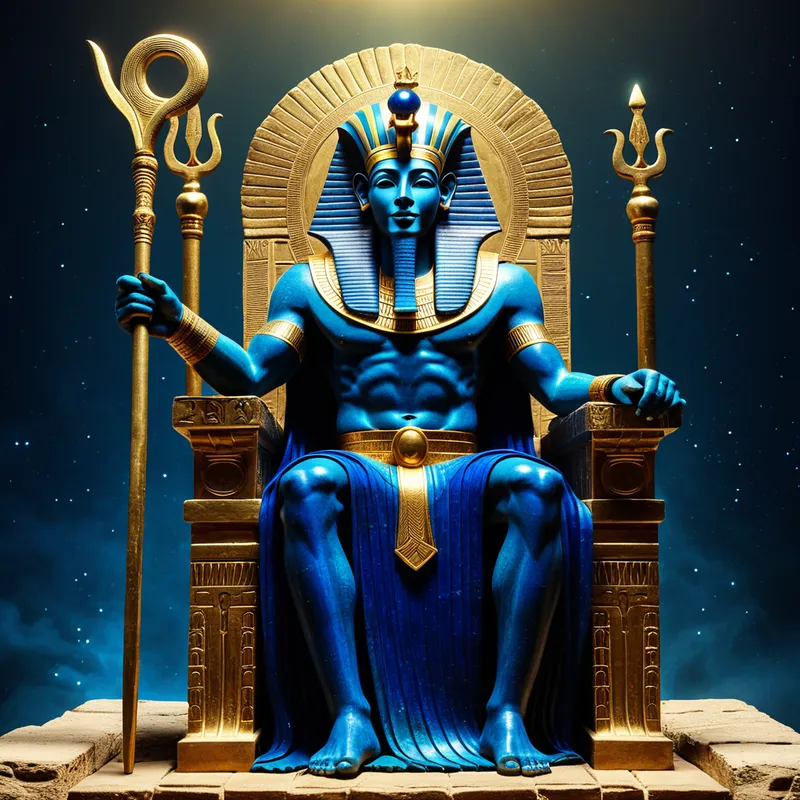
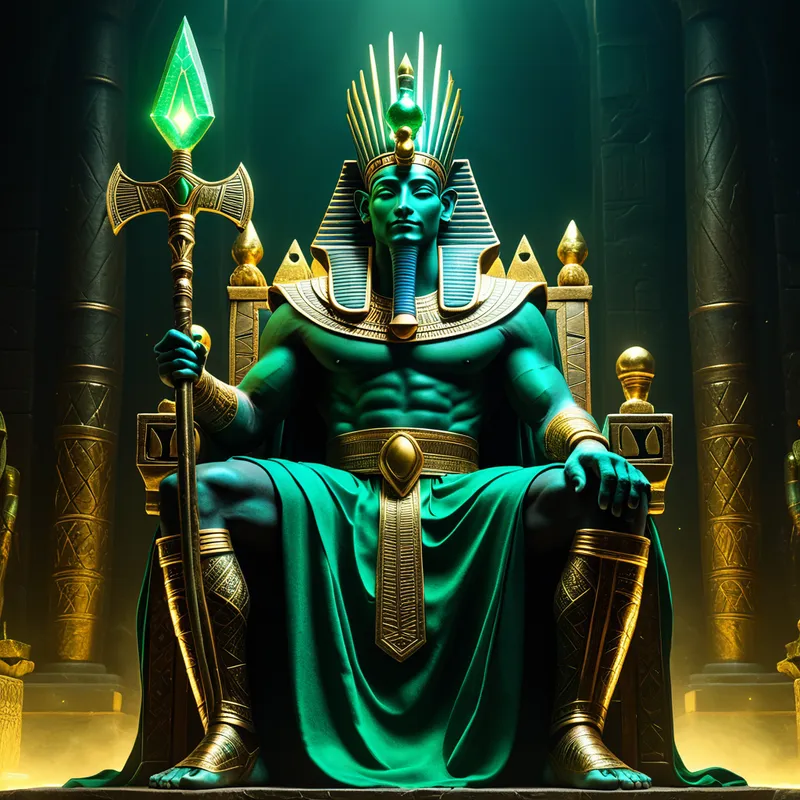
We see this not in the grand finale of the Christ story, but in its silent, subterranean middle: the Harrowing of Hell. This is the mythic interval where the divine descends into the uttermost foundation, not to conquer, but to gather. To reclaim the lost fragments of soul trapped in the underworld of forgetfulness and bring them back into the circuit of life. Similarly, in the Egyptian narrative, Osiris is not merely reassembled. He is reconstituted—his scattered parts gathered by Isis, but his final resurrection into a Lord of the Green Grain requires a descent, a fragmentation, and a recombination that births a new order of being. He becomes sovereign of a different realm entirely. The myth tells us: what returns is never the same as what fell. It returns integrated, broader, tasked with ruling a transformed inner landscape.
Symbolic Nodes
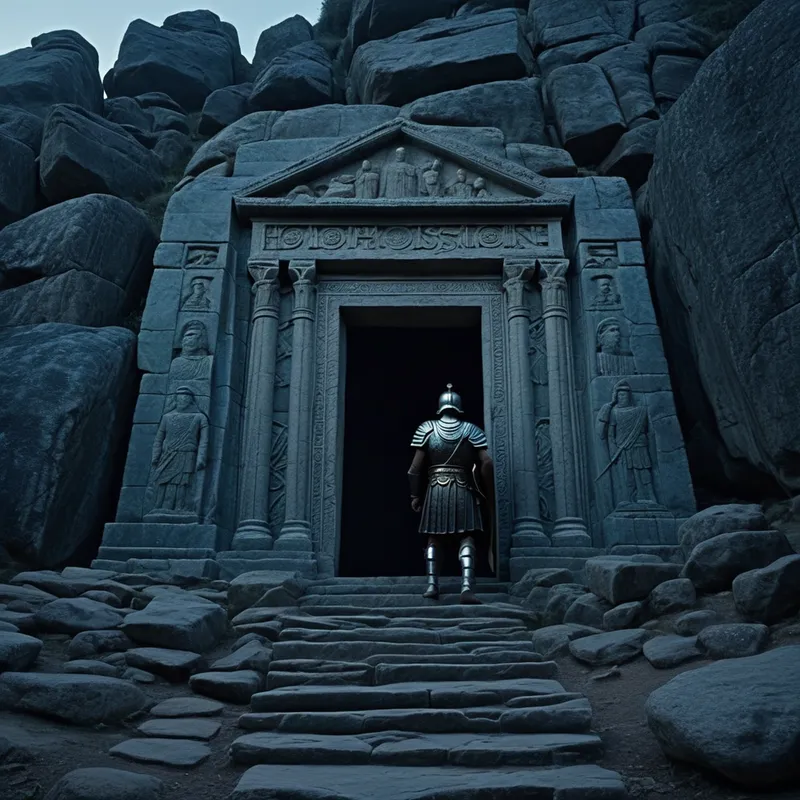
- Emergence from Confined Spaces: Crawling from tombs, coffins, submarines, basements, or elevators.
- Shattered Objects Re-functioned: Broken phones sprouting vines, cracked mirrors reflecting a clearer light, ruined buildings with new growth in the rubble.
- Dormant Systems Reactivating: Dead batteries suddenly holding a charge, old circuits lighting up with a new pattern, frozen streams beginning to flow with black water.
- The Unlikely Seed: Finding something growing in a place of sterility—a flower in a crack of asphalt, fungi on a plastic waste heap.
- The Animated Shell: A discarded exoskeleton, an empty suit of armor, or a hollow statue becoming inhabited by a new, living presence.
Archetypal Resonance
The engine of this profound transformation is The Magician Archetype. The Magician does not follow the rules of the visible world; they understand the hidden codes, the latent potential sleeping within form. The somatic echo—that charged, ozone pressure—is the Magician sensing the crack in reality where transformation can be inserted. This archetype’s core energy is transmutation: the conscious application of inner pressure and symbolic heat (solve et coagula—dissolve and coagulate) to alter the very substance of the self. Its shadow, the Manipulator, would use this force to control the outer world or maintain an illusion. The true Magician, in the context of resurrection, turns that power inward, becoming the alchemist of their own shattered state. The potential here is sovereignty over the inner realm—the ability to consciously participate in the death and rebirth of your own psychic structures, moving from a passive victim of circumstance to an active agent of your own becoming.
The Alchemical Process
The alchemy of resurrection is Reintegration. The prima materia is not base metal, but fragmented self-states—the orphaned grief, the exiled anger, the lost innocence scattered by trauma or necessity. The athanor (the furnace) is the sustained, often agonizing, tension of holding these fragments in awareness without rushing to reassemble the old statue. The heat is the grief of letting the previous form be truly dead. The pressure is the courage to not know what will emerge.
This is not a gentle simmer. It is the white heat of contradiction: to mourn what is gone while tending the strange new life pushing through its grave. The transmutation occurs in the moment you stop trying to resurrect the past self and instead become present to the emerging process. The shattered pieces do not glue back together; they dissolve into their essential qualities—solidity becomes foundation, sharpness becomes boundary, transparency becomes vision—and re-coagulate under a new, self-authored pattern. The lead of loss becomes the gold of a deeper, more inclusive identity. You are no longer the person who broke; you are the consciousness in which breaking and mending are both contained.

The Integration Protocol
Question 1: What in my life feels like a sealed tomb or a permanently broken device? Can I describe the quality of the silence or the stillness inside it?
Question 2: If that shattered thing were not meant to be repaired, but to become the nutrient base for something entirely new, what might be beginning to germinate within its fractures?
Question 3: What old version of myself—what role, identity, or story—am I secretly, fearfully, hoping to resuscitate? What would I have to grieve to finally let that hope die?
Action 1 (Somatic Mapping): For one week, carry a small notebook. When you feel that deep, tectonic ache or charged pressure, stop. Don't analyze. Instead, jot down three concrete, non-metaphorical details of your immediate environment (e.g., "grey light on floorboard knot," "hum of refrigerator," "smell of dust"). This grounds the somatic echo in the present, building a new foundation of sensory awareness.
Action 2 (Creative Re-functioning): Find a discarded, broken object in your home (a dead pen, a torn book, a burnt-out bulb). Do not fix it. Instead, spend 20 minutes with paper and any art supplies, not drawing the object, but drawing from its broken state. Let its fracture, its silence, its obsolescence guide the lines, colors, and forms that emerge. This practices the core alchemy: making the break the source of creation.
Action 3 (Ritual of Soil & Signal): Go to a patch of earth. Speak aloud one sentence that names something you know is dead within you (a hope, a habit, an old self). Then, speak a second sentence that names a raw, unformed potential you sense stirring. Bury a small, neutral token (a stone). Do not mark the grave. Walk away. This ritualizes the release of the old form and your trust in the subterranean process, separating your conscious will from the unconscious work of growth.
Final Validation
The path of resurrection is walked in the dark, with the weight of stones in your hands. To feel its ache is not a sign of failure, but of profound fidelity to a truth deeper than comfort. It is the system’s most courageous signal. You are being asked not to survive your breaking, but to become the spaciousness that can contain it—and the intelligence that can reconfigure its pieces into a sanctuary. The power here is not to avoid the tomb, but to learn, slowly and surely, how to breathe within it, until you realize the stone itself is pulsing, and the darkness is not an end, but a different kind of womb.