The Sacred Subtraction: Dreaming of Renunciation
The Somatic Echo
Before the mind can articulate the concept, the body registers renunciation as a hollowing. It is a sudden, internal silence where a familiar noise once lived—the hum of an obligation, the weight of an identity, the low-grade ache of a compromise. This is not the sharp pain of amputation, but the profound, unsettling ache of a vacuum being formed. The breath may feel shallow, as if the lungs are making space for a new, unknown air. There is a tremor in the hands, not of fear, but of release; a literal unclenching of a fist you didn’t know you were holding so tightly. It is the visceral sensation of a cord being cut from the inside, leaving a ghost-echo of its tension in your solar plexus. The body knows it first: something is being surrendered, and in that surrender, a terrifying and fertile emptiness is born.
The Dreamer's Log
In the dream, I stood before a vast, polished console, its surface a map of my life—glowing lines of connection, pulsing nodes of responsibility. My hand, moving of its own volition, reached out and deliberately, gently, pressed a single, unmarked key. A central line, bright as a sun, flickered and went dark. All other connections dimmed. A profound quiet descended, not of death, but of severance. I was holding a cold, intricate key I had no memory of using.
This is the alchemy of conscious choice: the deliberate deactivation of a core identity program to discover who operates the console.

The False Lead
Renunciation is not misfortune. It is not the passive experience of having something taken from you by external circumstance—a job lost, a relationship ended by another’s hand. That is the territory of the Orphan or the Victim. Nor is it mere quitting, the petulant dropping of a burden from a place of resentment or exhaustion. True renunciation, as dreamed, is an active, sovereign, and often pre-emptive gesture. It is the soul choosing to relinquish a thing of value—a role, a belief, a security, a version of the future—not because it is worthless, but because its continued possession now costs the integrity of the whole. It is not about loss, but about a strategic, sacred subtraction for the sake of a more authentic sum.
Psychological Architecture
To renounce, in the depth-psychological sense, is to engage in the most intimate form of Shadow work. It requires you to sit in council with the internal family of your psyche and identify which member, however beloved, however useful, has outgrown its mandate. The tireless Caregiver who forbids you rest. The ambitious Ruler who confuses control with sovereignty. The loyal Orphan who clings to safe narratives of wounding. Renunciation is the compassionate but firm decision to relieve this inner part of its duties, to thank it for its service, and to allow its energy to dissolve back into the psyche’s raw material.
This is the core of Individuation: a pruning of the persona. We build identities like fortresses—the Good Employee, the Reliable Friend, the Perfect Partner. These are necessary constructions. But the dream of renunciation signals that the fortress has become a prison, its walls now blocking the horizon. The work is to dismantle a section of that wall, stone by stone, not to be exposed to an enemy, but to be exposed to the sky. It is terrifying because it feels like a loss of self. In truth, it is the loss of a substitute self. The grief is real—you are mourning a version of you that has served its purpose. The process is the slow, often painful, realization that you are not the fortress. You are the land upon which it was built, and the sky into which it dissolves.
Mythic Resonance
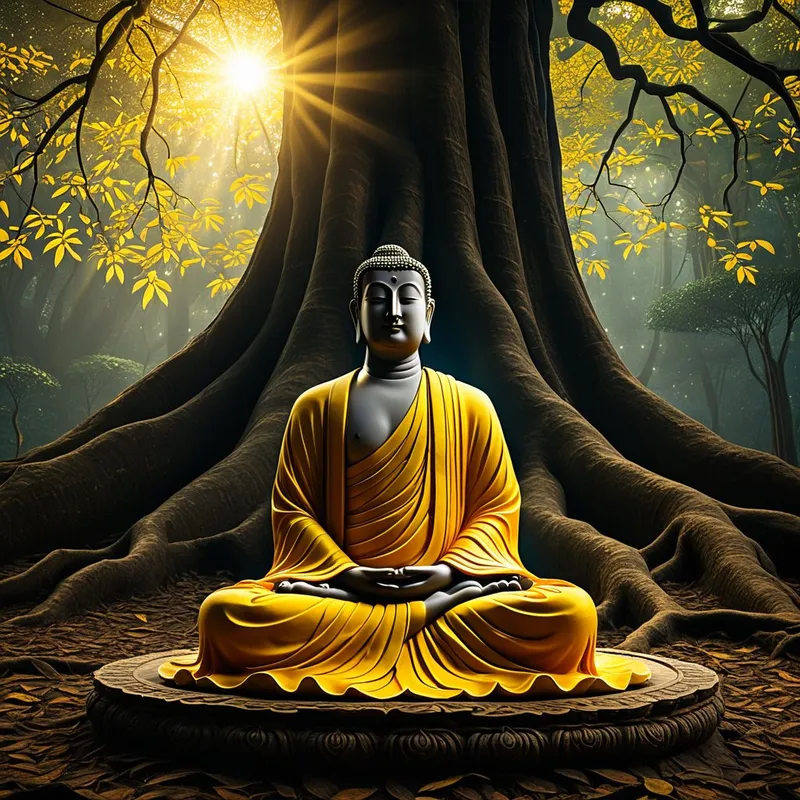
We see this eternal process in the Buddha’s Great Departure. Prince Siddhartha did not flee a life of poverty or misery; he renounced a life of immense privilege, sensual pleasure, and destined kingship. He walked away from a perfected, gilded identity. The myth is not about rejecting the “bad” for the “good,” but about relinquishing the good enough for the true. The palace walls were not evil; they were simply definitive. To find what was beyond definition, he had to subtract the definition itself.
Similarly, in the Grail legends, the knight who succeeds is often the one who renounces the direct, ego-driven quest for glory. Parzival’s pivotal moment comes not from seizing, but from surrendering—from asking a simple, compassionate question rather than proving his heroic worth. He renounces the performative script of knighthood to access a deeper, more humble power. The mythic path teaches that the prize is never claimed by the hand that clutches; it is revealed to the hand that has finally, courageously, let go.
Symbolic Nodes
- Surrendering a Key or Tool: Relinquishing access, agency, or a specialized identity.
- Silencing an Alarm or Engine: The conscious cessation of a driven, anxious, or vigilant state.
- Deleting Files or Erasing Text: Willfully removing a personal narrative or history.
- Walking Away from a Lit Room/Building: Leaving a structure of consciousness that is still functional and “illuminated.”
- Returning a Crown or Uniform: Stepping down from a role of authority or belonging.
- A Bridge that Dissolves as You Cross It: The irreversible release of a past state; burning the vessel that brought you here.
Archetypal Resonance
The Magician Archetype is the supreme archetype of renunciation. The Magician’s power does not come from accumulation, but from precise and conscious transformation. To perform a true act of magic—psychological or otherwise—one must first renounce the ordinary rules, the common materials, the consensual reality. The somatic echo of the hollowing is the Magician’s sacred vessel being emptied to receive a new, non-ordinary influence. The Shadow Magician manipulates and clings, using knowledge as a tool for control. The integrated Magician understands that the first and greatest power is the power to release. The alchemical potential here is staggering: by renouncing the leaden identity (the prima materia), the Magician-dreamer applies the heat of conscious choice to transmute it into the gold of authentic being. Renunciation is the Magician’s most crucial spell: the invocation of emptiness from which all new forms may arise.
The Alchemical Process
The alchemy of renunciation is Calcination—the application of intense, focused heat to a solid substance until it is reduced to its essential, dry, powdered form. Psychologically, this heat is the friction between who you have been and who you are becoming. It is the pressure of an inner truth that can no longer be contained by an outer form. The “substance” is the identity, attachment, or commitment you are called to release.
This process is not gentle. The heat is generated by honest reflection: Does this role still serve my soul? Does this belief enlarge my life or confine it? Does this security come at the cost of my vitality? The pressure is the sustained courage to hold these questions in your heart’s crucible, even as the old structure begins to crack and smoke. The terror is the fear of being nothing, of being that fine, anonymous ash. The grief is for the solid, known shape that is disappearing.
But Calcination is not destruction for its own sake. It is a purification. By burning away the volatile elements—the ego-investment, the fear of others’ opinions, the addictive comfort—what remains is the essential, indestructible mineral core of your experience. This core, this ash, is not the end. It is the beginning. It is the lightest, most porous, most receptive state of your being. It is from this state of sovereign emptiness that the next stages of alchemy—Dissolution, Separation, Conjunction—can begin. You have renounced the statue to reclaim the marble.

The Integration Protocol
Question 1: What is the one thing I am most afraid of becoming, or being seen as, if I were to let go of this specific role, obligation, or belief? What is the "name" of that fear?
Question 2: If this attachment were a member of my internal family, what would its primary job have been? (e.g., "To keep me safe from rejection," "To make me feel important," "To ensure I am loved.") Can I thank it for its service?
Question 3: What small, empty space has already appeared in my life or my sense of self since this dream? What wants to fill it—not with another thing, but with a new quality of being (e.g., silence, space, curiosity, breath)?
Action 1 (The Unclenching): For five minutes, sit quietly and focus on the physical sensation in your hands. Imagine they are holding the object, concept, or relationship you are being called to renounce. Feel its weight, texture, temperature. Then, slowly, finger by finger, practice letting it go. Do not throw it. Simply open your hands and allow it to be supported by the air, the floor, the earth. Notice the new sensations in your open palms.
Action 2 (The Erasure Poem): Take a page of text that symbolically represents the commitment you're releasing—an old job contract, a printed email, a page from a diary. With a black pen, begin to creatively obliterate the words, not by scribbling, but by drawing shapes, patterns, or new images over them. Allow a new, wordless visual form to emerge from the ashes of the old text.
Action 3 (The Ritual Return): Find a physical object that symbolizes what you are renouncing (a business card, a piece of jewelry, a key). Go to a natural body of water—a river, lake, or the sea. Speak your gratitude to the object for what it represented, then state your conscious release of that role. Place the object into the water and let it go. If it floats away, let it. If it sinks, let it. The act is in the surrender, not the disposal.
Final Validation
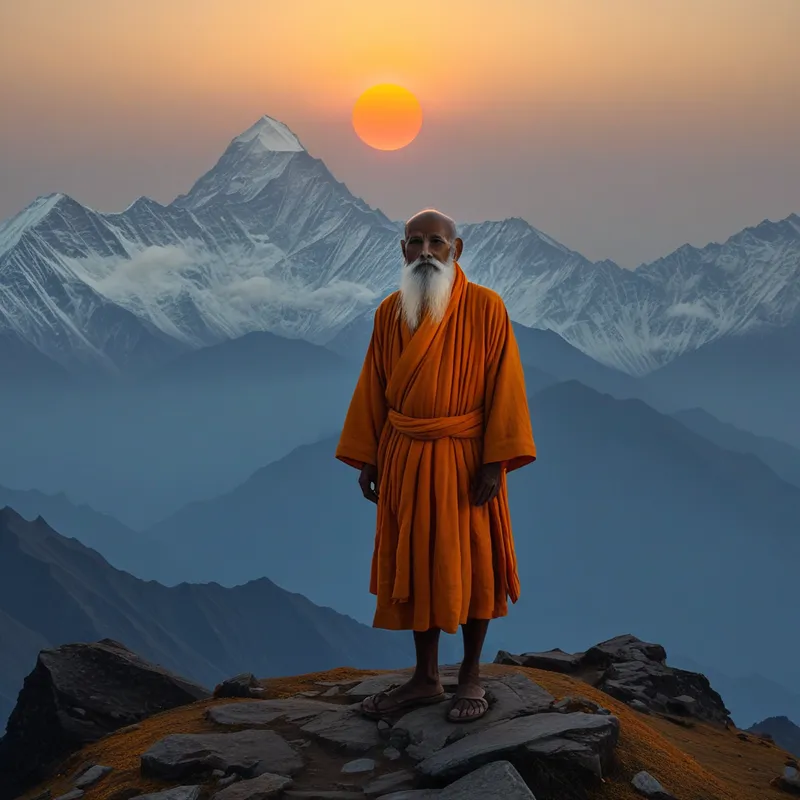
To dream of renunciation is to stand at the most daunting threshold of the soul. It asks you to release a known shore before the new land has risen from the mist. The emptiness that follows is real, and its chill is not a sign of error, but of authenticity. This hollowing is not your demise; it is your capacity. It is the very space required for your next, truer form to take root. You are not losing a part of yourself. You are returning a borrowed costume to the universe, and in that naked, unadorned moment, you finally meet the one who was wearing it all along. The courage to renounce is the ultimate claim of sovereignty.