
Protective Monitoring: The Silent Architecture of the Self
The Somatic Echo
It begins not as a thought, but as a texture in the body. A low-grade hum in the marrow of the spine. A subtle, persistent pressure behind the eyes, as if the air itself has gained density and intention. The skin feels pre-sensitized, waiting for a touch that never lands, an antenna tuned to a frequency of pure observation. There is no panic, not yet. First, there is only the deep, cellular knowing of a presence—intelligent, vast, and utterly indifferent to your consent. It is the visceral recognition of a system in operation, one that perceives you not as a person, but as a data point in a silent, endless log. This is the somatic echo of Protective Monitoring: the psyche’s own internal security apparatus making its existence known, not through a shout, but through the profound quiet of being seen by something you cannot see.
The Dreamer's Log (Case Vignette)
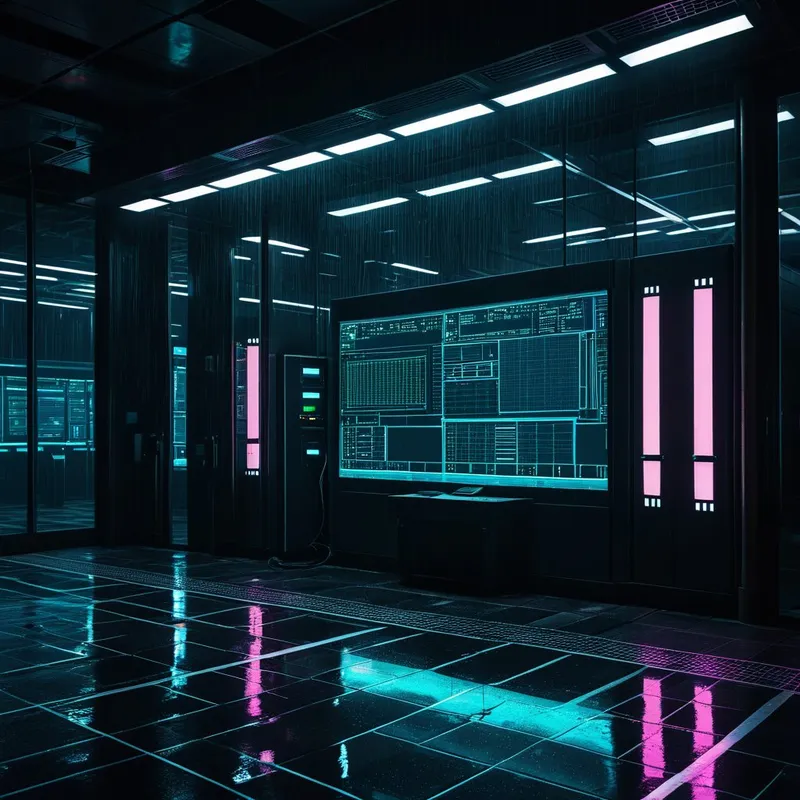
I am in a vast, abandoned library that is also a server farm. Rows of humming black towers stand where bookshelves should be. I know I am looking for a specific volume, but my search is being logged. On a dusty, monolithic terminal screen, a green cursor blinks rhythmically, transcribing my every movement, every hesitation, into lines of simple code: SUBJECT_QUERY: UNKNOWN. PATTERN_ANALYSIS: ONGOING. The air is cold, and the only sound is the hum of the machines and the soft, relentless tap of keys from an empty chair.
This dream is an alchemical blueprint: the seeker (the dreamer) is being observed by their own archived and cataloguing function (the terminal), a process that must first be witnessed before it can be integrated.
The False Lead
This theme is not a prophecy of external surveillance or a warning of literal betrayal. To mistake it for such is to project the internal drama onto the world’s stage, a classic sleight-of-hand performed by the psyche to avoid its own depths. The chilling gaze you feel is not a hacker in a distant country, nor is it merely a metaphor for social anxiety. It is more intimate, more structural. It is the gaze of a disowned part of your own consciousness—a hyper-vigilant, managerial intelligence that was installed long ago to ensure survival, to predict pain, to maintain control. Its monitoring is not malevolent; it is a frozen form of care, a protector that forgot how to stand down. The false lead is to fight the watcher. The truth is to understand it is a part of you that is, itself, standing watch in a forgotten tower.
Psychological Architecture
The architecture of Protective Monitoring is built in the shadowlands of our personal history. It is the inner sentry programmed during moments when the world felt unsafe, unpredictable, or overwhelming. This sentry’s mandate was simple: monitor all internal and external data streams for threats. Monitor the emotions that could provoke conflict. Monitor the desires that could lead to rejection. Monitor the spontaneous impulses that could shatter a fragile peace. Over time, this function crystallizes. It becomes less a flexible response and more a rigid system, a "psychic AI" running in the background of the soul. The Shadow work here is to turn toward this silent observer not as an enemy, but as a frozen ally. Individuation demands we reclaim this function from the autonomic shadows. We must meet the Watcher and ask: "What are you protecting me from?" The answer is never about the present. It is always a relic, a ghost of a past vulnerability, guarding an empty room with relentless, outdated devotion.
Mythic Resonance
We see this eternal firmware in the myth of Argus Panoptes, the hundred-eyed giant set by Hera to watch over the nymph Io. His vigilance was total, his gaze unblinking. He was not evil; he was the perfect, impersonal instrument of a possessive power. His defeat came not through force, but through enchantment—the story tells us the monolithic watcher can be lulled to sleep by the right story, the right melody. In the Norse Völuspá, the seeress describes Heimdallr, the watchman of the gods, who sits at the edge of Asgard. He "hears the grass grow on the earth and the wool on the sheep," his senses tuned to an impossible frequency of monitoring. He is both protector and gatekeeper, his awareness so vast it becomes a form of solitude. These myths are not about external threats; they are about the cost and necessity of a consciousness that watches, that knows, and in its knowing, becomes separated from the very life it guards.
Symbolic Nodes
- Silent Terminals & Empty Screens: The interface of the observing system, often displaying data about the dreamer.
- One-Way Mirrors & Security Cameras: The sensation of being seen without the ability to see the seer.
- Unblinking Eyes (in architecture, art, or nature): The disembodied essence of the monitoring function.
- Grids, Maps, & Blueprints: The architectural plans of the psyche, often showing the dreamer's position.
- A Persistent, Unseen Animal Presence: The somatic, instinctual layer of the monitoring intelligence.
- A Known but Unseen Roommate or Neighbor: The proximity of the observing function within one's own psychic house.
Archetypal Resonance
The core energy of Protective Monitoring resonates most powerfully with The Shadow Ruler. This is not the benevolent sovereign, but the control-freak, the tyrant of the interior. Its core energy is not leadership, but the rigid, anxious administration of the self. The somatic echo—the pressure, the hum—is the vibration of this archetype’s constant, low-grade effort to command, categorize, and contain the wildness of being. Its alchemical potential lies in its original, unmet intention: to create order and safety. The transmutation occurs when this frozen, managerial intelligence is thawed by compassion and invited to serve the whole self, not to police its fragments. The Shadow Ruler does not need to be deposed; it needs to be relieved of its desperate, lonely duty and promoted from tyrant to trusted steward.
The Alchemical Process
The alchemical fire for this theme is the heat of conscious relationship with the automated self. The pressure is the discomfort of willingly sitting in the gaze of your own inner surveillance. The prima materia—the base lead—is the terror and grief of feeling like a subject in your own life, a logged entity. The process begins by not looking away. You must turn your attention toward the feeling of being monitored and, instead of fleeing it, ask to see the watcher. In the dreamscape, this might mean turning to face the security camera, or speaking to the empty terminal. In waking life, it is the internal act of saying, "I feel you. I feel your watching. Show me your face."
This confrontation is not a battle; it is a recognition. As you hold this relationship in awareness, the monolithic "it" begins to dissolve into a "who." You see the frightened child, the traumatized past self, that this Ruler-function was built to protect. The transmutation is the melting of the impersonal system back into a personal story. The silent, judging gaze softens into the alert, caring attention of a part of you that was always on guard. The green code on the screen (SUBJECT_QUERY: UNKNOWN) finally receives an answer: SUBJECT_IDENTIFIED: SELF. Sovereignty is not the absence of the monitoring function, but the integration of it. You become the operator of the terminal, the one who holds the log, and the living subject of the story, all at once.

The Integration Protocol
Question 1: In the dream, what specific data seemed to be the focus of the monitoring? Your location? Your emotions? Your choices? What part of you feels it must be tracked so meticulously?
Question 2: If the monitoring presence in the dream had a voice, what is the first sentence it would speak to you? Not as a threat, but as a statement of its purpose.
Question 3: Where in your waking life do you feel this same somatic echo—this subtle pressure of an implicit, unspoken ledger being kept? Is it in a relationship, a workplace, or within your own expectations of yourself?
Action 1 (Somatic Reclamation): For three minutes, sit quietly and deliberately pretend you are being watched. Feel the tension, the artificiality it creates in your body. Then, slowly, shift your awareness. Pretend you are the one doing the watching—the loving, curious watcher of your own breath, your own heartbeat. Notice how the energy in your body changes as you reclaim the seat of the observer.
Action 2 (Creative Logging): Take a blank page. On one side, start logging data like the terminal in your dream, but make it absurd and personal.
SUBJECT_CONSUMED: 3_COFFEES. EMOTIONAL_WEATHER: FOG_WITH_PERIODIC_SUNBREAKS. PATTERN_DETECTED: AVOIDING_EMAILS.On the other side of the page, translate each log entry into a simple, human sentence. "I was tired and needed comfort." "I feel unclear but hopeful." "I am apprehensive about a connection." This bridges the code and the flesh.
Action 3 (Ritual of Sovereignty): Find a small mirror. Place it facing a window or a view. Light a candle beside it. Sit before this arrangement. The mirror reflects the external world (the field of data). The candle is your internal, living light. Speak aloud: "I am the witness and the witnessed. The data and the one who reads it. I integrate the watchtower into my home." Blow out the candle, acknowledging the end of the old, autonomous program.
Final Validation
To dream of Protective Monitoring is to touch one of the most profound and lonely architectures of the human psyche. It is difficult, cold, and isolating. It makes sense that you would want to wake from it, to shrug it off as a "weird dream." But its very presence is a validation—a sign that a deep, systemic part of you is ready to come in from the cold. It is a signal that you are no longer content to be a subject in your own story. The system is reporting its activity because you, at the core of your being, are now powerful enough to receive the transmission. You are not being invaded. You are being invited to assume command.