
The Alchemy of Pressure Release: When the Structure Cracks
The Somatic Echo
It begins not as a thought, but as a geography. A topography of tension. You carry it in the jaw, a silent, permanent clench against words unsaid. You feel it in the shoulders, a tectonic plate of responsibility settled into the bone. It hums in the solar plexus, a low-grade frequency of contained urgency. This is the somatic echo—the body’s faithful, brutal record of a pressure the mind has long learned to rationalize, manage, and ignore. It is the weight of a shape you have outgrown, a psychic architecture built for a past storm, now groaning under the quiet, cumulative strain of simply being present. The dream of pressure release is the body’s final, desperate telegram to a consciousness that has stopped listening to its own foundation. It is the sound of a dam, deep within the internal family system, developing its first, irrevocable crack.
The Dreamer's Log
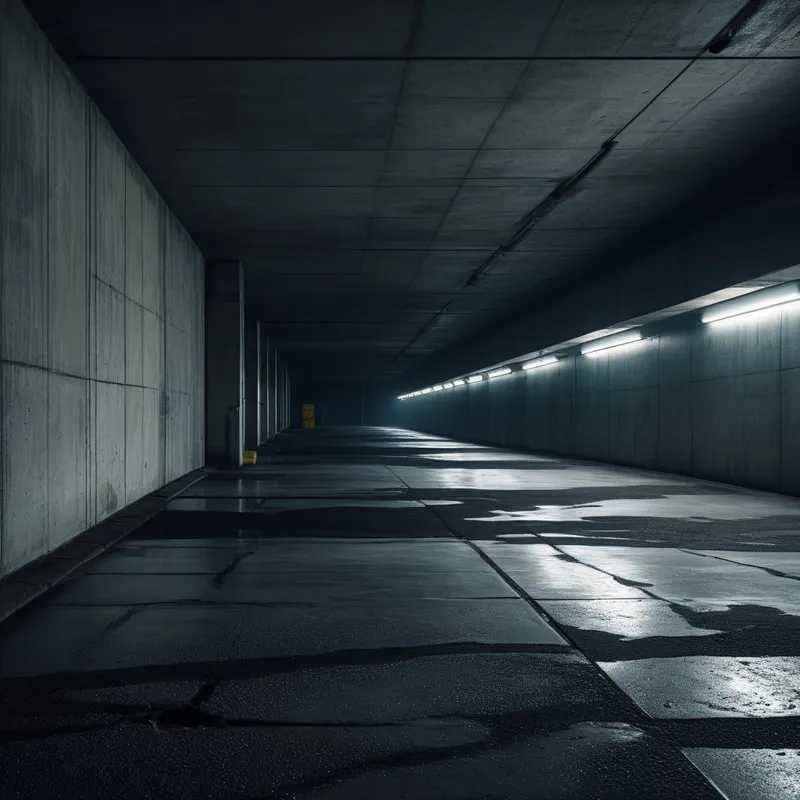
In the dream, I am alone in a vast, underground parking garage. The air is cold and smells of concrete dust. I am staring at a single, massive chrome pipe that runs from the floor to the ceiling. It is perfectly smooth, cold to the touch, and under an immense, silent strain. I know, without being told, that it is about to fail. I don’t run. I just watch. And then, with a sound that is not a bang but a deep, resonant groan, it begins to bend, not break, its perfect surface fracturing into a spiderweb of glistening fissures. A warm vapor, not steam, whispers out.
This is not a dream of destruction, but of deformation—the alchemical moment where an unsustainable structure yields, allowing its contained essence to finally escape and interact with the world.
The False Lead
This theme is not about the relief after a crisis. It is not the sigh when the external deadline passes or the difficult conversation ends. That is mere decompression. The dream of pressure release speaks to something far more fundamental: the crisis itself as the necessary, sacred mechanism. It is the recognition that the pressure is not an external invasion, but an internal signal of a profound misalignment. To mistake this for simple "bad luck" or an attack from the outside is to miss the psyche’s brutal, loving curriculum. The release is not the removal of pressure, but the transformation of the vessel that can no longer hold it. The terror is not in the impending failure, but in the terrifying freedom of what comes after the old container gives way.
Psychological Architecture
The architecture here is one of containment. Within the internal family system, certain parts—the Managers, the Firefighters—have constructed exquisite, high-tension systems to keep exiled feelings of grief, rage, or vulnerability safely locked away. These systems are feats of psychological engineering: perfect schedules, impeccable personas, silent endurance. They are the chrome pipe. But the Self, the core consciousness, knows this cannot last. The pressure release dream is the moment the Self orchestrates a controlled demolition from within the shadow. It allows the exiled part to send its distress signal not as a memory, but as a somatic prophecy in the dreamscape. This is the individuation process in its most visceral form: the conscious ego must witness, and ultimately consent to, the failure of its own defensive architecture. It must stand in the cold garage and watch the pipe bend. The grief that surfaces is not just for the current pain, but for the immense energy spent maintaining the illusion of containment. The release is the beginning of reintegration—the warm vapor is the exiled feeling, finally acknowledged, returning to the system’s atmosphere.
Mythic Resonance
We see this in the story of Atlas, condemned to hold up the celestial spheres. His eternal task is the ultimate image of pressurized stasis. The hero Heracles does not simply remove the burden forever; he temporarily takes it upon himself, giving Atlas a moment of release. This moment is not freedom, but it is a catastrophic shift in perspective. For that fleeting interval, Atlas experiences the absence of the weight that had become his identity. The myth speaks to the terror of release—what is he without the sky on his shoulders? The pressure was his purpose. Our modern version is less celestial but no less total: what are we without the burden we’ve used to define our strength?
Symbolic Nodes
- Bursting Pipes, Leaking Dams, Cracking Domes: The failure of engineered containment systems.
- Over-inflated Balloons, Swelling Fruits, Boiling Kettles: The visible, taut expansion of a contained force reaching its limit.
- Geological Shifts: Earthquakes, Fault Lines, Volcanic Rumbles: Pressure expressing itself through foundational, tectonic movement.
- Releasing Valves, Unclogging Drains, Opening Airlocks: The deliberate, often mechanical, act of facilitating the release.
- Sighing, Groaning, or Humming Structures: The auditory signal of strain in an inanimate object, giving voice to the silent tension.
Archetypal Resonance
The energy here resonates most powerfully with The Shadow Ruler.
The Shadow Ruler’s domain is control, order, and the maintenance of a perfect, rigid system at all costs. Its tyranny is not always over others, but often over the inner kingdom—the exiled emotions, the unruly instincts, the messy humanity. The somatic echo of clenched jaw and burdened shoulders is the Shadow Ruler’s martial posture, holding the borders of the self in a state of permanent, exhausting lockdown. The pressure build-up is the direct result of this archetype’s insistence on absolute containment. The alchemical potential lies in the crack itself. The release is the Shadow Ruler’s ultimate lesson in true sovereignty: that control is an illusion, and real power lies not in suppressing the inner chaos, but in developing the resilience and wisdom to integrate it. The bending pipe is the Shadow Ruler’s curriculum, forcing a transition from tyrannical control to enlightened governance.
The Alchemical Process
The alchemy of pressure release is the transmutation of containment into capacity. The intense psychological heat—the nigredo—is the unbearable somatic tension, the feeling of being at absolute capacity. This is the fire that heats the sealed vessel. The pressure is not the enemy; it is the agent of change. The old, rigid identity (the perfect pipe, the unyielding schedule) cannot withstand this heat. It must deform, must crack. This is the albedo, the whitening—not a cleansing, but a revealing of the fault lines, the inherent weaknesses in our psychic structures. The release of the contained essence (the grief, the rage, the creative urge) is the citrinitas, the yellowing, where what was trapped is brought into the light of awareness. Finally, the rubedo, the reddening, is the birth of a new, more resilient capacity. The self is no longer a brittle container, but a dynamic, breathing system. It has learned to hold pressure not by resisting it, but by flowing with it, by having release valves of creativity, vulnerability, and expression integrated into its very design. The sovereignty gained is not over one’s feelings, but from the futile war against them.

The Integration Protocol
Question 1: Where in my body do I feel the most constant, familiar tension? If that place could speak, what single word is it holding back?
Question 2: What is the one rule, expectation, or "should" in my life that feels most like a non-negotiable law? What tiny, permissible crack could I imagine in that law?
Question 3: If the pressure I feel was not a threat, but a signal trying to move me toward a necessary change, what would that change be?
Action 1 (Somatic Mapping): For one day, carry a small notebook. Every hour, pause and scan your body. Note the primary site of tension (e.g., "11 AM: jaw, right shoulder"). Don’t analyze, just record. At day’s end, look not for causes, but for the pattern’s geography. You are charting the territory of your containment.
Action 2 (Unstructured Release Writing): Set a timer for 7 minutes. Write by hand, starting with the sentence: "The pressure is..." Do not lift the pen. Do not edit, spell-check, or make sense. If you stall, write "The pressure is..." again. Let the writing be messy, repetitive, illogical. When the timer ends, destroy the paper without reading it. The value was in the expulsion, not the archive.
Action 3 (Ritual of Permissible Failure): Choose a small, private, daily structure you maintain perfectly (a made bed, a cleared inbox, a precise routine). Deliberately, and with intention, leave it undone or do it imperfectly. Sit with the discomfort that arises. Breathe into it. You are not creating chaos; you are conducting a laboratory experiment in surviving a controlled, minor release.
Final Validation
It is terrifying to feel the foundations groan. It is natural to want to shore up the cracks, to apply more mental steel and emotional reinforcement to the straining pipe. Honor that instinct; it has kept you intact until now. But hear the whisper in the groan: it is not a sound of ending, but of evolution. The pressure was the weight of a self you are ready to shed. The release is not a collapse into chaos, but the first, sacred breath of a larger form—a form with space to breathe, to feel, and to finally grow into the sovereignty that was always waiting on the other side of the strain. You are not breaking. You are becoming.