The Dream of Presence: When the Observer Dissolves
The Somatic Echo
It begins not with an image, but with a silence so dense it has texture. A weightlessness in the chest, not of flight, but of suspension. The usual internal radio—the chatter of planning, the static of regret, the faint hum of anxiety—has gone off the air. In its place is a low, somatic hum, a vibration felt in the bones and the base of the skull. It is the feeling of a held breath that has forgotten it is being held. The body becomes a vessel not for doing, but for receiving. The air against the skin registers with a new fidelity; the boundary between inner warmth and outer coolness softens, becoming a permeable membrane. This is the visceral prelude to the dream of Presence: a total, unmediated occupancy of the sensorium, where the watcher behind the eyes steps forward and merges with the watched.
The Dreamer's Log
I am in a vast, silent library, older than cities. I am not looking for a book. I am standing before one that lies open on a stone pedestal. I do not read the words. I watch the paper, the texture of the fiber, the slow dance of dust in a shaft of light that has no source. I am the paper, the dust, the light. The dream ends not with an awakening, but with a seamless fading into that same quality of attention.
This is the alchemy of observation turning in on itself: the dreamer is not encountering an object, but becoming the field in which the object exists.

The False Lead
This is not a dream of peace, though it may be peaceful. It is not a dream of emptiness, though it may feel empty of narrative. The common misinterpretation is to see it as a passive state, a psychic vacation or a simple respite from anxiety. That is a misreading of its profound activity. The terror and the gift of the Presence dream is its active deconstruction. It is not an absence of thought, but the dissolution of the thinker. It is not calm, but the terrifying and liberating collapse of the distance between you and your experience. It is the psyche practicing the death of the separate self, not as an annihilation, but as a homecoming to a wider identity.
Psychological Architecture
To understand this dream is to map the shadow work of the observer-self. Our waking consciousness is built on a foundational split: the “I” that experiences, and the “experience” itself. This split is necessary for navigation, for judgment, for survival. But it creates an exile. We live slightly behind our own eyes, commenting, comparing, managing. The dream of Presence is the Individuation process working at its deepest level—it is the psyche’s attempt to heal this primal wound of separation.
The shadow here is not a monster in the closet, but the entire closet itself: the hidden architecture of our self-referentiality. The work is to stop trying to find yourself in the experience and to instead be the experience. It is the ultimate act of psychological sovereignty—to relinquish the throne of the petty ruler who manages the kingdom, and to become the kingdom itself. This is not a spiritual bypass; it is the gritty, alchemical work of re-inhabiting your own raw sensation, emotion, and thought without the intermediary of a critic or a narrator.
Mythic Resonance
We see this in the moment the Buddha touches the earth. Besieged by the demon Mara’s illusions of doubt and fear, he does not argue or fight. He simply reaches down and makes contact with the ground, calling the earth itself to witness. His gesture is one of ultimate Presence—by grounding himself not in philosophy or power, but in the undeniable, tactile reality beneath him, he dissolves the illusion of a separate self under attack. The earth witness is not an external force coming to his aid; it is the activation of a deeper, non-personal reality of which he is an expression.
Similarly, in the Greek myth, Athena is not born from a mother, but springs fully formed from the forehead of Zeus. She is the embodiment of wisdom emerging not from gradual accumulation, but from a moment of total, present awareness—a sudden, complete manifestation of knowing that exists prior to thought. She is the archetype of Presence as a birth, a sudden arrival of a consciousness that is clear, whole, and immediately sovereign.
Symbolic Nodes
- Vast, Empty Spaces: Silent libraries, deserted plains, still oceans, star fields. Space not as absence, but as a container for being.
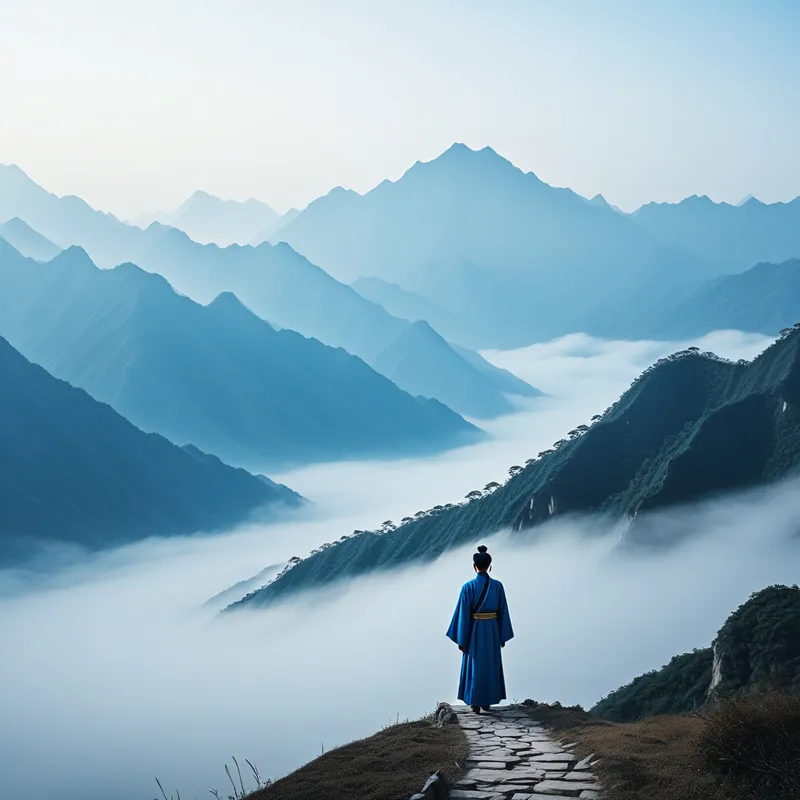
- Unfocused Light: Ambient glow, misty radiance, bioluminescence without a source. Illumination that reveals no specific thing, but the fact of seeing itself.
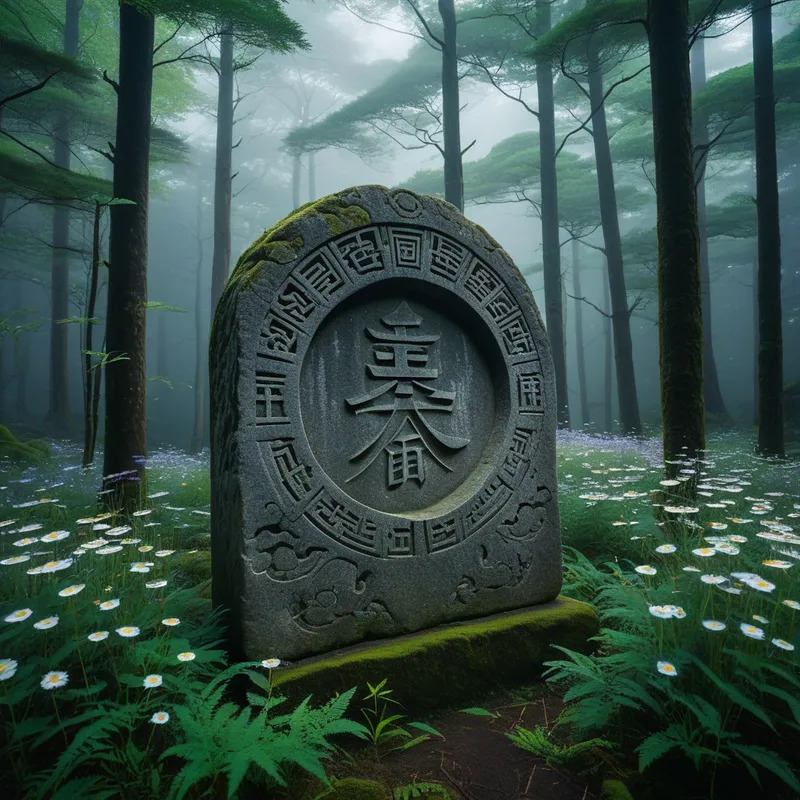
- Simple, Enduring Objects: A single stone, an ancient tree, a still pool of water. Objects that simply are, inviting identification without analysis.
- Mirrors or Reflective Surfaces that Show No Reflection: The ultimate symbol of the observer’s disappearance into the scene.
- The Sensation of Slow, Inexorable Growth: Watching moss spread, crystals form, or tides turn—participation in a process that has no individual actor.
Archetypal Resonance
The Sage Archetype is the active force here, specifically in its pure, non-shadow form. The Shadow Sage is dogmatic, lost in maps and theories about the territory. The true Sage archetype in this dream does not seek knowledge about reality; it seeks to become reality’s knowing. Its core energy is not analysis, but a direct, unmediated apprehension of truth. This resonates perfectly with the somatic echo of the dream—the quiet hum, the dissolved boundaries. The Sage’s alchemical potential is realized in this moment: the transformation of seeking into finding, where the seeker realizes it is the very ground being sought. The dream is the psyche’s tutorial in Sage consciousness, dropping the textbook and becoming the experiment.
The Alchemical Process
The alchemical transmutation here is from Separation into Wholeness. The base metal is the chronic, low-grade grief of being a ghost in your own machine—the feeling of never being fully here. The heat required is the intense, paradoxical pressure of allowing. It is not the fire of effort, but the crucible of surrender. You must allow the terror of non-doing, the anxiety of the void, the grief for the lost, busy self that felt in control.
The pressure is applied by the dream itself, which holds you in that silent, observing space and prevents escape into narrative. The transmutation occurs when the resistance breaks. The “I” that was observing the breath becomes the breath. The “I” that was watching the fear becomes the flowing energy of the fear, unlabeled. The leaden weight of self-consciousness, through this radical acceptance, turns into the gold of conscious being. Sovereignty is not gained by conquering the field of experience, but by realizing you are the field.

The Integration Protocol
Question 1: In the dream, what was the one sensation (the light, the silence, the texture) that seemed to absorb you completely? Where in your waking life have you felt a whisper of that same quality of absorption?
Question 2: If the "you" that usually narrates your life went silent for a day, what raw experience—emotion, sight, sound—would be left standing in the foreground?
Question 3: What small, daily activity do you perform most automatically (making coffee, walking a path)? What would it feel like to do it not for the outcome, but to let the activity think you, to disappear into its sensory steps?
Action 1 (Sensory Grounding): For three minutes, sit still. Do not follow your breath. Instead, choose one sound in your environment. Do not name it or locate it. Let the sound occupy your entire auditory space until the distinction between "you hearing" and "the sound" begins to soften. Just be hearing.
Action 2 (Unstructured Writing): Set a timer for five minutes. Write, but with this rule: you cannot use the words "I," "me," "my," or "mine." Describe your immediate environment, your bodily feeling, the air. This forces language out of the self-referential loop and into pure description.
Action 3 (Ritual of Osmosis): Find a natural object—a stone, a leaf, a bowl of water. Spend ten minutes in absolute silence with it. Do not analyze it. Look at it until its "stone-ness" or "leaf-ness" recedes, and you are left with only shape, color, and presence. Then, close your eyes and feel if the quality of your own presence has changed.
Final Validation
This is perhaps the most disorienting and demanding work the psyche can undertake. To the ego, the dream of Presence feels like a threat of erasure. It is natural to shy away, to fill the silence with noise upon waking. Honor that resistance; it is the guardian of a familiar, if lonely, home. But know this: the dream is not an invitation to become nothing. It is an invitation to become everything—to trade the small, lit room of your self-concept for the boundless, star-lit sky of your actual being. The dream is your deepest self, patiently teaching you how to come home. Not to a place, but to a state: the sovereign, unshakable state of being Here.