Possession: The Call of the Exiled Self
The Somatic Echo
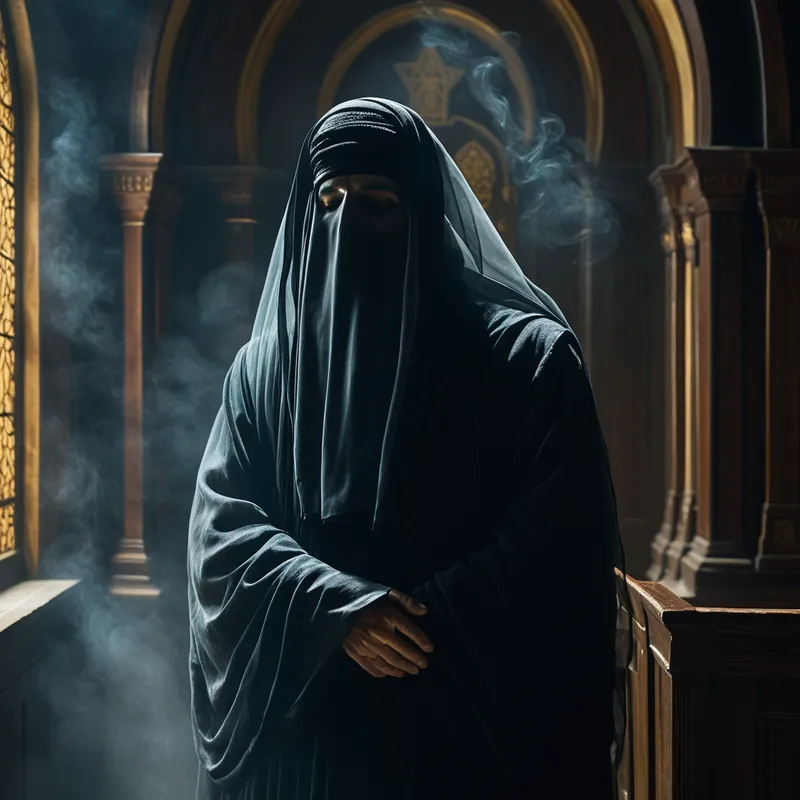
It begins not with a thought, but with a tremor in the architecture of the self. A cold, metallic taste at the back of the throat. A feeling of being hollowed out, a vessel for a wind that is not your own. The body becomes a contested territory—muscles clench with a will you did not command, the breath hitches on a rhythm that feels alien. It is the visceral dread of a silent coup within your own nervous system, a sense that the command center has been breached. The mind races to catch up, to name the invader, but the truth is more unsettling: the invader is not coming from outside. It is rising from the basement, a forgotten tenant in the house of you, pounding on the floorboards of your consciousness.
The Dreamer's Log
I am in my apartment, working late. My laptop screen flickers, and lines of code I don’t recognize begin to scroll, faster and faster. My hands move on the keyboard, typing with a precision and speed that is not mine. I try to pull them away, but they are stone. I am locked in, watching my own body execute a program whose purpose I cannot comprehend.
Alchemical Interpretation: The conscious ego, identified with the "worker," is being overridden by a far more efficient, unconscious complex—a buried skill, a repressed drive, or a systemic trauma response—demanding to run its ancient script.

The False Lead
This is not about literal demons, extraterrestrial forces, or a curse of bad luck. To mythologize the experience as an external attack is the psyche’s first, and most tempting, defense. It is a narrative sleight-of-hand that preserves the illusion of a pristine, unified self who is merely "infected." The true terror, and the true work, lies in realizing the possessing force is a disinherited part of your own soul. It is not an invasion, but a rebellion. It is not bad luck, but a profound structural shift—the collapse of an internal monarchy that could no longer hold.
Psychological Architecture
The dream of possession marks the failure of exile. For years, perhaps a lifetime, you have compartmentalized. The rage that didn’t fit the role of the good child was locked in a vault. The wild creativity that threatened stability was sedated and stored in the attic. The vulnerability that felt like a fatal weakness was buried in the garden. You built a tidy identity atop these graves. But the psyche abhors a vacuum, and energy cannot be destroyed. The exiled parts do not die; they gather strength in the shadows, coalescing into autonomous complexes. They become internal factions with their own agendas, their own memories, their own pain. When the conscious ego becomes too rigid, too brittle, or too weary to maintain the blockade, these complexes stage their return. They don't knock politely. They possess. This is Shadow work in its most dramatic form: not a gentle invitation, but a hostile takeover by the parts of you deemed unacceptable, demanding not destruction, but a seat at the council table. Individuation is not about defeating these forces, but about hearing their case—recognizing that the "demon" of uncontrollable anger might be the rightful protector you abandoned, and the "ghost" of paralyzing fear might be the sensitive child you left behind to survive.
Mythic Resonance
We see this eternal drama in the story of Psyche and Eros. Psyche is not possessed by a monster, but by an invisible lover—a force of divine, instinctual life (Eros) that she is forbidden to see. Her curiosity, her drive to make the unseen seen, is the spark of consciousness that disrupts the blissful possession. She loses her enchanted paradise, embarking on a brutal journey of impossible tasks. This is the alchemical price: to integrate the divine force, she must first lose its comforting, possessive embrace and face the raw, demanding reality of the work. Similarly, in tales of the Fae, humans are not merely kidnapped but are "taken" into a realm where time, logic, and morality are alien. To return, they are forever changed, holding a wisdom that marks them as other. The possession is the call to that other realm—the unconscious—and the return, if one manages it, is with a piece of that world integrated.
Symbolic Nodes
- Hijacked Technology: Phones, computers, cars, or radios operating against your will, symbolizing the takeover of your means of communication, navigation, and agency.
- The Unmoving Body/Puppetry: Paralysis while watching your limbs move, or the sensation of being a marionette, representing the split between observer and actor within the self.
- Mirror & Reflection Anomalies: A reflection that moves independently, stares back, or shows a distorted version, depicting the emerging Shadow self.
- Involuntary Speech/Voices: Speaking in tongues, hearing a command, or being unable to stop saying something, indicating an autonomous complex seizing the voice.
- Unfamiliar Rooms in Your House: Discovering a locked, decaying, or technologically alien room in your own home, symbolizing a newly accessed (or invading) compartment of the psyche.
Archetypal Resonance
The core energy of possession is the violent reclamation of power by a suppressed aspect of the self, making The Shadow Ruler the most active archetype. The Shadow Ruler is the internal tyrant dethroned, the control-freak whose regime has collapsed, now returning not as a wise sovereign but as a desperate, absolutist force seeking to govern by any means necessary. Its somatic echo is the rigid paralysis and the cold, top-down command of the body. Its alchemical potential, however, is immense: this brutal takeover forces the dissolution of a weak or illegitimate governance (the fragile ego). The heat of this conflict is necessary to forge a new, more authentic sovereignty—one built not on the suppression of parts, but on a difficult, earned integration where the once-exiled rebel, orphan, and magician are acknowledged as citizens of the self.
The Alchemical Process
The transmutation of possession into sovereignty requires the heat of conscious suffering. You must endure the full, terrifying experience of being not in control without fleeing into external explanations. This is the nigredo, the blackening: the dissolution of the old "I" that believed it was solely in charge. The pressure is applied by steadfastly asking, in the midst of the panic: "What part of me is this? What long-ago exile is returning?" This inquiry turns the searing energy of fear into the focused flame of the alchemist's lamp. You are not fighting the possession; you are containing it within the vessel of your awareness. Slowly, the chaotic, hostile energy begins to reveal its nature—as unmet grief, frozen rage, or abandoned genius. This recognition is the albedo, the whitening, where the demon is seen as a disfigured angel. The integration is the rubedo, the reddening: you grant this exiled part a voice, a function, a place. The merciless internal tyrant becomes a fierce protector of boundaries. The paralyzing fear becomes a sensitive advisor to danger. The possessing force is transmuted from a ruler over you to a ruler within you, part of a reconciled inner kingdom.
The Integration Protocol
Question 1: When in my waking life do I feel a similar sense of being "overridden"—where my actions or reactions feel foreign, automatic, or not entirely my own?
Question 2: If the possessing force in my dream were not a monster, but a wounded, exiled part of me, what might its extreme behavior be trying to communicate or protect me from?
Question 3: What territory of my life (my creativity, my anger, my vulnerability, my power) have I abdicated control over, and to whom or what have I handed that scepter?
Action 1 (Somatic Reclamation): The next time you feel a wave of an "unwanted" emotion or impulse, pause. Instead of resisting, place a hand gently on the part of your body where you feel it most strongly. Breathe into that space for one full minute, not to change it, but to acknowledge its presence as a resident of your physical domain.
Action 2 (Dialog with the Exile): Set a timer for 10 minutes. With a pen and paper, let the "possessing" energy from your dream write a letter to your conscious self. Let it complain, demand, grieve, and state its case. Do not censor. You are providing a sanctioned channel for its voice.
Action 3 (Ritual of Reintegration): Find a small stone or natural object. Hold it, and for a moment, imbue it with the energy of the exiled part from your dream—its pain, its power, its purpose. Then, take it to a significant place (your garden, a favorite tree, a body of water) and consciously bury it or place it there, not to discard it, but to symbolically return it to the ecosystem of your Self, now as an acknowledged citizen, not a fugitive.
Final Validation
To dream of possession is to stand in the most disorienting crossroads of the soul. It is a legitimate and profound crisis. The fear is real; the feeling of fragmentation is not your failure, but evidence of a depth within you that can no longer be partitioned. This dream is not a sentence to madness, but a severe mercy—a call to the most courageous act of leadership you will ever undertake: the reconstitution of your own fractured kingdom. The path forward is not through exorcism, but through audacious diplomacy with the ghosts in your own machine. They hold the keys to the sovereignty you seek.