
The Somatic Echo
Before the image forms, the body knows. It is a deep, gravitational unease—a sense that the floor beneath your soul is not where you left it. You feel it in the pit of the stomach, a hollow vertigo, as if your internal compass needle is spinning wildly, searching for a north that has vanished. The shoulders may hunch, bracing against a pressure from no discernible direction; the spine may feel both rigid and unsupported, a column in a building whose blueprint has been erased. This is the somatic echo of a Personal Position dream: the visceral, pre-cognitive recognition that the internal map no longer matches the territory of your life. It is the psyche’s first, wordless announcement that a foundational reorientation is not only necessary but already underway.
The Dreamer's Log
You are sitting in a familiar chair in your childhood home, but the chair is floating several feet above the floor. No one else seems to notice. You try to speak, to point out the impossibility, but your voice makes no sound. The room tilts slowly, and you grip the armrests, knowing with cold certainty that to fall is not to hit the ground, but to keep falling forever.
In this suspension, the dream alchemically renders the felt experience of being emotionally or spiritually dislodged from a once-stable identity, your voice silenced by the sheer strangeness of your new, unseen perspective.

The False Lead
This theme is not about external circumstance alone—a bad job, a rocky relationship, a streak of misfortune. Those are the costumes the dream drapes over a deeper form. To interpret a dream of precarious position as merely “I’m worried about my career” is to mistake the earthquake for a trembling cup. The terror is not of losing your place in the world, but of losing the internal coordinates by which you defined your place. It is a structural, not a situational, crisis. The dream is not reporting bad luck; it is conducting a structural integrity scan of the self.
Psychological Architecture
When these dreams arrive, the psyche is engaged in the most delicate and dangerous of operations: shadow integration through spatial reconfiguration. Think of your conscious identity as a house you’ve built on what you believed was solid ground. The Personal Position dream reveals that ground to be a contested territory, inhabited by exiled aspects of yourself—the unexpressed grief, the unowned ambition, the stifled creativity. These are the forgotten tenants in the basement, the ghosts in the attic.
Their integration is not a gentle welcoming committee. It is a demolition and re-pouring of the foundation itself. The Individuation process here feels less like growth and more like a controlled collapse. The old “position”—the way you saw yourself in relation to family, society, your own past—becomes untenable. You are, in essence, evicting yourself from a familiar prison. The vertigo is the price of this liberation; the feeling of being “stuck” is often the ego’s last-ditch effort to cement the old, crumbling floorboards. To move through this is to consent to a period of being nowhere, in order to eventually be somewhere true.
Mythic Resonance
We see this eternal drama in the myth of Inanna’s Descent. The Queen of Heaven does not merely take a trip; she is systematically stripped of her regalia—her crown, her lapis beads, her royal robe—at each of the seven gates to the underworld. This is not an attack, but a necessary de-positioning. To stand before her shadow sister, Ereshkigal, she cannot come as the sovereign of the upper world. She must arrive naked and prostrate, brought low. Only from this position of utter humility and void can true integration and return, now with deeper sovereignty, occur. Similarly, the Arthurian Grail Knight often finds the Castle of the Grail not on a clear path, but only after becoming utterly lost in the Wasteland—a perfect metaphor for the necessary disorientation that precedes sacred reorientation.
Symbolic Nodes
- Floating or Sinking: The loss of relational gravity.
- Chairs, Thrones, or Seats: The specific role or identity you occupy (or are expelled from).
- Tilting Floors or Shifting Walls: The destabilization of your internal world-structure.
- Being in the Wrong Room/Home: Occupying an outdated psychological or emotional space.
- Paralysis in a Public Space: The tension between an inner crisis and the need to maintain a social facade.
- Maps that are Blank or Unreadable: The conscious mind’s tools for navigation failing.
Archetypal Resonance
The core energy of the Personal Position theme resonates most powerfully with The Ruler Archetype—specifically, its shadow aspect in crisis. The Ruler’s essence is sovereignty, order, and responsible control over a domain. When dreams of lost or precarious position arise, it is often the Shadow Ruler—the Tyrant or Control-Freak within—who is being deposed. The somatic echo of vertigo is the feeling of this inner tyrant losing its grip on the throne of your identity. The alchemical potential lies in allowing this coup to happen; the disintegration of rigid, fear-based control is the necessary heat that forges a new, more authentic and flexible sovereignty. You are not losing your kingdom, but transitioning from a tyrannical regime to a wise and embodied governance of the self.
The Alchemical Process
The transmutation here is one of liquefaction and recrystallization. The old, solid but brittle structure of your perceived position must first be dissolved. This is the nigredo, the blackening—experienced as the grief of loss, the terror of the void, the profound not-knowing. The pressure is the tension between the ego’s desire to re-solidify the old form and the Self’s insistence on a new shape. The heat is the sustained, conscious endurance of this disorientation without rushing to fill the space with a new, equally false certainty.
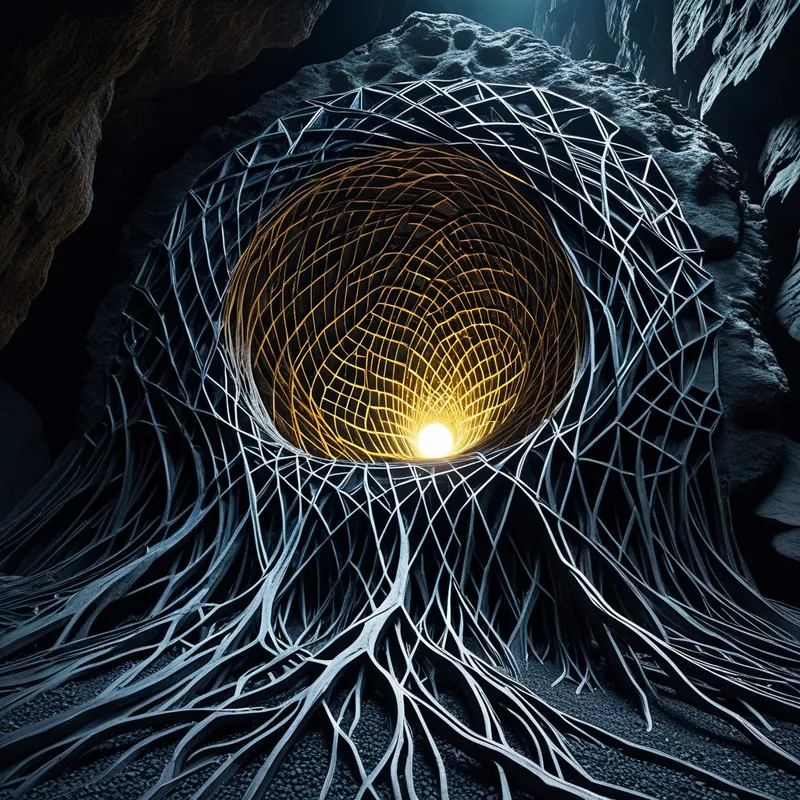
From this liquefied state, a new crystallization begins (albedo to rubedo). It is not you choosing a new position from a catalog of identities. It is your essential nature, now including integrated shadow material, precipitating out into a new form—like a geode forming in a cavern. The new “position” is not a static location, but a dynamic, responsive orientation. You move from being a fixed statue on a plinth to being a living tree, roots deep in your truth, branches responsive to the wind of circumstance. Sovereignty is no longer about controlling your territory, but about being in unshakeable relationship with it.
The Integration Protocol
Question 1: In my waking life, where do I feel a subtle, persistent sense of "acting a part" or holding a position that requires me to brace myself emotionally or physically?
Question 2: What forgotten or exiled part of myself might be causing this tectonic shift from below? What voice have I silenced that is now making the ground tremble?
Question 3: If my current sense of position were a piece of architecture (a throne, a chair, a spot on the floor), what is it made of? What would a structure built for my authentic, unfiltered presence look and feel like instead?
Action 1 (Grounding in the Void): For 10 minutes each day, sit in meditation and consciously do not try to find your center. Instead, feel the sensation of disorientation itself. Track the vertigo in your body without labeling it as wrong. This practices sovereignty over the feeling of having no ground.
Action 2 (Cartography of Exile): Take a large sheet of paper. In the center, draw a simple symbol of your current "position" (e.g., a chair, a title, a role). Now, intuitively draw lines radiating outward to symbols or words representing energies you have excluded to maintain that position (e.g., "wildness," "vulnerability," "anger," "play"). This creates a visual map of your internal contested territory.
Action 3 (Ritual of Re-Seating): Find an actual chair in your home. Sit in it as your "old" positioned self. Feel its limitations. Then, physically rise and move to sit on the floor, a cushion, or a different part of the room. As you do, state aloud: "I relinquish the seat that no longer holds me. I claim this ground as my own." Perform this with solemnity, marking the conscious choice to occupy a different, more fundamental space.
Final Validation
This disorientation is not a sign that you are broken, but a signal that you are outgrowing a shell that was once necessary. The terror of the tilt, the grief of the fall—these are honorable responses to the dissolution of a world you worked hard to build. Trust the vertigo. It is the sensation of a deeper, truer gravity beginning to exert its pull. Your position is not being taken from you; it is being returned to you, from the inside out, remade in the likeness of your whole, unfragmented soul. The ground you will eventually stand on will be one you cannot lose, for it will be made of your own, fully integrated being.