
The Dream of the Peak: An Alchemy of Ascent
The Somatic Echo
It begins not as an image, but as a vibration. A deep, resonant hum in the marrow, a silent pressure in the chest that feels less like weight and more like a gathering storm of potential. The breath catches, not from fear, but from the body’s instinctive recognition of a thinning veil. There is a lightness in the limbs, a paradoxical gravity in the heart. This is the somatic echo of the Peak Experience dream—the body’s ancient, pre-verbal knowing that you are about to touch a boundary of the self and find it permeable. It is the visceral prelude to an encounter with the sublime, where awe and terror are two notes of the same chord, vibrating in the hollow of your throat.
The Dreamer's Log (Case Vignette)
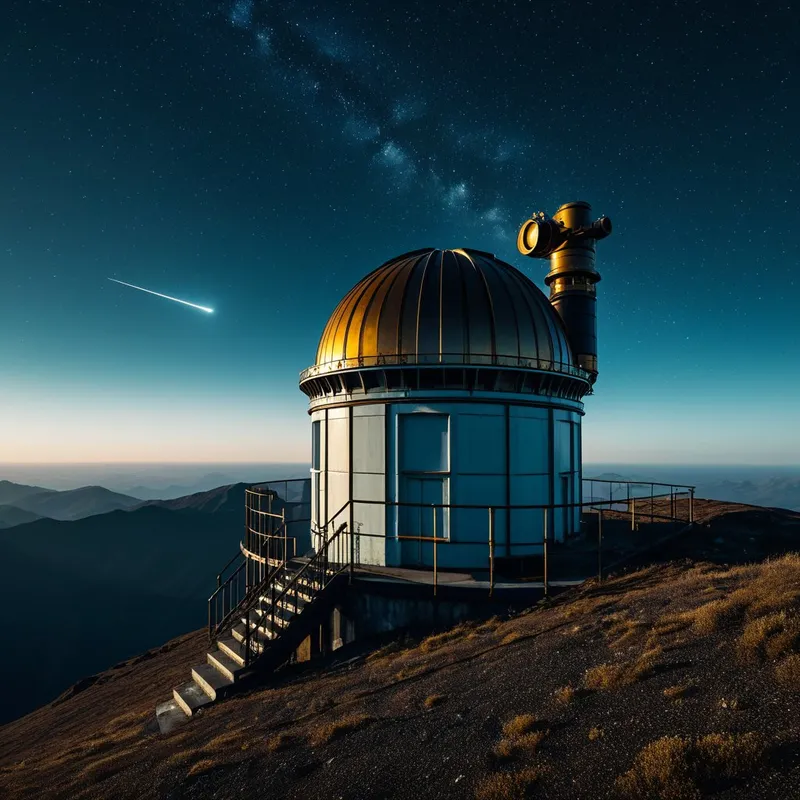
I stood on the rusted metal platform of an abandoned mountain observatory. The air was thin and cold, biting through my coat. Before me, a colossal brass telescope, pitted with age, pointed at a single, piercingly bright star. As I touched its icy eyepiece, the star’s light didn't just magnify; it flooded the entire structure, dissolving the walls, the mountain, everything, until there was only that silent, burning point and a sense of infinite, peaceful depth where my body used to be.
This is the alchemy of the peak: the dissolution of the familiar, observing "I" into the vastness of the witnessed, leaving not emptiness, but a profound, luminous belonging.
The False Lead
This is not a dream of mere success or achievement. To mistake the peak for a simple trophy, a promotion, or a finish line is to confuse the summit with the flag planted upon it. The Peak Experience dream is not about the ego’s conquest of external terrain. Its terror and its gift lie in the opposite direction: it is about the ego’s surrender to an internal vista so vast it renders the familiar self obsolete. It is not a dream of winning, but of being utterly won over—by beauty, by truth, by a reality that dismantles your previous coordinates. The fear it evokes is not of failure, but of insignificance; the grief it carries is for the smaller, safer self you must release to breathe this rarefied air.
Psychological Architecture
To dream of the peak is to be summoned to your own edge. The psyche, in its profound wisdom, constructs a theater of the impossible to stage a necessary death and rebirth. The climb, the vertigo, the final vista—these are the symbols of an intense process of Individuation. You are not just looking at a view; you are being asked to become the perspective.
This is deep Shadow work of the most subtle kind. The shadow here is not a monster in a cave, but the very ground beneath your feet. It is everything you have identified with—your history, your roles, your accumulated stories of who you are. The peak dream exposes these as the foothills they truly are. The intense pressure, the "heat" of this alchemical process, is the friction between the soul’s innate knowing of its boundless nature and the psyche’s desperate, loving clutch on its known form. The grief is real: it is the mourning of a beloved, limited identity. The terror is valid: it is the fear of falling into infinity. But the dream insists: the fall is into your true foundation.
Mythic Resonance
We see this eternal firmware in the myth of Sisyphus, often misunderstood as a tale of futile labor. The true peak of his story is not the moment the boulder rests atop the hill. It is in Camus’s imagining of Sisyphus, descending. In that conscious, lucid walk back down the mountain, having fully accepted the eternal return, he transcends his punishment. He becomes the sovereign of his own absurd realm. His peak experience is not victory, but the profound, silent integration of the endless cycle into a form of freedom. Similarly, the Buddha beneath the Bodhi tree reaches his peak not in a flash of light, but in the unwavering, grounded compassion that arises after touching the absolute. The summit is not a place to live, but a vista that forever changes how you walk in the valley.
Symbolic Nodes
- Mountain Summits & Vast Vistas: The ultimate symbol of achieved perspective, overview, and transcendence of lower-plane concerns.
- Towers, Lighthouses, Observatories: Man-made peaks representing the focused, conscious striving to see beyond the horizon of ordinary perception.
- Stars, Suns, Singular Points of Light: The transcendent goal, the unifying truth, the numinous center that pulls consciousness toward it.
- Thin Air, Vertigo, Dissolving Structures: The somatic and environmental feedback of the ego-structure becoming insubstantial in the face of the infinite.
- Silence & Stillness: The auditory hallmark of the peak, where the internal chatter ceases, and pure awareness remains.
Archetypal Resonance
The Sage Archetype is the primary architect of the Peak Experience dream. This is not the Sage as a dusty academic, but as the silent knower, the one who seeks perspective not for power, but for understanding. The somatic echo—the breathless awe, the pressure of vast knowing—is the Sage’s energy activating in the body, pulling consciousness upward and inward toward the source. Its shadow, the Dogmatic Judgmental, is the part that fears the peak, that clings to the old maps and labels the transcendent experience as "unreal" or "dangerous" out of terror of the unknown. The alchemical potential here is the transmutation of information into wisdom, of seeking into seeing. The peak dream is the Sage’s ultimate invitation: to trade the security of the known path for the sovereignty of the true view.
The Alchemical Process
The alchemy of the peak is one of sublimation—the direct transformation of a solid into a vapor, bypassing the liquid state. Psychologically, this is the intense process where the solid, dense matter of the personal ego (your story, your wounds, your identity) is subjected to the searing heat and unbearable pressure of an encounter with the absolute. The "heat" is the friction of the encounter itself—the awe that burns, the beauty that devastates. The "pressure" is the silent, implacable demand of the vision: you must change to hold this.
This does not destroy the self; it refines it. The ego does not die, but its role shifts from the central protagonist to a skilled vessel, a faithful witness. The grief of the "smaller self" is the necessary fuel for this transmutation. The terror of the void is the crucible. What emerges is not a new ego, but a self that is paradoxically both more humble and more sovereign—humble before the mystery, sovereign in its conscious participation within it. You become the mountain and the space that surrounds it.
The Integration Protocol
The work is not to stay on the peak, but to bring its atmosphere down into the cells of your daily life.
Question 1: In the dream, what was the quality of the silence or stillness at the peak? How does that specific quality contrast with the "noise" of your current waking life?
Question 2: What familiar structure, belief, or identity (the "observatory walls") dissolved in the light of the experience? What part of you might be clinging to its rubble?
Question 3: If the perspective from the peak became your permanent, grounded orientation, what one mundane action or relationship in your life would fundamentally change?
Action 1 (Somatic Anchoring): For one minute each day, stand still. Feel the weight of your body connecting to the ground. Then, recall the somatic echo of the peak—the lightness, the pressure. Don't visualize the scene; feel the sensation in your chest and limbs. Hold both sensations—the grounded weight and the soaring lightness—simultaneously. Breathe into the paradox.
Action 2 (Unstructured Writing): Set a timer for 10 minutes. Write from the perspective of the peak itself. Not you on the peak, but the mountain, the tower, the star. Let it speak. What does it see? What does it know? What does it feel, enduring eternity? Do not edit, do not judge. This bypasses the ego and channels the archetypal voice of the experience.
Action 3 (Ritual of Carried Light): Find a small, smooth stone. Sit with it at dawn or dusk, and for a few moments, imbue it with the memory of the light from your dream—its color, its temperature, its feeling. Carry this stone in your pocket for a week. Whenever you touch it, let it be a tactile trigger to recall that for one moment, you were not the stone, but the light that illuminates it.
Final Validation
The descent is always harder than the ascent. To have touched the infinite and then return to the finite world of laundry and deadlines can feel like a cruel joke, a source of profound loneliness and disorientation. This difficulty is not a sign of failure, but of authenticity. It means the experience was real. It means the alchemy has begun. You are not meant to live on the peak; you are meant to let the peak live in you. Let its silent perspective become the foundation of your compassion, its vast light the source of your patience, and its terrifying beauty the courage to live a human life, forever changed by having once touched the sky. The sovereignty offered is not over others, or even over your circumstances, but over the only thing you ever truly can command: the quality of your own awareness, now forever deepened by the height from which it has gazed.