
The Blueprint of the Self: When Dreams Demand Organization
The Somatic Echo
Before the image of a filing cabinet or the logic of a spreadsheet forms, the dream of organization announces itself in the body. It is a deep, cellular hum of dissonance—a sense that the internal wiring is frayed, that vital signals are being lost in the noise. You may wake with a jaw clenched against a chaos you cannot name, or a spine that feels like a column of mismatched stones, each vertebra carrying a different, unintegrated story. There is a pressure behind the eyes, not of fatigue, but of overload: too many tabs open in the mind’s browser, each playing a different song of memory, obligation, and desire. This is the somatic ground from which the dream of order grows—not a desire for control, but a profound yearning for coherence. It is the body’s plea for a system where energy can flow without short-circuiting into anxiety or dissipating into ennui.
The Dreamer's Log
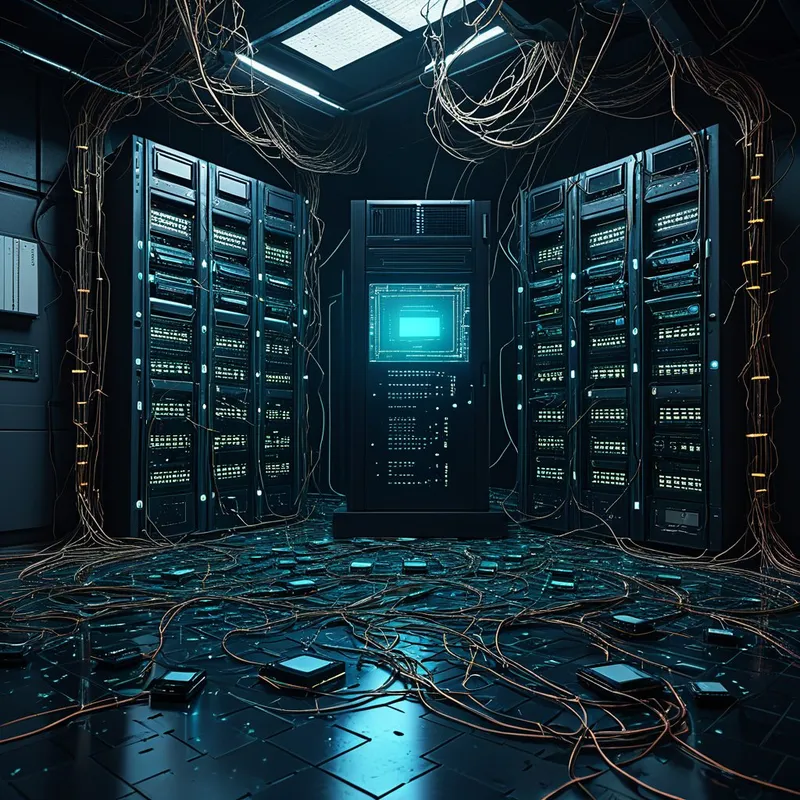
The dreamer stands in a cavernous, abandoned server room. Banks of dead terminals line the walls. On the central console, a single screen glows, streaming endless lines of corrupted, indecipherable code. Their task is clear: they must rebuild the system from the shattered hard drives scattered like black ice across the floor, but no manual exists, only the insistent, silent pulse of the living screen.
This is the psyche initiating a core dump and reboot, forcing a confrontation with fragmented self-data to compile a new, more authentic operating system.
The False Lead
This theme is not about becoming more efficient for the world’s sake. It is not a divine mandate to alphabetize your spice rack or optimize your productivity. To mistake the dream’s call for external systematization is to commit a profound error of literalism. The terror of the disorganized dream is not about a messy desk leading to bad luck; it is the existential dread of a fragmented self. The grief is not for lost items, but for lost parts of the soul—the passions filed away as “impractical,” the traumas locked in unmarked drawers, the creative sparks treated as system errors. The dream points not to a life of rigid schedules, but to a life where your internal architecture can finally support the weight and wonder of your own existence.
Psychological Architecture
Beneath the dream of the crumbling library or the labyrinthine office lies the Shadow work of reclamation. The psyche is not a monolithic entity but a parliament of selves—an internal family system where the Orphan who learned to hide, the Rebel who was punished, and the Caregiver who never rests all vie for the microphone. Disorganization, in its deepest sense, is the civil war of this parliament. No one is in charge. Agendas conflict. Vital messages from the exiled members are lost, manifesting as unexplained moods, somatic flares, and repetitive life patterns.
The individuation process here is the courageous, patient work of becoming the sovereign of this inner realm. It is not about silencing the voices, but about giving each a recognized seat at the table, understanding its history and its function. To organize the psyche is to establish a compassionate internal governance where the exiled artist, the furious child, and the weary protector are all acknowledged as essential ministers in the kingdom of the self. This is the architecture of wholeness: a structure flexible enough to hold contradictions, strong enough to contain storms, and porous enough to allow light into every chamber.
Mythic Resonance
We see this eternal process in the myth of Theseus and the Labyrinth. The labyrinth is not merely a maze to be solved; it is the disorganized, monstrous complexity of the unconscious self, born from a fractured past (the sins of Minos). The Minotaur at its center is the ultimate unintegrated shadow—the beastly, chaotic result of repressed desire and shame. Theseus’s thread, gifted by Ariadne, is the first act of organization: a single, conscious line of purpose and connection back to the world of light. He does not tidy the labyrinth; he navigates its chaos with a tool of coherence, confronts the monstrous fragmentation within, and re-emerges whole. The myth is not about killing parts of ourselves, but about traversing our inner chaos with the thread of awareness, integrating the beast by bringing it into the light of consciousness.
Symbolic Nodes
- Filing Cabinets, Archives, Libraries: The storage of self-knowledge, memory, and identity. Locked drawers signify repressed material; overflowing files indicate cognitive or emotional overload.
- Blueprints, Schematics, Flowcharts: The psyche’s nascent plan for a new internal structure, the vision of a potential self.
- Empty Rooms, Clean Slates, Blank Grids: The terrifying and fertile ground of potential that follows a deconstruction, the space before new forms cohere.
- Tangled Wires, Knotted Cords, Clogged Pipes: Blockages in the flow of life force, communication, or emotion; interconnected conflicts.
- Sorting, Cataloging, Assembling/Disassembling: The active process of the conscious mind engaging with psychic material, evaluating what to keep, what to release, and how things fit together.
Archetypal Resonance
The energy at the core of this theme is that of The Ruler Archetype. Not the Shadow Ruler who demands rigid control from a place of fear, but the mature Sovereign emerging from the chaos of inner civil war. The somatic echo of dissonance is the cry of a realm without a true ruler. The alchemical potential lies in the Ruler’s sacred task: to establish order not for order’s sake, but to create a kingdom—an internal ecosystem—where every part of the self can thrive in right relationship. This archetype does not conquer the other inner voices; it listens, integrates, and decides from a place of embodied authority, turning the cacophony of the psyche into a coherent symphony of being.
The Alchemical Process
The alchemical transmutation here is Coagulation—the process of bringing the solve (the dissolved, chaotic state) into a coagula (a coherent, solidified new form). The heat and pressure are applied by the conscious ego’s sustained, often frustrating, engagement with the very material it has spent a lifetime avoiding. The pressure is the daily commitment to sit with the anxiety of the unmade decision, to feel the grief for the time lost in confusion, to tolerate the ambiguity of the blank page that awaits your new blueprint.
The base metal is the terror of fragmentation and the grief of lost time. The philosopher’s stone is Sovereignty—the unshakeable, internal authority that comes from having met, named, and integrated your scattered parts. You do not simply “get organized.” You become the architect and benevolent monarch of your own inner world. The chaos is not destroyed; its raw, wild energy is harnessed as the creative force that now flows through the newly organized channels of your purpose.

The Integration Protocol
Question 1: If my inner world were a physical space—a room, a landscape, a building—what does it look, sound, and feel like right now? Where is the clutter, the blocked door, the broken window?
Question 2: Which one "file" in my psyche feels most dangerous or shameful to open? What single, neglected part of myself is demanding to be catalogued?
Question 3: What is the simplest, most foundational rule or principle my inner kingdom needs to function peacefully? (e.g., "All voices deserve a hearing," or "Rest is a required resource.")
Action 1 (Somatic Cartography): For one week, carry a small notebook. Do not write thoughts. Instead, note only bodily sensations when you feel overwhelmed or scattered. "Jaw tight, 3pm." "Heat in chest, during meeting." This maps the somatic geography of your disorganization.
Action 2 (Unstructured Reclamation): Set a timer for 15 minutes. With pen and paper (no screens), begin writing or drawing with the prompt: "The parts of me I have filed away are…" Do not edit, direct, or judge the output. This is creative data retrieval.
Action 3 (Ritual of Internal Accord): Find a small stone or natural object. Holding it, speak aloud one clear, compassionate decree for your inner realm. For example: "In this kingdom, exhaustion is honored as a signal, not a failure." Place the object where you will see it, as a talisman of your nascent sovereignty.
Final Validation
It is profoundly difficult to look into the psychic server room and see only shattered drives and corrupted code. The urge to walk away, to numb the hum of dissonance, is a sane response to an overwhelming task. Honor that resistance; it protected you until you were strong enough to face the blueprint. Now, you are strong enough. The very dream that frightens you is proof. It is your psyche’s own diagnostic tool, its rebuild command. You are not being asked to become neat. You are being summoned to become whole. Pick up one fragment. Listen for the thread in the dark. Your sovereignty is not a distant fantasy; it is the next line of code waiting to be written, in the quiet language of your own, reorganized soul.