
The Dream of Moral Instruction: A Blueprint for Your Soul's Architecture
We often mistake the dream of moral instruction for a lecture. We wake with a vague sense of having been scolded, a residue of shame or righteousness clinging to the sheets. But this is the mind’s clumsy translation of a far more profound transmission. True moral instruction in the dreamscape is not a voice from on high; it is a somatic blueprint, delivered not in words but in the silent language of weight, texture, and consequence. It is the psyche’s own architecture department, presenting plans for a necessary renovation of the self.
The Somatic Echo
Before any story forms, the body knows. This dream theme announces itself not as a thought, but as a specific gravity. It is the feeling of a moral density—a sudden, inexplicable heaviness in the chest, as if your heart has become a lodestone pulling toward a forgotten true north. It can manifest as a cold, clean clarity in the gut, a surgical precision that cuts through the fog of daily compromise. Conversely, its absence—when you dream of acting without this inner compass—leaves a hollow, metallic taste, a feeling of structural integrity compromised, as if you’ve walked through a wall and left part of your outline behind. The echo is one of ethical consequence made visceral; it is the physics of the soul made flesh, a preview of the weight your choices will carry in the waking world.
The Dreamer's Log
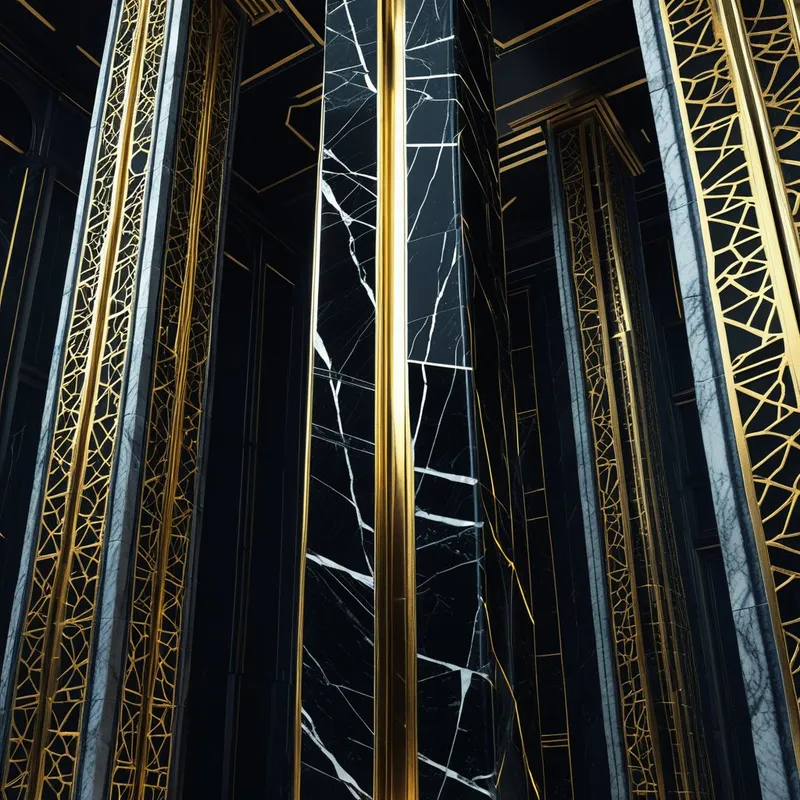
I stood in a vast, silent library of black marble. The only book on the endless shelves was a single, worn volume in my hands. I knew I had to inscribe the final chapter, but the pen I held wrote not in ink, but in light that scorched the page and my fingers each time I tried to form a word.
Alchemical Interpretation: The dream presents the terrifying sovereignty of authoring one’s own ethical code, where every authentic choice carries the searing cost of integrity and leaves a permanent mark on the self.

The False Lead
This is not a dream of social conditioning or external judgment. Do not confuse it for a replay of parental admonishments or cultural dogma. The voice of the superego is shrill, repetitive, and fear-based; it seeks to confine. The dream of moral instruction, in its pure form, is expansive and terrifyingly quiet. It is not about what you should do to be good in the eyes of another. It is the emergent, often unsettling, discovery of what you must do to be whole in your own being. It is the difference between following a map drawn by others and feeling the genuine magnetic pull of your own internal pole.
Psychological Architecture
Here, the Shadow work is not about confronting a monster in the basement, but about auditing the entire foundation. It asks: upon what ground do you stand? What compromises have been mortared into your character as necessary load-bearing walls? The dream exposes the fault lines. The process of Individuation in this realm is the slow, deliberate act of becoming your own moral authority—not a tyrant, but a sovereign. It requires dissolving the internalized panels of the courtroom where you are perpetually on trial, and instead, building a quiet chamber of reflection. This is the architecture of conscience, built from the inside out. You are not integrating a rejected "bad" part; you are integrating the responsibility that part has been avoiding, the cost of which has been paid in self-fragmentation.
Mythic Resonance
Consider the story of the Sword in the Stone. The universal firmware is not about Arthur’s destiny to be king, but about the weapon that yields only to the one whose inner constitution is its true sheath. The sword is not a tool of conquest, but an instrument of moral alignment; it cannot be wielded by force, only by a resonant integrity. Similarly, in the Labors of Hercules, each task is less about brute strength and more about navigating an ethical labyrinth—cleaning the Augean stables required rerouting rivers (changing fundamental systems), not just shoveling muck. The myth is a blueprint for moral problem-solving, where the monster is often a distorted reflection of an unaddressed inner compromise.
Symbolic Nodes
- Scales that are unbalanced or impossibly balanced: The measurement of competing loyalties, truths, or debts.
- A blank book, a silent judge, or a blindfolded figure: The confrontation with impartial, self-authored judgment.
- Bridges that are missing a central span, or doors that require a unique, self-forged key: The gap between current action and ethical integrity.
- A tool that changes weight or a path that forks with no signposts: The somatic feel of a moral dilemma.
- Receiving or giving an object that is profoundly beautiful but unbearably heavy: The weight and beauty of true responsibility.
Archetypal Resonance
The energy here is most purely that of The Ruler Archetype. This is not the shadow ruler demanding control over others, but the nascent sovereign establishing order within the self. The somatic echo of moral density is the Ruler feeling the weight of the crown—not as ornament, but as the gravitational center of a personal kingdom. Its core energy is stewardship and the establishment of a just, internal governance. The alchemical potential lies in its transformation from seeking external validation for one’s choices (the shadow’s tyranny or appeasement) to the calm, unshakeable authority that comes from laws written in the bedrock of one’s own experience and compassion. It is the archetype that builds the container in which the other parts of the self can safely exist.
The Alchemical Process
The transmutation here is of chaotic obligation into structured integrity. The prima materia is the raw, conflicted feeling of "should"—a messy alloy of fear, duty, and desire. The alchemical heat is applied through the intense pressure of conscious choice. This is the crucible moment: not the easy choice between good and evil, but the agonizing choice between two goods, or the lesser of two evils, where every option costs a piece of your previous self-concept. The fire is the sustained willingness to bear the consequence, to feel the scorch of the light-pen from the dreamer’s log. The pressure is the refusal to outsource the decision, to let the stone remain un-pulled, the stables forever filthy. In this heat, the base metal of guilt and external expectation burns away, and what remains is a new, self-forged alloy: personal ethic. It is heavier, but it is wholly yours, and it rings true when struck.
The Integration Protocol
Question 1: In the dream, where did the sense of "the right thing" emanate from? Was it a voice, a feeling in the body, a knowing in the scene itself? Trace its source.
Question 2: What is one long-standing "rule" you follow in your life that, upon feeling its weight in your body, feels more like a borrowed cage than a personal conviction?
Question 3: If your moral compass were not a needle pointing north, but a living entity within you, what would it look like and how would it communicate when you are off-course?
Action 1 (Somatic Cartography): For one week, pause at any moment you feel a pang of "should" or unease about a decision. Don’t analyze the thought. Instead, close your eyes and map the exact physical sensation—its location, size, temperature, texture. This builds a body-based lexicon for your conscience.
Action 2 (Unwritten Codex): Take a blank journal. Do not write rules or philosophies. Instead, creatively express through abstract drawing, splashes of color, or single fragmented words the "felt sense" of three core principles that guide you when you are at your most integrated and calm. Let it be non-linear and symbolic.
Action 3 (Ritual of Sovereign Choice): Identify one small, recurring life choice where you typically default to habit or others' expectations. Consciously make a different choice, one that aligns with your somatic cartography. Before acting, physically place your hand on your heart or solar plexus and silently state: "I bear the weight of this path." Feel the shift in authority.
Final Validation
This work is not for the faint of heart. To become the author of your own code, to feel the full weight of your sovereignty, is to willingly step into a void where the old signposts are gone. The disorientation is real. The grief for the simpler life of following orders is real. But on the other side of that terror lies a profound emancipation: the liberation of no longer being a subject in your own kingdom, but its rightful, compassionate ruler. The dream does not instruct you to be good for the world's sake; it instructs you to be whole for your own, knowing that from that wholeness, right action for the world can finally, authentically, flow.