
The Dream of Moral Erosion: Dissolving the Inherited Code
The Somatic Echo
It begins not as a thought, but as a texture in the soul. A slow, cold seepage behind the sternum, a feeling of internal foundations turning to silt. There is a quiet, persistent vertigo, as if the internal compass has lost its true north and now spins with a low, electrical hum of dread. The body knows the score before the mind can name it: something you once held as solid, as unquestionably right, is dissolving. It feels less like a fall from grace and more like a silent, geological subsidence. The gut tightens not with guilt, but with a stranger, more profound grief—the grief for a structure that once provided shelter but now feels like a cage made of ancient, petrified wood. This is the visceral prelude to the dream of moral erosion.
The Dreamer's Log
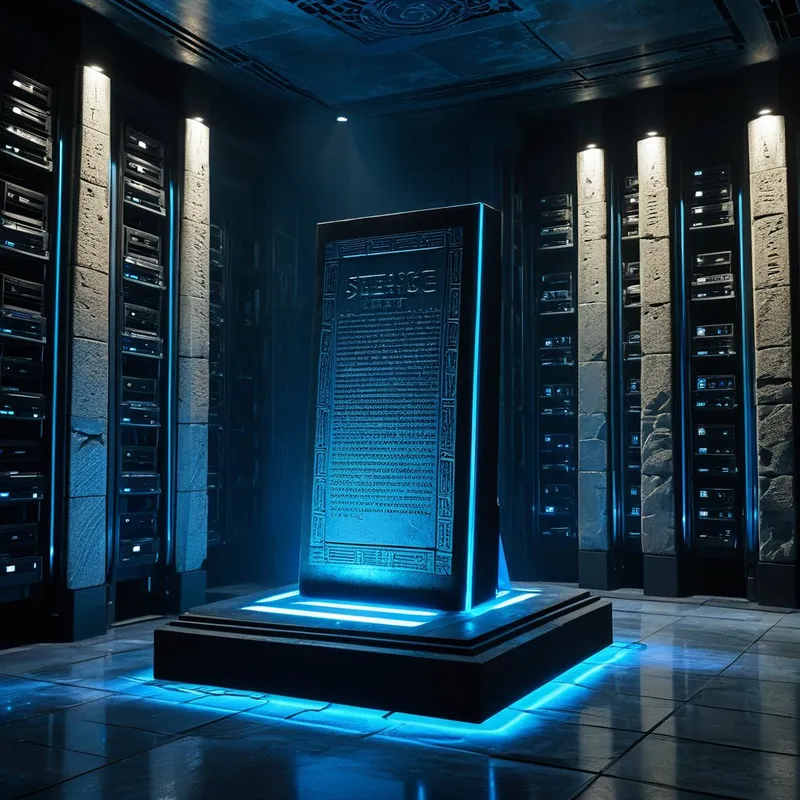
The dreamer stands in a vast, silent library where the books are bound in cold, polished metal. They reach for a familiar, heavy tome titled "The Right Way," but its pages are blank. As they turn them, a fine, black sand begins to pour from the spine, pooling at their feet and erasing the intricate patterns on the library floor.
This is not a dream of becoming evil, but of the terrifying, necessary void that appears when an inherited moral script—written by family, culture, or trauma—loses its meaning, leaving the dreamer in the silent, sandy expanse of their own unmapped conscience.
The False Lead
This theme is not about convenient excuses or a descent into amorality. It is not the Shadow Jester’s cynical punchline nor the Shadow Rebel’s destructive spree. Do not mistake the crumbling of an external edifice for the collapse of your core. This erosion is a targeted deconstruction, not a random catastrophe. It is the difference between a house falling down in a storm and carefully, painfully removing its load-bearing walls because you discovered the blueprint was flawed. The terror is real, but its source is the birth pang of a morality that is truly yours, not merely inherited.
Psychological Architecture
Here, the psyche engages in the most dangerous kind of shadow work: not integrating a repressed desire, but dismantling a cherished, ego-syntonic ideal. You are not meeting the monster you feared you were; you are questioning the saint you were told you must be. This is the Individuation process at its most fiery crucible. The persona of the "good person"—constructed from a thousand shoulds and musts—begins to crack. Beneath it lies not darkness, but complexity. The internal family system is in upheaval: the inner Caregiver weeps for the lost rules that provided safety, the inner Rebel cheers the newfound freedom, and the inner Orphan trembles, afraid of the exile that may come from stepping outside the tribe’s moral consensus. The work is to hold council with them all, to listen not for the loudest voice, but for the truest one emerging from the silence after the old laws fade.
Mythic Resonance
We see this in the story of Buddha, who walked away from the palace of prescribed comforts and duties—a life that was morally upright by his caste’s standards—to sit in the uncertain wilderness until his own truth emerged from the void. We hear it in the Greek Titan Prometheus, who defied the supreme moral law of Zeus (to keep divine fire from humans) to enact a deeper, more compassionate ethic of his own forging, accepting eternal punishment for the crime of a conscience that outstripped the established code. Both myths speak to the unbearable tension between a handed-down morality and the imperative of a personally-sourced one.
Symbolic Nodes
- Dissolving Structures: Melting ice, sandcastles washing away, crumbling statues or pillars, pages of text becoming illegible.
- Corrupted or Empty Vessels: Tainted water, spoiled food, blank books, silent bells, corrupted digital files.
- The Unmapped Space: Empty deserts, featureless grey oceans, fog-shrouded crossroads, blank canvases or screens.
- Ambiguous Fluids: Black rain, oily puddles, mercury-like substances, slow, silent leaks.
Archetypal Resonance
The core energy here is that of The Shadow Ruler. This is not the Sovereign who governs from authentic inner authority, but the Tyrant whose power resides solely in the rigid, unexamined Code. The somatic echo—the cold seepage, the vertigo—is the feeling of the Tyrant’s internal regime collapsing. Its control was the architecture of your old morality; its erosion is the crisis. Yet, within this shadow lies the alchemical potential: the heat of this crisis is what forges the true, authentic Ruler. The dissolution of the Tyrant’s law is the necessary precondition for the Sovereign’s decree to be written from the soul’s own deep, experiential wisdom, not from fear of exile or longing for approval.
The Alchemical Process
The alchemy of Moral Erosion is Solutio—the dissolving operation. This is not a gentle melting, but a radical dissolution in the waters of the unconscious. The intense psychological pressure is the tension of holding two unbearable truths: the profound disorientation of losing your moral footing, and the simultaneous, terrifying sense of rightness about that loss. The "heat" is the shame, the grief, the fear of judgment that arises as the old structures dissolve. The transmutation occurs when you stop trying to rebuild the old fortress on the shifting sand and instead learn to stand, naked and uncertain, in the empty space. Sovereignty is born from the courage to inhabit the question mark itself, to let personal integrity be slowly crystallized from the solution of your own lived experience, filtered through compassion, not from a prefabricated slab of righteousness.

The Integration Protocol
Question 1: Where in my waking life have I recently felt a deep, quiet "no" in my body to something I felt I "should" morally endorse or accept?
Question 2: What is the oldest, most foundational rule I was taught about being a "good person"? If I imagine that rule as a physical object, what is its texture, weight, and temperature now?
Question 3: If my current sense of unease or erosion is not a failure, but the gestation of a new ethic, what single value feels like it is trying to form in the cleared space?
Action 1 (The Grounding Trace): When you feel the somatic vertigo, place a hand on your heart and a hand on your solar plexus. Breathe into the space between them. Do not seek an answer. Simply acknowledge the emptiness as a geographical feature of your inner landscape, not a catastrophe.
Action 2 (The Unwritten Code): Take a blank notebook. On the first page, write at the top: "Articles of Faith, Now Under Revision." Without judgment, list the moral "laws" that currently feel porous or suspect. Opposite each, do not write a new law. Instead, write the raw, personal experience or feeling that is challenging it.
Action 3 (The Ritual of Unbinding): Find a small, smooth stone. Sit with it, projecting onto it the weight of one specific, eroding "should." Carry it with you for a day, feeling its burden. At dusk, go to a body of moving water—a river, the sea, even a steady rain gutter. Thank the stone for the structure it once provided, and then, with intention, drop it into the flow. Let the water perform the solutio you are undergoing internally.
Final Validation
To dream of moral erosion is to stand at the most frightening and honorable frontier of the self. It means you are brave enough to let your conscience outgrow its crib. The disorientation is not a sign of being lost, but a sign of being in motion—moving from the morality of the tribe to the ethics of the soul. The ground is not disappearing beneath you; you are being asked to become the ground itself.