
The Dream of Moral Debt: Reconciling the Soul's Ledger
It begins not as a thought, but as a weight. A density in the solar plexus, a cold stone in the gut. It is the somatic echo of a forgotten promise, a kindness unreciprocated, a truth left unspoken. This is the feeling of Moral Debt—a psychic gravity that pulls at your center of gravity long before the mind can name the creditor. It is the body’s ancient, pre-verbal knowing that a ledger exists, and your name is written in red. You carry it in your posture, a slight forward hunch as if against a headwind no one else can feel. Your breath becomes shallow, rationed, as if each inhalation might be tallied against you. This is the architecture of obligation written in flesh and bone, a silent contract signed in the currency of your own vitality.
The Dreamer's Log
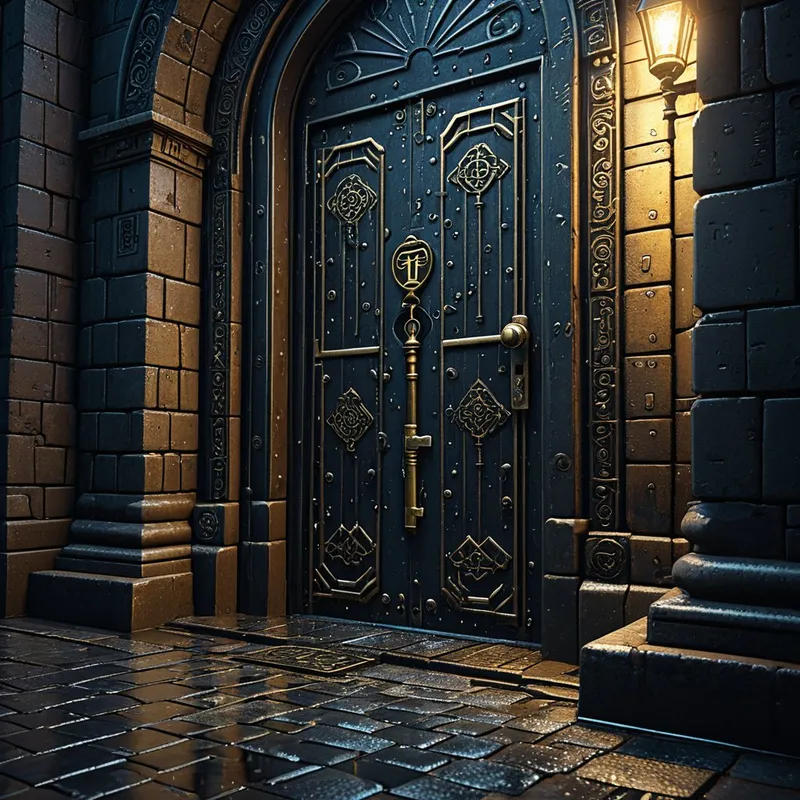
I am in a city of endless, rain-slicked alleys. A figure I cannot see hands me a heavy, ornate brass key. A voice, not from them but from the walls themselves, says, “The door is waiting. The debt is due.” I run, but the key grows warmer in my palm, a pulsing guilt. I know the door is at the city’s heart, and I know I must open it, but I am desperately trying to lose the key instead.
Alchemical Interpretation: The dreamer is handed the means of their own liberation (the key) but experiences it only as the proof of their obligation, fleeing the integration that the locked door (the Shadow) demands.
The False Lead
This is not about a simple mistake or a social faux pas you regret. Moral Debt is not the fleeting shame of a white lie or a missed appointment. To interpret it as such is to mistake a tectonic shift for a surface tremor. This theme is not about “bad luck” or karma as external punishment. It is the soul’s own profound accounting system activating, signaling not a petty crime, but a fundamental misalignment between your actions and your deepest ethical core—your internal sovereign law. It is structural, not situational.
Psychological Architecture
The work of Moral Debt is the deepest Shadow work. It is the process of Individuation pressing against a dam built of “should haves” and “could haves.” The debt exists because a part of you—an exiled fragment of your psyche—was left behind in an old story. Perhaps you were cruel when compassion was needed, silent when a voice was required, compliant when rebellion was the true ethic. That moment created a psychic split: the you who acted, and the you who knew better. The one who knew better was shushed, buried, and now accrues interest in the dark. The “debt” is the energy required to exhume that exiled self, to listen to its testimony, and to finally pay it not with punishment, but with the profound acknowledgment it was denied. The ledger is not in a bank; it is in the liminal space between your conscious persona and your unlived life.
Mythic Resonance
We see this eternal ledger in the myth of The Flying Dutchman, the captain condemned to sail forever for a blasphemous oath, only able to find rest through a love that offers redemption beyond the strict economy of his crime. His ship is the body of the debt, the endless voyage its somatic echo. More intimately, we find it in the Buddhist concept of karmic debt (ṛṇa), not as fatalistic punishment, but as the natural, causal architecture of intentional action. It is the universe’s impeccable bookkeeping, where every seed of intention must find its soil. These are not tales of doom, but maps showing that the debt itself contains the coordinates for its own dissolution.
Symbolic Nodes
- Unpayable Invoices, Overdue Bills: The literalization of psychic obligation.
- Being Chased for a Debt You Don't Recall: The Shadow’s relentless call for acknowledgment.
- A Heavy Key, a Locked Door, a Sealed Vault: The means and the barrier to integration.
- Forgotten or Broken Oaths: Fractures in personal integrity.
- A Scale That is Unbalanced: Justice, but of an internal, soul-based kind.
- A Gift That Feels Like a Burden: The paradox of an opportunity wrapped in obligation.
Archetypal Resonance
The energy of Moral Debt is most acutely felt through The Shadow Ruler. The Ruler archetype’s core desire is for order, control, and sovereignty. In its shadow, this becomes a tyranny of internal law—a merciless, perfectionist judge who holds court in your psyche, reading from a ledger of every transgression. The somatic echo—the weight, the rigidity—is the body governed by this tyrant. The alchemical potential lies in dethroning this Shadow Ruler not through anarchy, but by transforming its harsh law into wise, compassionate sovereignty. The debt is the Shadow Ruler’s case against you; paying it is how you integrate its fierce demand for order into a mature, self-governed integrity.
The Alchemical Process
The transmutation of Moral Debt is not an act of repayment, but of revaluation. The alchemical fire here is the unbearable heat of sitting in the full, unmediated truth of your own responsibility. No excuses, no mitigating circumstances, no blaming the other. This is the nigredo, the blackening. In this crucible, the “debt” begins to melt. You see it was never about a quantity owed, but about a quality of being avoided. The pressure is the sustained courage to ask: “What part of my power did I abandon? What truth did I betray?” As you hold this, the leaden weight of guilt undergoes a strange fission. It separates into its constituent elements: pure grief for the harm done (which can be released) and pure power reclaimed from the abandoned action (which can be integrated). The debt is canceled not by payment, but by this radical, truthful re-owning.

The Integration Protocol
Question 1: If the debt were not a punishment, but a message, what is the single, unspoken truth it is trying to deliver to me?
Question 2: To whom within myself—what exiled part, what stifled voice—do I truly owe this debt?
Question 3: What would constitute “payment in full” in the currency of my soul, not the currency of my shame?
Action 1 (Somatic Ledger Scan): Sit quietly and bring attention to the body. Without any story, simply scan for areas of density, pressure, or cold. Place a hand there. Breathe into that space, not to change it, but to acknowledge its presence as the physical ledger. Whisper, “I feel you here.”
Action 2 (Unsent Letter of Reckoning): Write a letter to the creditor—who may be you, another, or an abstract principle. Do not send it. Write with absolute, brutal honesty about the nature of the debt as you feel it. Then, write the response you most need to hear. Burn or bury the letter as a ritual of transmutation.
Action 3 (The Keystone Ritual): Find a small stone. Hold it, imbuing it with the felt sense of the debt’s weight. Take it to a boundary—a river, a crossroads, the edge of a wood. Speak aloud one sentence that acknowledges the truth of the debt and your intent to transform its energy. Then, throw the stone over the boundary, symbolizing the movement of this energy from internal burden to released matter.
Final Validation
The dream of Moral Debt is a difficult grace. It means your inner compass is intact, your ethical self is alive and holding you accountable to a higher order than mere convenience. The weight you carry is the proof of your own depth. To feel this debt is not a curse, but a summons from your own sovereignty—a call to stop fleeing the key, and to finally walk toward the locked door, not as a debtor, but as the sole architect of your freedom, ready to design a new interior.