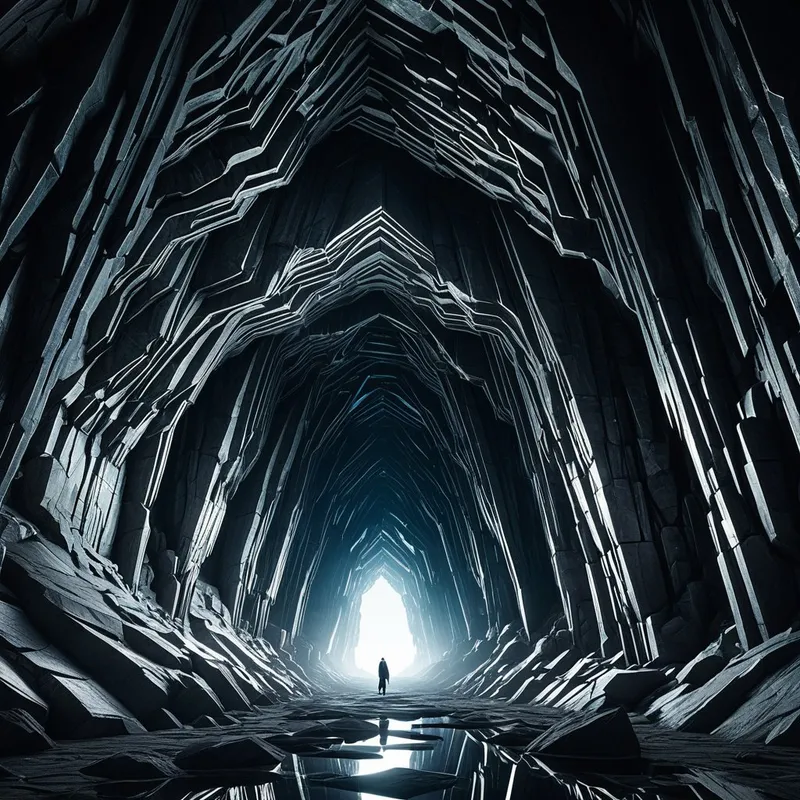
The Moral Crucible: Forging Integrity in the Dream-Fire
The Somatic Echo
It begins not as a thought, but as a weight. A density in the solar plexus, a cold, metallic taste at the back of the tongue. The body knows the crucible before the mind admits the trial. There is a sense of being watched by something internal and ancient—a silent jury of your own potential selves. The breath becomes shallow, held in the chest as if bracing for a verdict. This is the somatic signature of a structural shift in the soul’s bedrock, where the comfortable compromises of the waking world dissolve, and you are left alone with the raw ore of your own ethics. It is the feeling of standing at a precipice within yourself, where every possible path forward seems to demand a piece of your wholeness as payment.
The Dreamer's Log
The dreamer stands in a dim, concrete bunker, the air thick with static. Before them, a monitor displays a complex, branching decision-tree, each node glowing with the name of a person they love. A synthesized voice, flat and final, instructs: "To proceed, you must select one branch to sever. The system requires a sacrifice for optimization." Their hand hovers over the keyboard, paralyzed, knowing each choice is a kind of betrayal.
This is the alchemy of impossible choice: the psyche forcing consciousness to witness the catastrophic cost of its own loyalty, not to break it, but to purify its essence.

The False Lead
This is not a dream of simple misfortune or generic anxiety. Do not mistake the Moral Crucible for a nightmare of persecution or random bad luck. Those are storms on the surface. The Crucible is geology. It is not about things being done to you, but about the fundamental composition of the you to whom things are done. It is the difference between weathering a gale and discovering the continent you stand on is splitting in two. The terror here is not of external punishment, but of internal revision—the dismantling of a long-held self-concept to make room for a truer, often more demanding, form of integrity.
Psychological Architecture
The architecture of this dream is a courtroom built in the shadow lands. The prosecutor is your idealized self, the image of flawless virtue you secretly hold. The defense attorney is your pragmatic survivor, the part that made necessary compromises to get you here. And the judge is a deeper, older faculty—the silent witness of the Self, which observes not what is convenient, but what is true. The trial is always a case of the soul versus the persona. The evidence presented are memories re-examined, not for facts, but for their moral residue. That forgotten slight, that white lie that spiraled, that time you chose comfort over courage—these are not brought forth for condemnation, but for alchemical feedstock. The Shadow work here is the agonizing reintegration of the parts of yourself you deemed "unethical" or "weak." The bully, the coward, the liar—these are not cast out, but brought before the fire to testify. What were they protecting? What ancient wound were they obeying? Individuation in the Crucible is the process of hearing their testimony and, without endorsing their actions, acknowledging their twisted loyalty. From this terrible synthesis, a new authority is born: an integrity that has metabolized its own capacity for failure.
Mythic Resonance
We see this eternal process in the Babylonian myth of Gilgamesh. After the death of his beloved Enkidu, Gilgamesh is not merely grieving; he is thrust into a Moral Crucible regarding mortality, power, and the purpose of a king’s life. His subsequent, obsessive quest for immortality is a "false lead"—an attempt to solve a spiritual crisis with a physical answer. The crucible’s heat is in his devastating realization that even his greatest heroic strength is useless against the fundamental law of life. His transformation begins not when he finds the plant of immortality, but when he loses it to the serpent—the moment his last strategy for bypassing the moral-philosophical dilemma fails. He returns to Uruk hollowed out, but sovereign, his tyranny transmuted into wisdom because he has fully faced the impossible choice between his will and the way of the world.
Symbolic Nodes
- Impossible Locks & Heavy Keys: Systems that demand a paradoxical or painful action to proceed.
- Scales That Cannot Balance: Two precious things weighed against each other, where the scales are rigged to tip.
- Contaminated or Poisoned Nourishment: Food, water, or medicine that is offered but is ethically tainted.
- The Silent Jury or Audience: Figures who observe your choice without judgment or aid, representing your internalized values.
- A Contract with Blurred Clauses: An agreement whose true, costly terms only become visible as you sign.
- A Foundational Crack: A flaw discovered in the very floor or wall of a familiar dream space.
Archetypal Resonance
The energy of the Moral Crucible resonates most powerfully with The Ruler Archetype in its formative, shadow-tempering stage. This is not the Ruler on the throne, but the Ruler in the forge, hammering out the first principles of their domain—which is the inner kingdom of the self.
The somatic echo of the Crucible—the weight, the internal gaze—is the Ruler’s burden of sovereignty being felt for the first time, not as privilege, but as terrifying responsibility. The core energy is not about controlling others, but about establishing an unshakable inner law. The alchemical potential lies in the incineration of the Shadow Ruler—the tyrant who demands order through suppression and the control-freak who fears chaos—so that true leadership, founded on ethical authority rather than fear, can be born. The Crucible asks: What will you rule, and by what law? Your answer forges your crown.
The Alchemical Process
Alchemy requires three things: prima materia (base matter), heat, and the sealed vessel. In the Moral Crucible, the prima materia is your current moral code—a tangled alloy of inherited dogma, social convenience, and genuine intuition. The heat is the intense, sleepless pressure of the dilemma itself—the feeling that you are being asked to choose between two parts of your own heart. The sealed vessel is the dreamscape, the hermetic container where this reaction can occur without the interference of worldly excuses.
The transmutation is from a morality of external compliance to an integrity of internal coherence. The old alloy melts. The impurities—the "shoulds" placed by others, the ethical shortcuts taken to belong, the unexamined rules—rise to the surface as dross. What remains in the white-hot center is a core of personal truth, refined and dense. This is not a comfortable truth. It is often more demanding than the old rules. But it is yours. It is the gold that can only be forged in the unbearable heat of choosing between two loves, two loyalties, two versions of yourself. Sovereignty is earned the moment you realize the only verdict that matters is the one you deliver to your own soul.
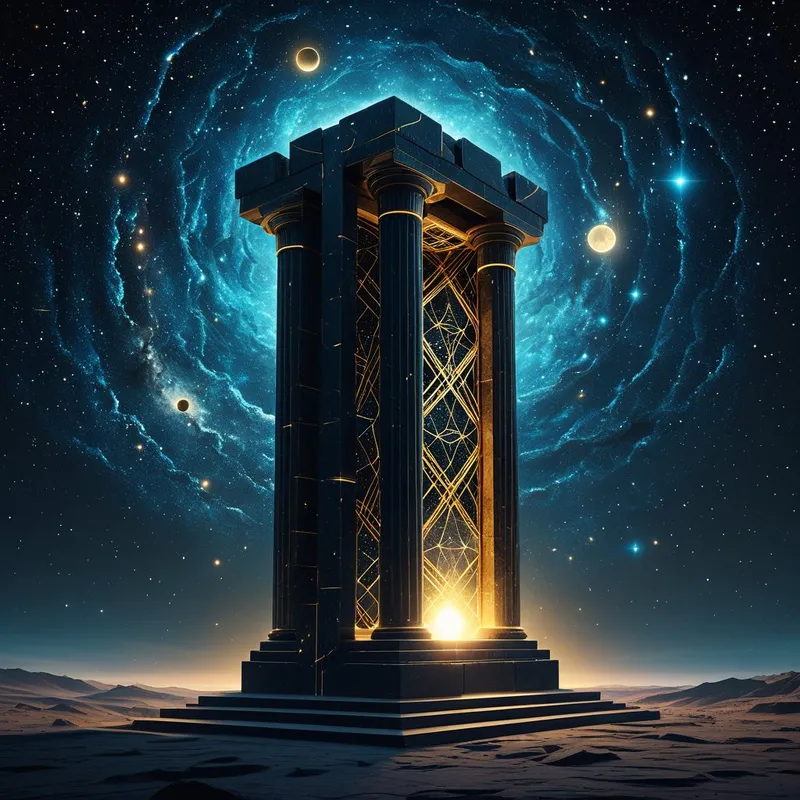
The Integration Protocol
Question 1: In the dream’s impossible choice, what was the deeper value each option represented? (e.g., "Safety vs. Honesty," "Loyalty to family vs. Loyalty to self").
Question 2: Where in your waking life have you been feeling a similar, low-grade "ethical static"—a situation that feels vaguely compromising or out of alignment?
Question 3: If the part of you that made the "wrong" choice in the dream could speak, what fear was it obeying? What was it truly trying to protect?
Action 1 (The Grounding Anchor): When you feel the somatic echo of the crucible (the weight, the static), place both feet firmly on the ground. Breathe deeply into your lower belly, and silently state: "I am here. The choice is now. The trial is the ground." This reclaims the body from the phantom dilemma.
Action 2 (The Unwritten Ledger): Take a blank notebook. Without narrative or justification, make two lists. On the left page, title it "Codes I Inherit." List rules, "shoulds," and moral statements you absorbed from family, culture, or institutions. On the right, title it "Codes I Verify." List only the ethical principles you have personally tested in the fire of experience and found to be true, regardless of difficulty. Observe the gap.
Action 3 (The Ritual of Release & Reclamation): Find a small stone. Hold it, imbuing it with the feeling of the dream's impossible pressure. Speak aloud one compromise you feel you are currently making. Then, walk to a body of water or even a sink. Say, "I release the contract of [name the compromise]." Drop the stone into the water. Then, turn and face away. Without looking back, state clearly one small, concrete action you will take in the next 24 hours that aligns with the value you reclaimed.
Final Validation
The path through the Moral Crucible is perhaps the most solitary and arduous of the soul’s journeys. To feel its heat is a testament not to your failure, but to your depth. It means your psyche is no longer willing to outsource its authority. It is demanding you become the sovereign of your own inner kingdom, with all the terrifying, glorious responsibility that entails. The fire does not exist to destroy you, but to separate everything you are from everything you were told you must be. Walk through. The integrity waiting on the other side is not a lighter burden, but it is a burden you were born to carry. It fits your soul, and it makes you unshakable.