
The Alchemy of the Archive: Dreaming of Memory Preservation
The Somatic Echo
It begins not as a thought, but as a pressure. A dense, silent weight behind the sternum, a gravity well in the chest pulling everything inward. The breath feels shallow, as if the lungs are rooms being slowly emptied of furniture. There is a metallic taste on the tongue—the flavor of old coins, of forgotten keys. In the body, the theme of memory preservation announces itself as a profound, somatic paradox: a desperate clenching to hold onto what is already, irrevocably, within. It is the muscle memory of a psyche trying to become its own reliquary, sensing a foundational erosion it cannot yet name. The nervous system becomes a silent alarm, a low hum of urgency that speaks in the language of biology before the mind can form the word "loss."
The Dreamer's Log (Case Vignette)
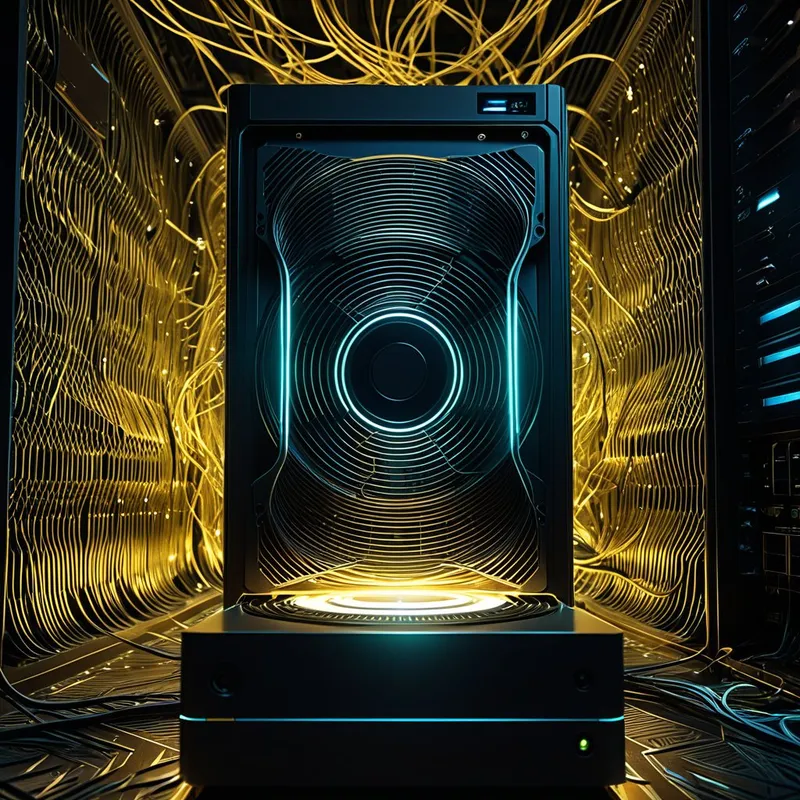
The dreamer stands in a cavernous, derelict server hall. Banks of dead machines hum a ghostly chorus. Their task is clear: they must find the one functioning drive, the one that holds the sound of their mother’s laughter, a specific, sun-drenched afternoon from childhood. They find it—a single, warm unit glowing amidst the dust. But as they cradle it, the casing dissolves, and the data inside streams out not as ones and zeroes, but as a fragile, golden filament that begins to unravel into the stagnant air.
This is not a dream about retrieving a file, but about witnessing the sacred, fragile material of memory itself, and the terrifying, beautiful process of its transmutation from stored event to living essence.
The False Lead
This theme is not about nostalgia. It is not the sentimental longing for a rose-tinted past. To mistake it for such is to confuse the alchemist’s crucible for a decorative vase. Nor is it merely a fear of forgetting names or dates—the common anxiety of a fading hard drive. The dream of memory preservation speaks to something far more structural: the threat of an identity dissolution. The terror is not of losing a memory, but of losing the very substrate that memories use to cohere into a Self. It is the difference between misplacing a book and watching the library itself turn to vapor.
Psychological Architecture
Beneath the dreamscape of archives and backups lies a profound Shadow negotiation. The part of us that architects our identity—the Inner Archivist—is in a state of high alert. It has sensed a challenge from a deeper, more ruthless psychic function: the Inner Dissolver. The Dissolver’s role is sacred; it breaks down outmoded narratives, composts the emotional matter of experiences that have been felt but not integrated, and makes space for new becoming. The Archivist, in its shadow aspect, perceives this necessary decay as an existential attack. Its preservation efforts become frantic, a hoarding of psychic artifacts in a doomed attempt to fortify a castle built on sand.
The individuation process here is a brutal, graceful marriage between these two inner forces. It is the Archivist learning to distinguish between the record and the wisdom. The record is the literal memory—the sensory data, the dialogue, the setting. The wisdom is the alchemical residue left in the soul after the event has been metabolized. The work is to allow the Dissolver to do its work on the records, while the Archivist, now elevated from clerk to curator, learns to preserve only the refined gold of the wisdom. This is the shift from a psychology of storage to a psychology of essence.
Mythic Resonance
We see this eternal drama in the myth of Mnemosyne, the Titaness of Memory. She did not merely store events; she was the mother of the nine Muses. Memory, in its highest form, is not a static repository but a generative womb. The preserved memory (Mnemosyne) gives birth to art, science, poetry (the Muses)—it becomes creative, life-giving force. Conversely, we find the warning in the tale of Lot’s wife. Her backward glance, a literal attempt to preserve a visual memory of a life being dissolved, results in her transformation into a pillar of salt—a perfect, preserved statue, eternally capturing a single moment at the cost of all future becoming. She becomes the memory itself, a monument to the failure of alchemy.
Symbolic Nodes
- Failing Digital Storage: Corrupt files, dying hard drives, obsolete formats.
- Fragile Physical Media: Cracking photographs, crumbling paper, dissolving film.
- Precarious Architecture: Leaking archives, tilting libraries, sinking vaults.
- Vital Containers: A single warm locket, a sealed vial of liquid light, a thriving seed amidst ruins.
- Unraveling Threads: Golden filaments, silken cords, magnetic tapes spooling into void.
Archetypal Resonance
The Creator Archetype is the prime mover in this psychic theater. Not its shadow aspect—the mad scientist hoarding blueprints—but the Creator in its profound, archetypal fullness: the Artist and the Architect of the Self. The somatic echo of chest-tightening urgency is the Creator feeling the impermanence of its medium—the lived life. Its drive is not to hoard, but to make something enduring from the flux of experience. The alchemical potential here is immense: the Creator, faced with the dissolution of its raw materials (memory), is forced to refine its craft. It learns that true preservation is not in the artifact, but in the pattern, the meaning, the beauty extracted and reconstituted into a new form. The memory of love is not preserved by a perfect recollection of a day, but by the capacity to love that the day instilled. The Creator’s task becomes the ultimate art project: weaving the wisdom of the past into the living tapestry of the present Self.
The Alchemical Process
The transmutation here requires the heat of conscious grief and the pressure of radical acceptance. The prima materia is the clinging, desperate fear that "I will be lost if this is lost." The alchemical fire is the courageous, slow-burning act of remembering with feeling—not to reinforce the memory, but to complete it. It is to re-enter the memory and feel the unfelt sorrow, the ungrieved joy, the unspoken truth within it. This emotional completion is the distillation. As the full emotional signature is extracted and integrated into the present-day psyche, the brittle, externalized "memory-object" begins to lose its compulsive charge. It is no longer a relic to be preserved, but a nutrient that has been absorbed. The gold produced is Sovereignty Over Narrative. You are no longer a tenant in a museum of your past, curated by fear. You become the author of a living story, using the past as ink, not as shackles.
The Integration Protocol
Question 1: When you feel that somatic clench, that urgency to "hold on," what specific quality (not event) are you afraid of losing forever? Is it a sense of safety, a particular love, a version of your own innocence?
Question 2: If that memory or era of your life were a book in your inner library, what is its title? Not the factual title, but the poetic, essential title that speaks to its core meaning for your soul.
Question 3: Imagine the part of you that frantically archives. If it had a face and form right now, what would it look like? What one sentence does it most need to hear from your present, adult consciousness?
Action 1 (Somatic De-clutching): When the preservation anxiety arises, place a hand on your chest. Breathe into that pressure for three cycles. On the fourth exhale, consciously imagine that clenched inner fist opening, not to release the memory, but to change its state from a solid, guarded object into a soft, diffuse light. Feel the weight disperse.
Action 2 (Memory Transmutation Journaling): Choose one memory that feels "endangered." Write the factual account on the left page. On the right page, do not write about the memory. Write from it. Write the letter the younger you needed to write then. Write the poem the experience secretly was. Let the record give birth to its Muse.
Action 3 (The Vessel Ritual): Find a small, physical object—a stone, a shell, a ring. Sit with it and consciously imbue it with the essence of what you wish to preserve (e.g., "the resilience I learned in that hard time," not "that hard time"). This object is not a locket holding a picture; it is a talisman holding a quality. Keep it as an anchor for the alchemized wisdom, not the unprocessed memory.
Final Validation
The terror is real. The feeling that the very threads of your being are unraveling is not a fantasy; it is the authentic signal of a deep psyche at work, dissolving an old structure to make way for a new integrity. To dream of preservation is to stand at this raw, vulnerable forge. It is a testament not to your fragility, but to your profound creative will—the part of you that refuses to let your experiences turn to dust without first extracting their sacred, animating light. This is not a crisis of memory. It is the birth pang of a more authentic, sovereign self, one being forged not from the flawless preservation of the past, but from its courageous, alchemical transformation.