Memorialization: The Architecture of Integration
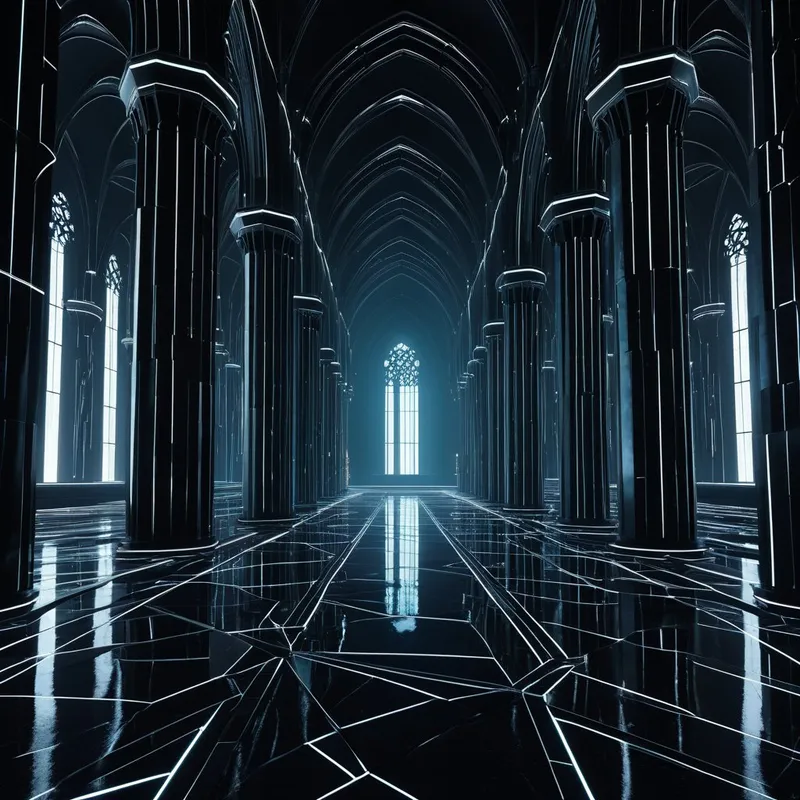
The dream of memorialization begins not in the mind, but in the body. It is a weight that settles in the chest, a density in the bones that feels like gravity has been recalibrated. It is the somatic echo of an absence that has become a presence—a hollow space now filled with a specific, heavy quality of air. Before you see the monument, the tomb, the plaque, or the archive, you feel its foundation being laid within you: a deep, quiet ache that is less about sharp grief and more about the permanent recalibration of your internal landscape. It is the feeling of a new, non-negotiable truth being inscribed into your very marrow, a truth that says, "This happened. This is part of the structure now." The breath becomes shallow, not from panic, but from the conscious effort of containing this new mass. The shoulders round, not in defeat, but in the bearing of a sacred, invisible load. This is the prelude. The psyche is preparing the site.
The Dreamer's Log
You are walking through the silent, cavernous halls of a data archive that stretches into infinity. Rows of dark, humming servers recede into the gloom. On one console, a single screen glows with a soft, persistent light. As you approach, you see it is not running code, but displaying a simple, looping animation of an origami crane, endlessly folding and unfolding itself. You know, with dream-certainty, that this terminal contains the only remaining record of a project you abandoned years ago, a version of yourself you thought you had deleted.
The alchemy here is not in preserving the past, but in the psyche’s insistence on maintaining a live, interactive terminal for a closed chapter—a monument that is not a tombstone, but a quiet, perpetual motion machine of meaning.

The False Lead
Memorialization is not mere nostalgia, nor is it the shadow of regret wearing a saint’s robes. It is not the passive collection of relics or the morbid curation of a museum of personal hurts. To mistake it for simple longing is to misunderstand its function. The dream is not asking you to live in the mausoleum; it is showing you that you have already, unconsciously, built one inside yourself. The danger of the false lead is to believe the work is about dwelling at the memorial site. The true work is about recognizing its architecture—understanding why it was built there, of those specific materials, and how its presence alters the traffic of your soul. It is a structural report, not a funeral invitation.
Psychological Architecture
This is the Shadow work of the historian of the self. Individuation demands we become sovereigns of our entire territory, not just the sunlit provinces. The forgotten server room, the unvisited memorial garden, the sealed archive—these are the shadowlands we have administratively separated from our daily governance. To memorialize in a dream is the psyche’s act of reintegrating a disavowed district back into the kingdom. The process is one of profound re-membrance: taking the scattered, buried, or abandoned pieces of experience and giving them a dignified, acknowledged place in the inner parliament. It is the end of internal exile. The grief you feel is not just for what was lost, but for the energy you have spent, for years, maintaining the border patrol between your conscious life and this exiled memory. The memorial dream announces the end of that civil war. The weight you feel is the weight of reunification.
Mythic Resonance
We see this in the myth of Ariadne, not with Theseus, but in her later, quieter apotheosis. Abandoned on the shore of Naxos, her story with the hero is over—a thread cut. Yet, in later tellings, Dionysus finds her, and he does not merely rescue her; he elevates her. He takes the crown from her mortal life and hurls it into the heavens, where it becomes the Corona Borealis, a constellation, a permanent memorial in the night sky. The memorial is not the abandoned beach; it is the starry crown. It is the alchemical act of taking a finished, painful story and transmuting its central symbol into an eternal, guiding light. The memory is not erased; it is celestialized. Its nature is fundamentally changed from a wound to a witness, from an ending to a fixed point of navigation.
Symbolic Nodes
- Empty plinths or frames awaiting an inscription.
- Time capsules being buried or, more tellingly, opened.
- Libraries, archives, or server farms with one specific, active terminal.
- Ghost towns that are pristine, preserved, yet utterly still.
- Tattoos that appear on the dream skin, marking a passage not chosen but endured.
- A single, meticulously tended plant in a vast, derelict garden.
Archetypal Resonance
The energy here is that of The Ruler Archetype, specifically emerging from its shadow phase. The Shadow Ruler—the Tyrant or Control-Freak—attempted to manage loss through denial, sealing archives, or declaring certain histories off-limits to maintain a fragile, curated order. The memorialization dream is the mature Ruler’s return to those sealed vaults to assume full, compassionate sovereignty. It is the archetype moving from control to stewardship, from banishing painful memories to granting them an official, integrated place in the realm of the self. The somatic echo of weight is the Ruler feeling the true heft of the scepter—the responsibility for all of one’s territory. The alchemical potential lies in exchanging the tyranny of "what should not be" for the sovereignty of "what is, and therefore shall be honored."
The Alchemical Process
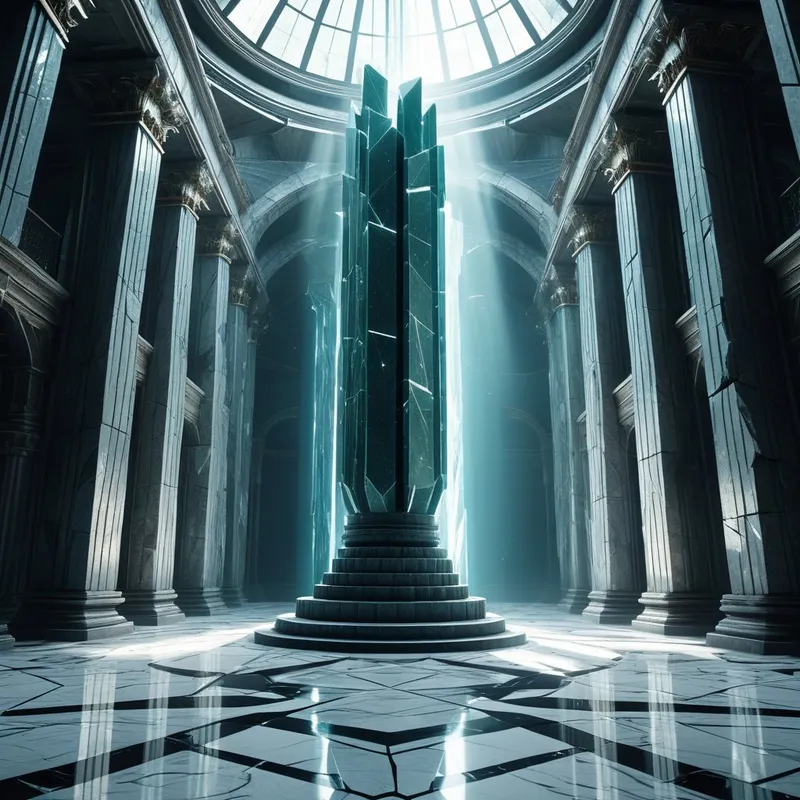
The transmutation here is from Archive to Altar. The intense psychological heat is applied through the conscious, willing descent into the memorial space while awake. It is the pressure of sitting with the weight instead of strategizing to lift it. The base material is the leaden grief of frozen history—the memory as a closed, heavy file. The heat is the courage to reopen it, not to relive the pain, but to witness it with present-moment awareness. In this crucible, the memory begins to change state. It is no longer a data point to be managed, but a sacred object to be acknowledged. The altar is not for worshiping the past, but for making offerings to the truth of your own journey. The silver that emerges is integrity—the self, whole and undivided, where every chapter, especially the painful ones, is granted its rightful place in the narrative cathedral. Sovereignty is born when you stop being a fugitive from your own history and become the curator of its meaning.
The Integration Protocol
Question 1: What part of my history have I placed under administrative silence? What is the name of that "closed file," and what energy does it take to keep it locked?
Question 2: If the memorial in my dream could speak, not about the past event, but about its own purpose in my inner landscape now, what would it say?
Question 3: How does bearing the weight of this integrated memory alter my posture in the world? Does it make me more rigid, or paradoxically, more grounded and real?
Action 1 (Somatic Grounding): When you feel the "weight" of this theme in your body, do not try to breathe it away. Instead, place your hands where you feel the density—often the chest or solar plexus. Breathe into that pressure, imagining your breath gently filling the hollow of the memorial space itself. For two minutes, simply be the caretaker of that site.
Action 2 (Creative Expression): Create a simple, physical "record." This is not a diary entry. Fold an origami shape, arrange three stones on your windowsill, or draw a single, abstract symbol on a piece of paper. Do not label it. Let the act itself be the inscription. Then, place this object somewhere you will gently encounter it, integrating it into your daily landscape.
Action 3 (Ritual of Sovereignty): Light a candle. Name, aloud, the chapter of your life that the dream memorializes. Then, say: "I am no longer the subject of this history. I am the sovereign of all my territory. This memory has a place, and its place is within my realm." Extinguish the candle. The ritual transfers the memory from the status of a ruling trauma to a citizen of your self.
Final Validation
This work is hard because it asks you to dignify your wounds, to grant citizenship to your ghosts. It is easier, far easier, to leave those rooms dark and silent. To feel the weight of your own fully acknowledged history is a profound and difficult courage. But remember: a memorial is not built for something small. The scale of the architecture in your dream mirrors the significance of the integration awaiting you. You are not being asked to live in the past. You are being shown that you are now large enough, strong enough, to contain it—not as a prisoner contains a jailer, but as a sky contains a star. The monument is already within you. The final act of integration is simply to turn on the lights and read your own name, carved in the stone, not as an epitaph, but as a foundation.