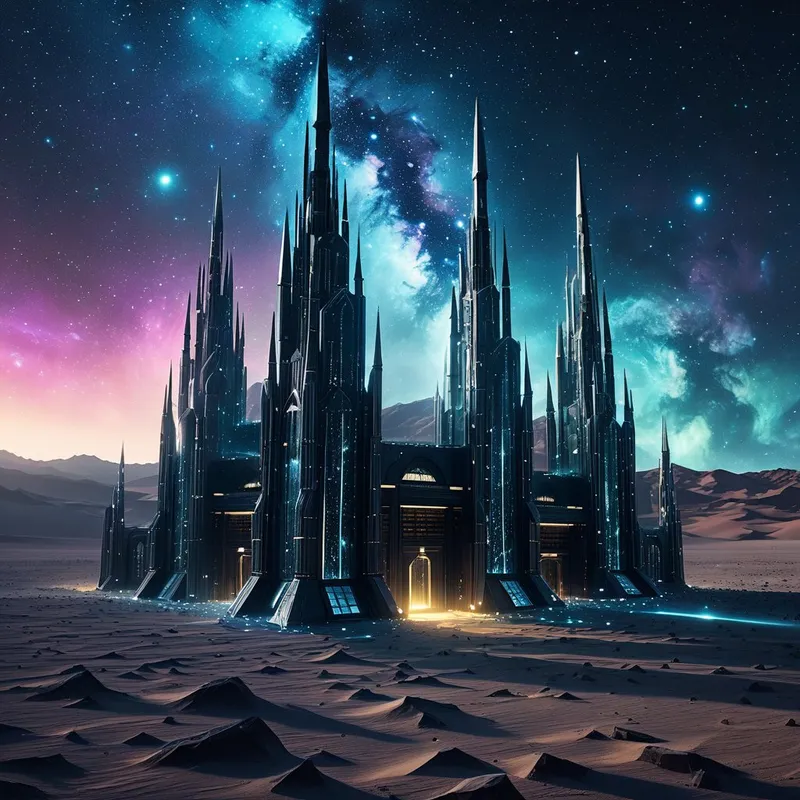
The Alchemy of Inheritance: When Dreams Speak of Legacy & Memory
It begins not as a thought, but as a weight. A density in the marrow. A phantom gravity in the chest, pulling you toward a past you never lived. This is the somatic echo of Legacy & Memory. It is the feeling of carrying a library you never chose, its shelves lined with unread books written in a script of old griefs, silenced joys, and unmetabolized hopes. Your body remembers what your mind has forgotten or never knew—the emotional architecture passed down like a family heirloom, a blueprint of survival etched into your nervous system before your first breath. It is the hum of a frequency you did not set, a resonance in the bones that whispers of debts unpaid and songs unsung.
The Dreamer's Log
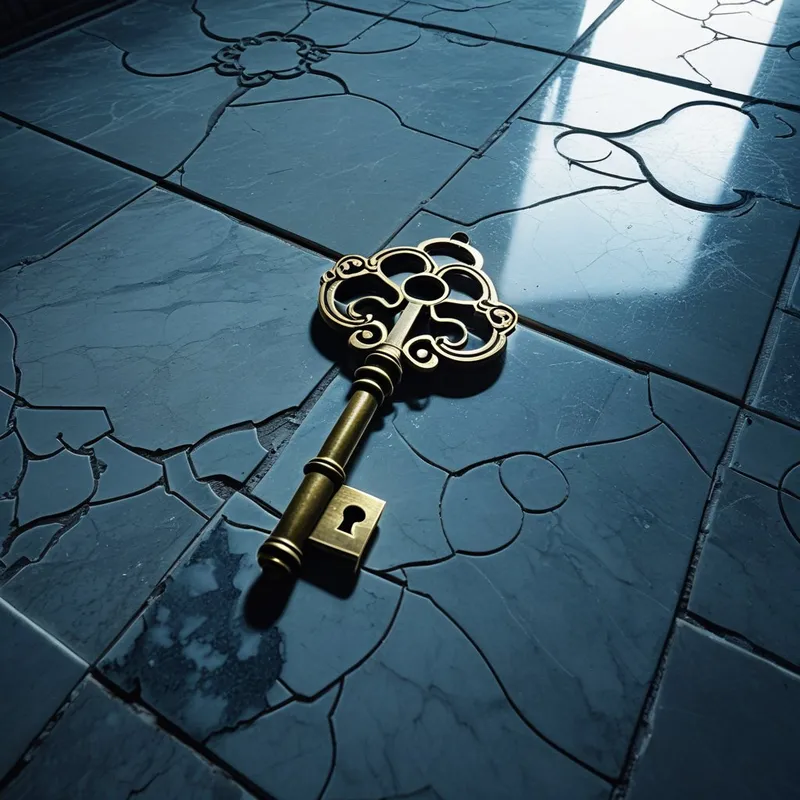
I stood in a grand, abandoned hall. The floor was marble, cracked and veined with gold. In my hand, I held a heavy, ornate brass key that was warm to the touch. All around me, on the walls, faint blueprints of impossible cities and strange machines flickered like ghostly projections, waiting for a lock I could not find.
This dream is not about finding an external lock, but about recognizing that the key itself is the legacy—the warmth is the living potential within the inherited form, and the hall is the psyche, waiting for its own blueprint to be drawn.
The False Lead
This theme is not a simple nostalgia trip or a genealogical curiosity. It is not about glorifying the past or being doomed to repeat it. The terror here is not of "bad luck" or familial "curses," but of unconscious authorship. The grief is for the life you might be living by default, a script written by ghosts. To mistake this profound structural reckoning for mere sentimentality or fatalism is to stay asleep within the inheritance. The dream is calling you to the drafting table, not the archive.
Psychological Architecture
Here, Shadow work is archaeology of the soul. You are not digging up bones to rebury them; you are sifting the soil of your own being to find the living seeds. Individuation in this realm is the process of becoming a conscious ancestor. It means facing the exiled figures in your internal family system—the orphaned grief of a grandparent, the rebel rage of a parent that was silenced, the caregiver’s sacrifice that demanded perpetual gratitude. These are not your emotions, yet they live in you as energetic tenants. To integrate them is not to become them, but to grant them audience. To hear their story, honor their truth, and then, with sober compassion, revise the contract. You dissolve the blind loyalty that mistakes pain for legacy, and in its place, you build a sovereignty informed by the past, but not enslaved to it. The foundation of the old house is examined, stone by stone. Some are kept. Some are replaced. The blueprint is redrawn by a hand that trembles with the weight of both memory and freedom.
Mythic Resonance
We see this in the story of Aeneas, who fled the burning ruins of Troy not just as a survivor, but as a carrier. He bore his father on his back and held the statues of the household gods in his hands—the literal and spiritual weight of his lineage. His entire epic journey was the struggle to find a place to plant that legacy, to build a new city (Rome) from the sacred fragments of the old. His destiny was not to repeat Troy, but to transmute its essence into a new form. Similarly, in the Buddhist metaphor of the two arrows, the first arrow is the inherited pain, the karmic or familial wound. The second arrow—the one of suffering—is our own identification with it, our unconscious enshrinement of that pain as self. The alchemical task is to feel the first arrow fully, to acknowledge its reality in the body, and to refuse to shoot the second.
Symbolic Nodes
- Ancient Houses, Mansions, or Ruins: The architecture of the inherited psyche, with locked rooms (repressed memories) and foundational cracks.
- Heirlooms, Keys, Sealed Chests, or Scrolls: The specific packages of legacy—talents, traumas, secrets, or responsibilities passed down.
- Family Members as Symbols (especially ancestors or the dead): Often not literal portraits, but personifications of an inherited emotional complex (e.g., a weeping grandmother as unmetabolized grief).
- Books in Forgotten Languages, Faded Photographs, or Ghostly Recordings: The data of legacy that feels just beyond conscious decoding.
- Roots, Trees, or Rivers: The deep, often unconscious, flow of lineage and time connecting you to a source.
- Being Given a Title, Crown, or Uniform That Doesn't Fit: The assignment of a role or destiny from the family system that feels alien to the true self.
Archetypal Resonance
The Ruler Archetype is the core energy awakening here. Its shadow—the Tyrant or Control-Freak—manifests as the internalized, unquestioned law of the family system, the "way things have always been" that governs choices with silent, ironclad authority. The somatic echo of this shadow is the stiff spine, the burden of duty, the clenched jaw of carrying a crown you never wanted. The active, integrating Ruler, however, does not reject the throne. They ascend to it consciously. This archetype resonates because the core task is sovereignty—to survey the kingdom of the self, to acknowledge all that you have inherited (both fertile lands and scorched earth), and to establish a new, conscious order. The Ruler’s alchemical potential is to take the raw materials of legacy—the laws, the resources, the history—and craft them into a functional, compassionate, and authentic governance for one's own life. It is the move from subject to sovereign of your own inner realm.
The Alchemical Process
The transmutation of Legacy & Memory requires the heat of conscious grief and the pressure of radical responsibility. The prima materia is the heavy, leaden feeling of fate—"this is just who we are." The fire is applied when you dare to ask: "Is this who I am?" This question creates friction. It heats up the loyalties, the guilt, the fear of betrayal. You must hold the contradictory truths: I love my family, and their pain shaped me in ways I did not choose. This is my history, and I am free to imagine a different future.
The pressure comes from bearing the weight of that freedom. It is the pressure of becoming the author where once you were only a scribe. The alchemical vessel is your attentive, non-judgmental awareness. Within it, the solid, frozen narratives of the past ("We are victims," "We never show weakness," "Success is everything") begin to dissolve. In the resulting solution, you separate the gold from the dross. The gold is the true essence: perhaps resilience, a capacity for deep feeling, a connection to the earth, an artistic sensibility. The dross is the distorted form it took: hardened defensiveness, emotional repression, ruthless ambition, escapist fantasy. The rubedo, the reddening, is the moment you integrate that purified essence into your living present—not as a burden, but as a chosen tool. You inherit the family's strength, but you wield it for your own values. You transmute the legacy of silence into the capacity for deep listening, or the legacy of lack into profound gratitude. The sovereignty forged is not over others, but over the inner kingdom of your own life.
The Integration Protocol
Question 1: When I feel the "weight" of my family or past in my body, what is its precise texture? Is it a chain, a cloak, a crown, a book? What emotion is bound within that object?
Question 2: What is one silent, unwritten rule I have always lived by that I never consciously agreed to? What might life look like if I amended that rule?
Question 3: If I were to become a conscious ancestor for my own future self or for others, what single quality or truth would I most want to pass on? How is that different from what I actually received?
Action 1 (Somatic Mapping): Sit quietly and scan your body for the felt sense of "lineage" or "family." Don't think in stories, feel in sensations. Locate it. Give it a shape, a color, a temperature in your mind's eye. For five minutes, simply breathe into that space, not to change it, but to acknowledge its presence as a resident in your inner ecosystem.
Action 2 (Creative Re-authoring): Take the dream image or family story that feels most charged. Write it down. Now, rewrite the ending. Or change one key element—the object, the setting, the emotion. Draw a symbol that represents the potential hidden within that old story, not the story itself. This is not denial; it is active imagination, claiming the creative rights to the narrative.
Action 3 (Ritual of Conscious Inheritance): Find a small object that represents an inherited burden (a stone will do). Also, find a small object that represents a genuine gift from your lineage (a leaf, a coin, a seed). Go to a threshold—a doorway, a park entrance, a bridge. Acknowledge the burden. Thank it for what it taught you about survival, then leave it (or bury it) before the threshold. Carry the gift with you as you cross over. The ritual is a physical metaphor for choosing what you bring into your next chapter.
Final Validation
It is a terrifying and lonely thing to feel the foundations of your identity shift, to question the very soil from which you grew. To do this work can feel like a betrayal, because in a way, it is—a necessary betrayal of unconsciousness. It is the ultimate act of loyalty to life itself. You are not erasing your past; you are finally learning its true language, so you can stop merely reciting its old scripts and begin to write your own sacred text. The legacy was never a prison sentence. It was an invitation, written in the code of memory, waiting for you to become the cryptographer and the poet. The hall is yours. The key is warm in your hand. Now, build.