The Alchemy of the Bridge: Dreams of Legacy and Continuity
The Somatic Echo
It begins not as a thought, but as a hollowing. A specific, resonant emptiness in the solar plexus, as if a vital organ has been quietly removed and replaced with a chamber of echoes. The breath feels shallow, drawn into a space that is no longer entirely your own. There is a weight, but it is not the dense pressure of a burden; it is the gravitational pull of a timeline, the subtle, terrifying knowledge that you are a point on a line that stretches infinitely in both directions. Your body becomes a conduit, a temporary vessel for a story that predates your name and will outlast your memory. This is the somatic prelude to the dream of legacy—the visceral recognition of being a living threshold.
The Dreamer's Log (Case Vignette)
I am standing in a cavernous, abandoned server farm. The air is cool and hums with a deep, sub-audible frequency. Rows of monolithic, dark terminals stretch into the gloom. One console, older than the others, flickers to life. On its screen, lines of archaic, glowing code scroll endlessly. I feel no urge to read it, only a profound responsibility to ensure its light does not go out before its transmission is complete.
This dream is not about preserving data, but about honoring the transmission of a pattern—the alchemical process of receiving a charge of meaning and holding the circuit open long enough for it to pass into the next form.

The False Lead
This theme is not a call to frantic productivity, to build monuments or secure a name in history. It is the opposite of the ego’s desire for permanence. To mistake it for a simple fear of death, or a midlife crisis checklist of achievements, is to grasp at the shadow. Nor is it merely about biological lineage or familial duty, though those may be its costumes. The terror here is not of ending, but of failing in your role as a conduit—of being the link where the signal degrades, where the essential pattern is lost in translation. It is the grief of the translator, not the author.
Psychological Architecture
Here, the work of Individuation meets its most profound paradox. To become a true individual, a whole Self, you must first consent to being a fragment of a larger story. The Shadow work is in confronting the parts of you that rage against this—the internal orphan who screams, “What about my story? What about my unique mark?” This orphan fears dissolution, fears that to be a bridge is to be walked over and forgotten. The alchemy occurs when this orphan is not silenced, but listened to, and then gently shown that its unique pain, its specific texture, is the very material from which the bridge is forged. Your particular cracks are what allow the light of the continuum to pattern through you in a new way. You individuate not by separating from the stream, but by becoming a conscious, shaped part of its current.
Mythic Resonance
We see this in the figure of Aeneas, fleeing the ashes of Troy. His heroism is not in conquest, but in bearing his father on his shoulders and carrying the household gods to a foreign shore. He is not the founder of a city in that moment; he is the city itself—mobile, vulnerable, a living archive. His journey is the somatic echo of legacy: the weight of the past physically upon him, the unknown future ahead, and his own identity suspended between, defined solely by his duty to transport what is sacred. He is the human bridge.
Symbolic Nodes
- Ancient or Obsolete Technology: Rotary phones, scrolls, crystal radios, flickering terminals. They represent the specific, dated form of a transmission that still carries a live current.
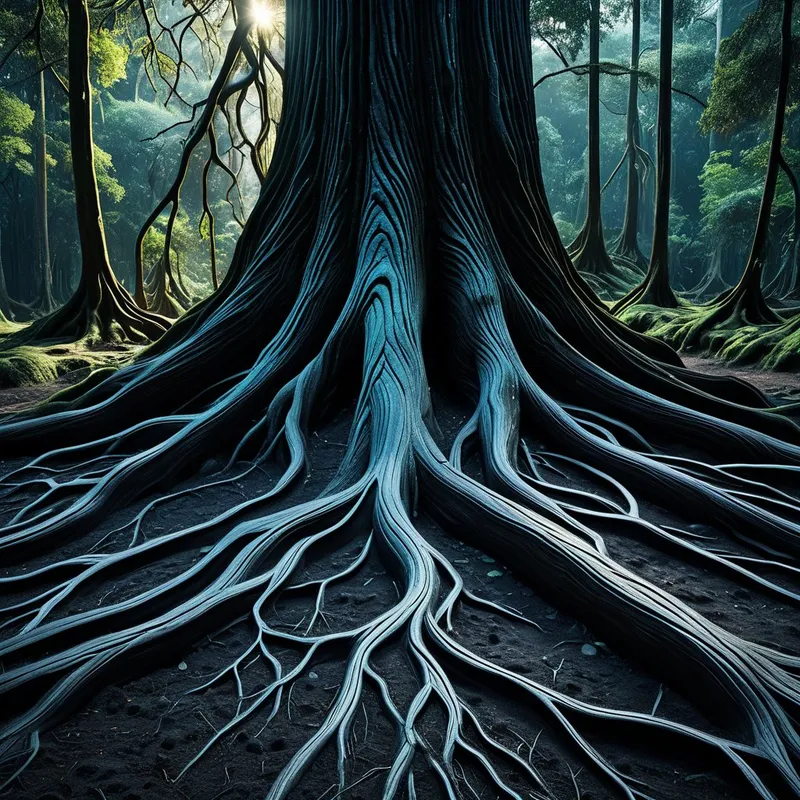
- Root Systems & Mycelial Networks: The hidden, connective structures that nourish visible life, speaking to the subconscious, ancestral web.
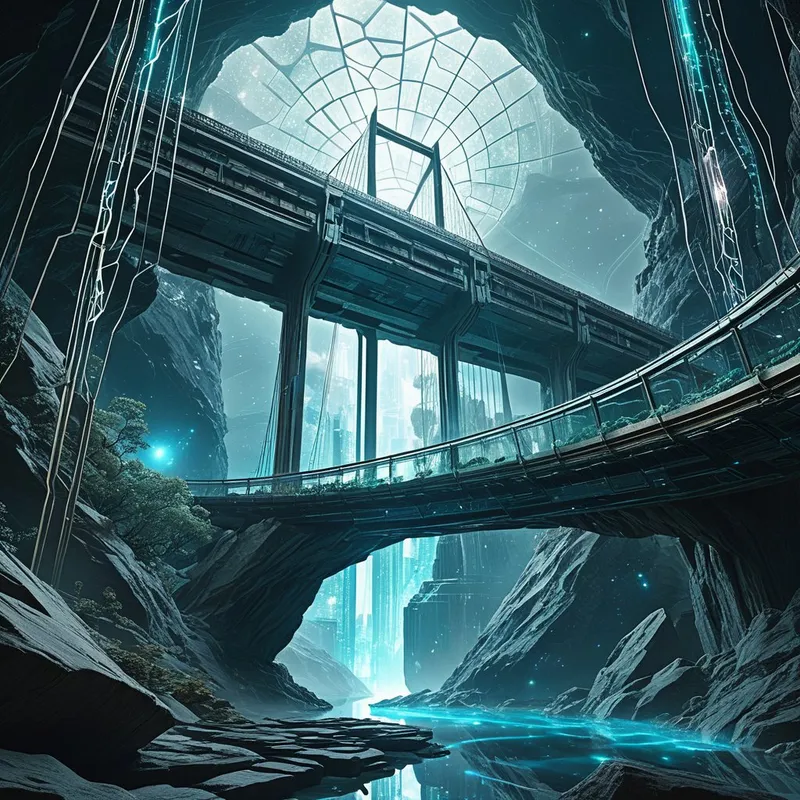
- Bridges, Viaducts, and Arches: The architecture of connection between solid, known land and the other side.
- Heirlooms of Unknown Function: A key that fits no lock, a tool whose purpose is forgotten. Their value is in their pattern, not their utility.
- Receiving a Sealed Message or Vessel: The dreamer is tasked not with creating content, but with stewardship and delivery.
Archetypal Resonance
The Ruler Archetype is activated here, but not in its shadow form of tyrannical control. This is the Ruler as Sovereign Steward. The somatic echo—the hollow gravity in the core—is the feeling of the sovereign’s mantle settling on shoulders that feel too frail to bear it. This archetype resonates because legacy is the ultimate act of stewardship: governing the territory of your own life with the awareness that you are managing a trust, not owning a property. Its alchemical potential lies in transmuting the anxiety of control (“I must micromanage my impact”) into the profound sovereignty of right relationship (“I govern this moment well so that the next ruler may inherit a fertile ground”). The Ruler builds not a prison of permanence, but a sustainable kingdom that knows it will one day have a new monarch.
The Alchemical Process
The prima materia here is the raw grief of impermanence and the terror of insignificance. The alchemical vessel is your own lifespan. The required heat is the sustained, conscious confrontation with your mortality—not as a morbid end-point, but as the necessary boundary that gives your time its shape and pressure. The solve (dissolution) is allowing the identity of “the one who builds something lasting” to break down. This is a death. The coagula (recombination) is the reassembly of identity as “the one who faithfully transmits.” The gold produced is not a monument, but a quality of presence: a deep, unshakeable participation in the flow of time. You become a conscious cell in a larger body, aware of both your exquisite specificity and your complete dispensability to the whole. This is the ultimate sovereignty: to rule your domain knowing you are a temporary steward, and to find perfect freedom in that faithful service.
The Integration Protocol
Question 1: What in my life right now feels like an obsolete terminal still glowing with a message? What is it transmitting, even if I cannot fully decode it?
Question 2: If my life is a bridge, what landscape lies firmly behind me (the inherited), and what landscape lies shrouded in mist ahead (the potential)? What is the texture of my span?
Question 3: Which part of me feels like an angry orphan, demanding a personal monument? What would it need to hear to consent to becoming sacred building material instead?
Action 1 (Somatic Grounding): Sit quietly and place a hand on your solar plexus. Breathe into the hollow. Imagine the breath flowing not just in and out, but through you—entering from behind, as if from the past, and exiting ahead, into the future. You are the channel. Practice for 5 minutes.
Action 2 (Creative Transmission): Find an object in your home that connects you to a past generation (a tool, a book, a piece of furniture). Spend 20 minutes writing from its perspective. Let it speak. What has it witnessed? What does it hope for the hands that will next hold it?
Action 3 (Ritual of the Threshold): Light a candle. Name aloud one pattern, value, or piece of “code” you have consciously received (e.g., “resilience,” “curiosity,” “a love for quiet mornings”). Speak your gratitude for it. Then, blow out the candle, releasing it from the form of your personal possession, and silently ask that it find its next necessary vessel in the world.
Final Validation
It is terrifying to feel the walls of your singular self become permeable, to know you are a temporary configuration in an endless recombinatory process. This fear is not a sign of failure, but of accurate perception. You are that bridge. The grief of being “only” a link is the very substance from which the bridge is woven. To integrate this is not to find comfort, but to find meaning so profound it reconfigures your atoms. You stop building statues. You become the sacred, singing stone of the road itself, and in that, you achieve a continuity that no name etched in marble could ever possess.